Best Ski Resorts in the Alps: 9 Mountains Compared for 2026
The best ski resorts in the Alps share three qualities: terrain that rewards return visits, snow conditions you can plan around, and a village or town worth the trip even on a rest day. Beyond that, they diverge — in altitude, in character, in the kind of skier they serve best. A week in Courchevel feels nothing like a week in Chamonix, and both differ fundamentally from St. Anton or Zermatt.
This guide compares nine Alpine resorts across four countries, drawing on our current collection of over 1,000 properties to provide specifics on accommodation, amenities, and access that generic travel guides cannot. The goal is not to rank them one through nine, but to help you choose the right mountain for your next trip.
| Resort | Country | Ski Area (km) | Top Altitude (m) | Village Altitude (m) | Best For |
|---|---|---|---|---|---|
| Courchevel | France | 600 (3 Vallées) | 2,738 | 1,850 | Families, luxury, all-round |
| Val d'Isere | France | 300 (Espace Killy) | 3,456 | 1,850 | Advanced skiers, snow reliability |
| Chamonix | France | 170+ | 3,842 | 1,035 | Off-piste, mountaineering, town life |
| Megeve | France | 445 (Evasion) | 2,350 | 1,113 | Gastronomy, families, understated luxury |
| Verbier | Switzerland | 410 (4 Vallées) | 3,330 | 1,500 | Off-piste, advanced, nightlife |
| Zermatt | Switzerland | 360+ | 3,883 | 1,620 | Year-round skiing, scenery, car-free |
| St. Anton | Austria | 305 (Ski Arlberg) | 2,811 | 1,304 | Advanced terrain, apres-ski |
| Lech | Austria | 305 (Ski Arlberg) | 2,811 | 1,450 | Refined Austrian elegance |
| Cortina d'Ampezzo | Italy | 120+ | 2,930 | 1,224 | Dolomite scenery, Italian style |
Courchevel: The Most Complete Resort in the Alps
Courchevel anchors the Trois Vallées — the largest linked ski area in the world at 600 kilometres of marked runs — and combines that terrain with the densest concentration of high-end accommodation in alpine skiing. The resort operates across four villages (Le Praz, Village, Moriond, and 1850), each with a distinct character and price point.
In our current collection, we list 229 properties in Courchevel. Of those, 217 offer ski-in ski-out access — 95% of the portfolio. Hot tubs appear in 193 properties (84%), saunas in 201 (88%), and private pools in 177 (77%). For groups, 129 properties accommodate 10 or more guests.
The terrain spans everything from gentle greens above Le Praz to the steep couloirs of Saulire. The 1850 village itself offers Michelin-starred dining, high-end retail, and a nightlife scene that caters to a well-heeled international crowd. Families benefit from dedicated children's areas at each village level and some of the most accessible nursery slopes in France.
Val d'Isere: High-Altitude Reliability
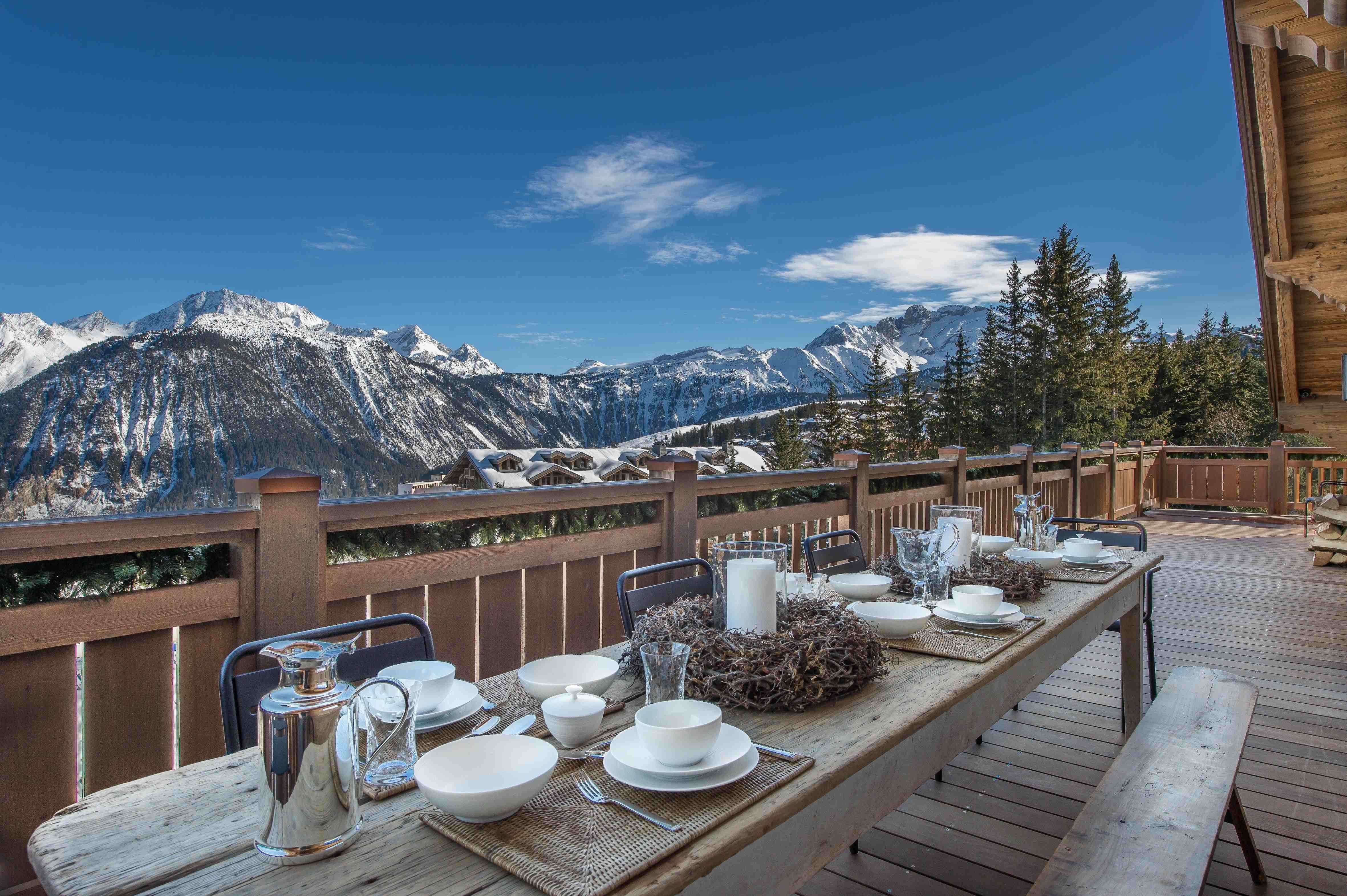
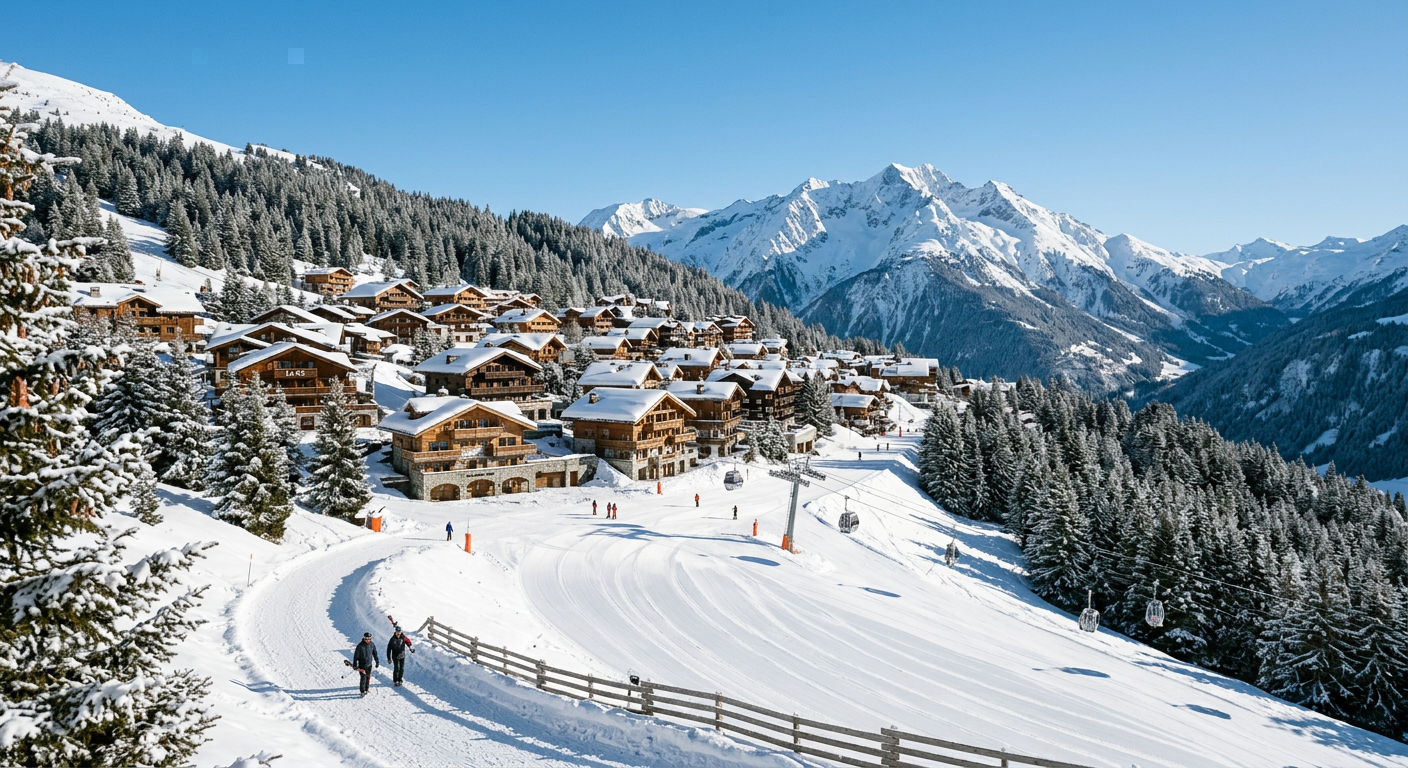
Val d'Isere sits at 1,850 metres with skiing that reaches 3,456 metres on the Grande Motte glacier, making it one of the most snow-reliable resorts in the Alps. The Espace Killy ski area — shared with Tignes — delivers 300 kilometres of terrain with a bias towards intermediate and advanced runs, including the legendary Face de Bellevarde Olympic downhill.
Our collection includes 224 Val d'Isere properties. Ski-in ski-out access is available in 199 (89%), and 173 (77%) include a hot tub. The resort draws a noticeably younger, more ski-focused crowd than Courchevel, and the village centre — centred on the church and main street — maintains an authentic Savoyard feel despite decades of development.
The snow record speaks for itself: the combination of altitude, north-facing aspect, and glacier access means reliable conditions from late November through early May. Val d'Isere is where serious skiers go when snow certainty matters more than village refinement.
Explore Val d'Isere properties
Chamonix: Where Mountaineering Meets Skiing
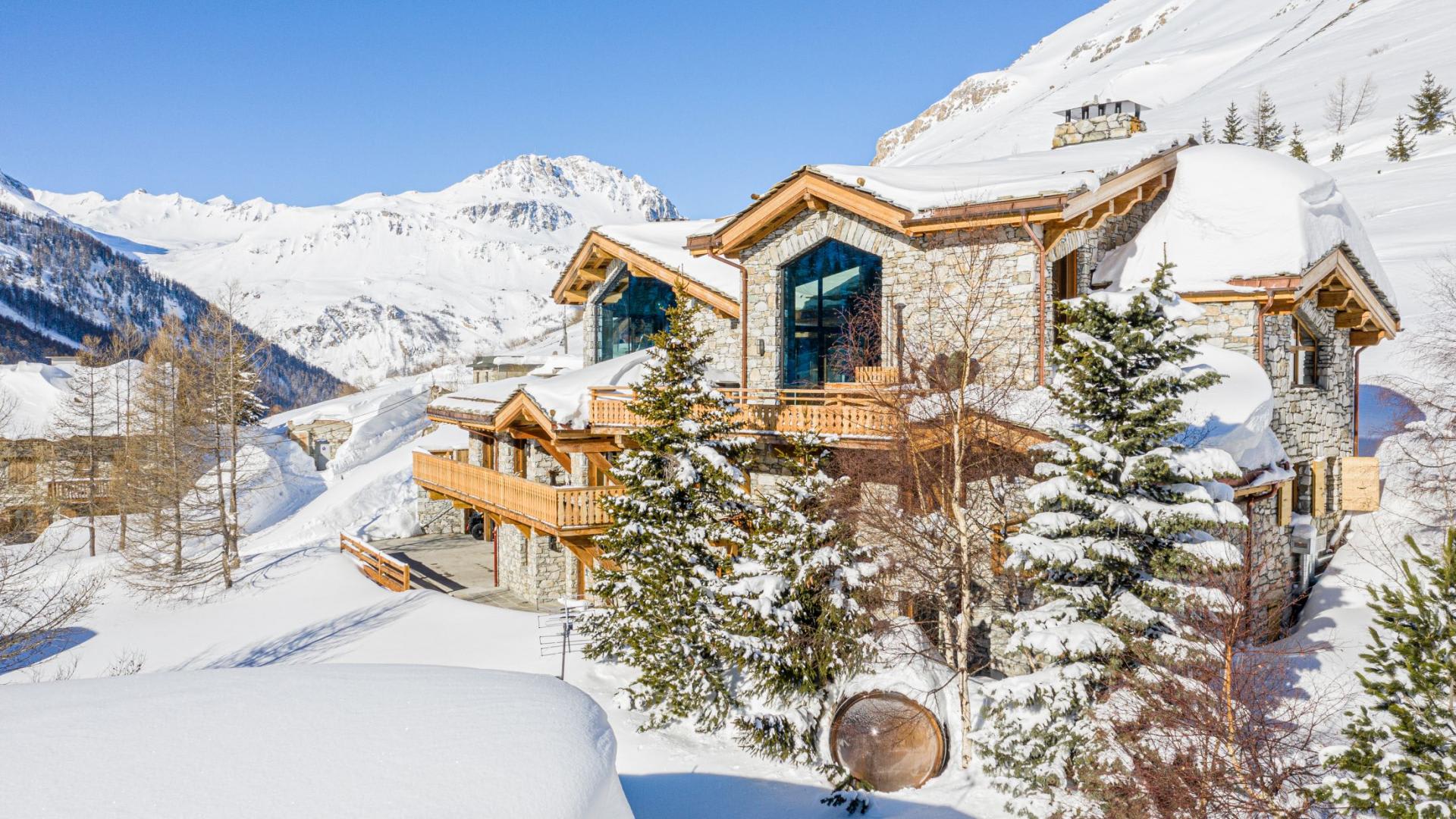
Chamonix occupies a unique position among Alpine resorts. It is a genuine mountain town — a working community of 9,000 residents — rather than a purpose-built ski village. The terrain is spread across five separate ski areas (Brevent-Flegere, Grands Montets, Les Houches, Le Tour, and the Vallee Blanche), none of which are linked by lifts. This fragmentation is both the town's limitation and its appeal: each area has a distinct character, and the town itself has a depth that single-resort villages cannot replicate.
Across 89 properties in our Chamonix collection, 81 (91%) feature hot tubs and 86 (97%) include saunas. Mountain views come with 88% of the portfolio — unsurprising given the town's position beneath the Mont Blanc massif.
Chamonix is the right choice for skiers who value off-piste challenge and town life over convenience. The Vallee Blanche descent — 20 kilometres of glacial terrain from the Aiguille du Midi to the town — is one of the defining ski experiences in Europe. The town rewards evenings as well, with restaurants, bars, and galleries that reflect a century of mountaineering culture.
Megeve: Quiet Sophistication in the French Alps
Megeve was the first purpose-designed ski resort in the French Alps, developed in the 1920s as an alternative to St. Moritz. A century later, its medieval village centre, pedestrianised streets, and Savoyard architecture give it a character that more modern resorts cannot fabricate. The skiing — 445 kilometres across the Evasion Mont Blanc area — is gentler than Courchevel or Val d'Isere, with a bias towards long, cruising intermediate runs through forested terrain.
Our Megeve portfolio of 110 properties skews heavily towards chalets: 92 of the 110. Wine cellars appear in 39 properties (35%) — the highest percentage of any resort in our collection — and 97 (88%) have saunas. Megeve is where the gastronomic tradition of the French Alps finds its finest expression, with multiple Michelin-starred restaurants within the village.
For skiers who prioritise refinement over raw vertical, Megeve delivers an experience closer to a sophisticated alpine town that happens to have skiing than a ski resort that happens to have restaurants. Explore Megeve chalets
Verbier: The Off-Piste Capital of the Swiss Alps
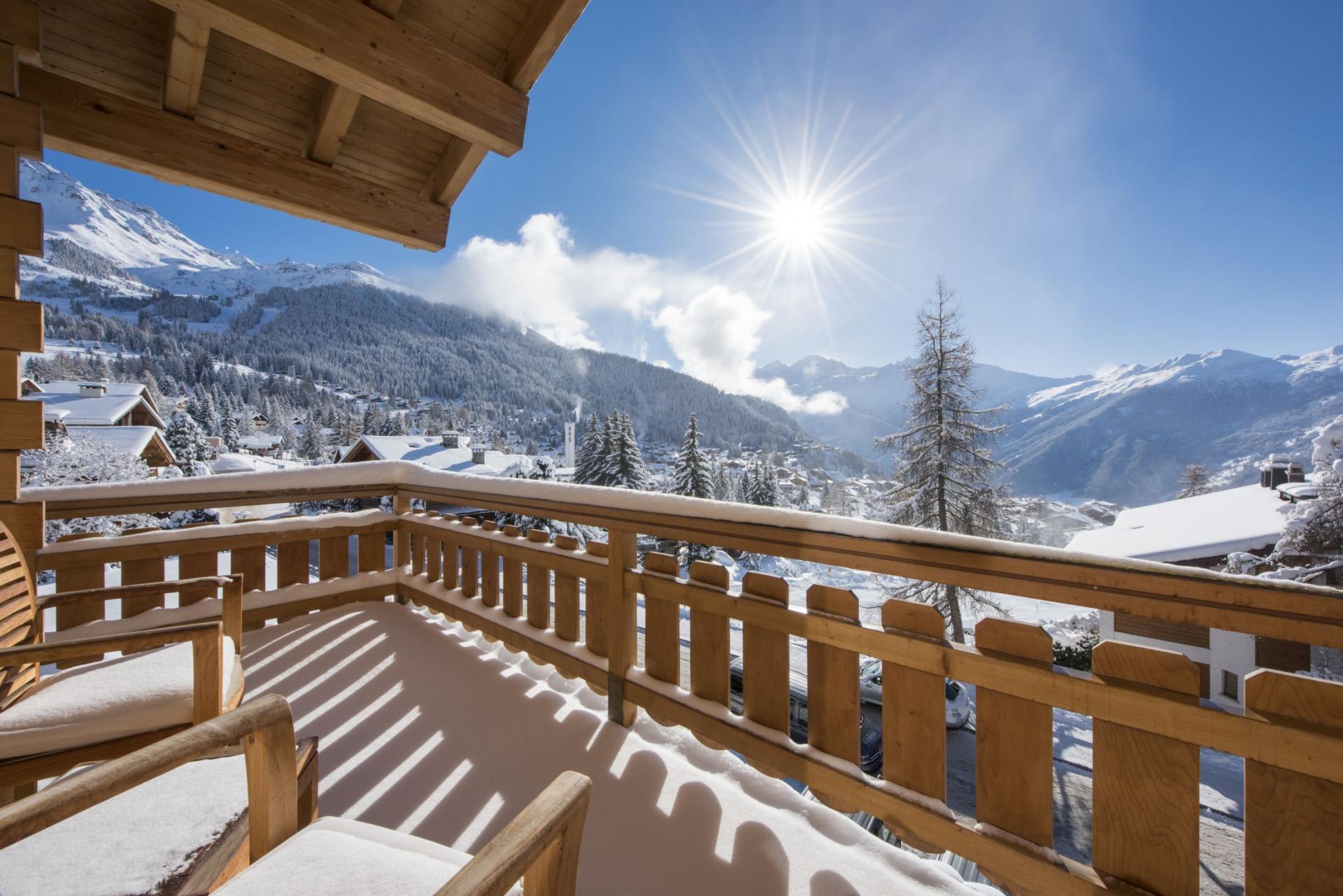
Verbier anchors the 4 Vallées — 410 kilometres of linked terrain in the Swiss canton of Valais — and draws a particular kind of skier. The resort hosts the final stop of the Freeride World Tour, and its itinerary routes off Mont Fort and Mont Gelé are among the most demanding lift-accessed descents in the Alps. But the pisted terrain is equally strong, with long runs above the tree line that suit confident intermediates.
In our current collection of 123 Verbier properties, 100 (81%) include hot tubs, 88 (72%) have saunas, and 111 (90%) offer ski-in ski-out access. The town itself is livelier than its Swiss neighbours — Verbier's nightlife scene is closer to a French resort than a typical Swiss village. Chef service is available in 24 properties (20%), and properties accommodating groups of 10 or more number 60.
Zermatt: Year-Round Skiing Beneath the Matterhorn
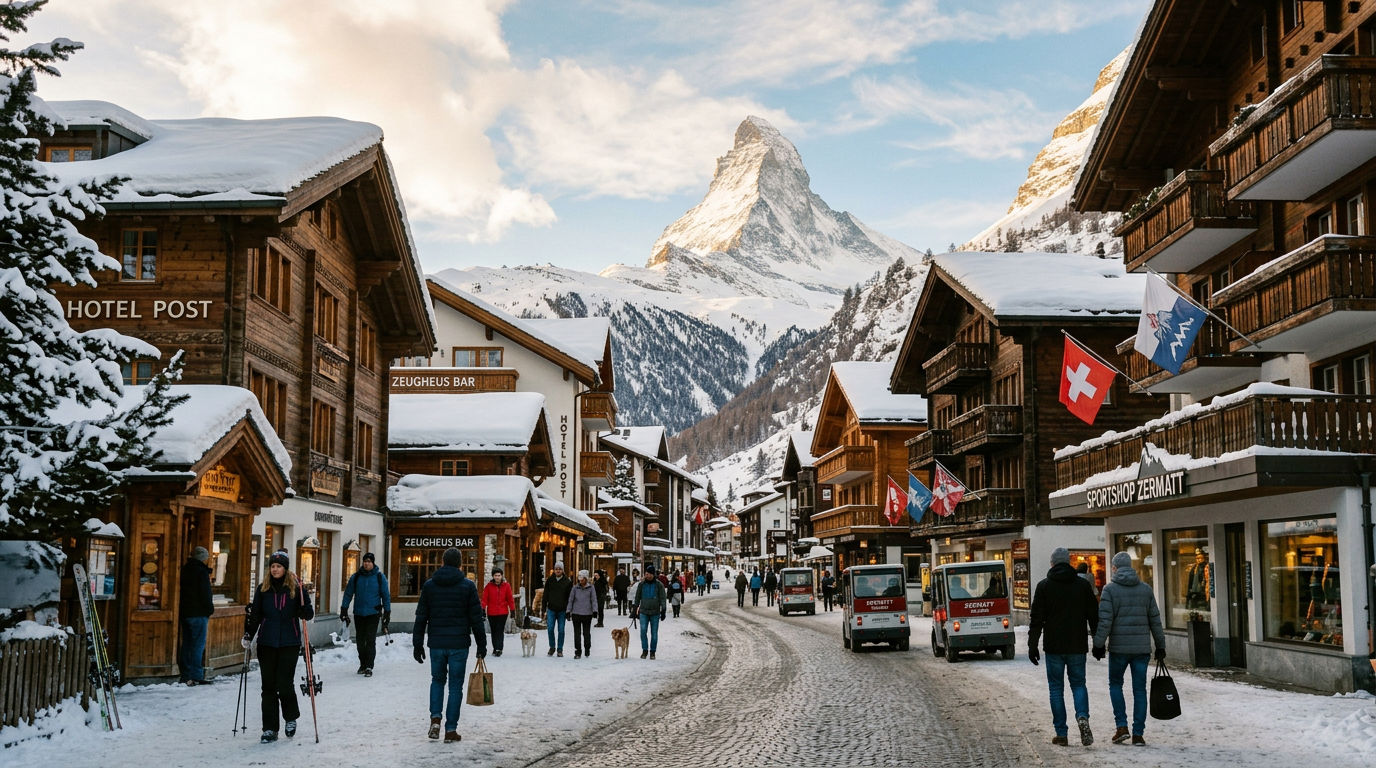
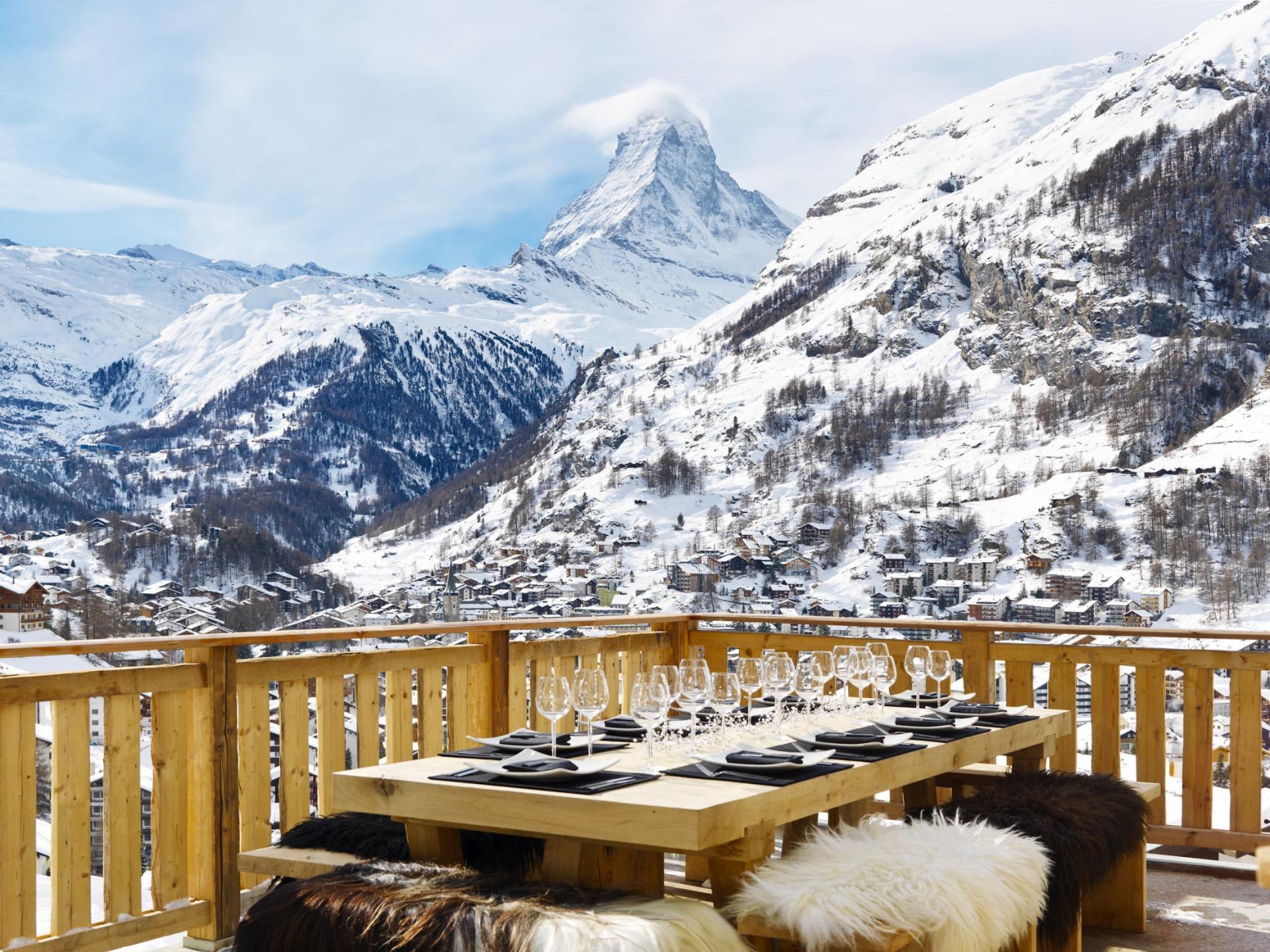
Zermatt is car-free, glacier-served, and visually dominated by the most recognisable mountain in the world. The resort's skiing extends to 3,883 metres on the Klein Matterhorn — the highest lift-served point in Europe — and the glacier terrain allows skiing twelve months of the year. The linked Matterhorn Ski Paradise, shared with Cervinia across the Italian border, offers over 360 kilometres of runs.
Our 113 Zermatt properties reflect the resort's diversity: 52 chalets, 35 hotels, and 25 apartments. Mountain views feature in 105 properties (93%), and 95 (84%) include hot tubs. The village — a pedestrianised maze of timber-and-stone buildings served by electric taxis — has a charm that car-dependent resorts struggle to match.
Zermatt suits skiers who want reliable snow, dramatic scenery, and a village that functions as a destination in its own right. The only significant drawback is cost — Swiss prices apply to everything from lift passes to lunch on the mountain. Browse properties in Zermatt
St. Anton: Austria's Most Serious Ski Town
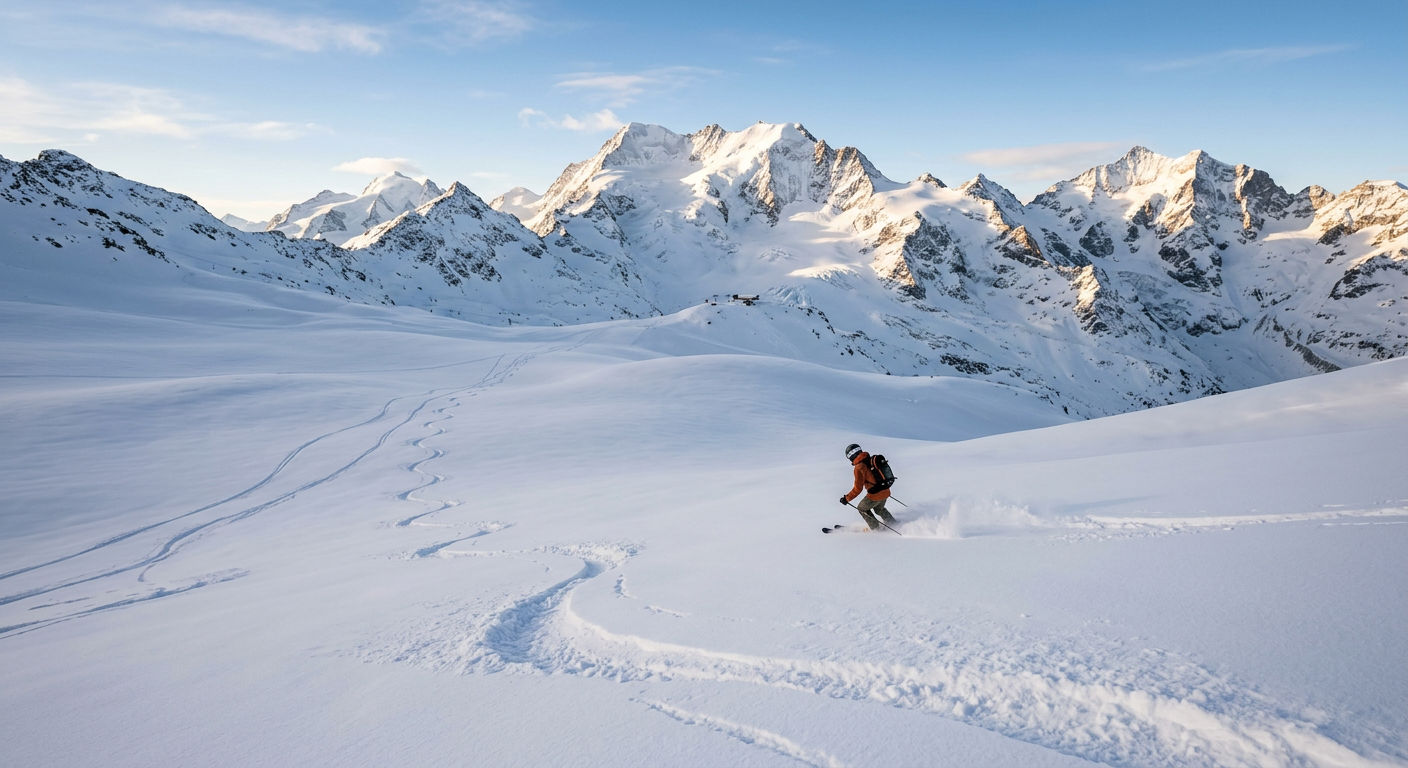
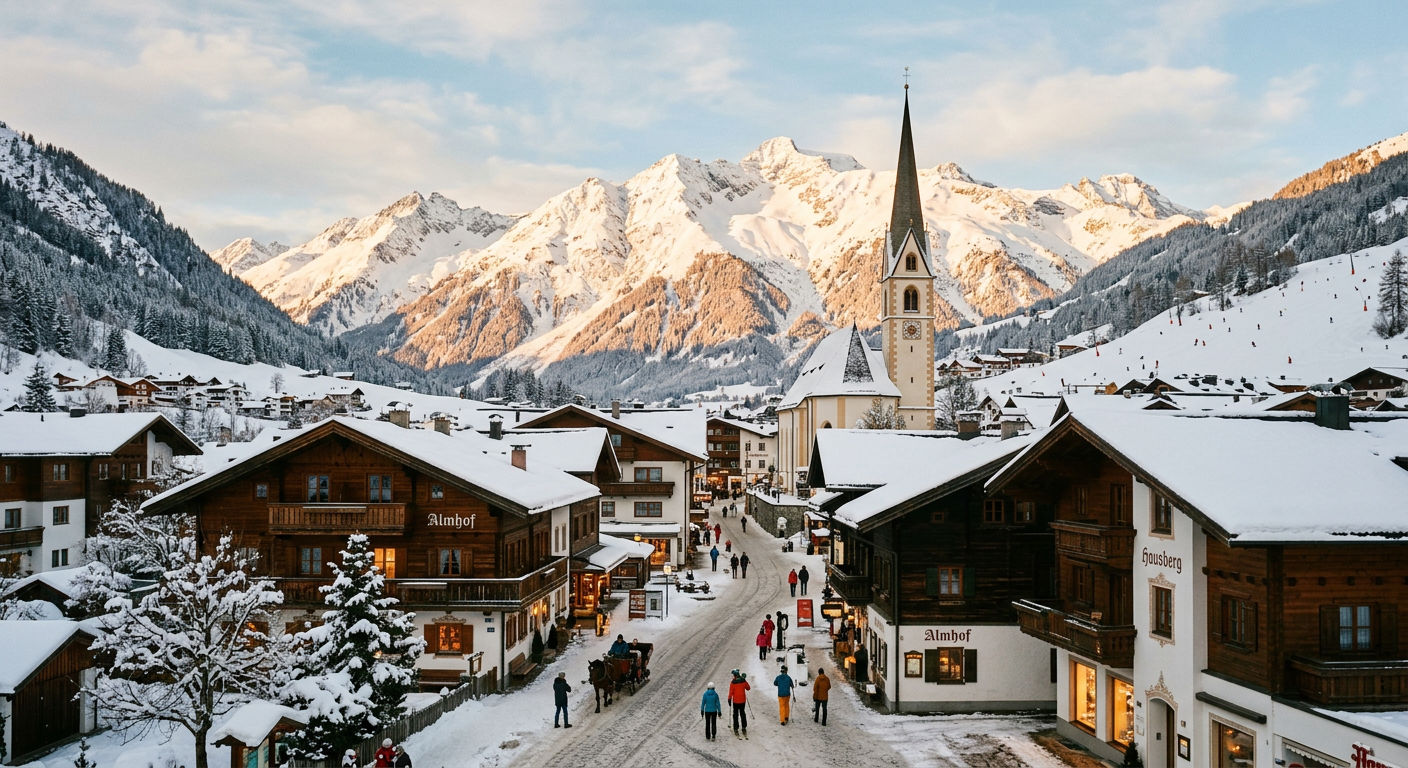
St. Anton am Arlberg is the birthplace of alpine skiing instruction and remains one of the most serious ski towns in the Alps. The Ski Arlberg area — 305 kilometres shared with Lech, Zürs, Stuben, and Warth-Schröcken — is the largest linked ski area in Austria, and St. Anton's home terrain is the most challenging portion, with steep runs off the Valluga and consistently good off-piste in the Rendl area.
Every property in our 83-strong St. Anton collection includes a sauna — 100% coverage. Ski-in ski-out access is available in 79 properties (95%), and 54 properties (65%) accommodate 10 or more guests. The apres-ski culture here is legendary: the Mooserwirt and Krazy Kanguruh are as integral to the St. Anton experience as the skiing itself.
St. Anton draws a younger, more sport-focused crowd than Lech or Courchevel. The town has genuine Austrian character — bakeries, butchers, and a church that predates the first ski lift by centuries — and remains more affordable than its Swiss and French equivalents. Explore properties in St. Anton
Lech: Refined Austrian Understatement
Lech shares the Ski Arlberg area with St. Anton but cultivates a fundamentally different atmosphere. Where St. Anton is boisterous, Lech is measured. The village — a collection of traditional hotels and chalets around a church and stream — attracts a quieter, more established clientele. The skiing is equally strong but oriented towards wider, better-groomed runs and tree-lined terrain that rewards technique over aggression.
All 65 properties in our Lech collection include saunas (100%), and 62 (95%) offer ski-in ski-out access. Spas feature in 52 properties (80%), and pools in 51 (78%). Lech also connects to the remote Warth-Schröcken area via the Auenfeldjet gondola, adding uncrowded terrain that many visitors overlook.
Lech is the right Alpine resort for skiers who want Austrian warmth, strong infrastructure, and a pace of life that lets the mountain set the rhythm. Browse Lech accommodation
Cortina d'Ampezzo: Italian Elegance in the Dolomites
Cortina stands apart from every other resort on this list. The Dolomites are not the Alps in the conventional sense — they are older, steeper, more vertical, and the skiing winds through landscapes that look more like a cathedral than a mountain range. Cortina itself is a stylish Italian town with a passeggiata culture, independent boutiques, and a dining scene that prioritises regional ingredients over international pretension.
The skiing is distributed across several areas — Tofana, Faloria, Cinque Torri, and the Lagazuoi — and the Dolomiti Superski pass unlocks over 1,200 kilometres of runs across the broader region. Our Cortina collection of 19 properties is smaller than the French and Swiss resorts but reflects the town's hotel-forward character: every property includes spa facilities, and 15 offer sauna access.
Cortina is ideal for skiers who want Italian culture, distinctive scenery, and a ski experience that feels different from the rest of the Alps. The 2026 Winter Olympics will bring infrastructure improvements, but the town's essential character is unlikely to change. Explore Cortina properties
How to Choose the Right Alpine Resort
The nine resorts above serve genuinely different needs. A framework for deciding:
For families: Courchevel (dedicated children's areas at every village level, largest accommodation selection) or Megeve (gentler terrain, pedestrianised village centre).
For advanced skiers: Val d'Isere (snow reliability, steep pisted terrain), Verbier (off-piste itineraries, Freeride World Tour terrain), or St. Anton (challenging runs, best value among top resorts).
For couples: Zermatt (car-free romance, Matterhorn views), Lech (refined atmosphere, spa-focused properties), or Megeve (gastronomy, medieval village charm).
For groups: Courchevel (129 properties for 10+ guests), Val d'Isere (109 properties for 10+), or Megeve (70 properties for 10+).
For the best snow: Val d'Isere (glacier access, north-facing), Zermatt (year-round skiing to 3,883m), or St. Anton (consistent Arlberg snowfall).
For town life beyond skiing: Chamonix (genuine mountain town), Megeve (gastronomy and culture), or Cortina (Italian passeggiata and dining).
Powder Edition brings together over 1,000 properties across these nine resorts and the broader Alpine region. Browse all Alpine destinations to find accommodation that matches your trip, or explore a specific resort through the links above.
Frequently Asked Questions
What is the best ski resort in the Alps for beginners?
Megeve and Courchevel are the strongest options for beginners in the Alps. Megeve offers wide, gentle runs through forested terrain with a village atmosphere that keeps non-skiers engaged. Courchevel provides dedicated learning areas at each village level, with particularly accessible nursery slopes at Le Praz and Courchevel 1550. Both resorts have well-established ski schools with English-speaking instructors.
When is the best time to ski in the Alps?
The core season runs from mid-December through mid-April across most Alpine resorts. January and February deliver the most reliable snow and coldest temperatures. March offers longer days and softer spring snow. For the highest probability of good conditions, book the last two weeks of January or the first two weeks of February. Val d'Isere and Zermatt extend their seasons significantly — Val d'Isere typically opens late November, while Zermatt offers glacier skiing year-round.
How much does a week in an Alpine ski resort cost?
Accommodation costs vary enormously by resort and property type. In our current collection, weekly chalet rates range from approximately €2,000 for a self-catered apartment in Chamonix to over €400,000 for a flagship property in Courchevel or Verbier during peak weeks. A realistic budget for a quality chalet sleeping 8-10 guests starts around €5,000-€8,000 per week in Austrian resorts and €8,000-€15,000 in French and Swiss resorts, excluding lift passes and dining.
Which Alpine resort has the best off-piste skiing?
Verbier and Chamonix are the two standout choices for off-piste skiing in the Alps. Verbier's Mont Fort and Mont Gelé itinerary routes are among the most demanding lift-accessed descents in Europe, and the resort hosts the Freeride World Tour finals. Chamonix offers the Vallee Blanche — a 20-kilometre glacial descent from the Aiguille du Midi — alongside extensive off-piste in the Grands Montets area. St. Anton also deserves mention for its accessible backcountry terrain in the Rendl and Valluga sectors.
Is it better to ski in the French, Swiss, or Austrian Alps?
Each country offers a distinct experience. The French Alps have the largest linked ski areas (Trois Vallées at 600km) and the broadest range of luxury accommodation. The Swiss Alps offer the most dramatic scenery, car-free villages, and year-round glacier skiing — at a premium price. The Austrian Alps provide the best value, the strongest apres-ski culture, and a more traditional alpine atmosphere. The Italian Dolomites stand apart entirely with their distinctive vertical rock formations and Italian dining culture. The right choice depends on your priorities rather than an objective ranking.
Do I need a car to get around Alpine ski resorts?
Most top Alpine resorts are designed to function without a car. Zermatt is entirely car-free. Courchevel, Val d'Isere, Verbier, and Lech operate comprehensive shuttle and lift systems that connect accommodation to slopes. Chamonix is the main exception — its five separate ski areas are not linked by lifts, and a car or bus is necessary to move between them. Airport transfers from Geneva, Lyon, Zurich, Innsbruck, or Milan are typically arranged through your accommodation provider or a specialist transfer company.