Best Ski Resorts for Beginners: 9 Mountains That Make Learning Effortless
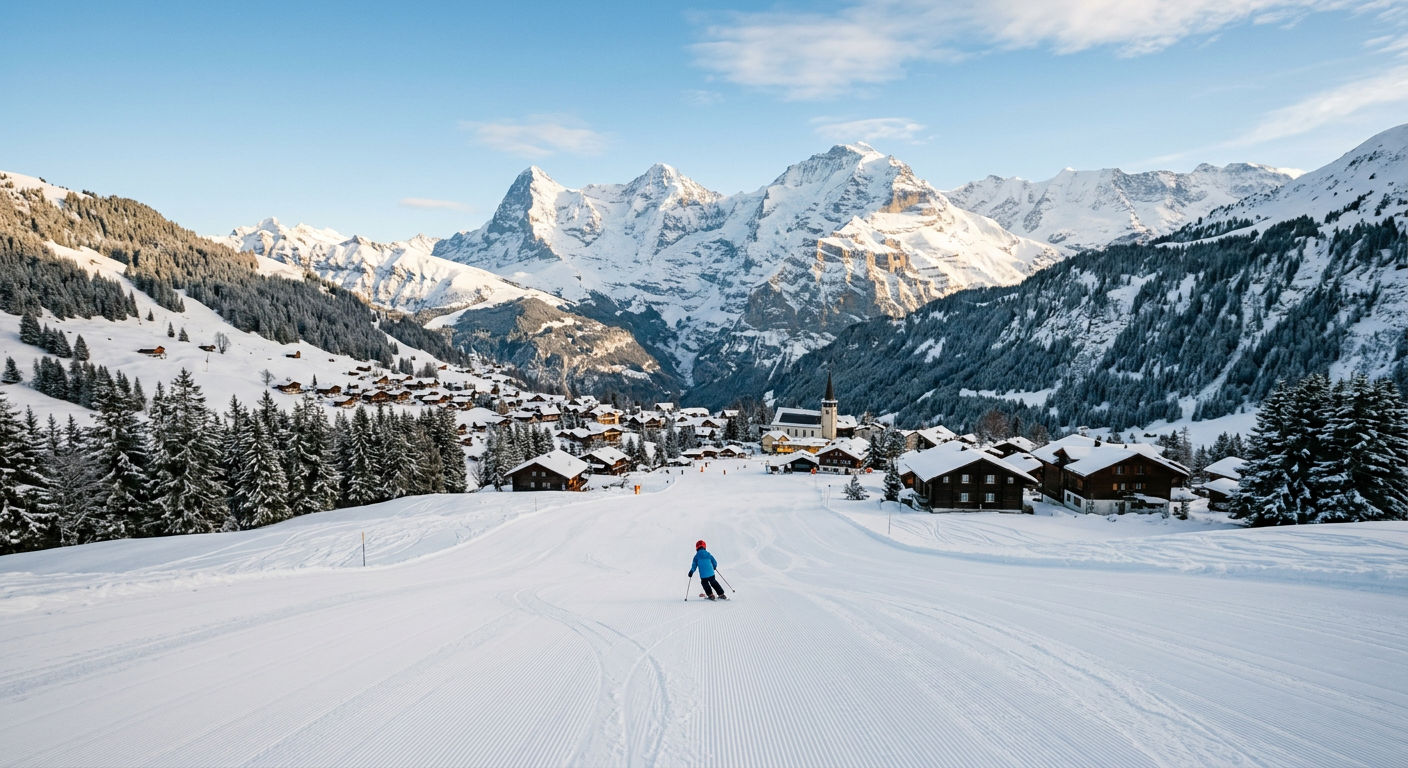
The best ski resorts for beginners are not necessarily the biggest or most famous — they are the ones where the terrain, instruction, and overall environment work together to make learning feel natural rather than stressful. A resort with 500 kilometres of expert runs means nothing to someone spending their first week on snow. What matters is the width of the greens, the quality of the ski school, the ease of getting from accommodation to the learning area, and enough refinement off-slope to make the trip worthwhile even on the days when your legs give out by 2pm.
This guide covers nine resorts across the Alps and North America where beginners can learn with confidence — and where the experience extends well beyond the nursery slopes.
What Makes a Ski Resort Good for Beginners?
A truly beginner-friendly ski resort combines wide, well-groomed nursery slopes with modern lift infrastructure that eliminates the stress of getting uphill. The best resorts for first-time skiers offer dedicated learning zones separated from faster traffic, magic carpet lifts and gentle chairlifts, and ski schools with proven instructional methods.
Beyond the slopes, three factors distinguish the best beginner resorts:
- Terrain progression — enough intermediate runs to advance to without a dramatic jump in difficulty
- Lift system — gondolas and covered chairlifts that remove the anxiety of exposed chair rides
- Village proximity — learning areas close to accommodation, not a shuttle ride away
| Feature | Why It Matters for Beginners |
|---|---|
| Wide groomed runs | More room for snowplough turns, less pressure from faster skiers |
| Dedicated learning zones | Separated from main pistes, lower collision risk |
| Magic carpet lifts | No chairlift anxiety for the first few sessions |
| Gondola access | Enclosed ride to mid-mountain without exposed chairlifts |
| ESF or certified ski school | Structured progression with qualified instructors |
| Gentle gradient progression | Green → blue runs without sudden steepening |
Best Beginner Ski Resorts in the Alps
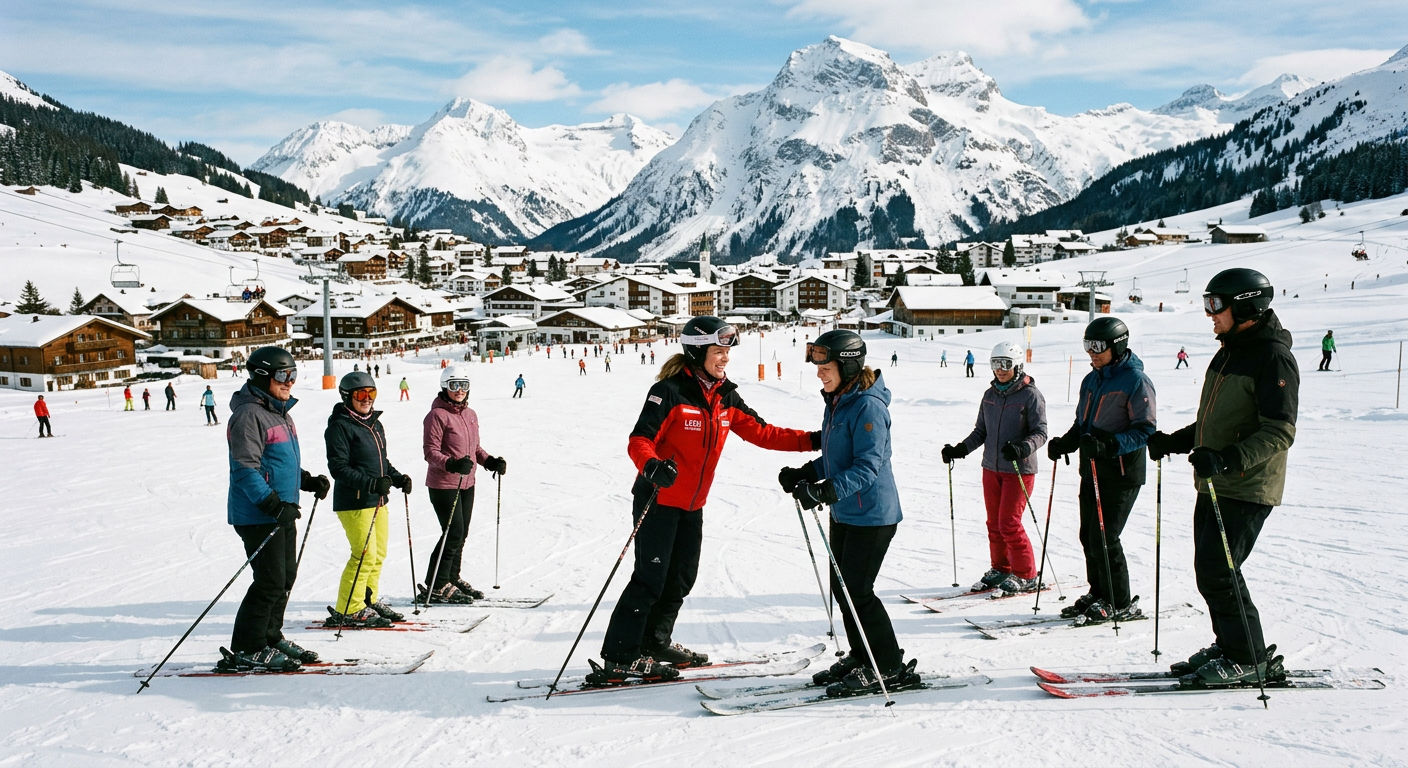
The Alps offer some of the finest beginner terrain in the world, particularly in France and Austria where wide-altitude nursery areas and purpose-built learning zones are standard. The combination of reliable snow cover, extensive grooming, and a dining culture that rewards an early finish makes the Alps the most civilised place to learn.
Courchevel, France
Courchevel consistently ranks among the best ski resorts for beginners in Europe thanks to its dedicated beginner areas across four altitude levels. Courchevel 1850 — the resort's most refined village — has a wide, gentle nursery area directly in the village centre, served by free drag lifts.
The progression from green to blue runs is unusually gradual here. The Verdons green run from the top of the Verdons gondola winds 4.5 kilometres back to 1850 on a gentle gradient that builds confidence without monotony. As part of the Three Valleys — the world's largest linked ski area with 600 kilometres of pistes — Courchevel offers virtually unlimited terrain to grow into across subsequent trips.
Ski school options include ESF Courchevel (the largest in the resort) and several independent English-speaking schools. Group lessons for adults start from around €280 for six half-days.
Verbier, Switzerland
Verbier is often perceived as an expert's mountain, but the village-level terrain around Les Esserts and La Chaux is genuinely well-suited to beginners. The nursery slopes sit at 1,500 metres with reliable snow and south-facing exposure that keeps conditions pleasant through the morning.
What makes Verbier worth considering is the quality of the broader experience. The village itself — with its concentration of considered restaurants and design-forward chalets — rewards skiers who want more from a trip than the skiing alone. First-timers who spend their mornings in lessons and their afternoons exploring the village will find Verbier difficult to fault.
The Savoleyres sector offers gentle blue runs accessible by gondola, providing a natural next step once the nursery slopes feel comfortable.
Lech am Arlberg, Austria
Lech earns its reputation as one of the best beginner ski resorts in Austria through a combination of wide, perfectly groomed runs and a village atmosphere that values understated quality over scale. The Oberlech area — a car-free satellite village at 1,740 metres — offers dedicated beginner terrain with direct hotel access via underground tunnels.
The resort invests heavily in grooming. Pistes are wide, well-maintained, and clearly graded. The progression from the Oberlech nursery slopes to the blue runs of the Schlegelkopf is natural and confidence-building. Ski school standards are among the highest in Austria, with the Lech Ski School operating since 1925.
Average annual snowfall of 700 centimetres — among the highest in the Austrian Alps — means reliable conditions from December through April.
Best Beginner Ski Resorts in North America
North American resorts approach beginner skiing differently: larger dedicated zones, highly standardised instruction, and a trail grading system that provides clarity. The green circle designation is well-regulated, and resorts with significant beginner terrain invest in separating learner traffic from the main mountain.
Whistler Blackcomb, Canada
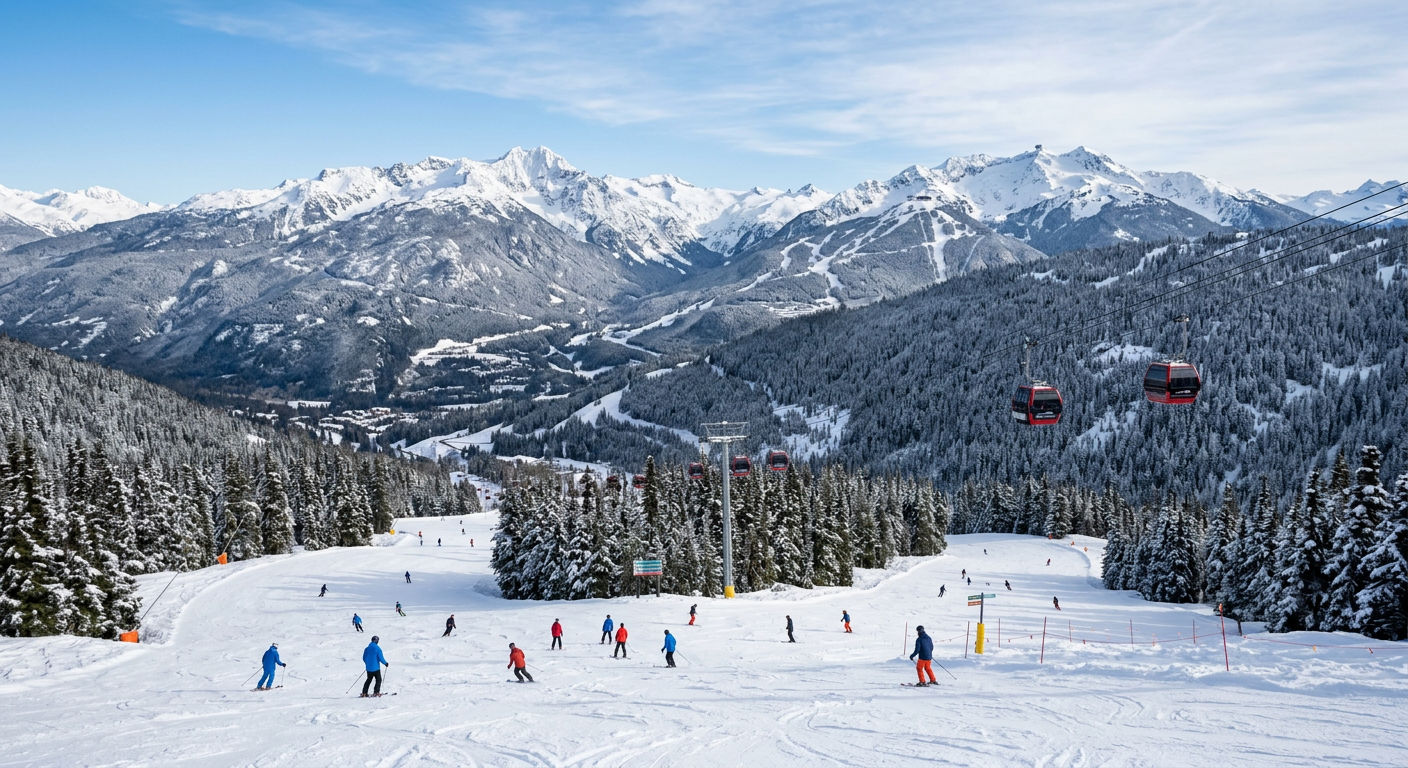
Whistler Blackcomb may seem an unlikely beginner recommendation given its 8,171 acres and reputation for expert terrain, but the resort's sheer scale means its beginner areas are larger than many entire mountains. The dedicated learning zone at the base of Blackcomb covers a substantial area with magic carpet lifts, and the Olympic Station green runs offer wide, well-groomed terrain with mountain views that make even the first day feel significant.
The progression path is clear: green runs from mid-mountain on both Whistler and Blackcomb provide long, gentle descents once the base area is mastered. The Peak 2 Peak gondola — an enclosed, heated ride — connects both mountains without requiring any skiing ability.
Whistler Village provides walkable access to restaurants, shops, and après-ski without the car dependency that affects many North American resorts.
Aspen Buttermilk, Colorado
Aspen's Buttermilk mountain was essentially designed for beginners and intermediates. Of its 470 acres, 35% is rated green and another 39% blue — the inverse of most Aspen mountains. The terrain is wide, the gradient is forgiving, and the views of the Maroon Bells make even basic snowplough turns feel cinematic.
Buttermilk's ski school, part of the broader Aspen Skiing Company programme, has a strong reputation for adult beginner instruction. The Hideout children's area is equally well-regarded, making this one of the best ski resorts for beginners and families.
The key advantage: you're still in Aspen. The same restaurants, the same town character, and the same calibre of accommodation available to skiers on the steeper mountains. Once confidence builds, Snowmass — with its 3,332 acres and extensive intermediate terrain — is a natural progression.
Vail, Colorado
Vail dedicates its entire front side to beginner and intermediate terrain, with wide, tree-lined runs descending into Vail Village and Lionshead. The Eagle's Nest area at mid-mountain provides a gentle, expansive learning zone accessible by gondola — no exposed chairlift required.
Vail's investment in beginner infrastructure is substantial: the Adventure Ridge area includes a dedicated tubing park and snowshoe trails for non-ski days, while the ski school operates one of the largest beginner programmes in North America with small group sizes.
The village itself offers pedestrian-only streets, slope-side dining, and the kind of accommodation quality that justifies the trip regardless of ability level. Vail's 5,317 acres and legendary Back Bowls provide a lifetime of terrain to grow into.
How to Choose the Right Beginner Resort
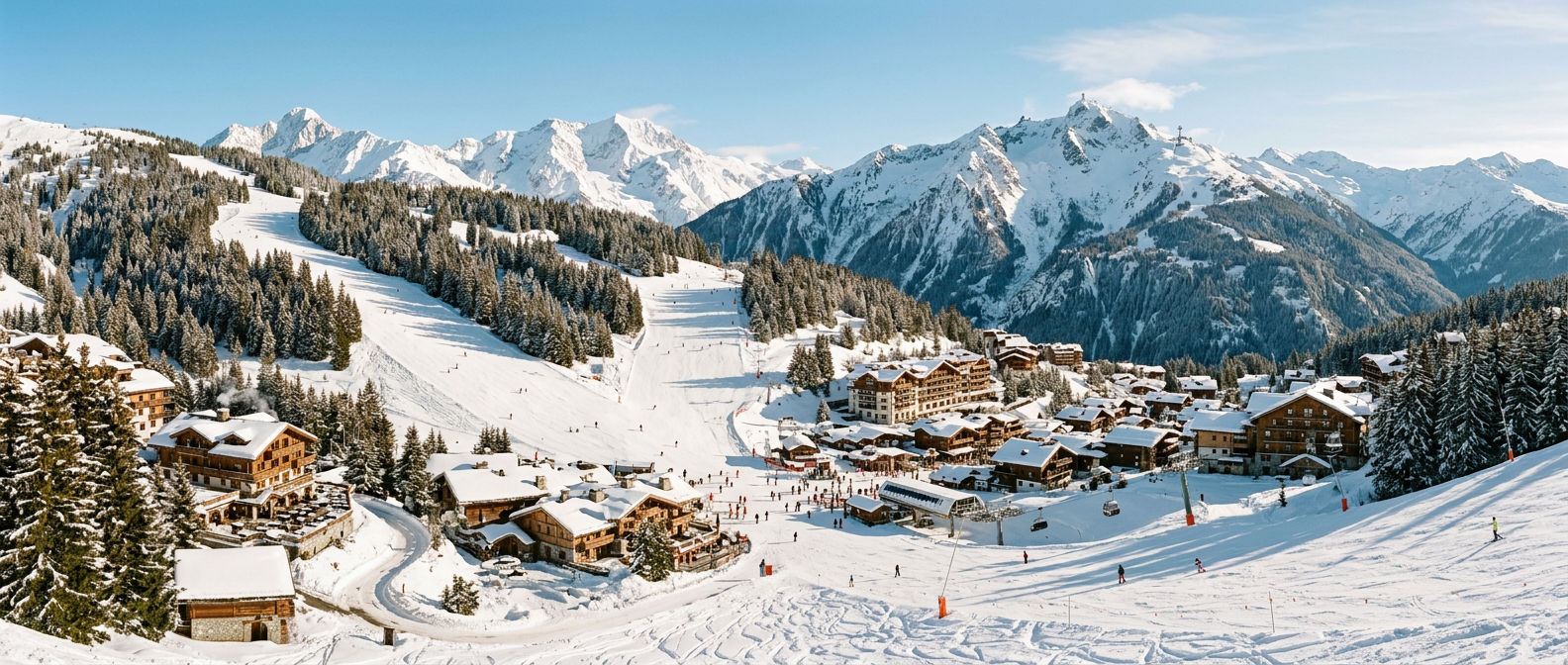
Selecting the best ski resort for beginners depends on what matters beyond the learning curve. The terrain quality across all nine resorts in this guide is excellent — the differentiators are village character, accommodation standards, and the non-skiing experience.
For a refined Alpine experience: Courchevel and Lech offer the highest accommodation standards with effortless access to beginner terrain. Both have a measured pace and a dining culture that makes early finishes feel deliberate rather than defeated.
For the complete mountain town: Whistler and Aspen combine beginner-friendly skiing with walkable villages and enough cultural programming to fill the afternoons. Both suit skiers who want the mountain experience to extend well beyond the lifts.
For maximising future trips: Courchevel (Three Valleys), Whistler (8,171 acres), and Vail (5,317 acres) offer the most terrain to grow into. A first visit as a beginner sets the foundation for years of return trips on progressively more challenging runs.
| Resort | Beginner Terrain | Ski School Quality | Village Character | Grow-Into Potential |
|---|---|---|---|---|
| Courchevel | Excellent — multi-level greens | Top-tier (ESF + private) | Refined, walkable | Three Valleys (600km) |
| Verbier | Good — village-level nursery | Strong | Design-forward | 4 Vallées (410km) |
| Lech | Excellent — wide, groomed | Historic, Austrian tradition | Understated, elegant | Ski Arlberg (305km) |
| Whistler | Excellent — massive base areas | Large programme, good ratios | Lively, walkable village | 8,171 acres |
| Aspen (Buttermilk) | Purpose-built for beginners | Aspen Ski Co. programme | Cultural, sophisticated | 4 mountains, 5,500+ acres |
| Vail | Excellent — front-side focus | One of the largest in NA | Pedestrian, slope-side | 5,317 acres + Back Bowls |
Essential Tips for First-Time Skiers
First-time skiers benefit more from good preparation than natural athletic ability. The difference between an enjoyable first day and a frustrating one typically comes down to three things: properly fitted equipment, realistic expectations, and the right instruction.
Book lessons before you arrive. Ski school spots at the best resorts fill weeks in advance during peak periods. Pre-booking guarantees a place and often secures a lower rate. Three consecutive days of instruction builds more skill than six scattered lessons across two weeks.
Rent equipment at the resort, not online. Shop-fitted boots make more difference than any other piece of equipment. A good boot fitter at the resort will spend 20-30 minutes on the fitting — this is normal and worthwhile. Poorly fitted boots are the primary cause of first-day discomfort.
Choose mid-January or March. Early January crowds have cleared, snow conditions are typically excellent, and ski school availability is better. March offers warmer temperatures and longer days — both meaningful advantages when you're learning outdoors.
Budget for four days minimum. Most beginners describe a breakthrough on day three or four. A two-day trip rarely provides enough time to move past the initial frustration phase and into the satisfying part of learning.
Start Your Ski Trip with Powder Edition
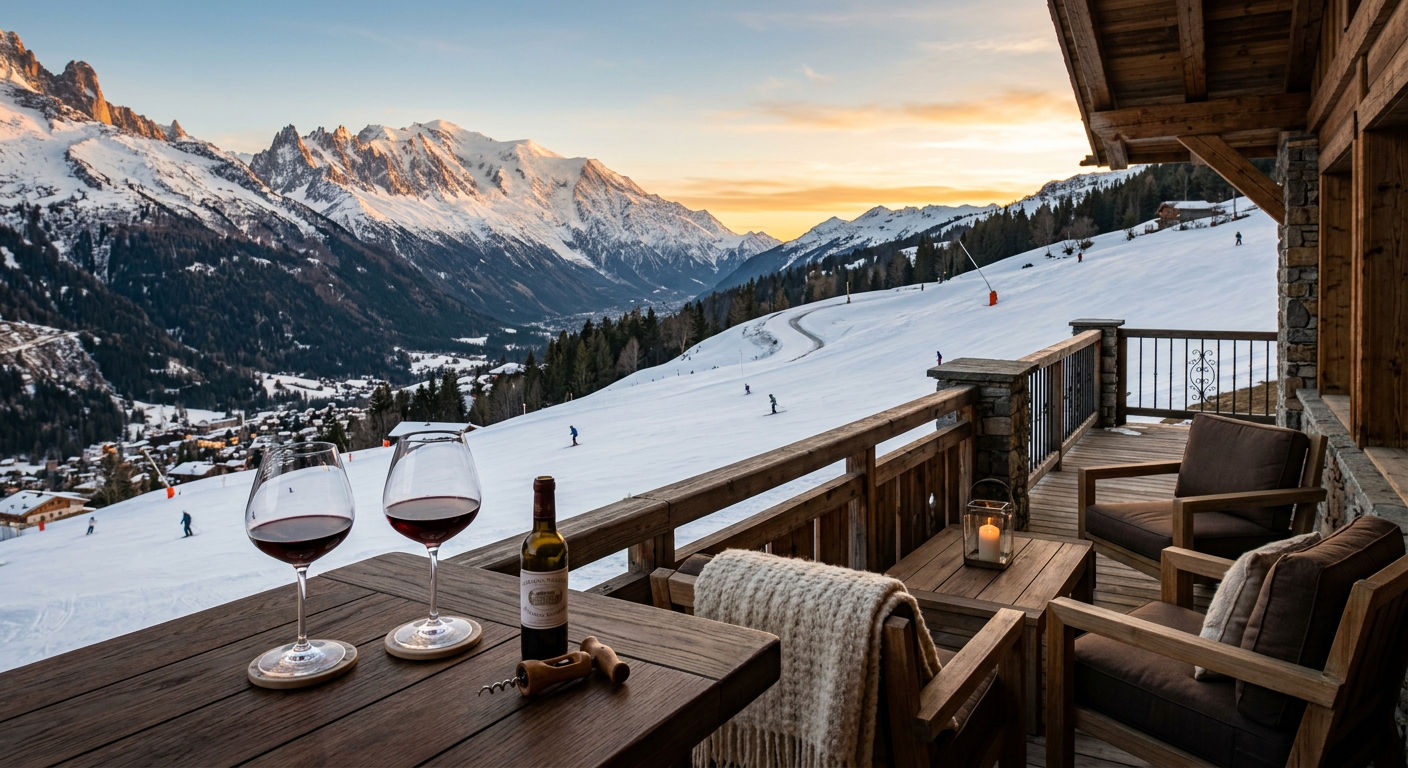
Powder Edition curates mountain properties across the Alps and North America — including resorts that welcome beginners with wide terrain and refined accommodation. Explore chalets in Courchevel, Verbier, Whistler, or browse all destinations.
Frequently Asked Questions
What is the best ski resort for a complete beginner?
Courchevel 1850 in France offers the most complete beginner experience: dedicated nursery slopes in the village centre, a gentle 4.5-kilometre green run for progression, multiple ski school options, and accommodation quality that makes the trip worthwhile from day one. Aspen's Buttermilk is the closest North American equivalent, with 35% green terrain and access to Aspen's dining and cultural scene.
How many days of lessons do beginners need?
Most adult beginners need three to four consecutive days of group or private instruction to feel comfortable on green runs independently. Private lessons accelerate progress — a typical private student can link parallel turns by day three, while group lessons may take five days to reach the same stage. Budget for at least four days of skiing on a first trip.
Are European or North American resorts better for beginners?
Both offer excellent beginner terrain, but the experience differs. European Alps resorts — particularly in France and Austria — provide wider pistes, a more gradual grading system, and a dining culture that rewards early finishes. North American resorts offer more standardised instruction, clearer trail markings, and dedicated beginner zones that are physically separated from advanced terrain.
What should I budget for a first ski trip?
A week-long beginner ski trip to a quality resort typically costs between $3,000 and $6,000 per person including accommodation, lift pass, equipment rental, and lessons. Equipment rental runs $40–70 per day, group lessons $50–100 per half-day, and lift passes $80–150 per day depending on the resort. Booking accommodation with ski-in ski-out access or proximity to the learning area reduces transport costs and daily friction.
Is it worth learning to ski as an adult?
Adult beginners consistently report that skiing becomes one of their most valued winter activities. The initial learning curve is steeper than for children — adults are more self-conscious and more aware of falling — but the progression from first turns to comfortable cruising on blue runs is achievable within a single week of dedicated practice. The key is choosing a resort with proper instruction and terrain that builds confidence gradually.