Best Ski Resorts in Japan: 9 Mountains Worth the Journey

Best Ski Resorts in Japan: 9 Mountains Worth the Journey
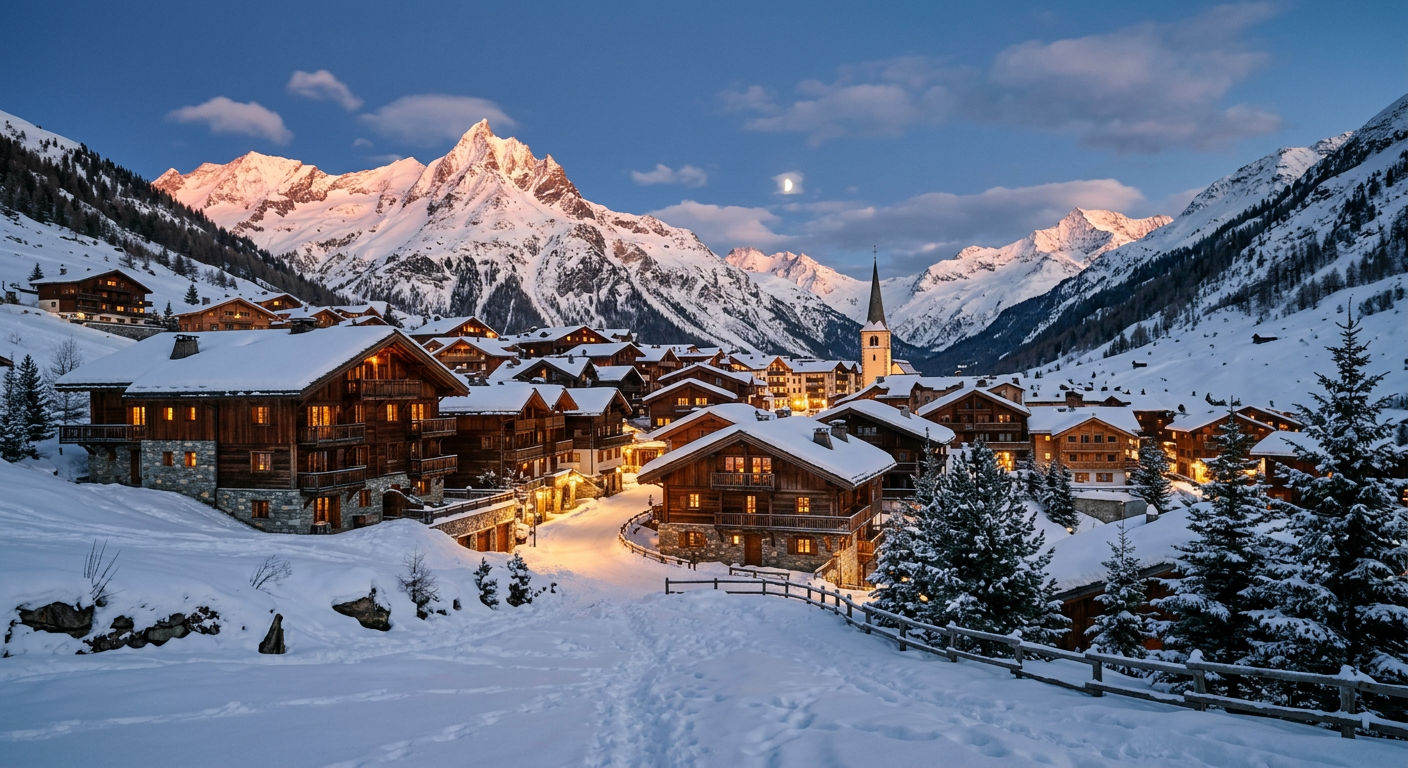
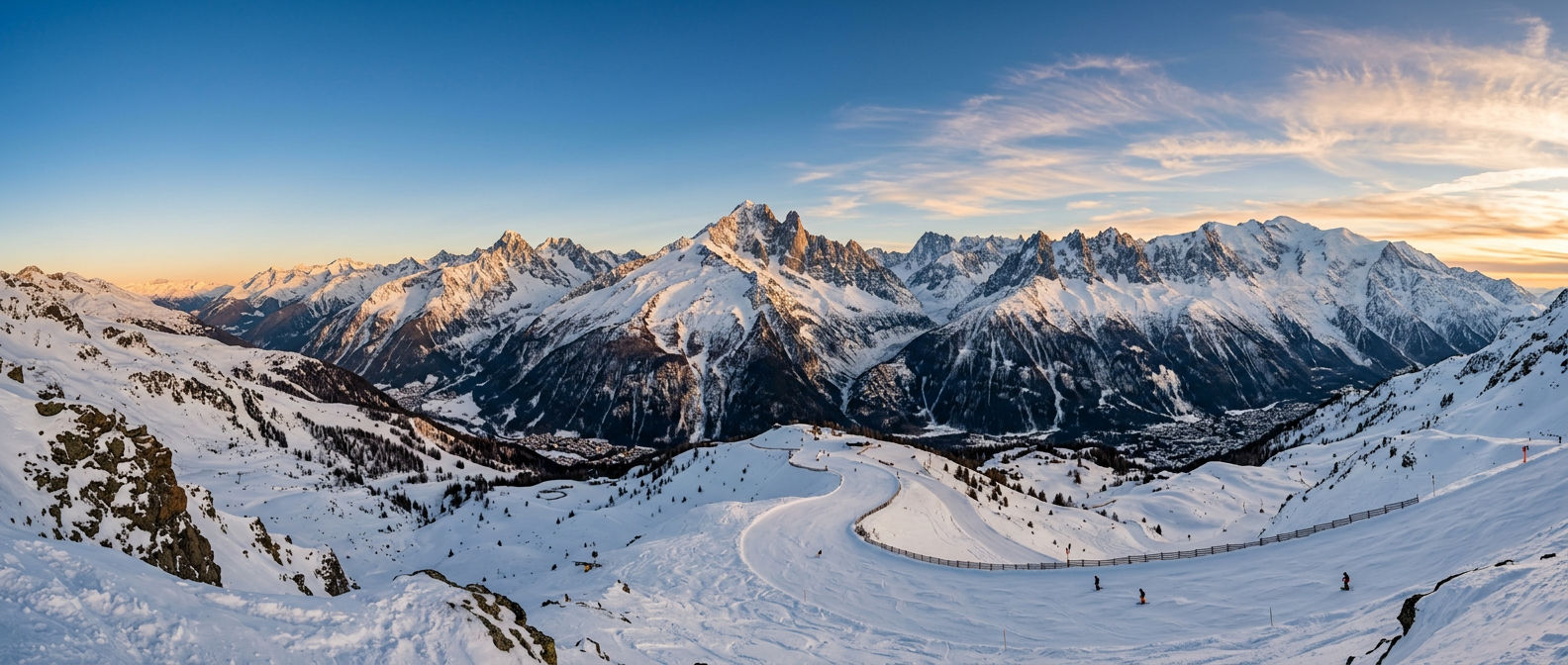
Japan receives some of the deepest, driest snowfall on the planet — a phenomenon the country's devoted skiing community calls "Japow." But Japan offers far more than powder. From centuries-old onsen villages to modern resort complexes, the country's mountains combine world-class terrain with a cultural depth that European and North American resorts rarely match. These nine resorts represent the range and quality of skiing in Japan today.
What Makes Japan's Ski Resorts Distinct
Japan's ski resorts stand apart for three reasons: extraordinary snowfall (several resorts average 10–15 metres annually), a deeply integrated food and bathing culture, and consistently lower prices than comparable resorts in the Alps or Rockies.
The Japanese Alps and Hokkaido's volcanic ranges catch moisture from the Sea of Japan, producing some of the lightest, most consistent powder on earth. Resorts often report 30–50 centimetres of overnight accumulation during peak season.
Beyond the snow, Japan's ski culture revolves around onsen (natural hot spring baths), ramen shops at the base of lifts, and a precision of service that shapes every aspect of the experience. Lift lines move quickly. Groomers run overnight. On-mountain dining often surpasses what you'll find in most European resort towns.
For international visitors, Japan also offers strong value. Multi-day lift passes, quality accommodation, and on-mountain dining typically cost 30–50% less than equivalent experiences in the Alps.
Best Ski Resorts in Hokkaido
Hokkaido captures the heaviest snowfall in Japan, with resorts like Niseko and Kiroro averaging 14–15 metres annually. The island's northerly latitude and Sea of Japan moisture corridors create the deep, dry powder that has drawn an international following over the past two decades.
Niseko
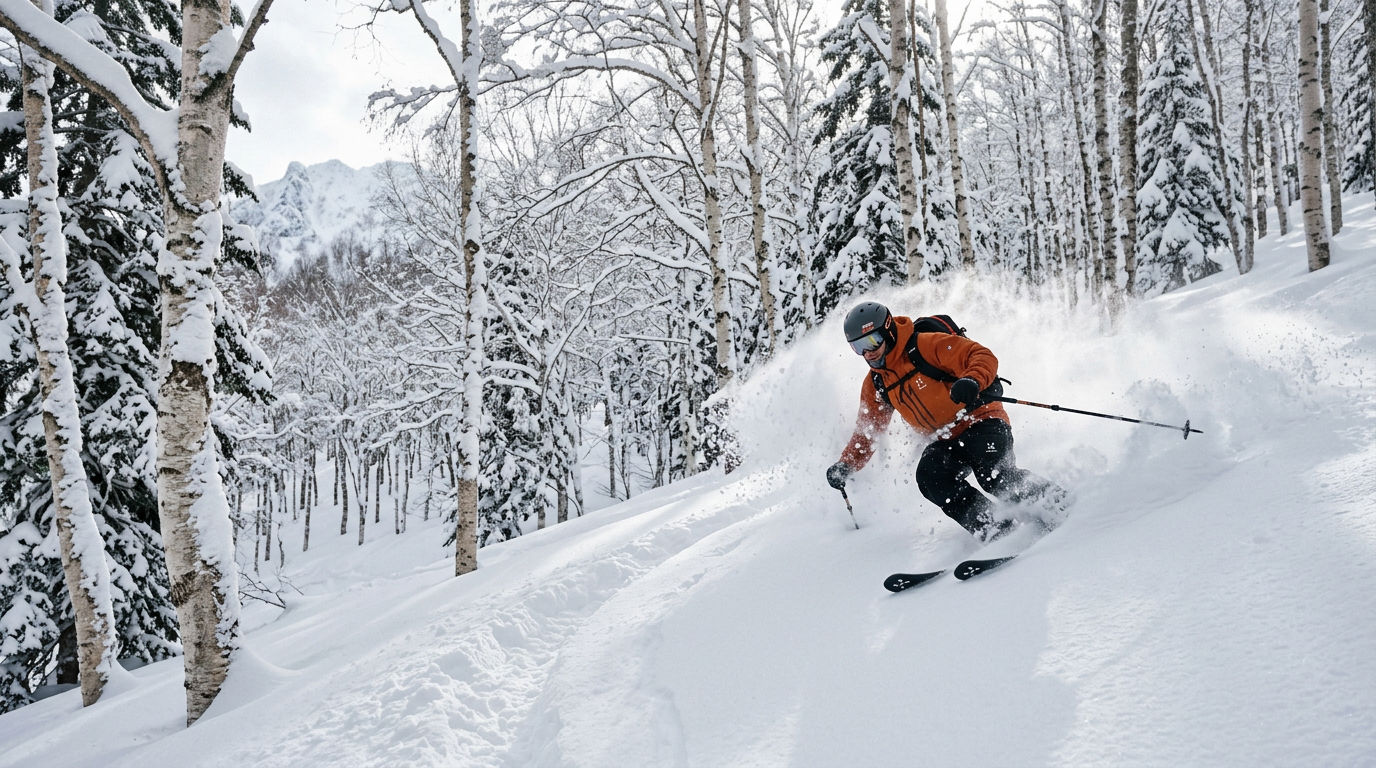
Niseko United — comprising Grand Hirafu, Hanazono, Niseko Village, and Annupuri — is Japan's most internationally recognised ski resort. The four interconnected areas wrap around the base of Mt. Annupuri (1,308m) and offer roughly 30 kilometres of groomed runs alongside extensive off-piste terrain.
The resort averages approximately 15 metres of snowfall per season. Its strong international infrastructure — English-speaking ski schools, Western-style accommodation, and a lively après scene — makes it the most accessible Japanese resort for first-time visitors.
Getting there: roughly 2.5 hours by car or shuttle from New Chitose Airport (Sapporo).
Furano
Furano sits in central Hokkaido, well removed from Niseko's international circuit. The resort offers 23 courses across two zones (Furano and Kitanomine), with terrain rising to a summit elevation of 1,074m.
What distinguishes Furano is its crowd profile. Even during peak season, lift queues rarely exceed a few minutes. The town itself — known for lavender fields in summer — has a quietly appealing local character with strong ramen and curry restaurants.
Getting there: roughly 2 hours from New Chitose Airport or 1 hour from Asahikawa Airport.
Rusutsu
Three interconnected mountains — West Mt., East Mt., and Mt. Isola — offer 37 courses across varied terrain. Rusutsu sits roughly 30 kilometres from Niseko and receives comparable snowfall, but with markedly fewer visitors.
The resort's tree skiing is particularly notable: well-spaced birch forests with pitch angles suited to intermediate and advanced skiers. A gondola connects the mountain complex, making it easy to move between zones throughout the day.
Getting there: roughly 90 minutes from New Chitose Airport.
Kiroro
Kiroro, tucked into the mountains between Niseko and the port city of Otaru, averages roughly 14–15 metres of annual snowfall — making it one of the snowiest resorts in all of Japan. Its relative obscurity keeps crowds low, even during holiday periods.
The resort is compact: 21 courses across two peaks, with most terrain suited to intermediate skiers. Kiroro's proximity to Otaru — roughly 40 minutes by car — makes it a strong option for those combining skiing with a broader Hokkaido itinerary.
Best Ski Resorts in Honshu
Honshu's ski resorts trade Hokkaido's sheer snow volume for proximity to Tokyo and a deeper layer of traditional mountain culture. The Nagano and Niigata prefectures — both accessible by Shinkansen — offer resorts where centuries-old villages sit alongside modern lift infrastructure.
Hakuba Valley
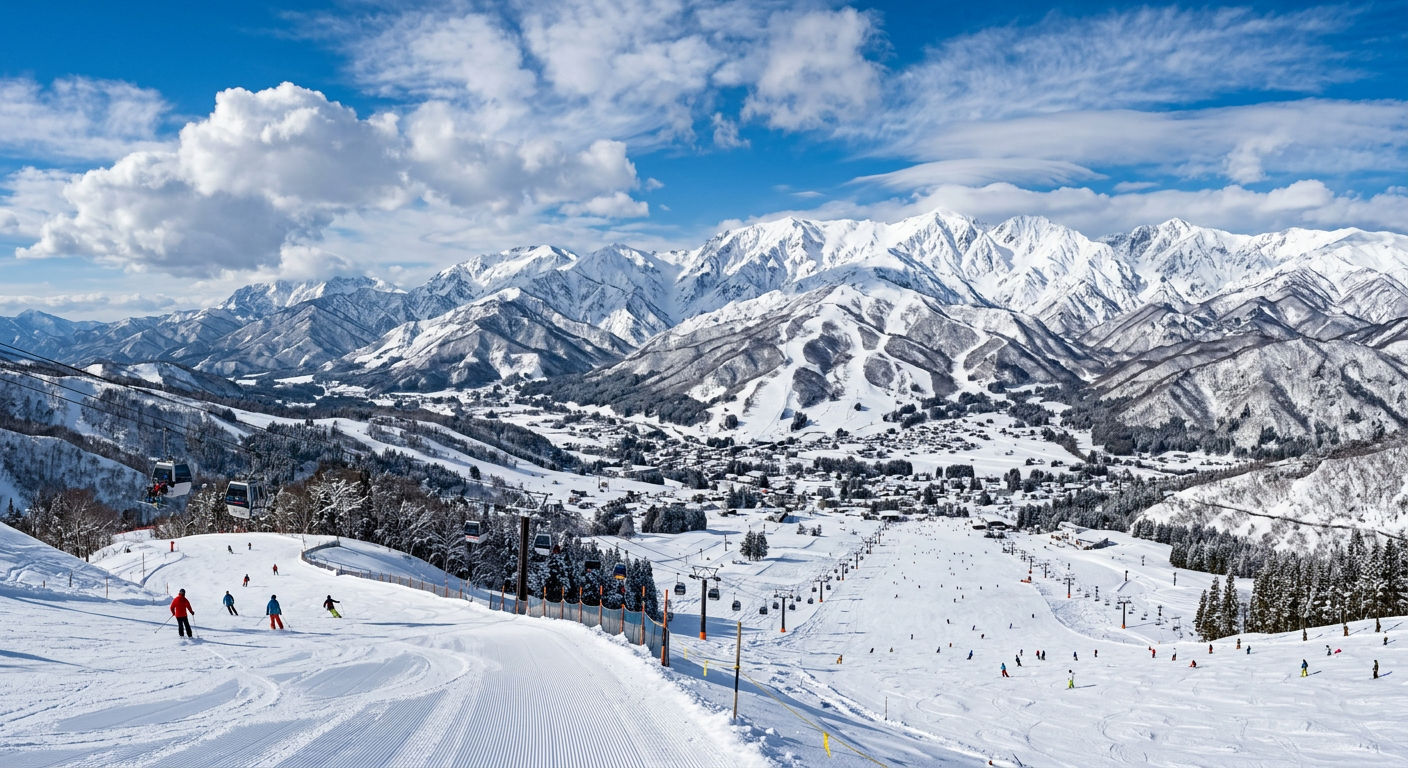
Hakuba hosted alpine events during the 1998 Nagano Winter Olympics and remains Japan's most significant concentration of ski terrain on Honshu. The valley encompasses 10 resorts, of which Happo-One (1,831m summit, roughly 1,070m vertical) is the largest and most varied.
The valley's scale allows progression across resorts: beginners at Hakuba Goryu, intermediates at Happo-One and Hakuba 47, and advanced skiers in the steeps at Cortina and Tsugaike Kogen. A single Hakuba Valley pass covers multiple areas on one ticket.
Getting there: roughly 4 hours from Tokyo via Shinkansen to Nagano, then 1 hour by bus.
Nozawa Onsen

Nozawa Onsen is a working mountain village that happens to have a ski resort above it — not the other way around. Thirteen free public bathhouses, fed by natural hot springs, thread through narrow streets lined with wooden buildings and small inns.
The resort itself offers over 50 courses across a vertical drop of roughly 1,085m, with reliable natural snow averaging 11–12 metres per season. Nozawa's off-piste terrain, particularly in the Yamabiko area near the summit, draws intermediate to advanced skiers seeking untracked lines.
Getting there: roughly 2.5 hours from Tokyo via Shinkansen to Iiyama, then 25 minutes by bus.
Discover rentals in Nozawa Onsen
Myoko Kogen
Myoko Kogen, in Niigata prefecture, is one of the snowiest ski areas on the planet. Annual snowfall regularly exceeds 12 metres, and the resort's steep, tree-lined terrain makes full use of every centimetre.
Several interconnected areas — Akakura Onsen, Akakura Kanko, Suginohara, and Ikenotaira — cater to different ability levels, though Myoko's reputation rests primarily on its expert-level tree skiing and backcountry access. The resort has a quieter, more Japanese-focused atmosphere than Niseko or Hakuba.
Getting there: roughly 2.5 hours from Tokyo via Shinkansen to Joetsumyoko Station, then 30 minutes by bus.
Shiga Kogen
Shiga Kogen is Japan's largest interconnected ski area: 21 resorts linked by lifts and shuttle buses across a high-altitude plateau. The base sits at roughly 1,340m — unusually high for Japan — which extends the season and improves snow quality at altitude.
The sheer variety is the draw. A single pass covers everything from wide groomers to steep, rarely tracked powder fields. The area also sits adjacent to Jigokudani Monkey Park, where wild Japanese macaques bathe in hot springs — a memorable side trip for non-skiing days.
Appi Kogen
Appi Kogen, in Iwate prefecture, is northern Honshu's largest and most polished resort. Wide, well-groomed runs across 21 courses make it particularly well suited to intermediate skiers and families.
The resort's service quality is notably high, even by Japanese standards. Its remote location — roughly 2 hours from Morioka Station by bus — keeps visitor numbers manageable. Night skiing on floodlit runs extends the ski day considerably.
How to Choose the Right Japanese Ski Resort
The best Japanese ski resort for your trip depends on three factors: whether you prioritise snow depth, cultural immersion, or ease of access from Tokyo. Hokkaido delivers the deepest powder; Honshu offers the richest cultural experience and faster access from the capital.
| Resort | Region | Annual Snowfall | Best For | Access from Major Airport |
|---|---|---|---|---|
| Niseko | Hokkaido | ~15m | International atmosphere, night skiing | New Chitose (2.5h) |
| Furano | Hokkaido | ~9m | Quiet powder, local culture | New Chitose (2h) |
| Rusutsu | Hokkaido | ~14m | Tree skiing, low crowds | New Chitose (1.5h) |
| Kiroro | Hokkaido | ~15m | Deep snow, families | New Chitose (1.5h) |
| Hakuba | Nagano | ~11m | Olympic terrain, variety | Tokyo Narita (4h) |
| Nozawa Onsen | Nagano | ~12m | Onsen village, culture | Tokyo (2.5h via rail) |
| Myoko Kogen | Niigata | ~13m | Expert terrain, deep snow | Tokyo (3h via rail) |
| Shiga Kogen | Nagano | ~10m | Scale, snow monkeys | Tokyo (3.5h via rail) |
| Appi Kogen | Iwate | ~8m | Families, groomed runs | Morioka (2h) |
For first-time visitors to Japan, Niseko or Hakuba provides the most straightforward entry point. Niseko's English-speaking infrastructure and direct airport access suit those prioritising convenience. Hakuba's Olympic-scale terrain and Shinkansen connection from Tokyo offer greater variety.
For repeat visitors seeking deeper immersion, Nozawa Onsen, Myoko Kogen, and Furano reward the effort with fewer crowds and stronger local character.
Planning Your Japan Ski Trip

Japan's ski season runs from mid-December through late March, with peak powder conditions typically falling between mid-January and late February. International flights to New Chitose (Sapporo) or Narita/Haneda (Tokyo) provide access to all major resort areas.
Season timing. December offers early-season coverage, though some higher terrain may not fully open until late December. January and February bring the heaviest, most consistent snowfall. March brings warmer temperatures and spring conditions, particularly at lower elevations.
Getting around. The Japan Rail Pass covers Shinkansen routes to Nagano, Niigata, and Morioka — useful for reaching Honshu resorts. Hokkaido resorts typically require a domestic flight to New Chitose Airport followed by a car transfer or resort shuttle.
Accommodation. Japanese ski accommodation ranges from traditional ryokan (inns with tatami rooms and kaiseki dinner) to modern condo-style properties. Niseko and Hakuba offer the widest range of Western-style accommodation, including ski-in ski-out chalets.
Lift passes. Multi-day passes at most Japanese resorts cost ¥15,000–25,000 (roughly $100–170 USD) for three days — significantly less than comparable passes in the Alps or Rockies. The Hakuba Valley pass covers 10 resorts on a single ticket.
Dining. On-mountain and base-area restaurants in Japan consistently outperform their Western counterparts in both quality and value. Expect excellent ramen, katsu curry, and soba at most resort cafeterias for ¥1,000–1,500 ($7–10 USD) per meal.
Powder Edition curates a select collection of ski properties across Japan's most sought-after resorts. Explore chalets in Niseko, Hakuba, Nozawa Onsen, or browse all destinations.
Frequently Asked Questions
What is the best ski resort in Japan for powder?
Niseko, Kiroro, and Myoko Kogen consistently deliver the deepest powder in Japan. Niseko averages roughly 15 metres of snowfall annually and offers extensive off-piste access. Myoko Kogen, while less well-known internationally, receives comparable snowfall with far fewer visitors competing for fresh tracks.
When is the best time to ski in Japan?
Mid-January through late February offers the most reliable powder conditions across both Hokkaido and Honshu. This window aligns with peak snowfall cycles driven by cold air masses crossing the Sea of Japan. Early March can still produce good snow at higher elevations, though conditions become more variable.
How much does a ski trip to Japan cost?
A week-long ski trip to Japan typically costs less than an equivalent trip to the Alps or Rockies. Lift passes run roughly $35–55 USD per day, mid-range accommodation $80–200 per night, and on-mountain meals $7–15. Return flights from North America or Europe to Tokyo or Sapporo generally range from $600–1,200 depending on season and booking timing.
Can beginners ski in Japan?
Several Japanese resorts cater well to beginners. Hakuba Goryu, Appi Kogen, and Niseko Annupuri all offer gentle, well-groomed slopes alongside quality ski schools with English-speaking instructors. Niseko's international ski schools are particularly well regarded for first-time skiers.
Do I need to speak Japanese to ski in Japan?
Niseko and Hakuba have the strongest English-language infrastructure, including signage, ski schools, and restaurant menus. At smaller resorts like Furano, Nozawa Onsen, and Myoko, basic Japanese phrases help, though most lift operations and hotel front desks manage essential communication in English. Translation apps bridge most remaining gaps effectively.
Is Japan better than the Alps for skiing?
Japan and the Alps offer fundamentally different experiences. Japan excels in powder quality, value, and cultural integration — onsen, cuisine, and service are woven into the ski day itself. The Alps offer larger interconnected ski areas, higher elevations, and a wider range of luxury accommodation. Many committed skiers alternate between the two rather than choosing one over the other.