Ski Holiday in Hokkaido: A Complete Guide to Japan's Powder Capital
Ski Holiday in Hokkaido: A Complete Guide to Japan's Powder Capital
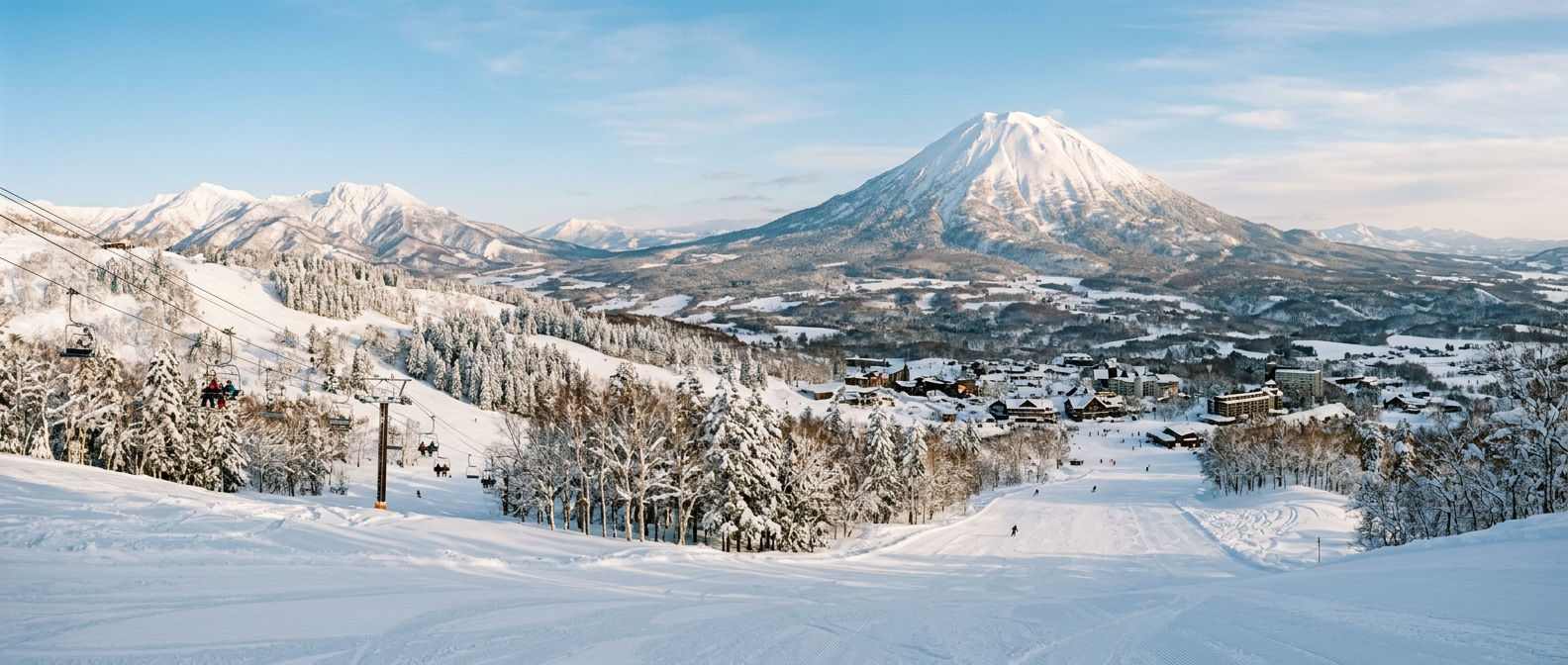
Hokkaido averages over 14 metres of snowfall each winter — more than double what most European resorts receive. That snow, driven by cold Siberian air crossing the Sea of Japan, arrives as some of the driest, lightest powder on earth. A ski holiday in Hokkaido pairs this extraordinary snow record with onsen hot springs, a food culture built on fresh seafood and Sapporo ramen, and a hospitality tradition that makes even the most seasoned traveller slow down. This guide covers which resorts to choose, when to go, how to get there, and what to expect beyond the ski runs.
Why Hokkaido Has the Best Powder Snow in the World
Hokkaido's snowfall is driven by a specific meteorological phenomenon: Siberian air masses pick up moisture over the warm Sea of Japan and deposit it as ultra-dry powder across the island's mountain ranges. The result is snow with a water content of just 4–8%, compared to 12–20% in the Alps. Locals call it "Japow."
This translates to skiing conditions that are almost impossibly light. Resorts like Niseko report over 15 metres of cumulative snowfall in peak seasons. Furano averages 9 metres. Even smaller resorts like Rusutsu and Kiroro receive 10–13 metres annually.
The consistency matters as much as the volume. Between December and early March, Hokkaido sees snowfall on roughly 70% of days. Multi-day dry spells are rare.
| Resort | Average Annual Snowfall | Base Elevation | Vertical Drop |
|---|---|---|---|
| Niseko United | 14–15m | 260m | 889m |
| Rusutsu | 10–13m | 400m | 648m |
| Furano | 8–9m | 245m | 939m |
| Kiroro | 10–12m | 570m | 610m |
| Tomamu | 7–8m | 660m | 540m |
Niseko: Hokkaido's Most International Ski Resort
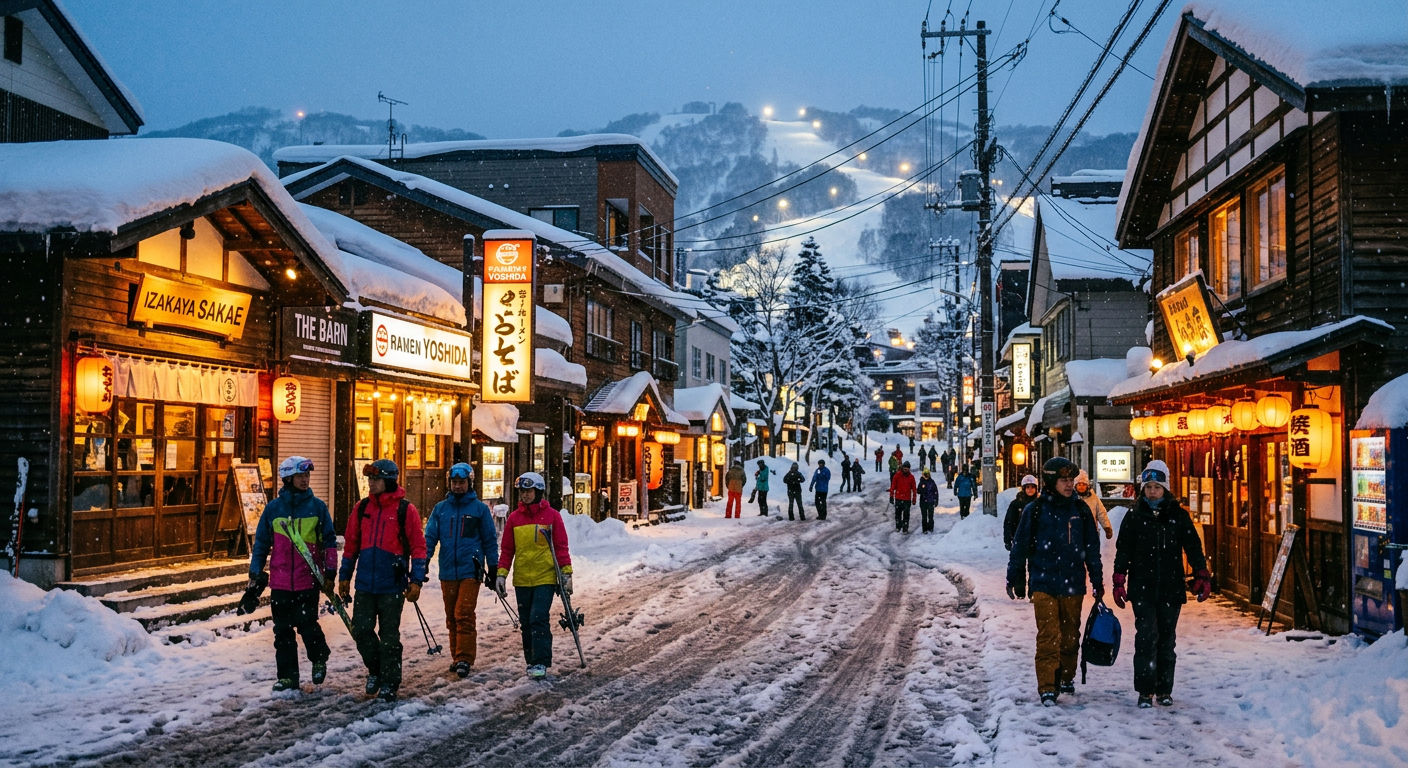
Niseko United is the most established destination for international visitors planning a ski holiday in Hokkaido. Four interconnected resorts — Grand Hirafu, Hanazono, Niseko Village, and Annupuri — share 72 runs across 887 metres of vertical, all accessible on a single lift pass.
Grand Hirafu has the widest range of restaurants, bars, and accommodation. Hanazono is quieter, with marked tree runs and a terrain park. Annupuri draws intermediates with wide groomed trails and fewer crowds.
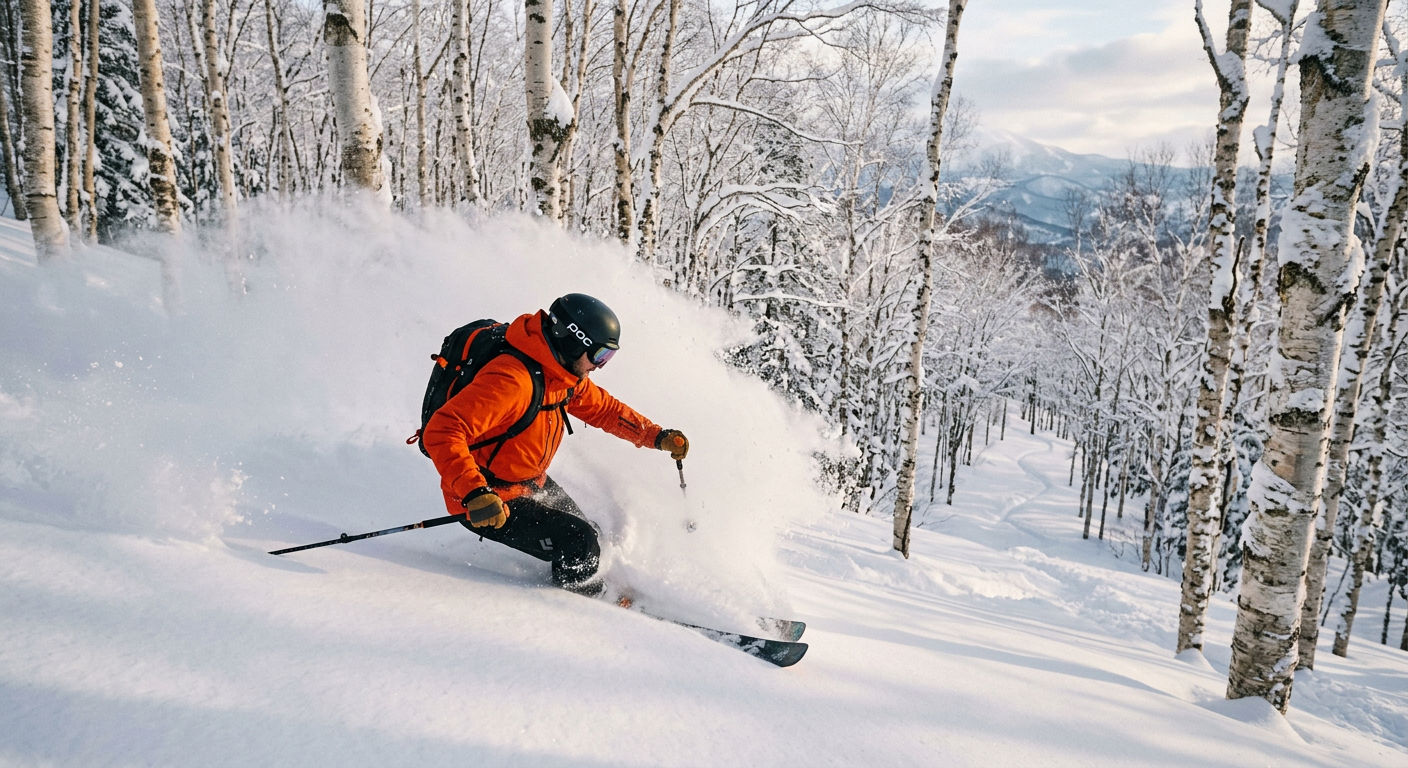
What sets Niseko apart is its off-piste policy. Unlike most Japanese resorts, Niseko allows backcountry access through designated gates — a rarity in a country where ski patrol culture historically kept skiers on-piste. The gate system opens after snowfall, giving access to birch glades and steep chutes above the resort boundary.
Accommodation ranges from slope-side apartments to design-forward chalets with private onsen. Explore our collection of Niseko properties to see what's available this season.
Getting to Niseko
New Chitose Airport (Sapporo) is the main gateway, with direct flights from Tokyo, Osaka, and seasonal international routes from Singapore, Hong Kong, and Sydney. The transfer to Niseko takes approximately 2.5 hours by car or 3 hours by bus. A rail option runs to Kutchan Station (20 minutes from the resort) via Otaru.
Beyond Niseko: Four Hokkaido Resorts Worth Considering
Niseko draws the most attention, but skiing in Hokkaido extends well beyond one resort. These four alternatives offer fewer crowds, strong snowfall, and distinct character.
Furano sits in central Hokkaido and receives consistent dry powder with far fewer international visitors than Niseko. The resort covers 24 runs with a 939-metre vertical drop — the largest in Hokkaido. The town itself is known for lavender fields in summer and a thriving local food scene year-round.
Rusutsu is 30 minutes from Niseko and offers three interconnected peaks with 37 runs. Tree skiing here is exceptional, with well-spaced birch glades that rarely get tracked out. The resort has invested heavily in its hotel and facilities, though the village lacks Niseko's dining scene.
Kiroro operates just 40 minutes from Otaru and appeals to those who want reliable powder without the crowds. Two peaks offer 23 runs, and the resort's location on the coast-facing side of the mountains means it catches the first snowfall from Siberian weather systems.
Tomamu combines skiing with a resort complex that includes an ice village, indoor wave pool, and cloud-viewing terrace. The skiing covers 29 runs across a modest vertical, making it better suited to intermediates and families than advanced powder seekers.
When to Plan Your Hokkaido Ski Holiday
The ski season in Hokkaido typically runs from late November to early May, but the optimal window depends on priorities.
December to February delivers the deepest, most consistent powder. January is statistically the snowiest month, with base depths regularly exceeding 3 metres at upper elevations. Temperatures hover between -5°C and -15°C. This is prime season for a Japan ski vacation, and accommodation books early — particularly over the New Year and Chinese New Year periods.
March brings longer days, warmer temperatures, and lighter crowds. Snow continues to fall, though the powder becomes slightly heavier. For skiers who prefer groomed runs and spring conditions, March offers exceptional value.
Early season (late November–mid December) can be hit or miss. Coverage is building but not yet reliable across all terrain. However, early arrivals occasionally strike first powder before the main rush.
| Period | Snow Quality | Crowds | Temperature | Best For |
|---|---|---|---|---|
| Late Nov–mid Dec | Building | Low | -3 to -10°C | Early birds, budget-conscious |
| Jan–Feb | Peak powder | High | -5 to -15°C | Powder seekers, serious skiers |
| March | Spring powder | Moderate | -2 to -8°C | Mixed groups, value seekers |
| April–May | Spring corn | Low | 0 to 5°C | Late season, warm weather |
Onsen, Food, and What to Do Off the Mountain
A ski holiday in Hokkaido is as much about the culture as the skiing. Unlike European or North American ski towns, the rhythm here bends toward hot springs, seasonal food, and deliberate quiet.
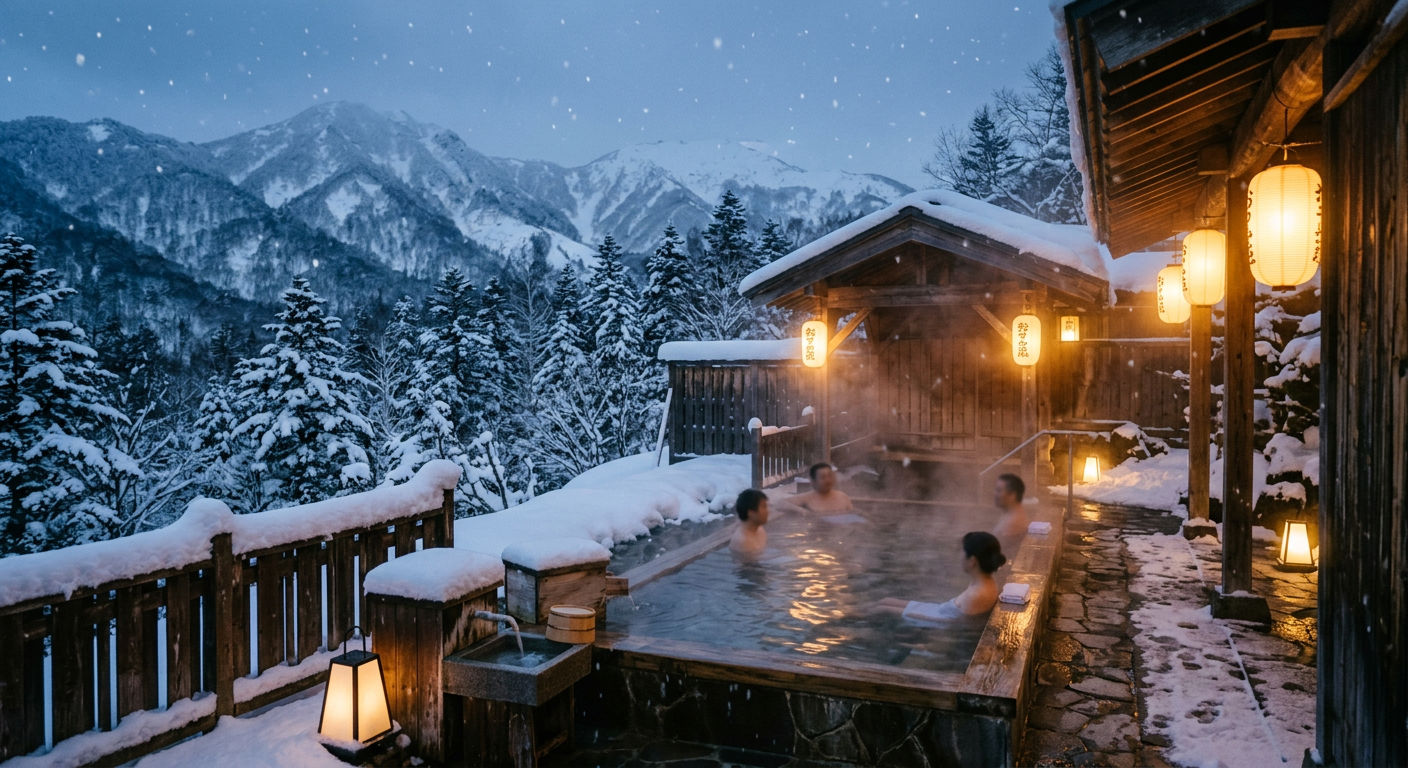
Onsen are integral to the Hokkaido experience. Most resorts and many hotels have their own onsen facilities, and standalone options abound. In Niseko, Yukichichibu and Goshiki onsen are well-regarded. Noboribetsu, a 90-minute drive from Niseko, is one of Japan's most celebrated hot spring towns, with water sourced from volcanic vents at temperatures exceeding 45°C.
Food in Hokkaido is considered among the best in Japan. Sapporo is the birthplace of miso ramen. Otaru specialises in sushi made with fish landed hours earlier. In resort towns, izakaya (informal Japanese pubs) serve seasonal dishes: grilled Hokkaido lamb, snow crab, uni (sea urchin), and kaisen-don (seafood rice bowls).
Sapporo is 2–3 hours from most ski resorts and worth a day trip or overnight. The Sapporo Snow Festival (early February) draws over 2 million visitors with monumental ice sculptures. The city's craft beer scene, centred around Sapporo Beer Garden and newer microbreweries, offers a welcome contrast to resort evenings.
How to Plan Your Trip: Flights, Transfers, and Costs
Flights: Most international travellers fly into Tokyo (Narita or Haneda) and connect domestically to New Chitose Airport near Sapporo. Domestic flights take 1 hour 45 minutes. ANA and JAL both offer Japan Explorer fares for international visitors, significantly reducing the cost of domestic legs.
Transfers: From New Chitose to Niseko, shared shuttle buses (Hokkaido Resort Liner, SkyBus) run 3–4 times daily in peak season for approximately ¥5,000–7,000 one way. Private transfers cost ¥40,000–50,000 per vehicle. The JR rail line to Kutchan is scenic but slower.
Lift passes: A Niseko United all-mountain pass costs approximately ¥7,800/day for adults (2025/26 rates). Multi-day passes reduce the daily rate by 10–15%. Furano and Rusutsu are typically 20–30% less expensive than Niseko.
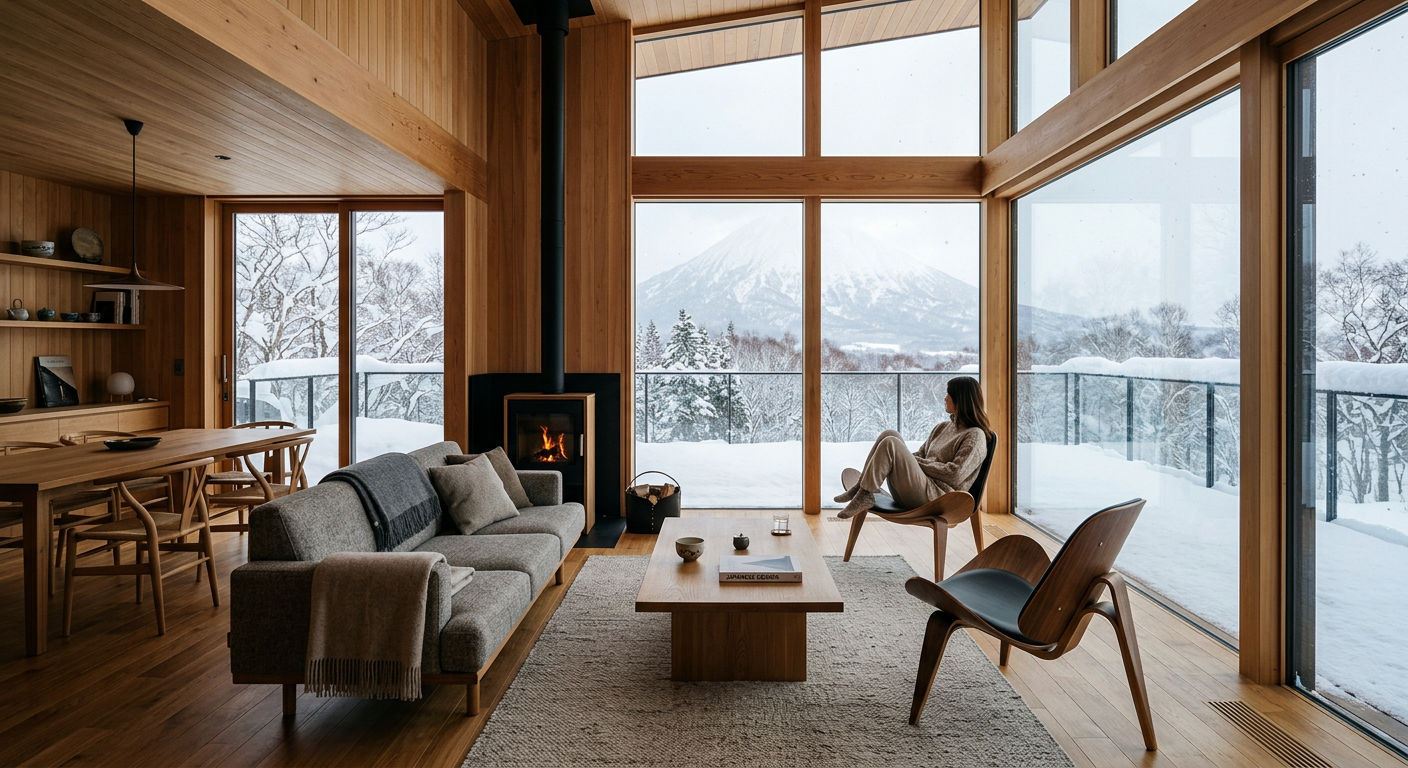
Accommodation: Ranges widely. A well-located apartment in Hirafu starts around ¥25,000/night. Design-led chalets and full-service lodges in Niseko range from ¥80,000–250,000/night. Browse properties in Niseko or explore Hakuba options for current availability.
Budget estimate for two (7 nights, mid-season):
| Category | Budget Range (per person) |
|---|---|
| Flights (return, intl + domestic) | ¥150,000–250,000 |
| Accommodation (7 nights, shared) | ¥90,000–350,000 |
| Lift passes (6 days) | ¥40,000–50,000 |
| Food & drink | ¥70,000–120,000 |
| Transfers & transport | ¥15,000–30,000 |
| Total per person | ¥365,000–800,000 |
At current exchange rates (March 2026): approximately $2,400–5,300 USD or £1,900–4,200 GBP per person.
Discover Hokkaido with Powder Edition
Powder Edition curates ski properties in Hokkaido's finest resort areas, from contemporary chalets in Niseko to considered lodges near Hakuba's backcountry. Explore our Niseko collection, browse chalets in Hakuba, or view all destinations to begin planning your Japan ski vacation.
Frequently Asked Questions
Is Hokkaido good for beginner skiers?
Hokkaido resorts are well suited to beginners. Niseko Annupuri and Furano both have wide, well-groomed green runs with gentle gradients. English-speaking ski schools operate throughout Niseko, and lesson quality is generally high. The light powder also makes falls softer and learning less intimidating than on packed European slopes.
What is the best month to ski in Hokkaido?
January delivers the most consistent deep powder, with snowfall occurring on roughly 70% of days and base depths exceeding 3 metres. February is nearly as reliable with slightly longer days. March suits those who prefer groomed runs and lighter crowds, though fresh powder still falls regularly.
How does Niseko compare to European ski resorts?
Niseko's skiable terrain (887m vertical, 72 runs) is smaller than major Alpine resorts like Courchevel or Verbier. The draw is snow quality rather than ski area size — Niseko's 14-metre average annual snowfall dwarfs most European totals. Off-piste access, onsen culture, and Japanese cuisine make it a fundamentally different experience from an Alps ski holiday.
Do I need to speak Japanese to ski in Hokkaido?
In Niseko, English is widely spoken across hotels, restaurants, ski schools, and rental shops. The resort has a significant Australian, British, and Singaporean visitor base. Outside Niseko — at Furano, Rusutsu, or Kiroro — English is less common, but resort signage is typically bilingual and translation apps handle most situations.
Can I combine Hokkaido skiing with other Japan destinations?
A common itinerary pairs 5–7 days of skiing in Hokkaido with 3–4 days in Tokyo or Kyoto. Domestic flights from Sapporo to Tokyo take under 2 hours. Some travellers also add Hakuba (Nagano Prefecture) for a second ski area — accessible by bullet train from Tokyo in under 2 hours. View Hakuba properties for options.
Is Hokkaido expensive compared to the Alps?
On-mountain costs in Hokkaido are generally 20–40% lower than top-tier Alpine resorts. Lift passes, dining, and mid-range accommodation are notably more affordable. High-end chalets in Niseko have reached European price levels, but the overall trip cost — including flights — remains competitive, particularly given the yen's recent weakness against Western currencies.