Chalet Val d'Isère: A Guide to Renting in France's Most Revered Ski Resort
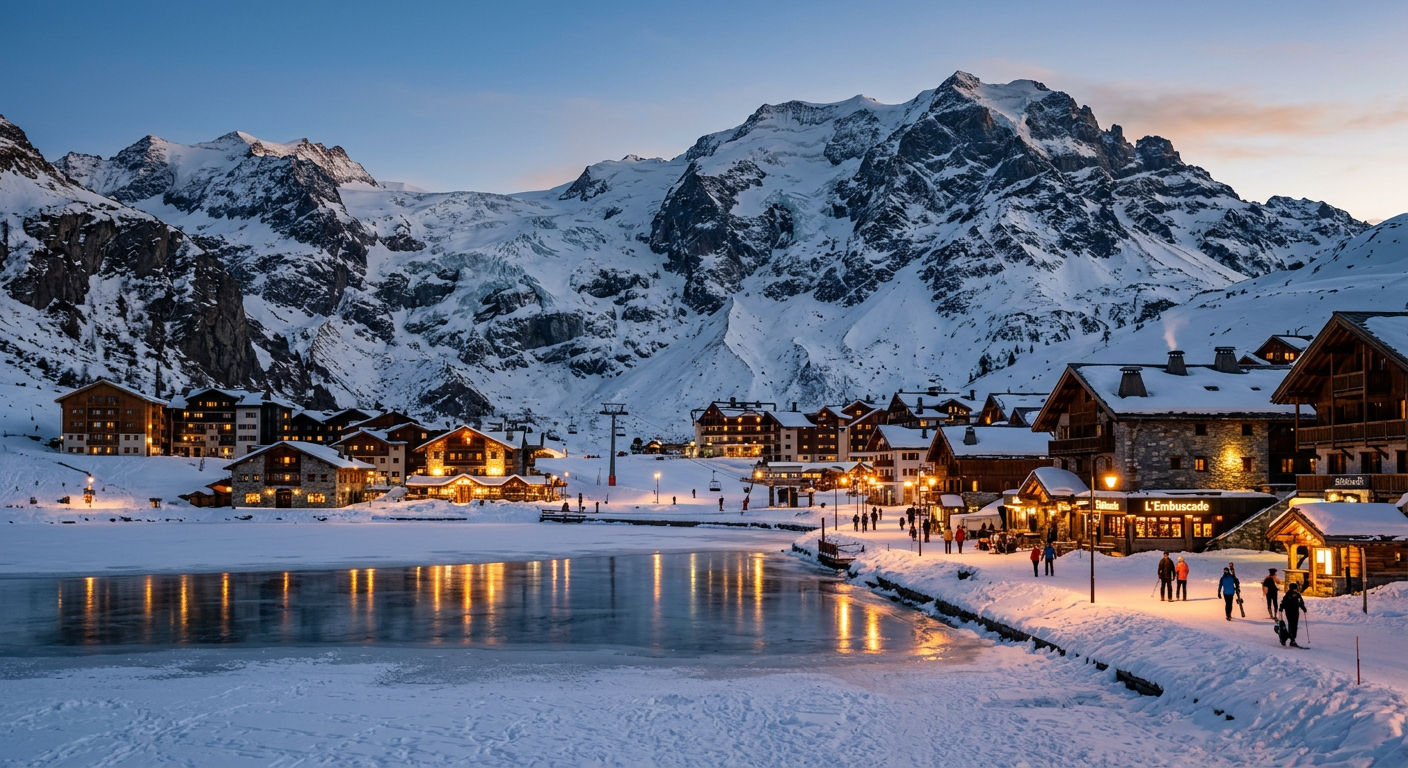
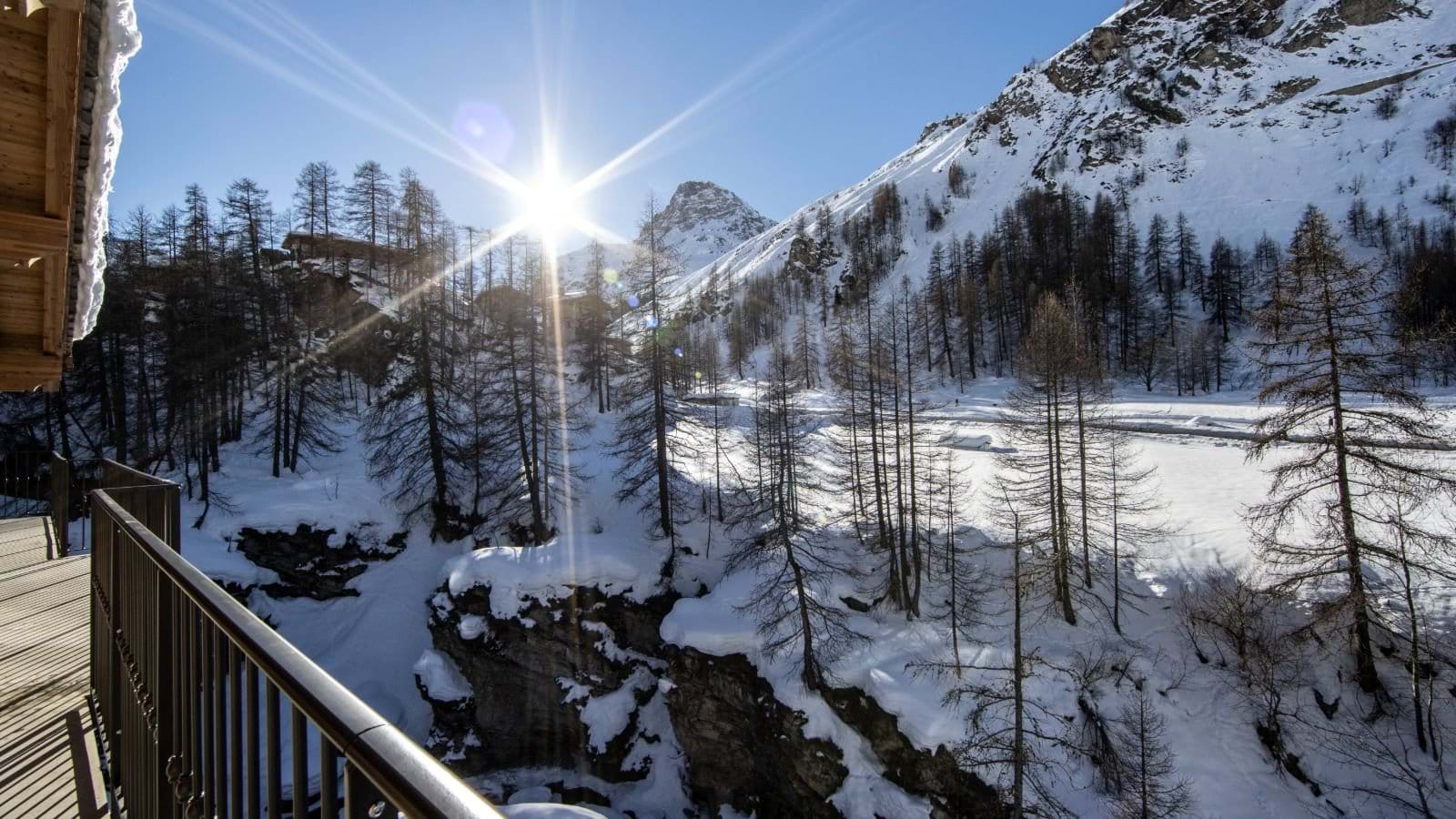
Val d'Isère sits at 1,850 metres in the Tarentaise Valley, high enough to guarantee snow from late November through early May. The resort shares the Espace Killy ski area with neighbouring Tignes — 300 kilometres of marked runs across two valleys — yet retains the feel of a working Savoyard village rather than a purpose-built station. For chalet rentals, it is one of the deepest markets in the Alps, with accommodation ranging from intimate slope-side apartments to fully staffed residences that sleep twenty or more.
Why Val d'Isère Draws Chalet Guests Year After Year
Val d'Isère consistently ranks among the top three ski destinations in France for chalet accommodation, alongside Courchevel and Méribel. What sets it apart is the combination of altitude, terrain variety, and a compact village where nearly everything is walkable.
The resort's 1,850-metre base altitude means the snowpack holds well into April, making it one of the most reliable destinations in the French Alps. The Espace Killy area rises to 3,456 metres at the Grande Motte glacier, offering some of the longest vertical descents in Europe.
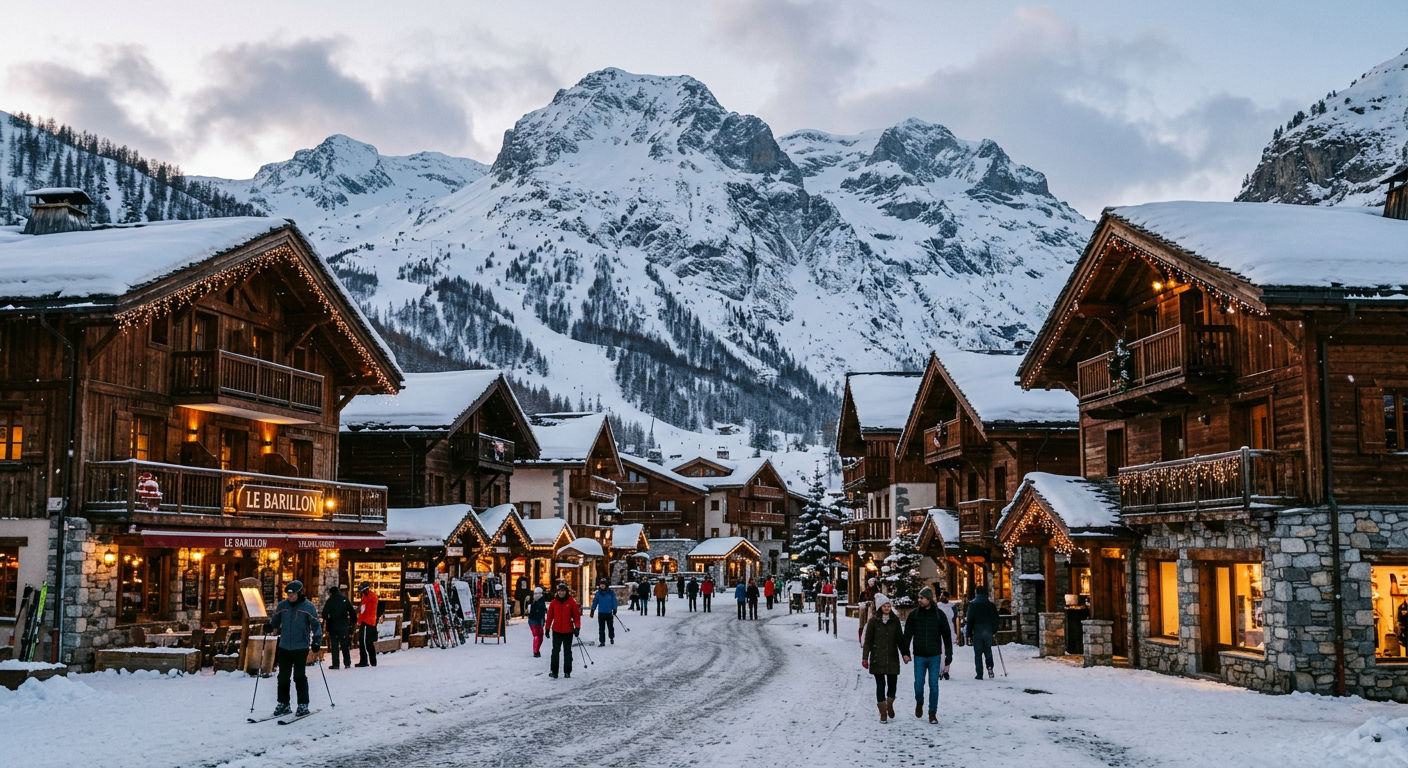
Beyond the skiing, Val d'Isère has a genuine village character. The main street — Avenue Olympique — runs through a core of stone-and-timber buildings with restaurants, wine bars, and independent shops. It is neither sterile nor contrived, and guests who return season after season often cite this atmosphere as the reason.
In our current collection, we list over 220 properties in Val d'Isère — the second-largest portfolio of any resort on Powder Edition, behind only Courchevel. Of these, 133 are chalets, 58 are apartments, and the remainder are hotels and lodges.
Val d'Isère Neighbourhoods: Where to Base Your Stay
The resort divides into distinct areas, each with a different character and proximity to lifts. Choosing the right neighbourhood shapes the entire holiday.
Le Centre (Village Core)
The heart of Val d'Isère, centred on Avenue Olympique. Properties here sit within walking distance of the Olympique gondola, restaurants, and shops. It is the most convenient base for guests who want to step out the door and into the village after skiing. Noise levels run higher during peak weeks, particularly around the après-ski bars on Rue du Fornet.
La Daille
At the western end of the resort, La Daille is home to the Funival funicular — the fastest lift link to the Bellevarde sector. Properties here tend to offer better ski-in/ski-out access and slightly lower prices than the village core. The trade-off is a quieter evening scene; a free shuttle runs to the centre every ten minutes.
Le Fornet
The easternmost hamlet, Le Fornet sits at the foot of the Col de l'Iseran and offers direct access to the Fornet cable car. It is the quietest of the three main areas and appeals to families and groups who prefer a retreat-like setting. Terrain from here skews toward off-piste routes and the resort's most dramatic descents.
Le Laisinant and Surrounding Hamlets
Between the centre and Le Fornet, smaller clusters of chalets dot the hillside. Many of these are true ski-in/ski-out properties, positioned on or just above the piste network. They tend to be larger, freestanding chalets — well suited to groups and multi-family bookings.
Ski-In Ski-Out Access: What the Numbers Show
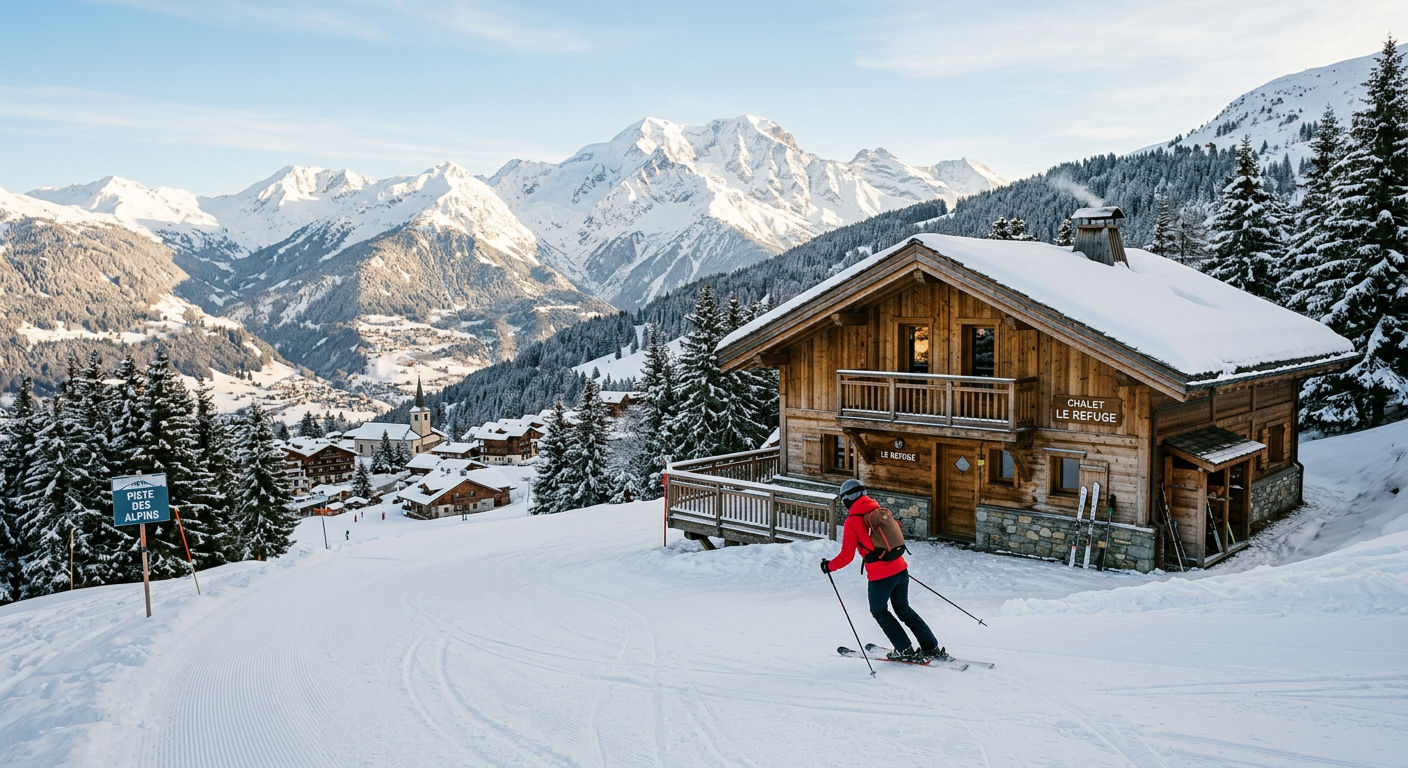
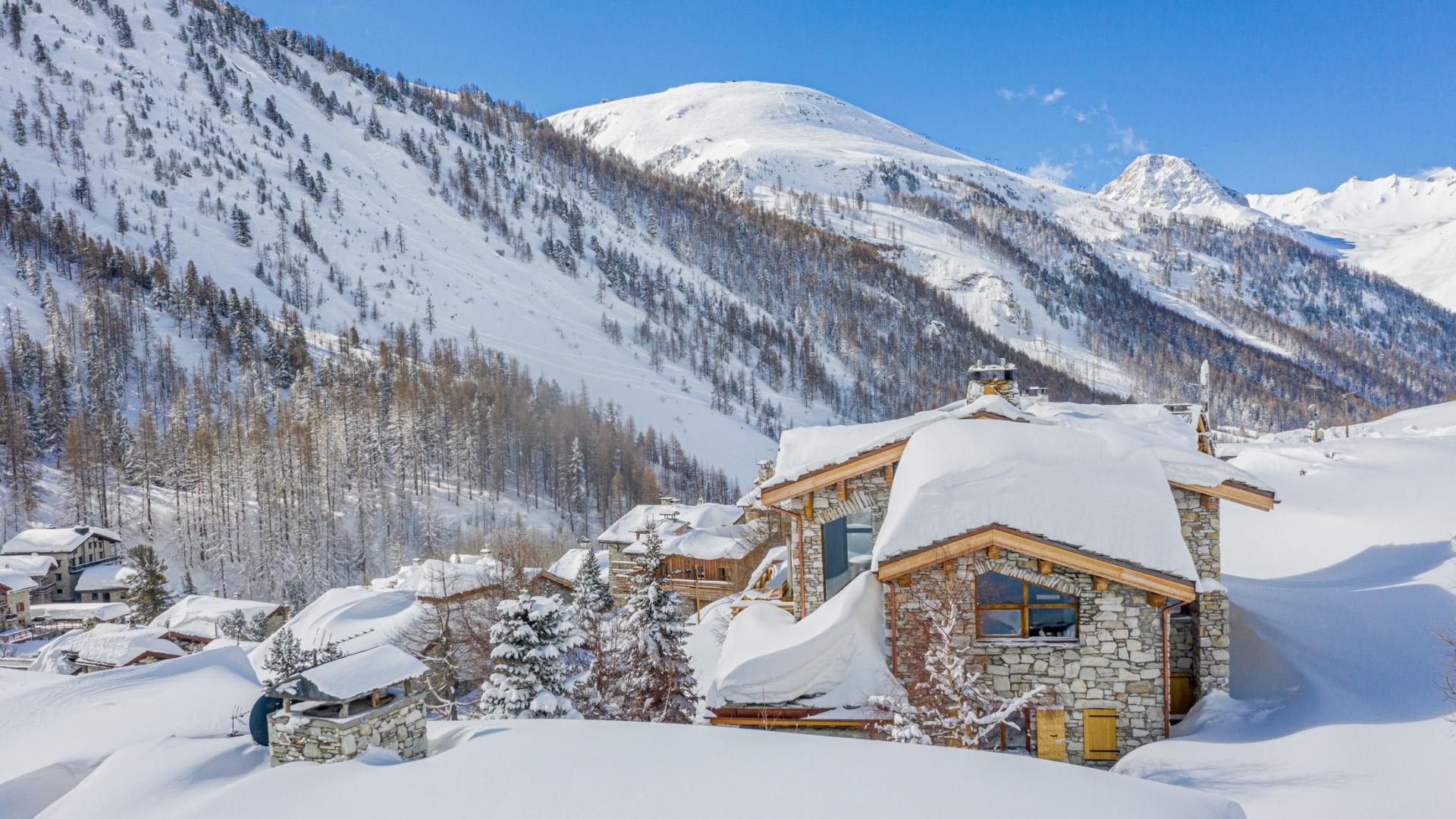
Val d'Isère has one of the highest concentrations of slope-side accommodation in the Alps. In our current collection, 199 of 224 properties — roughly 89% — offer some form of ski-in or ski-out access. That includes 49 properties within five minutes of a lift or piste, and a further 14 within five to fifteen minutes on foot.
This ratio is notably higher than most comparable French resorts. Méribel and Courchevel offer strong ski access, but their larger footprints spread properties further from the slopes. In Val d'Isère, the compact geography means even properties outside the immediate centre tend to sit close to a run or lift connection.
| Ski Access Category | Properties | % of Collection |
|---|---|---|
| Under 5 minutes to piste/lift | 49 | 22% |
| 5–15 minutes | 14 | 6% |
| Ski-in/ski-out (total) | 199 | 89% |
| Shuttle or transfer required | 25 | 11% |
For guests who prioritise door-to-slope convenience, browse our ski-in ski-out chalets in Val d'Isère to filter by access type.
Catered vs Self-Catered: Understanding Service Levels
The choice between catered and self-catered defines the rhythm of a chalet holiday. Val d'Isère's market splits almost evenly between the two, giving genuine flexibility regardless of budget or group preference.
Catered Chalets
In our Val d'Isère collection, 76 properties offer catered service — typically including breakfast, afternoon tea, and a multi-course dinner five or six evenings per week. Of these, 28 include a dedicated chef, with menus that range from traditional Savoyard cuisine to contemporary tasting menus with wine pairings.
Catered chalets work particularly well for groups of eight or more, where the per-person cost of staffing drops considerably. A catered chalet with chef service in Val d'Isère starts from around €10,000 per week for a three-bedroom property and extends well beyond €100,000 per week for the largest fully staffed residences.
Self-Catered and Flexible Options
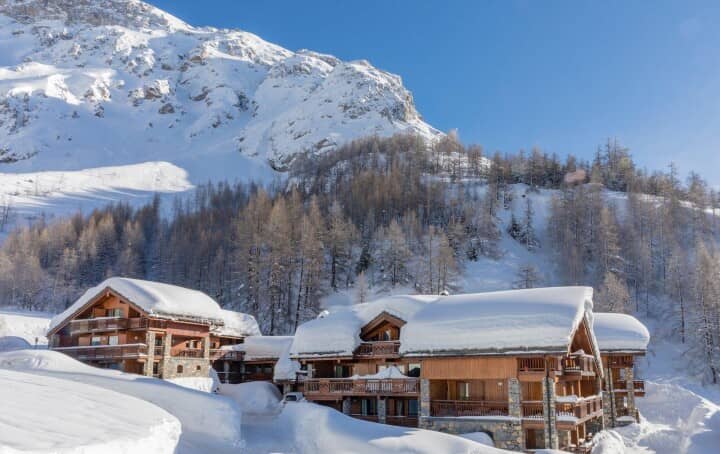
Self-catered properties number 72 in our collection, with a further 47 offering flexible arrangements — meaning catering can be added as an optional extra or booked for selected evenings only. Self-catering suits couples, smaller groups, and those who want to eat out in the village most nights.
Val d'Isère's dining scene supports self-catering well. The village has a Sherpa supermarket, a fromagerie, a boucherie, and several bakeries — more than enough for guests who enjoy cooking with local ingredients.
| Service Level | Properties | Best For |
|---|---|---|
| Catered (incl. chef) | 76 | Groups of 8+, celebration weeks, families with children |
| Self-catered | 72 | Couples, foodies who prefer restaurants, budget-conscious |
| Flexible | 47 | Mixed groups, those who want both options |
| B&B | 29 | Short stays, solo travellers, those who dine out |
Explore catered chalets in Val d'Isère or compare with self-catered options.
Amenities That Define a Val d'Isère Chalet
Certain amenities have shifted from occasional extras to standard expectations in the Val d'Isère rental market. Knowing the baseline helps set realistic expectations when comparing properties.
Hot Tubs, Saunas, and Wellness
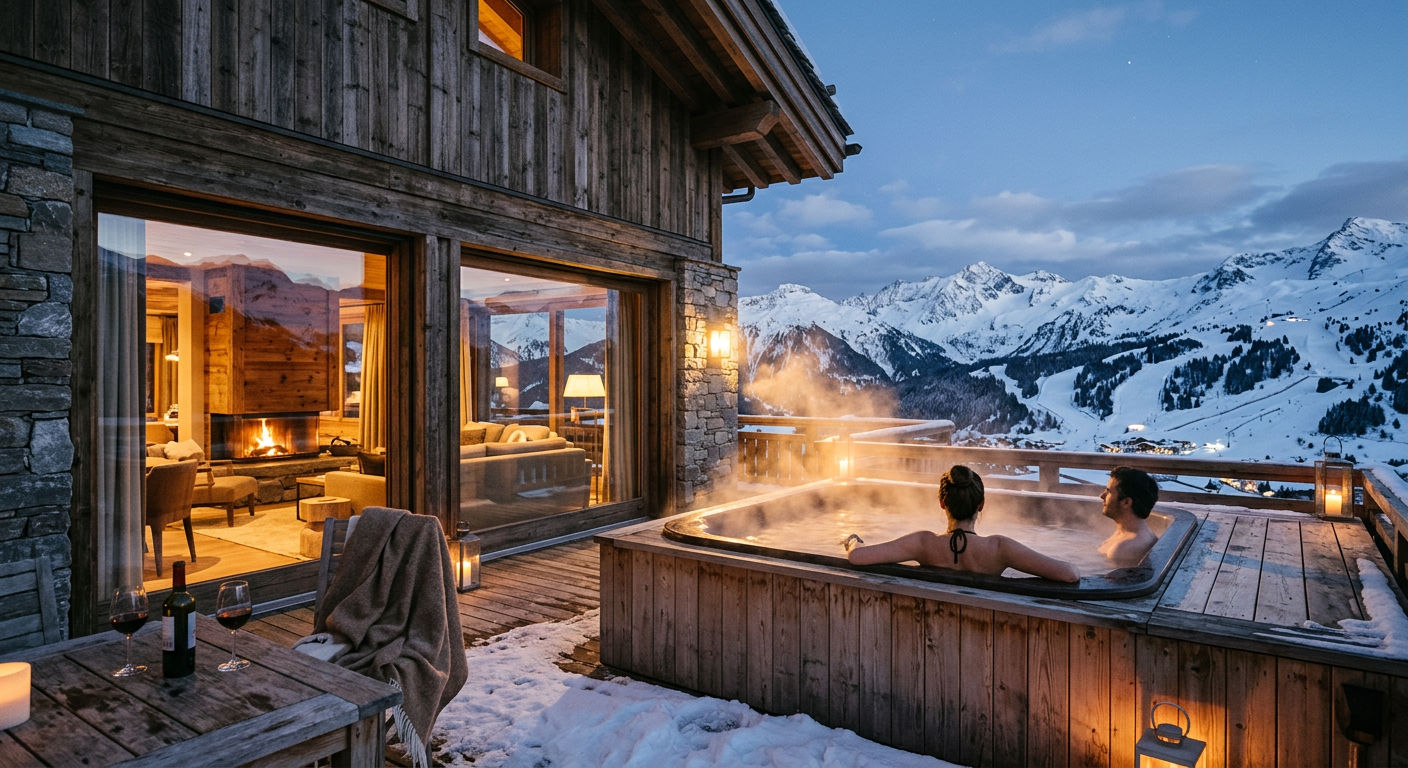
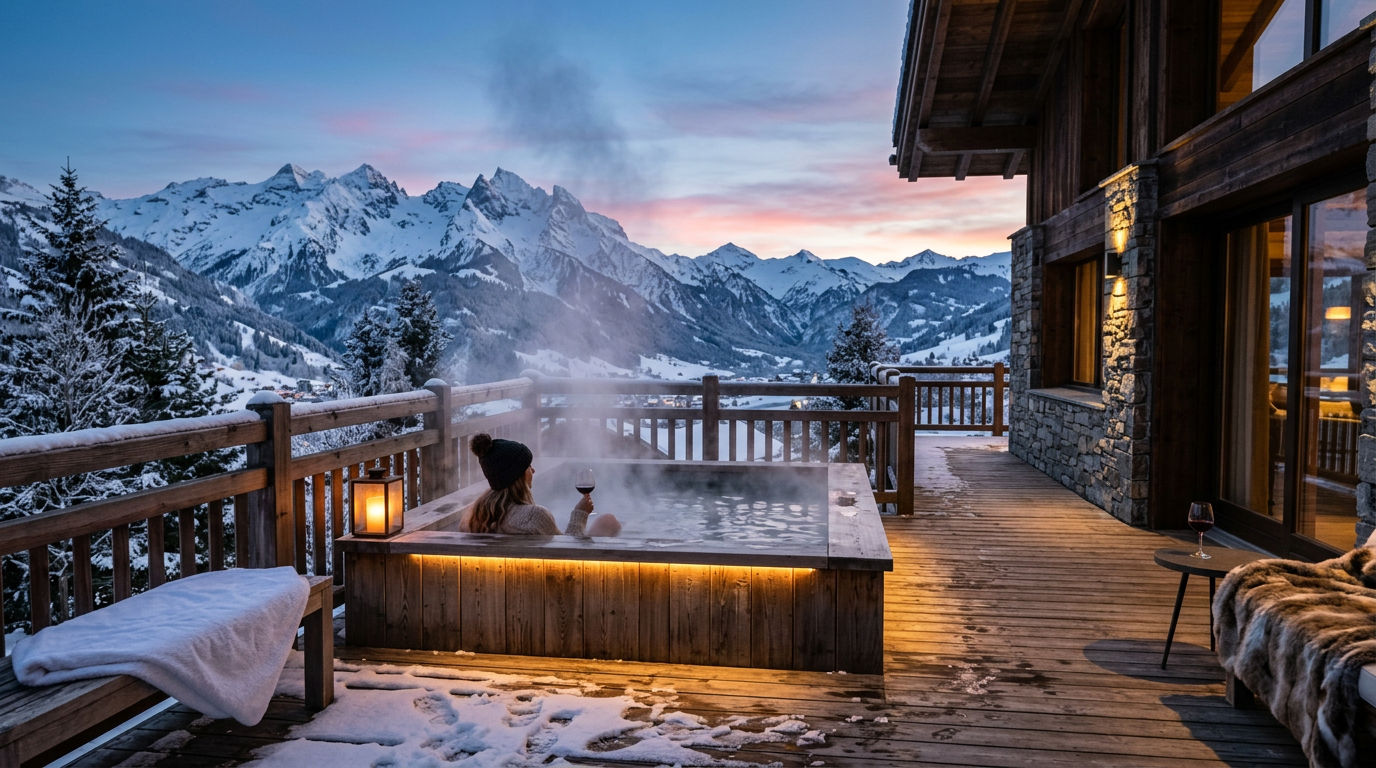
At the time of writing, 173 of 224 properties in our Val d'Isère collection include a hot tub — 77% of the portfolio. Saunas feature in 164 properties (73%), and 158 offer a swimming pool. A private spa with hammam, massage room, or treatment area appears in 126 properties (56%).
These figures reflect the market's positioning. In Val d'Isère, a hot tub is not a luxury feature — it is closer to a baseline amenity. Properties without one tend to be smaller apartments or budget-oriented studios.
Fireplaces, Cinema Rooms, and Living Spaces
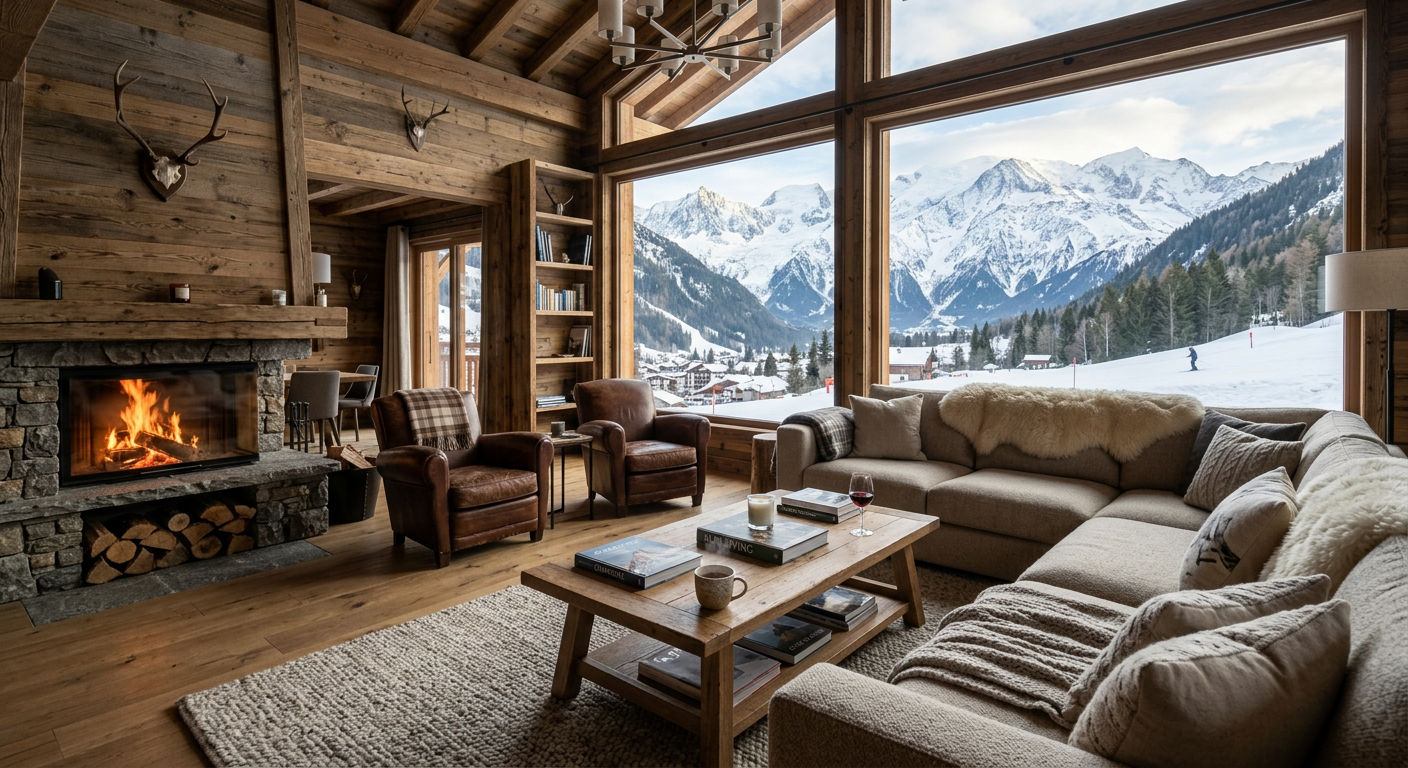
Fireplaces appear in 211 of 224 properties — 94% — making them near-universal. Cinema rooms feature in 141 properties (63%), often doubling as media rooms for families. Mountain-view balconies or terraces appear in 197 and 112 properties respectively.
Group-Friendly Capacity
Val d'Isère caters well to larger parties. In our current collection, 109 properties accommodate ten or more guests, and 24 properties sleep sixteen or more. For multi-family ski trips or celebration weeks, the resort's chalet stock offers genuine depth at the larger end.
| Amenity | Properties | % of Collection |
|---|---|---|
| Hot tub | 173 | 77% |
| Sauna | 164 | 73% |
| Pool | 158 | 71% |
| Spa | 126 | 56% |
| Fireplace | 211 | 94% |
| Cinema room | 141 | 63% |
| Gym | 109 | 49% |
| Chef service | 28 | 13% |
For properties with specific amenities, filter our Val d'Isère collection by hot tub or explore chalets with pool and sauna.
When to Book and What to Pay
Val d'Isère pricing follows a predictable seasonal pattern, with sharp peaks during school holidays and more considered pricing in the shoulder periods.
Season Structure
The resort typically opens in late November and closes in early May — one of the longest seasons in the French Alps. The strongest weeks fall during Christmas/New Year, February half-term (UK and French school holidays), and Easter if it lands in March.
Pricing Expectations
At the time of writing, our Val d'Isère properties range from around €1,200 per week for a compact apartment to over €175,000 per week for the resort's most distinguished fully staffed chalets. The median falls in the €8,000–€25,000 per week range for a four- to six-bedroom chalet.
January and March typically offer the best value — comparable snow conditions to February at a fraction of the peak-week price. Many catered operators offer early-booking discounts of 10–15% for reservations made before September.
Booking Timeline
For peak weeks (Christmas, February half-term), booking twelve to eighteen months in advance is standard for the most sought-after properties. For January or late March, three to six months ahead usually secures a strong selection. Last-minute availability does appear, but at the upper end of the market, the best properties book out early.
Find Your Chalet in Val d'Isère
Powder Edition brings together over 220 properties in Val d'Isère — from intimate apartments to fully staffed chalets with private chefs, spas, and direct slope access. Explore our full Val d'Isère collection, filter by catered chalets, or browse properties that sleep ten or more guests.
Frequently Asked Questions
What does ski-in ski-out mean in Val d'Isère?
Ski-in ski-out in Val d'Isère means the property sits directly on or immediately adjacent to a groomed piste or lift, allowing guests to ski to and from the door without a shuttle or significant walk. In our collection, 89% of Val d'Isère properties offer this level of access — the highest ratio among major French resorts.
Is a catered chalet worth the cost in Val d'Isère?
For groups of eight or more, a catered chalet in Val d'Isère often represents better value than dining out each evening. Catered properties include breakfast, afternoon tea, and dinner five or six nights per week, typically with wine. Per-person costs decrease as the group grows, and the convenience of returning from the slopes to a prepared meal is significant during a ski holiday.
When is the best time to ski in Val d'Isère?
Val d'Isère's high altitude (1,850 metres at the base, 3,456 metres at the top) ensures reliable snow from late November through early May. January and March offer the best combination of snow conditions and value — peak-week crowds thin out, and prices drop by 30–50% compared to February half-term.
How far in advance should I book a chalet in Val d'Isère?
For Christmas, New Year, and February half-term, book twelve to eighteen months ahead to access the widest selection. January and March bookings can be made three to six months in advance with a strong range of properties still available. Last-minute deals appear occasionally, but the most distinguished chalets in the resort are booked well before the season begins.
Can I find a budget-friendly chalet in Val d'Isère?
Val d'Isère is a premium resort, but self-catered apartments and smaller chalets start from around €1,200 per week. The best value comes from booking outside peak school holiday weeks — January and late March/April offer snow quality comparable to February at considerably lower rates. Self-catered properties with flexible meal options provide further cost control.
What is the difference between Val d'Isère and Tignes?
Val d'Isère and Tignes share the Espace Killy ski area (300 km of pistes) but differ in character. Val d'Isère is a traditional Savoyard village with stone architecture, a walkable main street, and a strong dining and après-ski scene. Tignes is higher (2,100 metres), more purpose-built, and generally more affordable. Both offer access to the same terrain, but Val d'Isère attracts guests who value village atmosphere alongside the skiing.