Quick Answer
Aspen and Vail deliver Colorado skiing in fundamentally different ways. Aspen spreads across four mountains — Buttermilk for beginners, Highlands for experts, Ajax for intermediates, Snowmass for families — with a genuine Victorian cultural town attached. Vail consolidates 5,317 acres onto a single mountain with ski-in/ski-out lodging and a purpose-built pedestrian village. Pick Aspen for town life and terrain variety; Vail for sheer scale and convenience.
The Skiing
Aspen and Vail are Colorado's two defining ski destinations, but they deliver the mountain experience in fundamentally different ways.
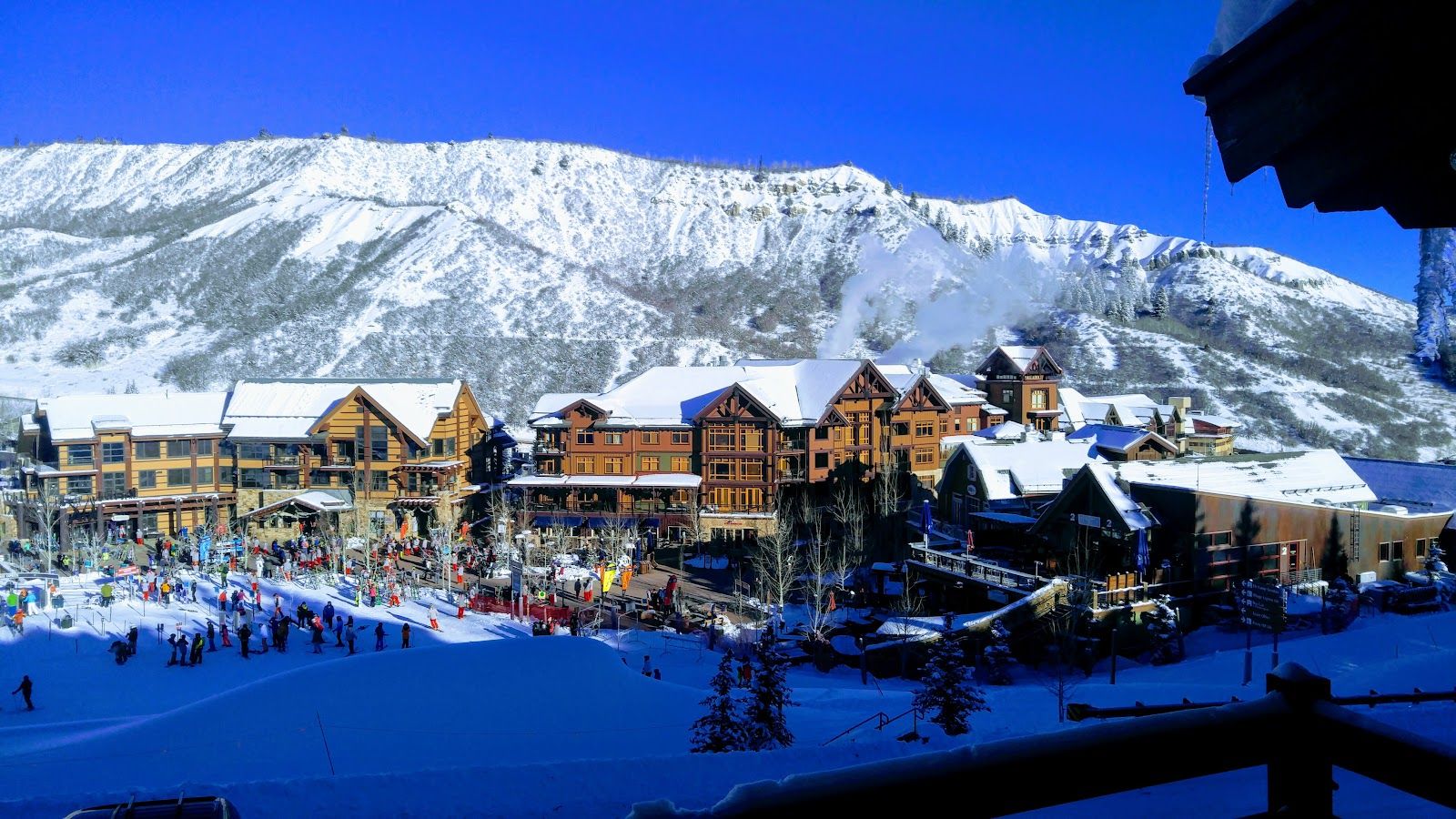
Aspen is actually four separate mountains operating under one lift ticket: Aspen Mountain, Aspen Highlands, Buttermilk, and Snowmass. The combined skiable terrain covers roughly 5,527 acres — but it's the variety across those four mountains that matters. Aspen Mountain (known locally as Ajax) rises directly above town and offers 76 trails with no beginner runs at all — every pitch is intermediate or expert. Highlands is beloved by locals for its steep Highland Bowl hike-to terrain, which consistently ranks among the best in-bounds expert skiing in North America. Buttermilk is the learner's mountain, gentle and wide, also home to the X Games each January. And Snowmass is the anchor — 3,362 acres of varied terrain, the third-largest ski area in the US, with a 4,406-foot vertical drop that's the longest in the country.
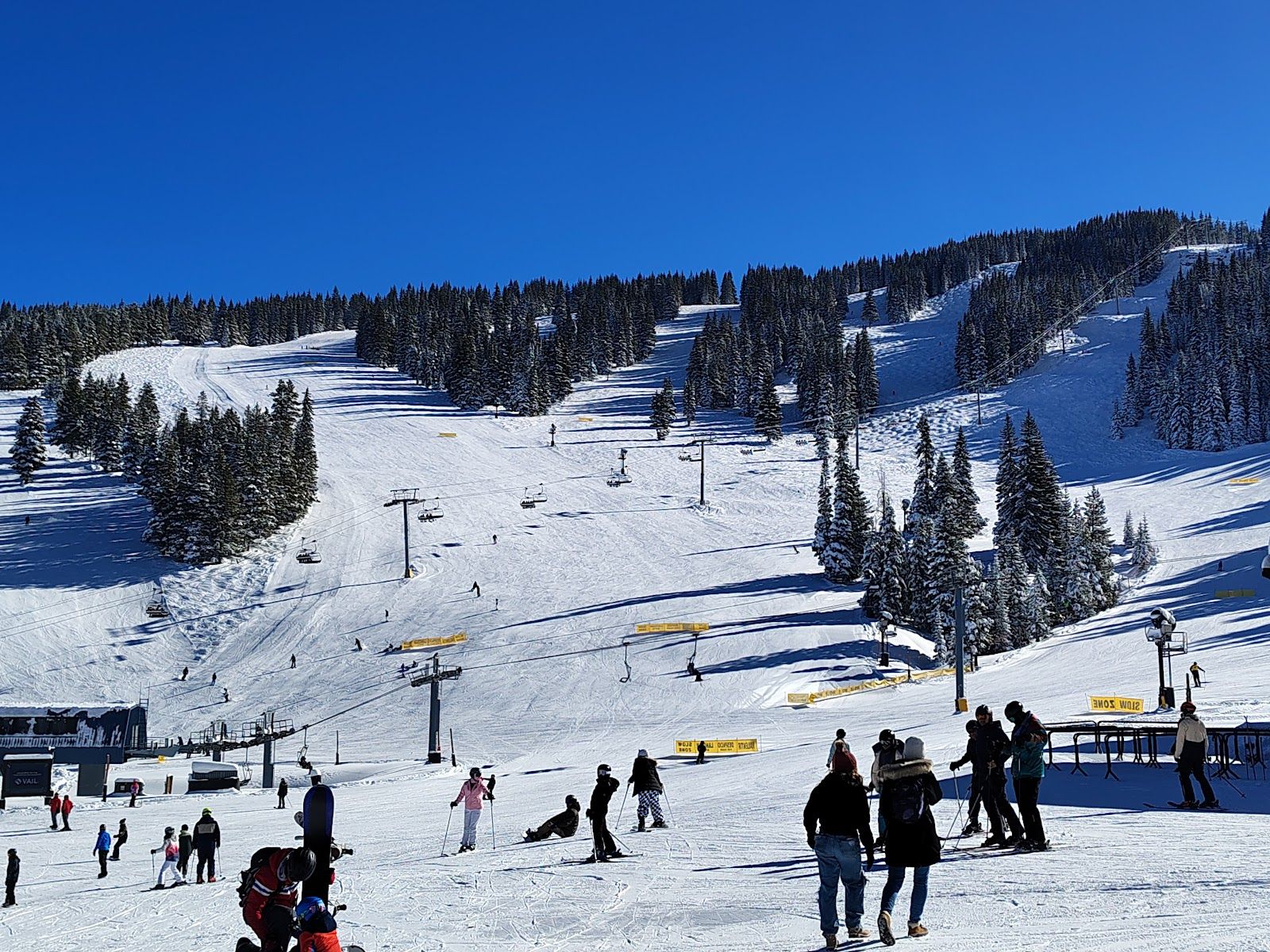
Vail takes the opposite approach: one mountain, vast and self-contained. At 5,317 acres, it's the third-largest single ski area in North America. The front side offers beautifully groomed intermediate runs through gladed spruce forests. But Vail's defining feature is the Back Bowls — seven enormous alpine bowls spanning nearly seven miles, all south-facing, offering wide-open above-treeline skiing that feels closer to the Alps than a typical American resort. Beyond the Bowls, Blue Sky Basin adds another 645 acres of adventure terrain through old-growth forest. Everything connects, everything flows — you never need to take a shuttle or drive between mountains.
For skiers who prize variety and want four distinct mountain personalities in one trip, Aspen is hard to beat. For those who want to wake up each morning, walk to a single base area, and explore seemingly endless terrain without ever retracing their tracks, Vail is the more seamless experience.
The Village & Apres-Ski
The character difference between these two towns is as significant as the skiing difference.
Aspen is a real town — it was a silver mining settlement in the 1880s, and that Victorian architecture still defines its downtown. The streets are walkable, the restaurants are chef-driven, and the cultural life (Anderson Ranch Arts Center, Wheeler Opera House, Aspen Art Museum) gives the town a depth that pure ski resorts simply don't have. Celebrity culture is woven into the fabric — you'll spot names at Matsuhisa or Cache Cache — but it's less ostentatious than its reputation suggests. Apres-ski ranges from the historic J-Bar at the Hotel Jerome (operating since 1889) to the rooftop at the Limelight. There's an edge to Aspen's social scene that keeps it interesting year after year.
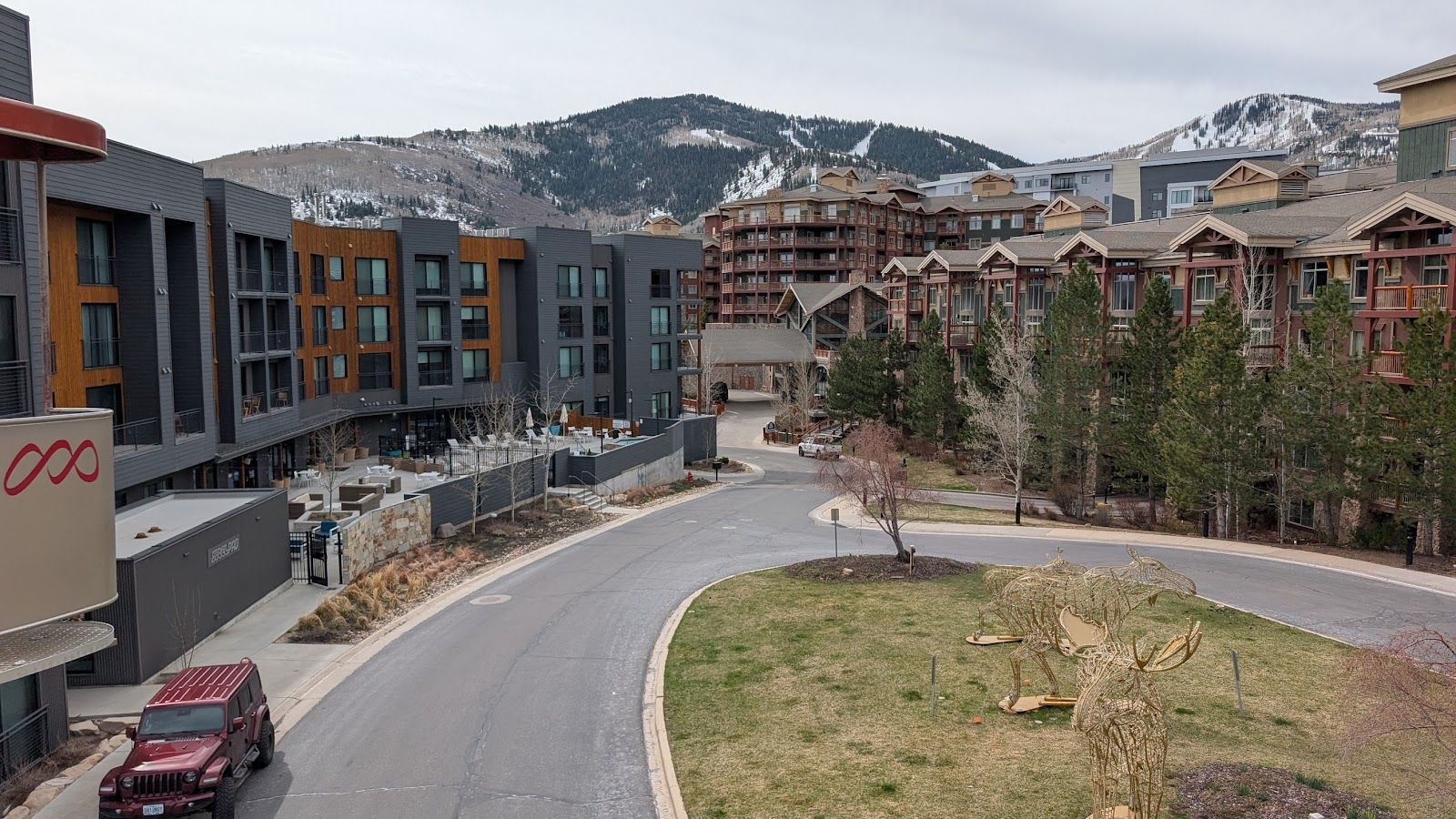
Vail Village is a purpose-built Bavarian-inspired pedestrian village constructed in the 1960s, and while it lacks Aspen's historic authenticity, it succeeds on its own terms. The cobblestone streets, covered bridge, and concentrated layout make it genuinely pleasant to navigate on foot, particularly with children. Lionshead Village, a short walk west, adds a second pedestrian hub with newer lodging and dining. Apres gravitates toward spots like the Red Lion, Los Amigos, and the 10th Mountain Division Hut — more convivial and family-friendly than exclusive. Vail's dining scene has improved dramatically in recent years, with restaurants like Sweet Basil and Mountain Standard earning regional recognition, but it doesn't match Aspen's culinary depth.
If your ideal evening involves a gallery opening followed by dinner at a restaurant that would hold its own in New York, choose Aspen. If you want a self-contained, pedestrian-friendly village where the whole family can walk to dinner in ski boots, Vail is the better fit.
Getting There
Both resorts are served by regional airports, and both are accessible from Denver — but the logistics differ enough to matter.
Aspen: Aspen/Pitkin County Airport (ASE) receives direct flights from Denver, Los Angeles, Chicago, Dallas, Houston, San Francisco, and other major cities during ski season. The airport is just four miles from town — genuinely door-to-slope in under 20 minutes. The alternative is flying into Eagle County Airport (EGE), roughly a 70-minute drive, or Denver International (DEN), which is approximately 220 miles and a 3.5-4 hour drive depending on I-70 conditions. Independence Pass closes in winter, so all road access from the east comes via Glenwood Springs.
Vail: Eagle County Airport (EGE) is the closest option, about 35 miles west of Vail — roughly 30-40 minutes by car. It receives direct seasonal flights from major hubs including New York, Miami, Atlanta, and Los Angeles. Denver International is approximately 100 miles east, a 2-2.5 hour drive on I-70 in good conditions. The key caveat: the I-70 corridor through the Eisenhower Tunnel is notoriously congested on weekend mornings and Sunday afternoons. Midweek arrivals and departures avoid the worst of it.
Aspen's own airport gives it a meaningful convenience advantage for those flying direct. Vail's proximity to Denver makes it the easier choice for Colorado residents and anyone connecting through DEN.
When to Visit
Colorado's ski season typically runs from late November through mid-April, with both resorts sharing the state's signature 300+ days of sunshine and dry, light powder.
Aspen's sweet spot is January through mid-March — Highland Bowl opens once the snowpack stabilizes (usually by mid-January), and Snowmass is in full operation. The X Games in late January bring a particular energy to town. Presidents' Day week is peak season. Late March and April offer superb spring skiing on Snowmass' higher slopes, with quieter restaurants and lower accommodation prices.
Vail peaks during the same January-to-March window, with the Back Bowls skiing at their best after sustained snowfall. Vail tends to close slightly earlier than Aspen's mountains — typically mid-April versus Aspen Mountain and Snowmass, which sometimes push into late April. The week between Christmas and New Year is Vail's busiest and most expensive period by a significant margin.
Both resorts average over 300 inches of annual snowfall, and both benefit from Colorado's cold, dry climate that preserves powder longer than the heavier maritime snow of the Pacific Northwest.
The Verdict
These two resorts represent the pinnacle of American skiing, but they attract different sensibilities.
Choose Aspen if you want: four distinct mountains with terrain ranging from gentle learner slopes to genuine expert challenges; a historic town with world-class dining, art, and nightlife; a Colorado ski vacation with cultural substance beyond the mountain; the feeling of being somewhere with real identity and history. Aspen is the resort for people who care as much about what happens after the lifts close as what happens while they're spinning.
Choose Vail if you want: one enormous, interconnected mountain where you can ski for a week and never repeat a run; the legendary Back Bowls and Blue Sky Basin; a self-contained pedestrian village that simplifies logistics for families and groups; a resort purpose-built to deliver a seamless skiing experience. Vail is the resort where the mountain is the main event and everything is designed to get you onto it efficiently.
If you're still torn, consider this: Aspen is a town that happens to have extraordinary skiing. Vail is extraordinary skiing that happens to have a town. Both are among the best places in North America to spend a week on snow.
Frequently Asked Questions
Is Aspen or Vail better for beginners?
Vail is the more straightforward choice for beginners. Its front-side green and blue runs are wide, well-groomed, and served by modern high-speed lifts. The terrain flows naturally from easier to more challenging as you move across the mountain. In Aspen, beginners are best served at Buttermilk — an excellent learning mountain but one that requires a shuttle or drive from town. Aspen Mountain itself has no beginner terrain whatsoever.
Which resort gets more snow — Aspen or Vail?
Snowfall is comparable. Aspen's mountains average 300 inches annually (with Snowmass receiving slightly more on its higher slopes), while Vail averages around 305 inches. The real difference is consistency: both benefit from Colorado's light, dry powder, but Vail's Back Bowls, being south-facing, can develop sun crust faster after a storm. Aspen Highlands' north-facing Highland Bowl holds powder longer than almost anywhere in the state.
Is Aspen more expensive than Vail?
At the very top end, yes — Aspen's luxury accommodation and dining carry a premium that reflects its status as a year-round cultural destination. However, the Ikon Pass (which covers all four Aspen mountains) and the Epic Pass (which covers Vail) are comparably priced. Day-to-day expenses like dining and après are similar, though Aspen's restaurant scene skews higher on average. Both resorts offer a range of accommodation from luxury to mid-range — neither is a budget destination.
Can you ski Aspen and Vail in the same trip?
Yes, though they're about 130 miles apart (roughly 2.5-3 hours by car via Glenwood Springs and I-70). Some travelers split a week between the two, spending the first half in one resort and driving to the other midweek. This works well logistically but means two separate lift tickets or passes. The drive between them through the Colorado Rockies is scenic in its own right.
Which resort is better for a group ski holiday?
For mixed-ability groups, Aspen has a structural advantage: Buttermilk handles beginners, Snowmass offers something for everyone, Ajax challenges the experts, and Highlands rewards the adventurous — all on one lift ticket. The group reconvenes in town each evening. Vail works well for groups of intermediate-to-advanced skiers who want to explore one mountain together, and its compact village layout makes evening logistics simpler. For groups with non-skiers, Aspen's town life is substantially richer.
Should I choose Vail or Aspen for a luxury ski trip?
Both are luxury destinations, but the experience is different. Aspen skews toward cultural luxury — James Beard-nominated restaurants, galleries, the Aspen Art Museum, a year-round cultural calendar, and a discreet, moneyed crowd who treat the town as a second home. Vail's luxury is more resort-driven — the Four Seasons, ski-in/ski-out penthouses, on-mountain private dining clubs, and purpose-built convenience. For a traditional luxury ski holiday with polish and ease, Vail wins. For cultural depth and a town with its own identity beyond skiing, Aspen has the edge.
Which has better off-piste and backcountry access?
Aspen Highlands' Highland Bowl is the headline — a hike-to, in-bounds expert zone that's widely regarded as one of the best lift-served backcountry experiences in North America. Snowmass' Hanging Valley and Aspen Mountain's Walsh's also deliver serious terrain. Vail's Back Bowls are vast (3,017 acres of largely ungroomed south-facing terrain) but less technical — more open bowl skiing than steep couloirs. For committed off-piste skiers, Aspen Highlands is the draw. For accessible powder fields without the hike, Vail's Back Bowls are unmatched in volume.