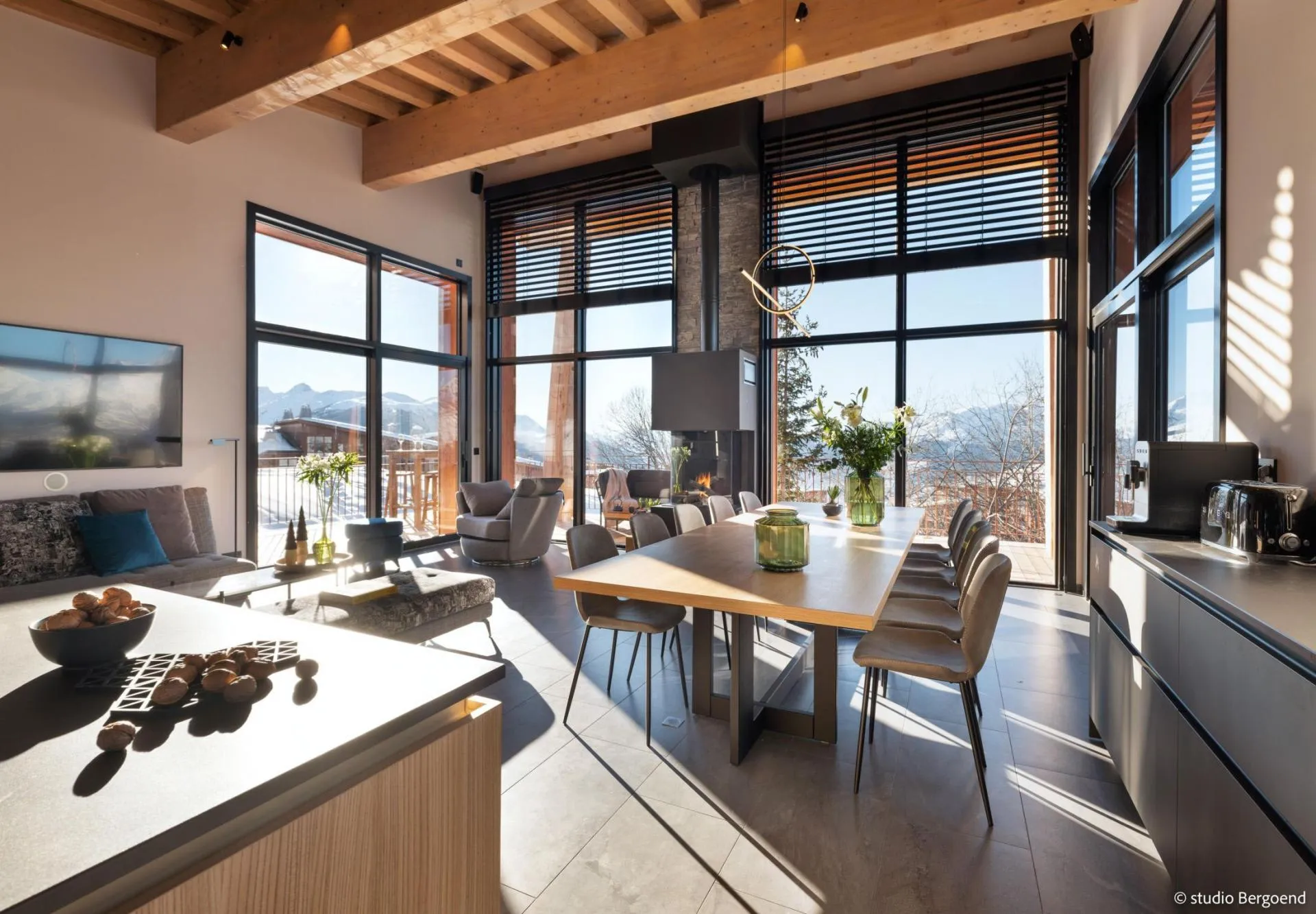
The Skiing
La Plagne and Les Arcs are the two halves of Paradiski, linked since 2003 by the Vanoise Express double-decker cable car — one of the largest in the world. Together they form 425km of marked pistes, making this one of the biggest connected ski areas in France. But the character of the skiing on each side is quite distinct.
La Plagne spreads its 225km of pistes across a vast, gently rolling landscape. The terrain is notably forgiving: around 70% of marked runs are graded green or blue, with wide, well-groomed boulevards running between the resort's ten villages at altitudes from 1,250m up to 2,100m. The glacier at 3,250m on the Bellecote adds high-altitude insurance, but the runs back down are among the area's few genuinely challenging descents. For intermediates, the seemingly endless cruising between Belle Plagne, Plagne Centre, and Plagne Bellecote is outstanding. The area also has a dedicated bobsleigh run from the 1992 Albertville Olympics — an experience unique in the ski world.
Les Arcs has a more muscular profile. Its 200km of pistes fan out from the Aiguille Rouge summit at 3,226m, and the 7km run from the top all the way to Villaroger is one of the great descents in the Alps — over 2,000m of vertical drop. The piste grading skews harder than La Plagne, with a good selection of genuine black runs and steeper reds, particularly in the Aiguille Rouge and Grand Col sectors. Les Arcs also holds the world speed skiing record set on its dedicated piste at Les Arcs 2000 — a legacy that tells you something about the gradient.
For confident intermediates and above who want to feel the mountain, Les Arcs delivers more engaging terrain. For families and progressing skiers who want long, confidence-building runs in spectacular scenery, La Plagne is hard to beat. And the Vanoise Express means you can comfortably access both in a day — though a single crossing takes around five minutes and the queues in peak periods can be significant.
The Village & Apres-Ski
This is where the contrast is sharpest.
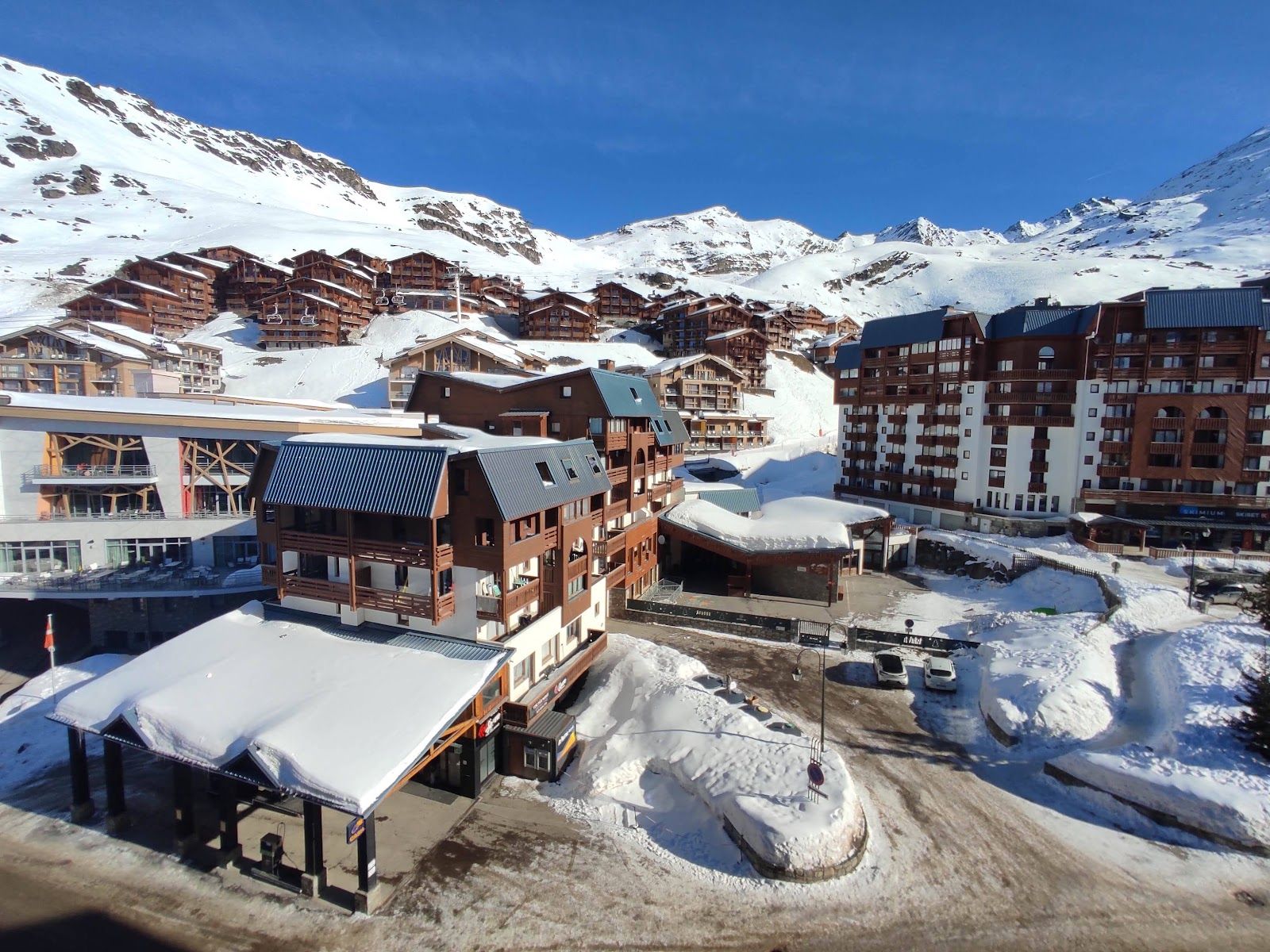
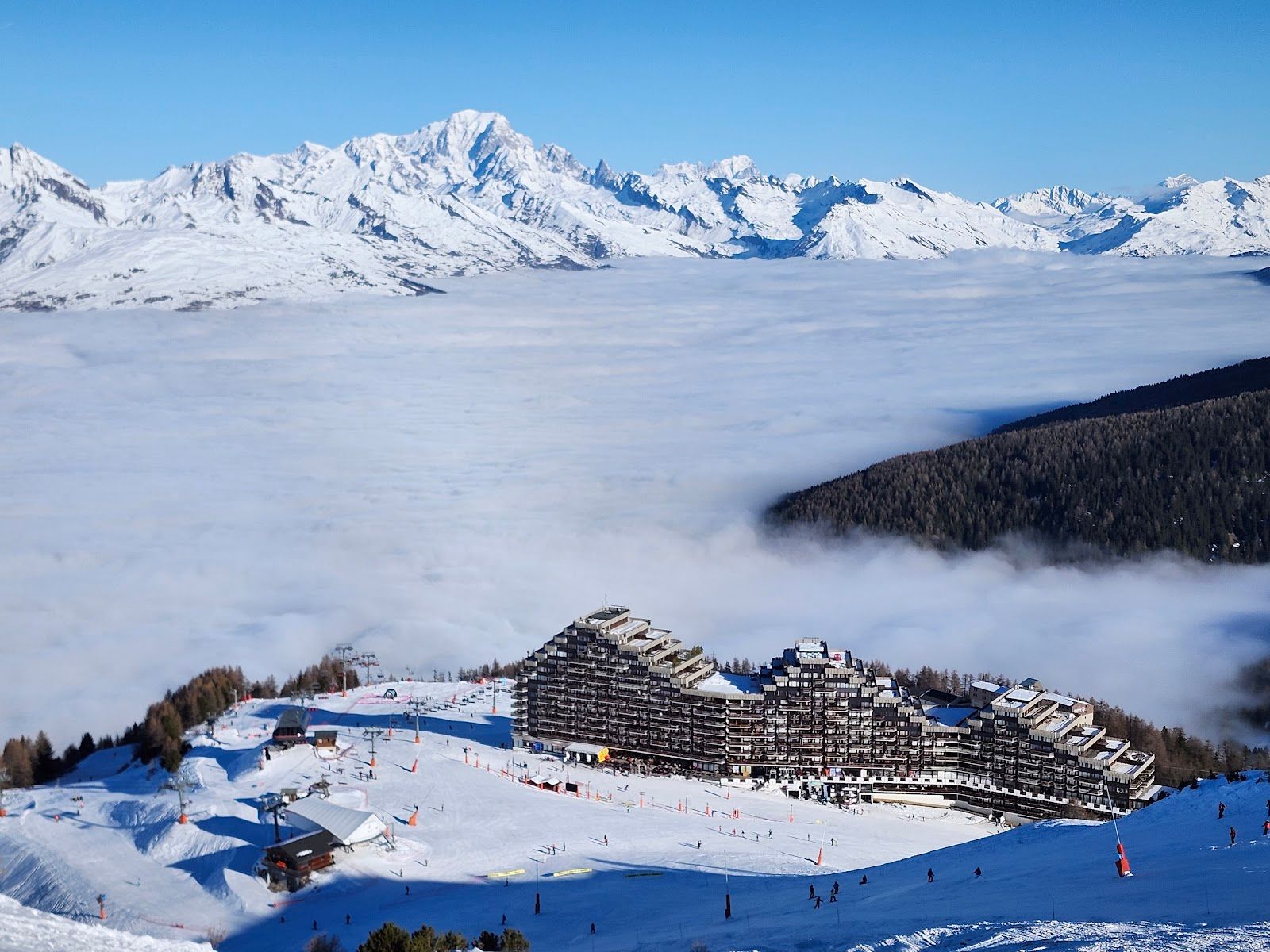
La Plagne is really ten separate villages rather than one resort, and their character varies enormously. The highest — Belle Plagne, Plagne Bellecote, Plagne Centre, and Aime 2000 — are purpose-built from the 1960s and 1970s. The architecture is functional rather than charming, though Belle Plagne has been significantly improved with more sympathetic recent developments. The lower villages — Montchavin-Les Coches, Champagny-en-Vanoise, and Montalbert — are genuinely attractive, with traditional Savoyard buildings, smaller scale, and a quieter atmosphere. Apres-ski across La Plagne is subdued. There are bars and restaurants in every village, but this is not a resort you choose for nightlife. It is a resort you choose because it works exceptionally well for families and mixed-ability groups, with every village offering direct ski access.
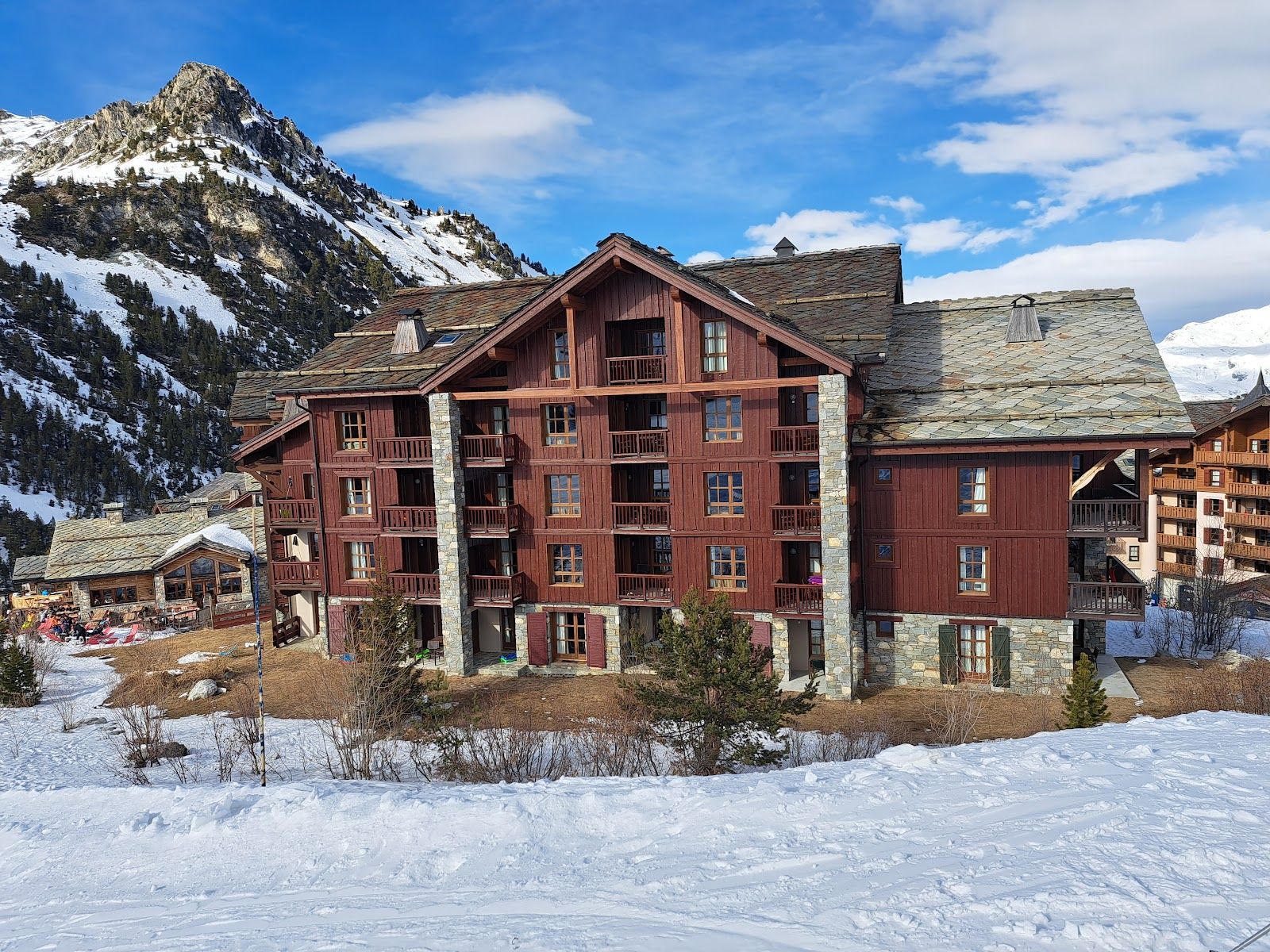
Les Arcs has a cleaner identity. The four altitude-named villages (1600, 1800, 1950, 2000) are all purpose-built, but the standout is Arc 1950 — a relatively recent development designed by Intrawest (the group behind Whistler's village) that delivers genuine ski-in/ski-out luxury with a pedestrianised centre, upscale restaurants, and an attractive architectural style that references traditional Savoyard design without imitating it. Arc 1800 is the largest and liveliest village, with the most dining and bar options. Apres-ski is livelier here than across the valley — the Arpette Bar at 1800 and the bars around 1950's central square provide a sociable end to the day, though this is still firmly a French family resort, not Val d'Isere.
Getting There
Both resorts share the same gateway, which simplifies the comparison.
La Plagne: The nearest major airport is Chambery (1h45 drive), with Lyon (2h30) and Geneva (3h) as alternatives. The Eurostar ski train runs to Aime-la-Plagne station in the Tarentaise valley — one of the most convenient rail connections to any major ski resort. From Aime, a funicular rises directly to La Plagne's upper villages in under 20 minutes.
Les Arcs: Access is almost identical — Chambery (1h30), Lyon (2h15), Geneva (2h45). Les Arcs has its own funicular from Bourg-Saint-Maurice directly to Arc 1600, with the TGV and Eurostar running to Bourg-Saint-Maurice station. This makes Les Arcs arguably the most rail-accessible major resort in the French Alps — step off the train, step on the funicular, arrive ski-ready at 1600.
When to Visit
Both resorts share the same season (typically mid-December through late April) and face broadly similar snow conditions, given they share the same mountain system.
La Plagne's lower villages benefit from tree-lined skiing in poor visibility — a genuine advantage in January storms when higher, exposed areas can be closed. February half-term is the busiest and most expensive period across both resorts, and La Plagne's family orientation makes it especially popular during school holidays.
Les Arcs is at its best from January through mid-March for reliable snow top to bottom. The Aiguille Rouge glacier extends the season at altitude. Late March and early April can offer outstanding value — the snow on the upper runs is still good, the sun is out, and the crowds have thinned. The annual Apocalypse Snow music festival at Les Arcs (typically late March) is worth timing a trip around if you want your skiing with a side of electronic music.
The Verdict
These are not rival resorts — they are complementary halves of the same ski system, and any stay at one includes access to the other via the Vanoise Express. The choice comes down to which base you want to return to at the end of the day.
Choose La Plagne if you want: an unbeatable family resort with gentle terrain across multiple villages; a wide range of accommodation at different price points; the convenience of ten interconnected bases; and skiing that rewards cruising rather than charging. La Plagne is the resort where everyone in the group can find their level and meet for lunch without drama.
Choose Les Arcs if you want: more challenging piste skiing with genuine vertical; the polished ski-in/ski-out experience of Arc 1950; the convenience of a direct funicular from the TGV; and a slightly more grown-up atmosphere. Les Arcs is the resort where the terrain keeps strong skiers engaged while still offering enough for everyone else.
If you can, consider spending a few days on each side. The Paradiski lift pass covers both areas, and moving between them mid-week gives you the best of both worlds — La Plagne's gentle vastness and Les Arcs' steeper, more dramatic terrain.
Frequently Asked Questions
Can you ski between La Plagne and Les Arcs?
Yes. La Plagne and Les Arcs are linked by the Vanoise Express cable car, forming the Paradiski ski area with 425km of combined pistes. The crossing takes approximately five minutes, but queue times at peak hours (typically 9-10am and 3-4pm) can add 15-30 minutes. A standard Paradiski lift pass covers both resorts.
Which resort is better for beginners — La Plagne or Les Arcs?
La Plagne is the stronger choice for beginners. Its terrain is gentler on average, with numerous wide green and blue runs between the villages. The nursery areas at Belle Plagne and Plagne Centre are excellent, and the resort's multi-village layout means beginners can quickly progress to skiing between bases without tackling anything steep. Les Arcs has adequate beginner areas (particularly at 1800), but the terrain steepens more quickly as you move away from them.
Is Arc 1950 worth the premium?
For the right group, absolutely. Arc 1950 is the only village in the Paradiski area that was designed from the ground up as a luxury ski-in/ski-out destination. The residences are spacious, the pedestrian village centre is attractive and functional, and the ski access is genuinely at your doorstep. If you are looking for a premium, convenience-first experience without the price tags of the Three Valleys, Arc 1950 delivers excellent value relative to comparable options in Courchevel or Meribel.
Which side of Paradiski has better snow?
Snow conditions are broadly similar across the two resorts, as they share the same mountain range and altitudes. Both have glacier access above 3,200m and extensive snowmaking. La Plagne has a slight advantage in poor weather thanks to more tree-lined runs at lower altitudes, which remain skiable when the exposed upper slopes on both sides are closed due to wind or flat light.
Is La Plagne or Les Arcs better for a group ski holiday?
For mixed-ability groups, La Plagne is hard to beat. The sheer number of villages means you can base different members of the group at different altitude levels, and the terrain is forgiving enough that weaker skiers do not feel left behind. For groups of confident skiers, Les Arcs is the better fit — the terrain from the Aiguille Rouge is more rewarding, and Arc 1950 provides a comfortable, sociable base to regroup at the end of the day. For a broader perspective on planning group trips, see our group ski holiday guide.