Quick Answer
Val Thorens and Tignes both solve the same problem — unreliable snow at lower altitudes — but unlock different experiences. Val Thorens sits at 2,300m (Europe's highest resort village) and is the gateway to the 600km Three Valleys, the world's largest ski area. Tignes shares the Espace Killy with Val d'Isère and offers year-round glacier skiing on the 3,456m Grande Motte. Pick Val Thorens for ski area scale; Tignes for freestyle culture and season length.
The Skiing
Both Val Thorens and Tignes were purpose-built to solve the same problem — unreliable snow at lower altitudes — and both succeed spectacularly. But the skiing they unlock is quite different.
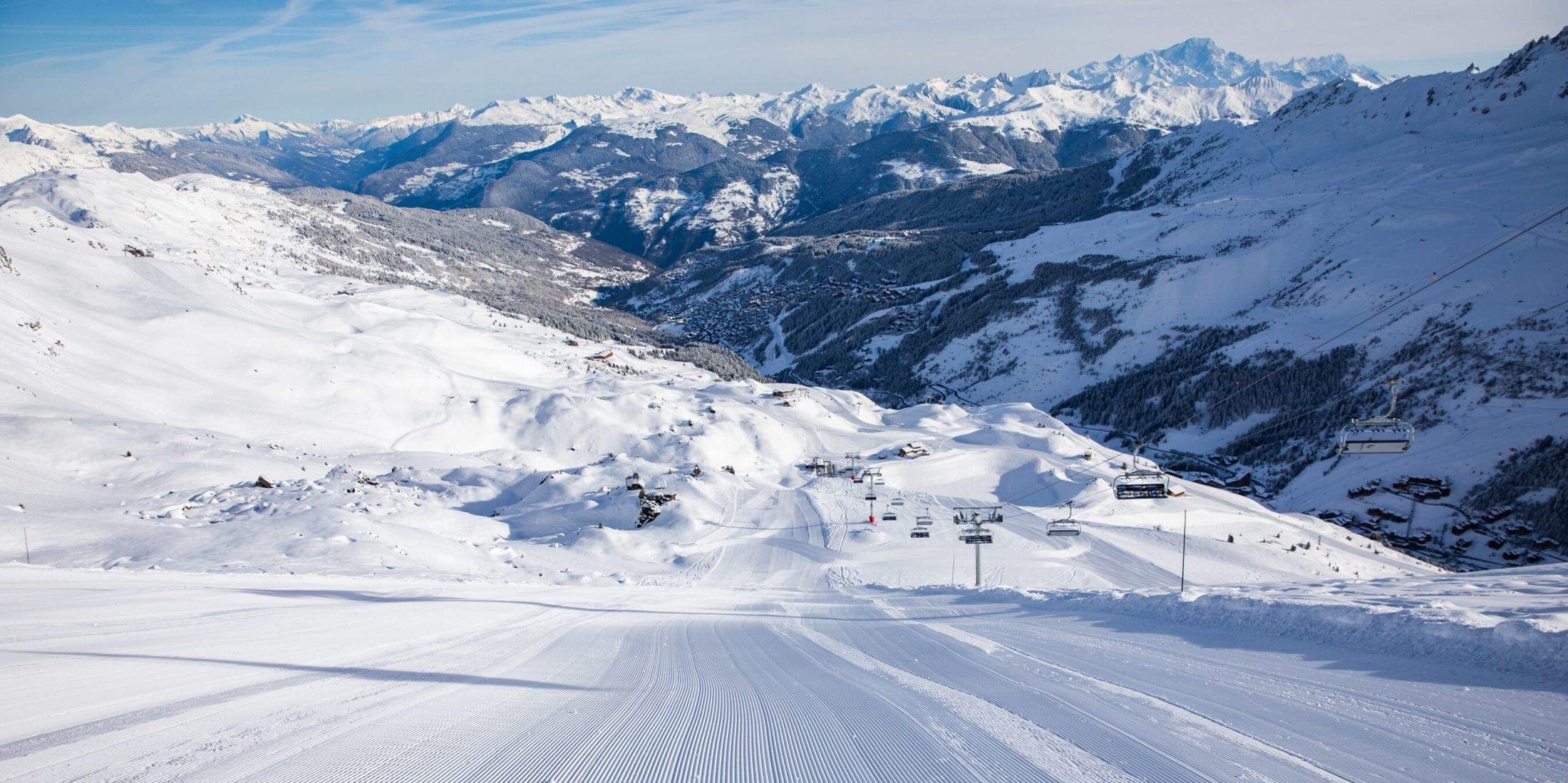
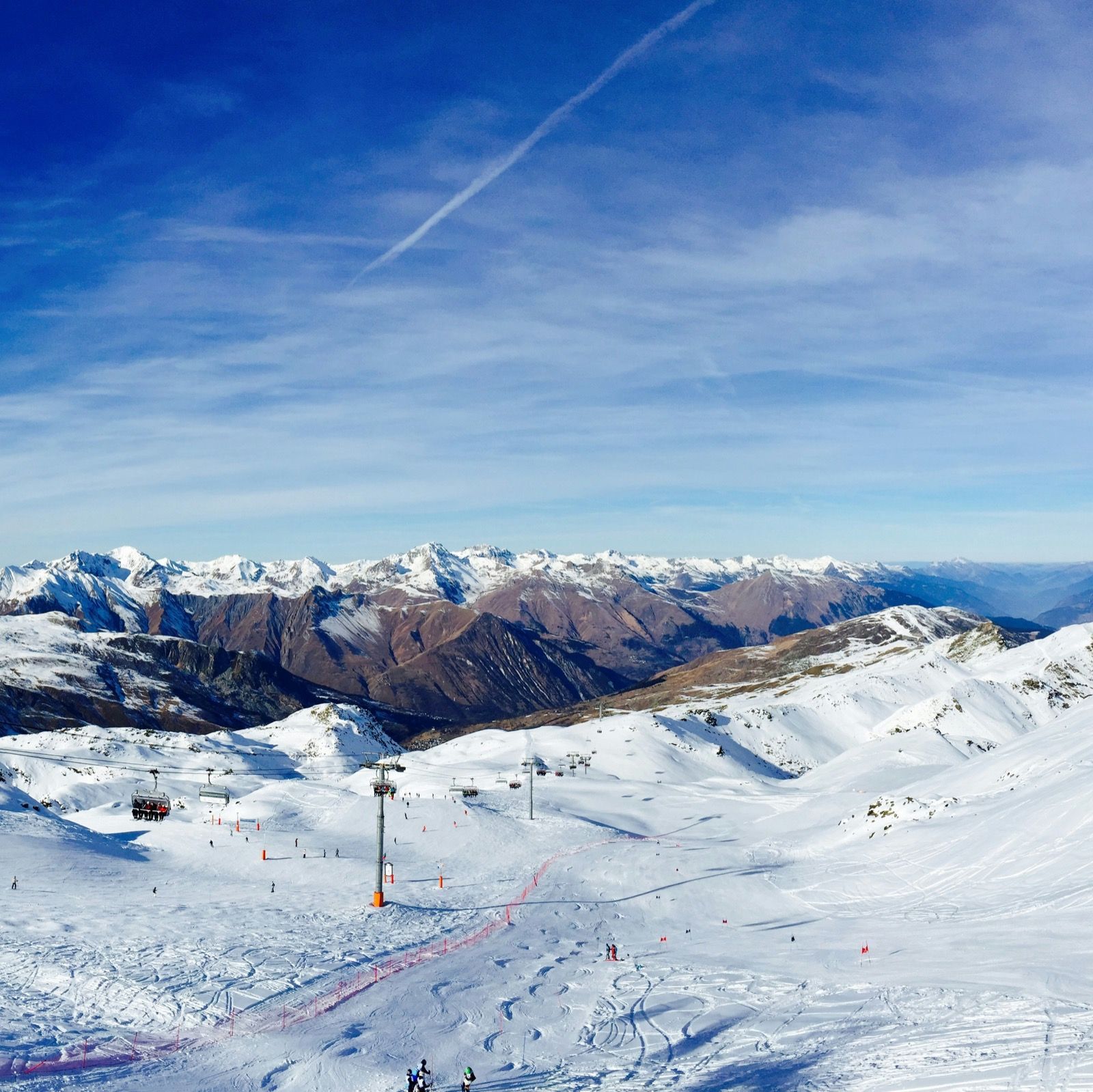
Val Thorens sits at 2,300m, making it the highest resort in Europe. Its own ski area spans around 150km of pistes between 1,800m and 3,230m (Cime de Caron), with terrain skewing toward long, wide reds and sweeping blues that cover serious distance. The real selling point is access to the Three Valleys — from Val Thorens you can ski to Meribel and Courchevel and back in a single day across 600km of interconnected pistes. For sheer volume of skiing, nothing in the world competes. The off-piste around the Cime de Caron and Pointe du Bouchet is serious and rewarding, though it requires proper guidance.
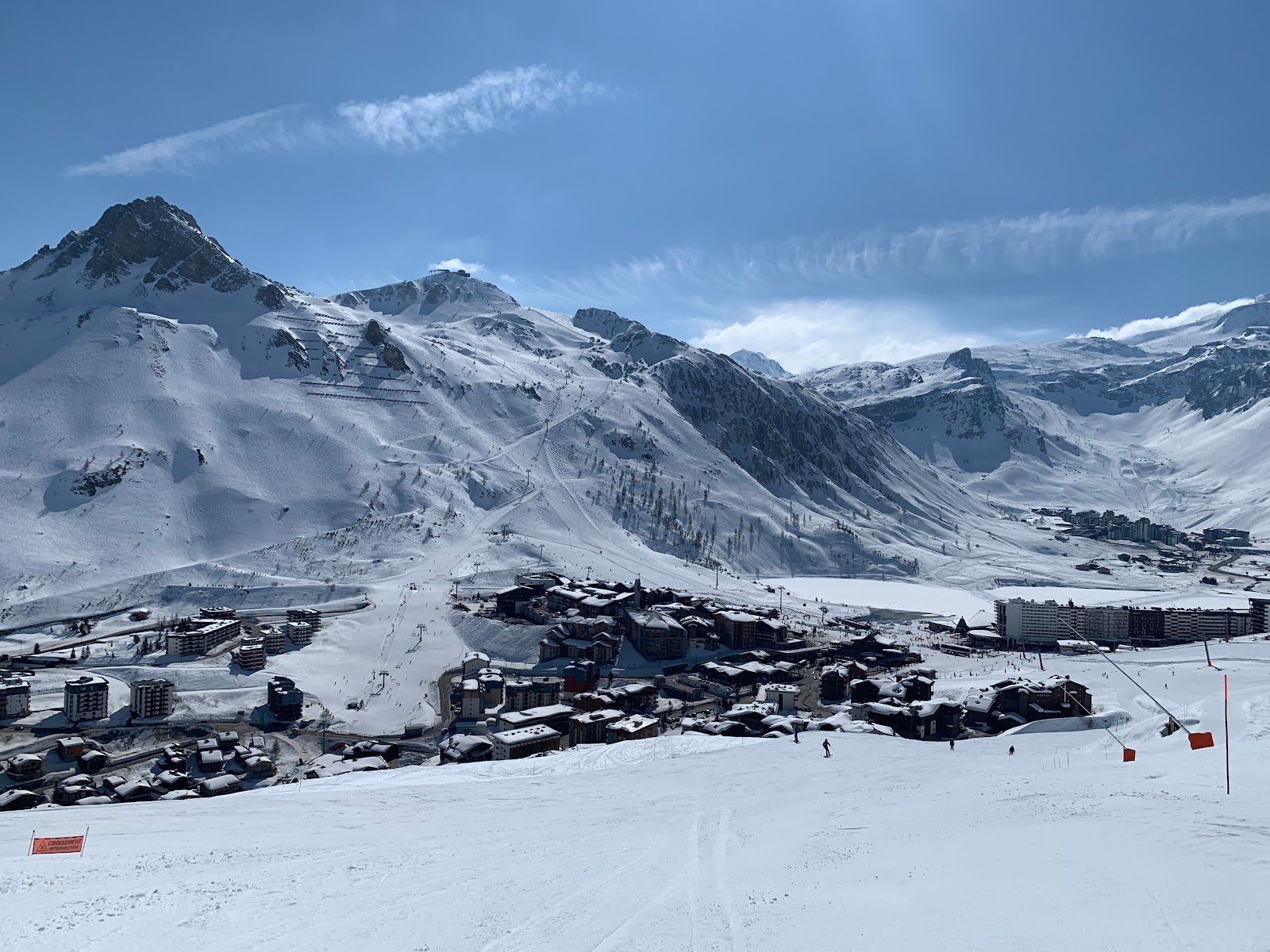
Tignes sits between 1,550m (Tignes Les Brevieres) and 3,456m (Grande Motte glacier), forming one half of the Espace Killy area alongside Val d'Isere — 300km of combined pistes. The skiing is more vertical and more varied in character than Val Thorens. The glacier provides gentle, wide runs at altitude (and summer skiing), while the lower sectors around Tignes Le Lac and La Grande Motte offer steep, technical terrain. The off-piste is exceptional — the Chardonnet and Pissaillas valleys are renowned, and the freeride culture is deeply embedded in the resort's identity. Tignes also has some of the best terrain parks in Europe, with a strong freestyle scene.
Val Thorens wins on scale and accessibility. Tignes wins on vertical variety and freestyle culture. Both deliver near-guaranteed snow from November through May.
The Village & Apres-Ski
Neither resort will win architectural beauty awards, but they've developed distinct personalities.
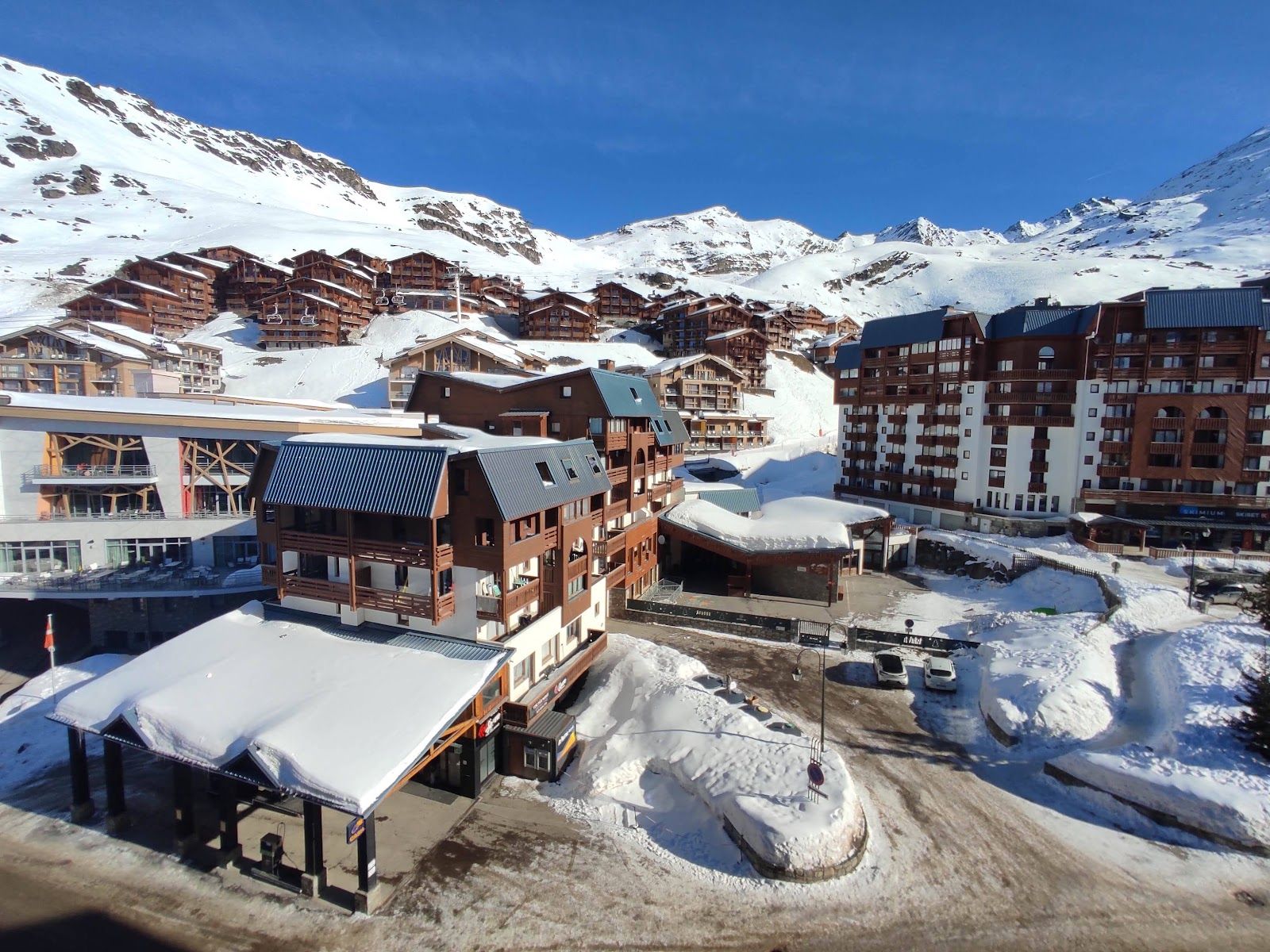
Val Thorens is compact and purpose-built — the original 1970s concrete has been softened over decades of renovation, and the village now has genuine warmth, particularly around the Place de Caron area. Everything is ski-in/ski-out, and the concentrated layout means restaurants, bars, and shops are within a few minutes' walk. Apres-ski is surprisingly vibrant: the Folie Douce (the chain that originated here) kicks off at 3pm with DJs and dancing on tables, and the Malaysia and Underground bars carry the energy into the evening. For a high-altitude, purpose-built resort, Val Thorens has more soul than you'd expect.
Tignes is spread across several satellite villages — Le Lac, Val Claret, Les Boisses, and Les Brevieres — each with a different character. Le Lac is the commercial centre with the most dining and nightlife options. Val Claret is higher and more functional, closer to the glacier lifts. Les Brevieres, at the bottom of the valley, is a genuine old Savoyard village with rustic charm. The apres-ski is more muted than Val Thorens — Loop Bar and Grizzly's are the main draws — but the town compensates with excellent restaurants and a laid-back, sporty atmosphere. Tignes attracts a crowd that cares more about skiing than scene.
Getting There
Both resorts sit in the Tarentaise valley and share similar access routes, though Tignes requires a slightly longer drive.
Val Thorens: Chambery airport is the nearest at approximately 2 hours, with Lyon (2h45) and Geneva (3h) as alternatives. The final 30-minute climb from Moutiers is steep and occasionally closed in heavy snowfall. Transfer services are well-organised and most run directly from Geneva. The resort's altitude means you're essentially guaranteed snow from the moment you arrive.
Tignes: Chambery is again closest at around 2 hours 15 minutes, with Geneva at approximately 3 hours. The approach via Bourg-Saint-Maurice is straightforward, and Tignes' position in the valley means the final ascent is less exposed than Val Thorens'. The Eurostar ski train runs directly to Bourg-Saint-Maurice from London — a genuinely convenient option that makes Tignes one of the most accessible high-altitude resorts for British skiers.
When to Visit
Snow reliability is the defining feature of both resorts, and both deliver an exceptionally long season.
Val Thorens typically opens in late November and closes in early May — one of the longest seasons in the Alps. January through March is peak time, when the entire Three Valleys is at its best. February half-term is the busiest and most expensive week. Late March and April offer outstanding spring skiing with warm temperatures, soft snow, and significantly lower prices.
Tignes pushes the envelope further: the Grande Motte glacier opens as early as October and remains skiable into May, with additional summer skiing from June through August. For the main resort, January to March delivers the best all-round conditions. Tignes is a strong choice for early and late season trips when lower resorts are a gamble.
The Verdict
These are the two resorts you choose when snow reliability is non-negotiable. Both sit above the treeline, both guarantee skiing deep into spring, and both offer serious terrain. The decision comes down to priorities.
Choose Val Thorens if you want: the largest linked ski area in the world; a compact, convenient village where everything is ski-in/ski-out; surprisingly good nightlife for a high-altitude resort; the ability to ski to Meribel and Courchevel without getting in a car. Val Thorens is the resort that maximises your time on snow.
Choose Tignes if you want: glacier skiing with the longest season in the Alps; a strong freestyle and freeride culture; the Espace Killy connection to Val d'Isere; a more spread-out village structure with different zones to explore. Tignes is the resort for skiers who prioritise the mountain above everything else.
If you're still deciding, consider what matters more: breadth of skiing (Val Thorens and the Three Valleys) or depth of terrain and year-round access (Tignes and the glacier). Either way, you won't be worrying about snow.
Frequently Asked Questions
Which resort is higher — Val Thorens or Tignes?
Val Thorens village sits at 2,300m, making it the highest resort village in Europe. However, Tignes' Grande Motte glacier reaches 3,456m — higher than Val Thorens' summit at 3,230m. In practice, both offer exceptional altitude and snow reliability. Tignes has more vertical range, with skiing starting as low as 1,550m in Les Brevieres.
Can you ski from Tignes to Val d'Isere?
Yes. Tignes and Val d'Isere form the Espace Killy, a fully linked ski area covering 300km of pistes. The connection is seamless — you can ski between the two resorts throughout the day via multiple lift and piste links. The combined area offers excellent variety, with Val d'Isere's south-facing Solaise and Bellevarde sectors complementing Tignes' higher-altitude terrain.
Is Val Thorens too cold?
Val Thorens' altitude means temperatures are consistently lower than valley-floor resorts — expect minus 10 to minus 20 in January. The wind chill above the treeline can be significant. However, the resort is well-adapted: heated chairlifts, sheltered runs, and warm mountain restaurants. Pack proper layers and you won't have issues. The trade-off is snow quality that lower resorts simply cannot match.
Which resort is better value?
Both resorts offer better value than the glamour resorts of Courchevel, Verbier, or Zermatt. Val Thorens has a wider range of accommodation (from apartments to luxury chalets) and the Three Valleys lift pass, while expensive, covers an extraordinary amount of terrain. Tignes is slightly more affordable for accommodation, and the Espace Killy pass is cheaper than the Three Valleys equivalent. For pure cost-per-kilometre of skiing, both are excellent.
Is there anything to do besides skiing?
More than you might expect at purpose-built high-altitude resorts. Val Thorens has an excellent sports centre with a pool and climbing wall, plus snowshoeing and ice driving circuits. Tignes has a lake (frozen in winter for ice diving and skating), a waterpark complex, and snowshoeing trails. Neither will match the off-slope diversions of a town like Kitzbuhel or Megeve, but for groups that want to ski hard and rest well, both have enough to keep non-skiers occupied.
Can you ski from Val Thorens to Tignes?
Not directly — they sit in different valley systems. Val Thorens is part of the Three Valleys (with Méribel, Courchevel, Les Menuires, and Saint-Martin-de-Belleville). Tignes is part of the Espace Killy (with Val d'Isère). You can ski across each system, but connecting them requires either a car journey or a multi-resort lift pass combined with a transfer — roughly 90 minutes by road between the two.
Which is better for families — Val Thorens or Tignes?
Val Thorens has the edge for families with younger children: everything is ski-in/ski-out, the village is compact and walkable in ski boots, the sports centre provides wet-weather backup, and the childcare infrastructure (kindergartens, ski school groups) is well-developed. Tignes is split across several villages, which adds logistical complexity with small children, though Tignes Le Lac is family-friendly with its lakeside layout and gentle home pistes. For ease and convenience, Val Thorens wins. For older children who want variety and terrain parks, Tignes edges ahead.