Best Apres Ski in Europe: 7 Resorts Ranked for After-Hours Culture
The best apres ski in Europe is found in seven resorts that have each developed a distinctive after-hours culture — from slope-side dancing in ski boots to candlelit wine bars in medieval villages. St. Anton remains the undisputed capital for raw energy, while resorts like Megeve and Lech offer something altogether quieter and more considered. What follows is a resort-by-resort guide based on atmosphere, venue quality, and the ease of getting from the slopes to your first drink.
St. Anton — The Undisputed Capital of Apres Ski
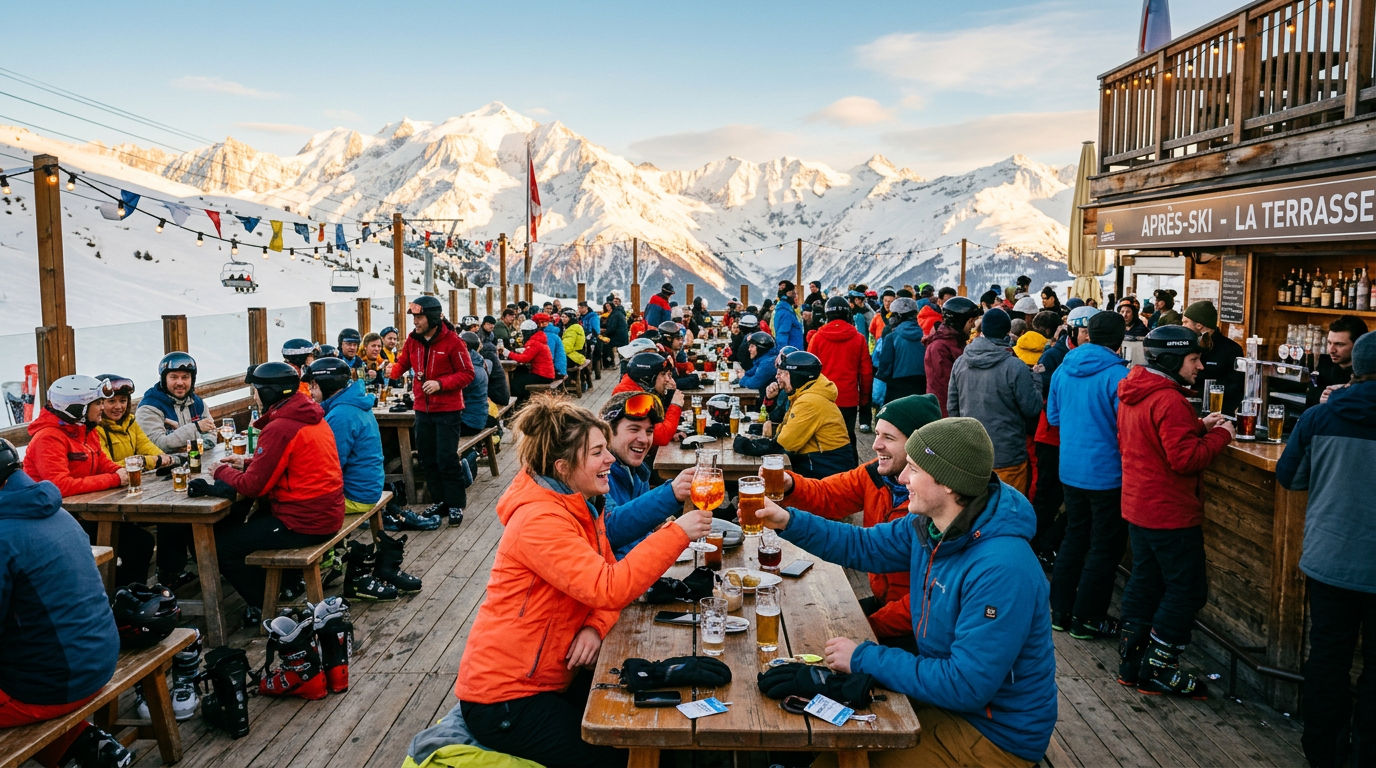
St. Anton am Arlberg has defined European apres ski culture for decades, with slope-side venues like the Mooserwirt and Krazy Kanguruh drawing crowds from 3pm onward. The tradition here is immediate: ski down to the base of the Galzig gondola, unbuckle your boots, and join a terrace party that often runs until well after dark.
The energy at the Mooserwirt is hard to overstate. DJs play to a crowd still in ski gear, drinks are ordered from the bar or from passing trays, and the atmosphere is closer to a festival than a quiet wind-down. Krazy Kanguruh, directly on the Steissbachtal run, offers a similar intensity with slightly more space. For something calmer, the Hospiz Alm combines traditional Tyrolean interiors with a notable wine collection.

After Dark
The scene continues into the village centre, where bars like the Piccadilly, Underground, and Postkeller keep things going past midnight. The compact layout of St. Anton means everything is walkable — a meaningful advantage when snow is underfoot and the night has been long.
Val d'Isere — French Sophistication Meets Mountain Revelry
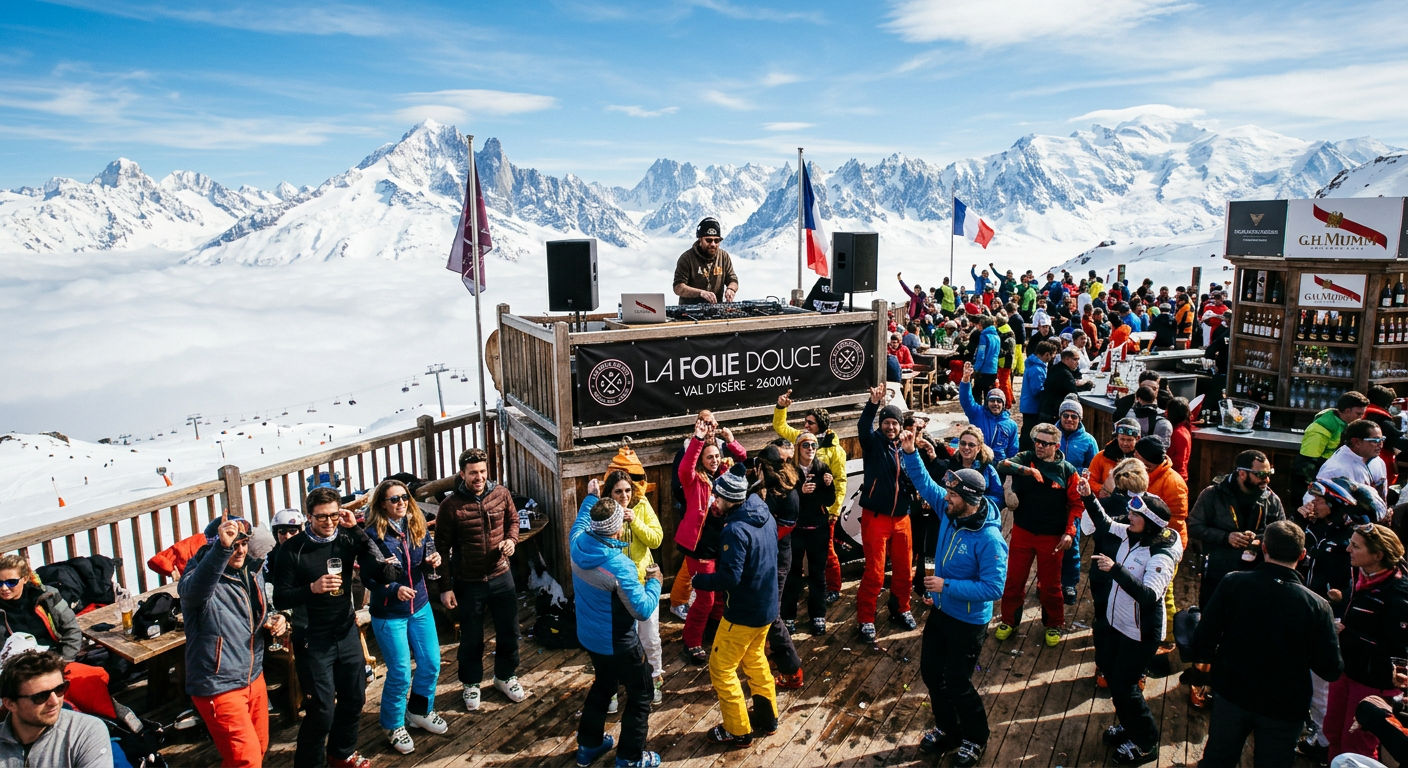
Val d'Isere pairs French culinary finesse with some of the most spirited apres ski in the Alps, anchored by La Folie Douce — a high-altitude restaurant and open-air club at 2,600 metres. The concept, which has since expanded to other resorts, originated here: a DJ booth surrounded by snow, altitude, and panoramic views that turn an afternoon drink into an event.
In the village, the scene splits neatly. Dick's Tea Bar is the long-standing institution for late-night dancing — unpretentious, reliable, and open until the early hours. La Baraque, near the main nursery slopes, draws a younger crowd for terrace drinks. For a more measured evening, Le Blizzard's cocktail lounge or the wine list at L'Atelier d'Edmond provide a quieter counterpoint.
Verbier — Switzerland's Most Spirited Ski Town
Verbier has earned a reputation as the liveliest resort in the Swiss Alps, with a nightlife scene that runs longer and louder than its neighbours. The anchor is Pub Mont Fort, a slope-side bar at the base of the Médran lift that fills up from 3:30pm with live music, cheap beer, and a crowd that skews younger and more international than most Swiss resorts.
Further into the village, Le Farinet combines a nightclub, cocktail bar, and outdoor terrace in a single complex that functions as the centre of Verbier's social universe. The Crock No Name is the late-night institution — small, loud, and open until 4am on weekends. For something more refined, the W Hotel's rooftop bar offers cocktails with a panoramic view of the Val de Bagnes.
Zermatt — Car-Free Village, World-Class Atmosphere
Zermatt's car-free village creates an apres ski atmosphere unlike any other Alpine resort. Without traffic, the cobbled Bahnhofstrasse becomes a promenade of restaurants, bars, and shopfronts that feels more like a pedestrian quarter in a historic town than a ski resort strip.

The Papperla Pub is the classic starting point — a warm, crowded bar directly on the main street with live music most evenings. Hennu Stall, on the Zermatt side of the Klein Matterhorn slopes, is the resort's answer to slope-side apres: a wooden terrace with Matterhorn views and a lively crowd from 3pm. For cocktails, the Vernissage in the Backstage Hotel combines a cinema, gallery, and bar in one space.
The Quieter Side
Zermatt also caters to those who prefer their apres ski with a wine list. The Omnia's rooftop terrace, accessed by a lift carved into the rock, serves drinks against what may be the most photographed mountain backdrop in the world.
Megeve — The Refined Alternative
Megeve approaches apres ski as it does everything else: with restraint, good taste, and a distinct absence of thumping bass. This is not a resort for slope-side DJ sets. Instead, the village — a medieval centre of cobbled streets and Belle Epoque facades — hosts cocktail bars, wine cellars, and restaurants where the transition from skiing to evening feels seamless rather than sudden.

Les Enfants Terribles, in the Hotel Mont Blanc, is the village's social hub — a cocktail bar with low lighting and a crowd that has changed out of ski gear. Le Chamois, near the Place de l'Eglise, serves wine and charcuterie in a more rustic setting. For something distinctly Megeve, the Bar du Fer à Cheval at the Hotel Fer à Cheval combines Savoyard warmth with a considered drinks menu.
Who This Suits
Megeve's apres ski is ideal for those who want atmosphere without volume — couples, gastronomic travellers, and anyone who considers a good Burgundy a better end to the day than a DJ. The village's walkability makes it easy to move between restaurant and chalet without a car.
Morzine — Relaxed, Affordable, and Underrated
Morzine's apres ski scene has grown steadily from its roots as a laid-back family resort into something more interesting: a mix of British-run bars, French-owned wine spots, and a growing craft beer scene, all set in a traditional Savoyard village that feels more authentic than purpose-built resort towns.
The Tibetan Cafe is the centre of gravity — a bar and restaurant with a large terrace, live music, and a crowd that includes locals, seasonaires, and families alike. Bec Jaune Brewery, Morzine's own craft brewery and taproom, has become a destination in its own right. For something quieter, L'Opera is a cocktail bar with DJs at the weekend and a wine list that takes itself seriously.
Value and Atmosphere
Morzine stands apart from other resorts on this list for its accessibility. Prices for drinks and dining run 30-40% below Verbier or Courchevel, and the resort's position in the vast Portes du Soleil ski area means there is no shortage of terrain to justify the trip.
Lech — Understated Austrian Elegance
Lech am Arlberg takes the opposite approach to its neighbour St. Anton: where St. Anton is loud, Lech is measured; where St. Anton fills terraces from mid-afternoon, Lech prefers a quiet drink by the fire before a multi-course dinner. The apres ski here is not absent — it is simply more curated.
The Rüfikopf Bar, at the top of the Rüfikopf cable car, offers panoramic views and a civilised terrace. In the village, the Hotel Krone's bar is a gathering point for regulars, and the Pfeffermühle combines traditional Tyrolean design with live music on select evenings. Lech's real strength, though, is its dining scene — several restaurants hold Gault&Millau or Michelin recognition.
For the Discerning Traveller
Lech suits guests who define apres ski as the entire evening experience, not just the first drink.
Find Your Apres Ski Chalet
Explore chalets in St. Anton, Val d'Isere, Verbier, or browse all destinations.
Frequently Asked Questions
Which European ski resort has the best apres ski?
St. Anton am Arlberg is widely regarded as the best apres ski destination in Europe. Its slope-side bars — particularly the Mooserwirt and Krazy Kanguruh — have set the template for Alpine apres culture. Val d'Isere and Verbier are the closest competitors, each with a strong mix of on-mountain and village nightlife.
Is apres ski in Europe expensive?
Costs vary significantly by resort. In Morzine or St. Anton, a beer typically runs €5-8. In Verbier, Zermatt, or Megeve, expect to pay €8-14 for the same drink. The most meaningful cost difference is in accommodation and dining rather than drink prices alone. Morzine offers the best value among the resorts on this list.
What time does apres ski start in the Alps?
Apres ski in the Alps typically begins between 3pm and 4pm, when the main lifts start closing. In St. Anton and Val d'Isere, slope-side bars like the Mooserwirt and La Folie Douce are already full by 3:30pm. Village bars usually pick up by 5pm, and the scene transitions to dinner and nightlife from 8pm onward.
Can families enjoy apres ski in Europe?
Yes — several resorts on this list cater well to families. Morzine and Megeve offer low-key atmospheres where children are welcome in most restaurants and bars during early evening. Zermatt's car-free village is particularly family-friendly. The high-energy scenes in St. Anton and Verbier are better suited to adult groups.
What should I wear to apres ski?
On-mountain apres ski (slope-side bars) is attended in ski gear — boots, salopettes, and jackets are the norm. Village apres ski is more varied: in St. Anton and Morzine, casual wear is fine; in Megeve and Lech, guests tend to dress up for evening bars and restaurants. Layering is practical since you will move between heated interiors and cold streets.
Which resort is best for apres ski and good skiing?
Val d'Isere combines the strongest all-round skiing with excellent apres ski. Its Espace Killy ski area offers 300km of pistes shared with Tignes, including significant off-piste terrain, while the village delivers La Folie Douce, Dick's Tea Bar, and a strong restaurant scene. St. Anton's Arlberg ski area (305km) is equally strong for terrain and apres combined.