Off-Piste Skiing: 7 Alpine Resorts Ranked for Freeride Terrain
Quick Answer
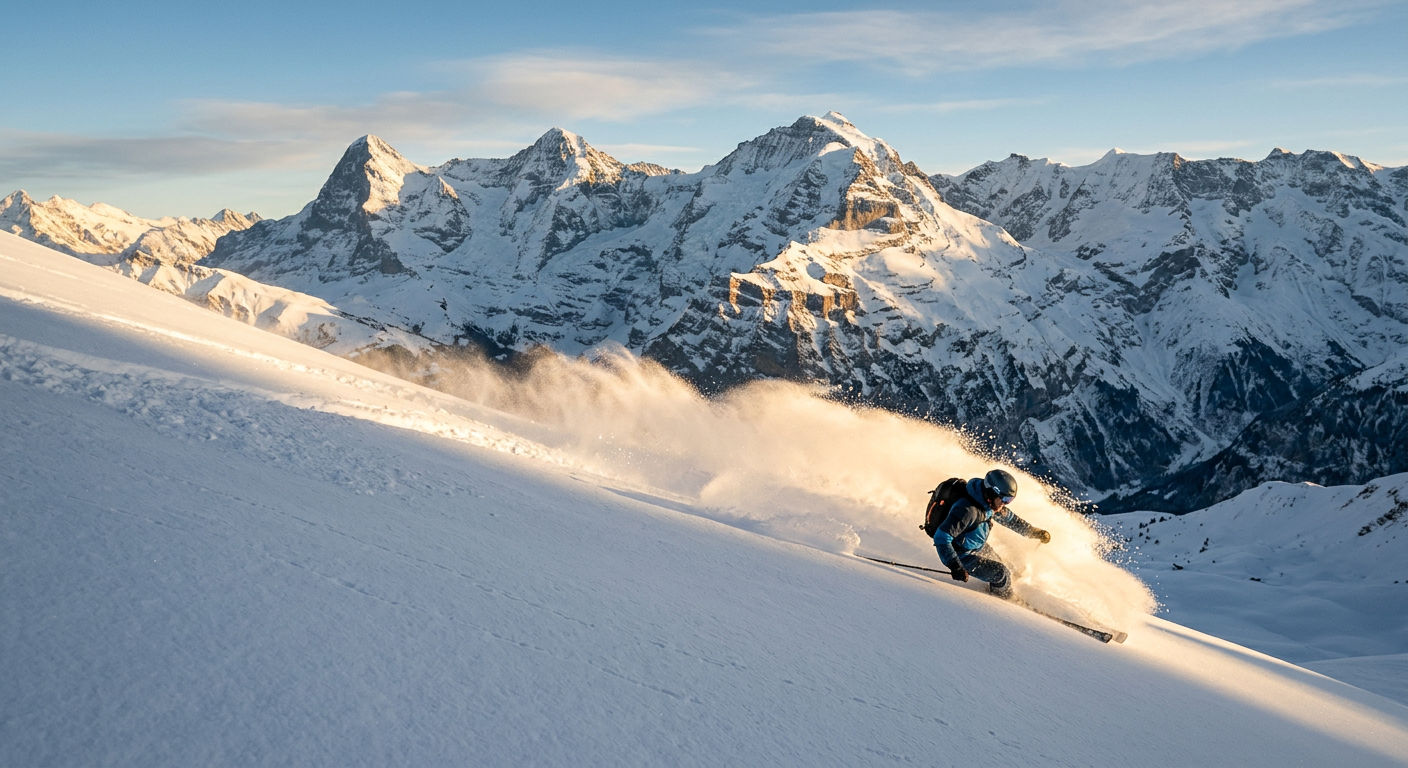
The best off-piste skiing in the Alps sits across seven resorts, each with a distinct freeride character. Chamonix delivers the steepest couloirs and the iconic Vallée Blanche descent. Verbier offers vast open backcountry accessible from the Mont Fort cable car. Val d'Isère and St. Anton combine lift-accessed off-piste with deep snowfall records. Pick Chamonix for technical challenge, Verbier for backcountry exploration, or St. Anton for the best powder-to-price ratio.
Off-piste skiing — venturing beyond groomed runs into unpatrolled, unmarked terrain — is where the Alps reveal their full scale. The same mountains that funnel millions of skiers down prepared pistes also hold thousands of metres of untracked powder faces, glacier descents, and hidden couloirs that most visitors never see.
This guide ranks seven resorts by what actually matters for freeride skiing: terrain variety, vertical drop, snow reliability, guide availability, and the quality of what's waiting when you get back down.
What Makes a Great Off-Piste Resort
A resort's off-piste quality comes down to five factors:
- Vertical drop and gradient — steeper terrain holds powder longer
- Altitude and snowfall — above 2,500m means reliable cover from December through April
- North-facing aspects — slower melt, better snow preservation
- Guide infrastructure — bureau des guides, certified mountain guides, rescue services
- Avalanche management — controlled zones, transceiver checkpoints, posted risk levels
The resorts below all score highly across these criteria. What separates them is character — some favour steep, technical descents; others open into wide bowls that reward exploration. The table at the end compares them side by side.
Chamonix — Steep Couloirs and the Vallée Blanche
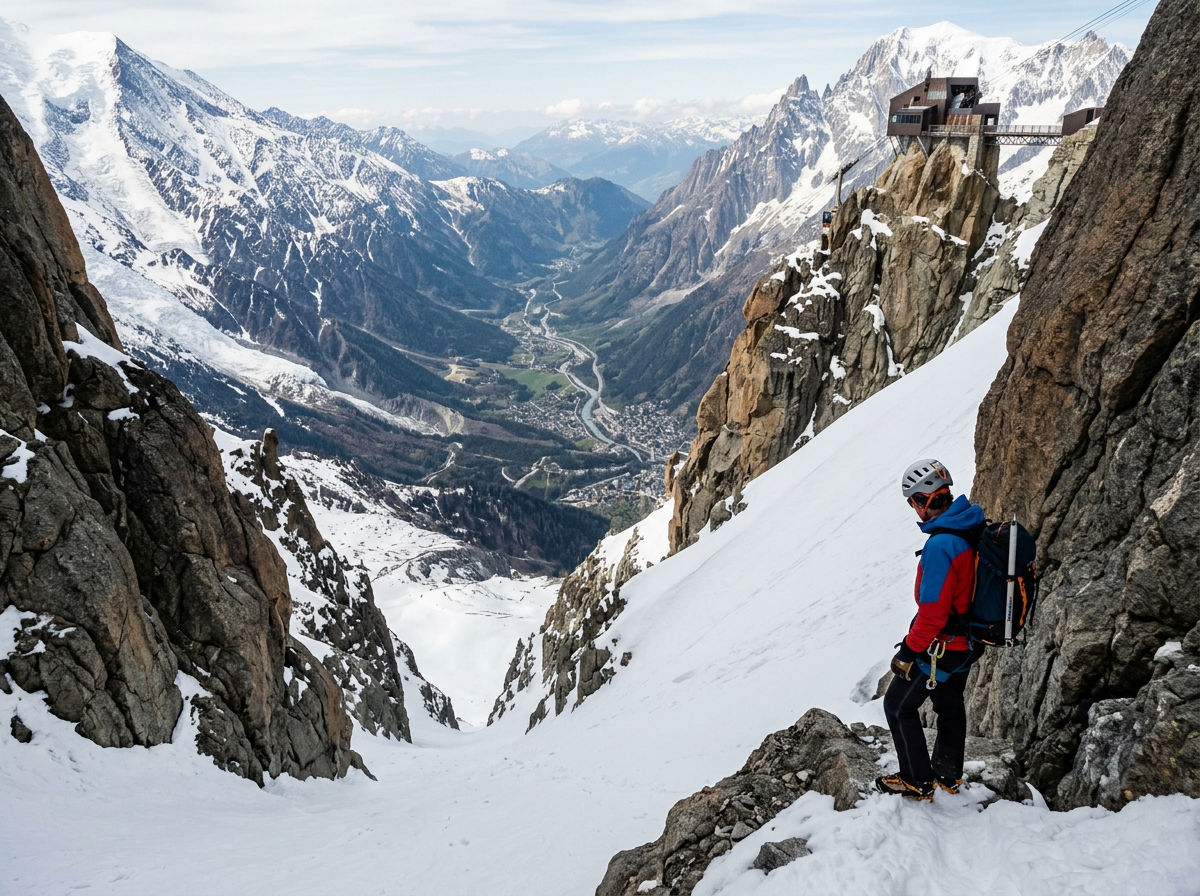
Chamonix is the birthplace of alpinism and remains the reference point for off-piste skiing in Europe. The Aiguille du Midi cable car lifts you to 3,842m — the highest lift-accessed point in the Alps — and from there, the 20km Vallée Blanche descent drops through crevasse fields and glacial terrain to the valley floor at 1,035m. No other resort offers a single run with that kind of vertical.
Beyond the Vallée Blanche, Chamonix's five ski areas scatter across the Mont Blanc massif. Les Grands Montets (currently rebuilding its upper cable car) has historically offered the steepest lift-accessed freeride in the valley. Flégère and Brévent hold north-facing powder stashes that stay skiable for days after a storm. The Aiguille du Midi's north face — the Envers du Plan — is a serious mountaineering descent requiring ropes, crampons, and a qualified guide.
Who It's For
Confident off-piste skiers with glacier experience, or intermediates hiring a guide for the Vallée Blanche. Not the place to try off-piste for the first time — Chamonix's terrain is steep, consequential, and widely spaced across separate ski areas connected by bus, not lifts.
Verbier — Open Backcountry and the Mont Fort Summit
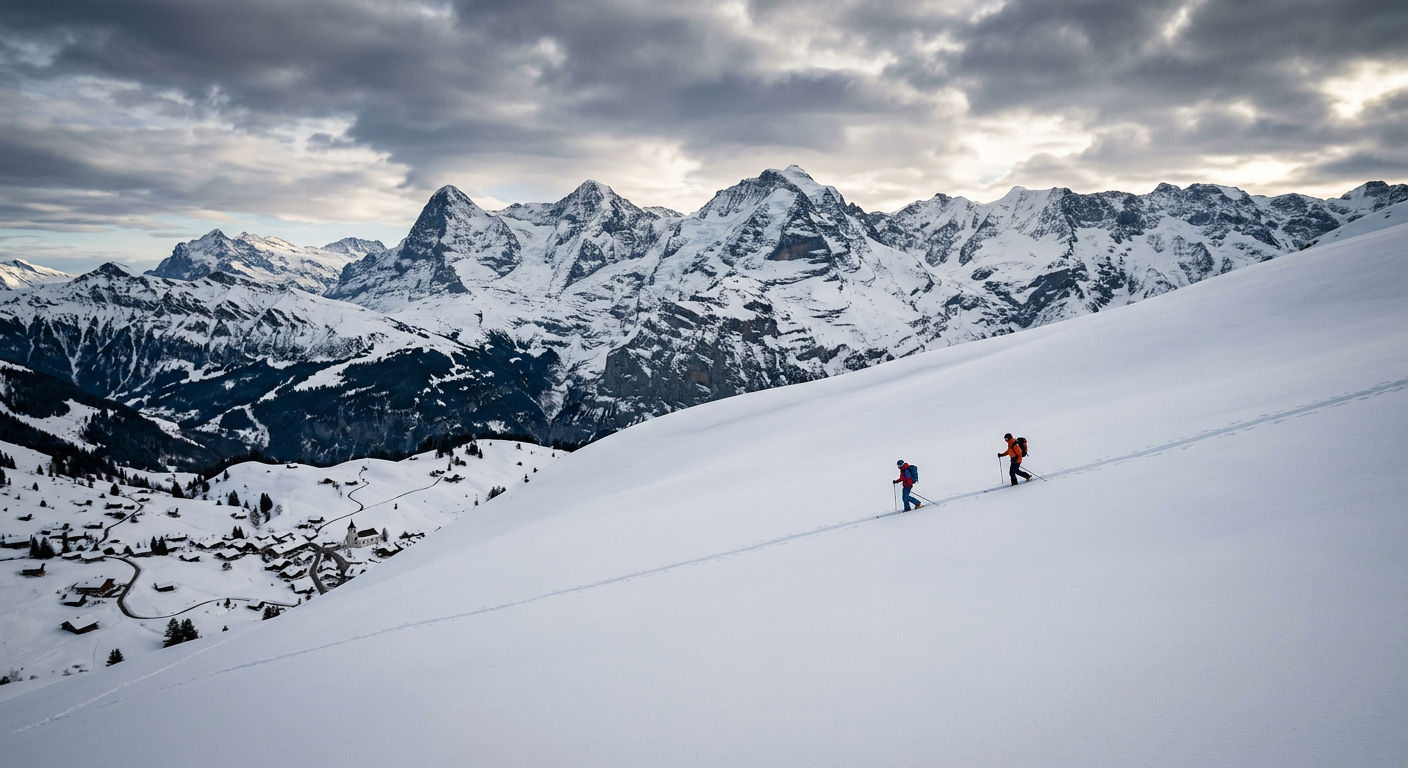
Verbier's freeride terrain is the most extensive lift-accessed backcountry in Switzerland. The Mont Fort cable car reaches 3,330m, opening a network of off-piste itineraries that drop through wide bowls, steep chutes, and glacier terrain across the 4 Vallées system. The resort's Bec des Rosses face hosts the Freeride World Tour finals each March — the steepest competition venue in professional freeride skiing.
What distinguishes Verbier from Chamonix is accessibility. Several classic off-piste runs — the Tortin, the Gentianes glacier, the backside of Mont Gelé — start directly from lift stations and finish at marked pistes below. You can ski challenging off-piste terrain and be back at a lift within 30 minutes, rather than committing to a multi-hour descent.
The Col des Mines, Vallon d'Arby, and the Stairway to Heaven are intermediate-friendly off-piste itineraries that introduce skiers to ungroomed terrain without extreme gradients. Verbier's Bureau des Guides pairs clients with UIAGM-certified guides at approximately CHF 600–900 per day.
Who It's For
Strong intermediates through experts. Verbier rewards powder-hungry skiers who want variety — steep faces in the morning, wide bowls in the afternoon, and a chalet sauna by evening.
Val d'Isère — Where Espace Killy Terrain Opens Up
Val d'Isère shares the 300km Espace Killy ski area with Tignes, and while the piste network is extensive, the off-piste terrain multiplies it. The Signal and Solaise sectors hold north-facing powder fields that stay untracked for days thanks to the resort's relatively low proportion of expert skiers. The Col Pers and Chardon glacier descents offer committed backcountry skiing with 1,500m+ vertical drops to the valley.
The resort's altitude — village at 1,850m, top lifts at 3,456m on the Grande Motte glacier (accessed via Tignes) — provides reliable snow cover from late November through early May. Val d'Isère averages approximately 5 metres of snowfall per season, among the highest in the northern French Alps.
The resort hosts several off-piste guiding outfits, including Évolution 2 and the Bureau des Guides de Val d'Isère. Half-day introductory off-piste sessions start from approximately €250 for two people — lower than Chamonix, reflecting the friendlier entry-level terrain.
The majority include a sauna and over half offer full spa facilities. The sheer range — from self-catered apartments to fully staffed chalets — means groups can match their accommodation budget to their guide spend. See our Val d'Isère skiing guide for a full resort breakdown.
Who It's For
Intermediate to advanced off-piste skiers. Val d'Isère is the best resort on this list for skiers transitioning from groomed runs to powder — the terrain is forgiving enough to build confidence, with steeper options nearby when you're ready.
St. Anton — Austria's Freeride Heartland
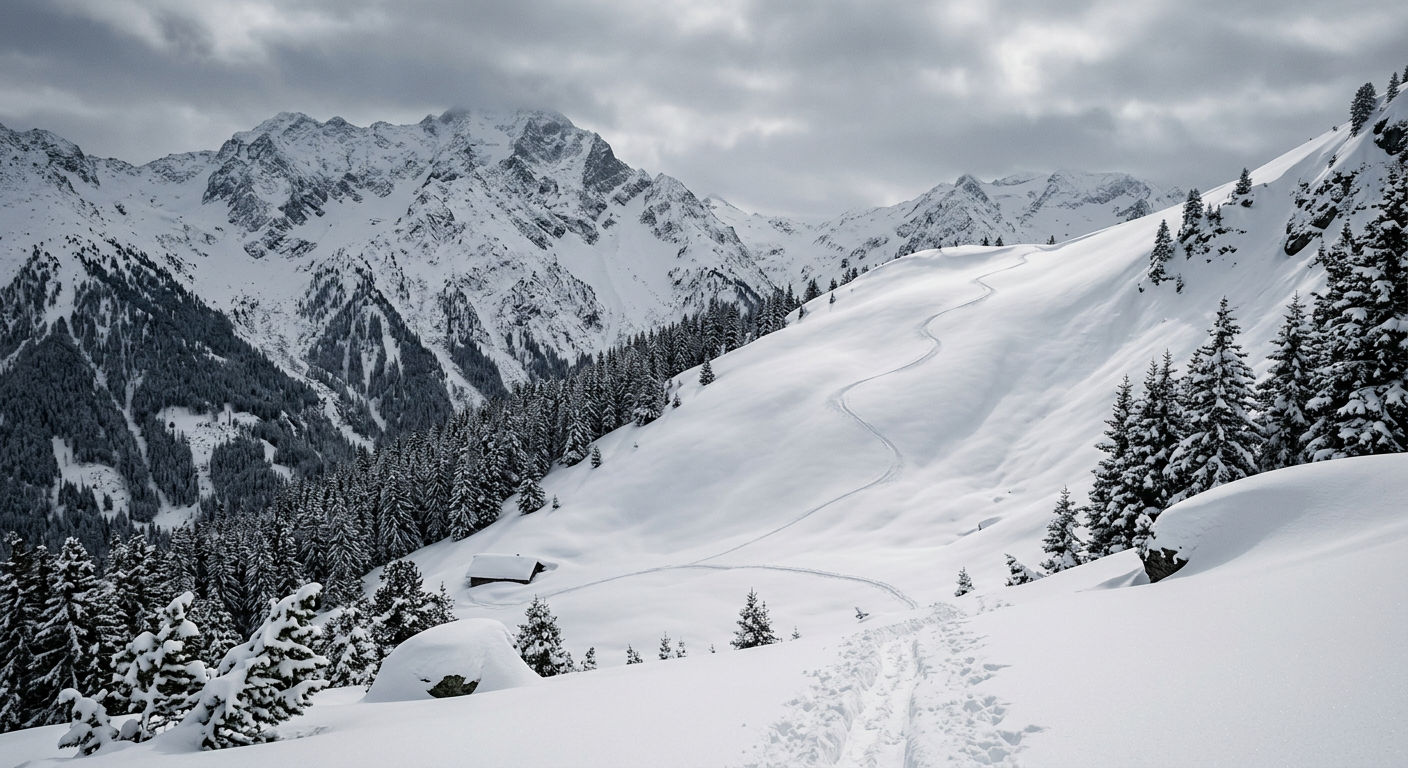
St. Anton's off-piste culture runs deeper than any other Austrian resort. The Arlberg region receives an average of 7 metres of snowfall per season — significantly more than most Alpine resorts — and the local skiing culture treats off-piste as the norm, not the exception. The Valluga summit (2,811m) offers a steep, guide-only descent into Zürs that is among the most celebrated runs in the Alps.
The terrain between Stuben, St. Christoph, and St. Anton forms a natural freeride playground. North-facing slopes above the Albona sector hold powder for days. The Mattun, Schindlerkar, and runs off the Kapall ridge are classics that combine 800–1,200m vertical with manageable gradients. Unlike Chamonix or Verbier, much of St. Anton's best off-piste is visible from the lifts — you can scout lines from the chairlift before committing.
Who It's For
All levels. St. Anton's terrain ranges from gentle powder fields above Stuben to the Valluga's steep chutes. The lower guide costs and deep snowfall make it the best entry point for off-piste skiing in the Alps.
Zermatt — High-Altitude Glacier Descents
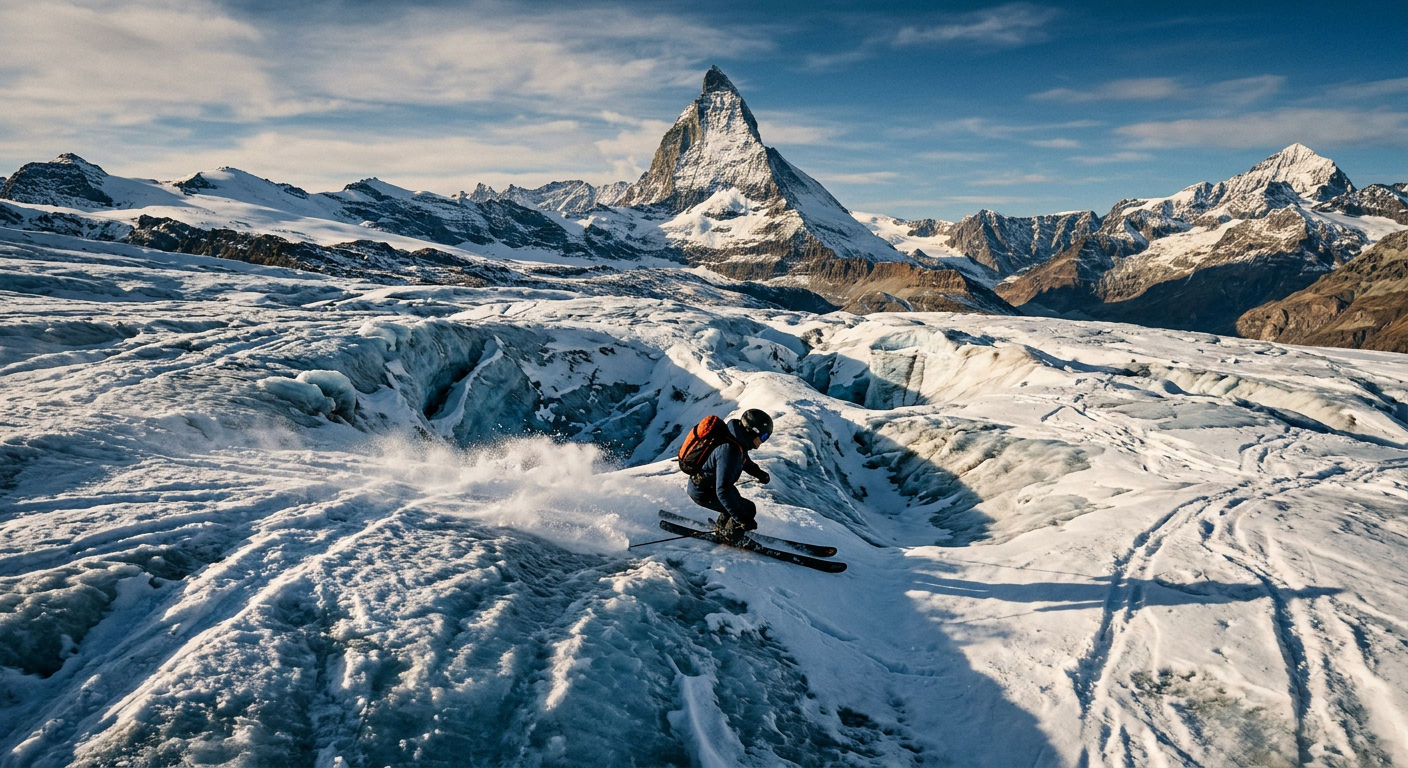
Zermatt's off-piste terrain is defined by altitude. The Klein Matterhorn lift station at 3,883m is the highest in Europe, and the glacier terrain below it holds skiable snow from October through May. The Italian side — the descent from Plateau Rosa toward Cervinia — adds a cross-border dimension that no other resort can match.
The Stockhorn sector (3,532m) is Zermatt's dedicated freeride zone, with steep north-facing chutes dropping into the Triftji couloir and the open bowls above Gant. The terrain is more technical than it appears from the lift, with rocky entry points and variable snow conditions on the wind-exposed ridges.
Zermatt's unique car-free village adds a logistical note: all transfers happen by electric taxi or on foot. After a long day of glacier skiing, this enforced quiet has its appeal — the village feels genuinely removed from the outside world in a way that Chamonix or Verbier, with their through-traffic, do not.
The accommodation is concentrated in the village centre, most within walking distance of the Gornergrat or Matterhorn Glacier Paradise lifts.
Who It's For
Advanced skiers drawn to high-altitude, glacier-heavy terrain. Zermatt's off-piste demands comfort with crevasse zones and exposed ridgelines. The cross-border descent to Cervinia is a memorable day out with a guide.
Lech-Zürs — The White Ring and Deep Snow
Lech-Zürs sits at the western end of the Arlberg, sharing the same snowfall patterns as St. Anton but with a markedly different character. Where St. Anton is rowdy, Lech is understated. The skiing is equally serious.
The runs off the Madloch chairlift — particularly the Langerzug and the descents into the Zug valley — are long, north-facing powder runs that hold snow exceptionally well. The Mehlsack couloir off the Rüfikopf is a steep, technical line visible from the village centre. The White Ring circuit (22km, four valleys, served entirely by lifts) is a day-long tour that crosses through consistently excellent off-piste terrain between the marked sections.
Lech's avalanche management is notably thorough. The resort closes certain off-piste zones during high-risk periods more proactively than most, which can frustrate experienced freeriders but significantly reduces accident rates.
Across our read our Lech Skiing guide, nearly all include a sauna and most offer a hot tub. The accommodation skews premium — Lech's village is small, refined, and quiet after dark. It is the off-piste resort for skiers who want serious terrain without the crowd. Our Lech skiing guide covers the full village and Arlberg connection.
Who It's For
Confident intermediates and above. Lech rewards patience — the best runs open after fresh snowfall, and the quieter slopes mean untracked lines last longer than in St. Anton, just down the valley.
Tignes — Glacier Access and Late-Season Certainty
Tignes completes the Espace Killy partnership with Val d'Isère and adds one critical advantage: the Grande Motte glacier, which keeps off-piste skiing viable well into May. At 3,456m, the glacier holds snow when lower resorts have turned to slush.
The Lavachet Wall — a steep, north-facing cliff band directly above Tignes Le Lac — is one of the most accessible expert off-piste zones in the Alps. It's visible from the village, and strong skiers can lap it repeatedly using the Bollin chairlift. The Chardonnet and Pramecou couloirs offer longer, more committing descents requiring a guide.
Tignes is also one of the more affordable resorts on this list.
Who It's For
Intermediate to expert skiers who prioritise snow certainty over village charm. Tignes is functional rather than picturesque — but the skiing, particularly late in the season, rivals anything in the Alps thanks to the glacier's altitude.
Staying Safe Off-Piste
Off-piste skiing carries objective risk that groomed runs do not. Avalanches, hidden crevasses, cliff bands, and rapidly changing weather are real hazards in every resort listed above. Three non-negotiable rules apply:
Carry avalanche equipment. A transceiver, probe, and shovel are the minimum. Most resorts require transceivers in marked off-piste zones, and some — including St. Anton and Lech — have transceiver checkpoints at key access gates.
Hire a guide for unfamiliar terrain. Even experienced freeriders benefit from local knowledge on a first visit. Guides know which aspects loaded overnight, which couloirs are in condition, and which descents end at cliffs. The cost of a guide is a fraction of a helicopter rescue.
Check the avalanche bulletin daily. The European Avalanche Warning Services publish daily risk assessments on a 1–5 scale. Most guided off-piste skiing happens at risk levels 2 (moderate) or 3 (considerable). At level 4 (high), guides restrict routes to low-angle terrain or cancel altogether.
Where to Stay After a Day in the Backcountry
Off-piste skiing is more physically demanding than resort skiing — longer descents, heavier snow, variable terrain, and the constant attention that unpatrolled terrain requires. What you come back to matters.
Browse all destinations to compare across the full collection.
Frequently Asked Questions
What does off-piste skiing mean?
Off-piste skiing means skiing outside the marked, groomed, and patrolled runs of a ski resort. The terrain is ungroomed, avalanche risk is not managed by the resort, and there are no safety nets or markers. In French resorts, the boundary between piste and off-piste is clearly delineated; in Austrian resorts, the distinction is sometimes blurred by "ski routes" — marked but ungroomed and unpatrolled itineraries.
Do I need a guide for off-piste skiing?
Not legally in most resorts, but practically yes — especially on a first visit. Guides assess avalanche risk, choose safe routes, and know the terrain intimately. Some descents, including the Valluga in St. Anton, legally require a certified guide. Budget approximately €400–700 per day for a private guide for up to four people, depending on the resort and country.
What equipment do I need for off-piste skiing?
Beyond standard ski equipment, you need an avalanche transceiver (worn on your body, switched to transmit), a collapsible probe (minimum 240cm), and a lightweight shovel. Many skiers also carry an avalanche airbag backpack. Fat skis (100mm+ underfoot) perform significantly better in deep powder than standard piste skis.
Which resort has the easiest off-piste terrain for beginners?
Val d'Isère and St. Anton offer the most accessible entry to off-piste skiing. Both have gentle powder fields close to marked runs, well-established guide operations offering half-day introductory sessions, and terrain that allows you to return to the piste network quickly if conditions become challenging. Verbier's Savoleyres sector also has moderate off-piste on gentler gradients.
When is the best time for off-piste skiing in the Alps?
January through March delivers the most consistent powder conditions across all seven resorts. January tends to bring colder, drier snow — the lightest powder for skiing. February and March offer longer days and better visibility, though the snow can be heavier. For glacier off-piste in Zermatt or Tignes, the season extends into May. December can be excellent but snowpack is thinner, increasing the risk of hidden obstacles.
How much does an off-piste ski holiday cost?
A week-long off-piste trip for a group of four typically breaks down to:
St. Anton and Tignes offer the strongest value; Verbier and Zermatt sit at the premium end. Splitting a large chalet and guide costs across a group of 8–12 brings the per-person cost down substantially.