Cervinia Skiing: Complete Guide to Italy's High-Altitude Matterhorn Resort
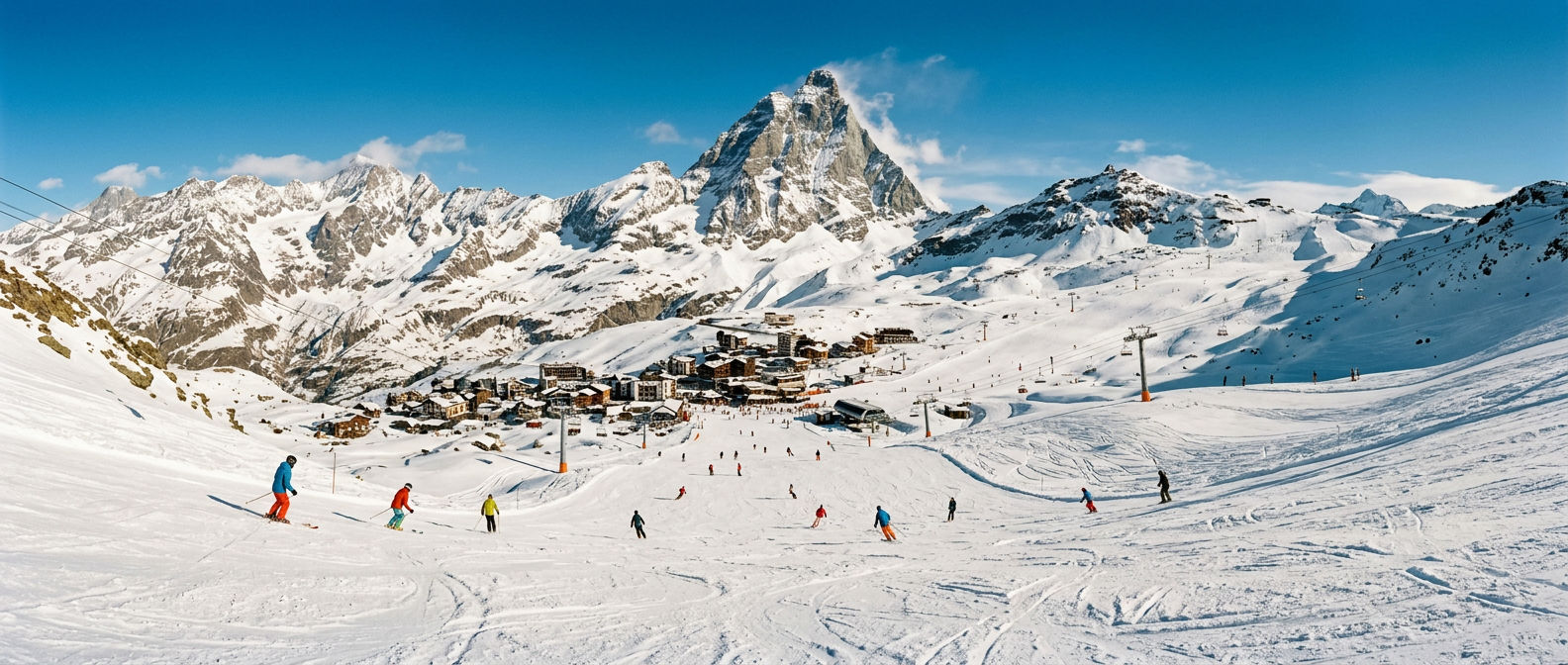
Breuil-Cervinia occupies a rare position in Alpine skiing: a high-altitude Italian village at 2,050 metres with direct lift access to the Matterhorn Ski Paradise, one of the largest interconnected ski areas in Europe. The resort shares 360 km of pistes with Zermatt across the Swiss border, yet accommodation and dining in Cervinia cost considerably less than their Swiss equivalents. For skiers who want reliable snow, dramatic scenery, and Italian hospitality without the Swiss price premium, Cervinia delivers on every count.
The Skiing: 360 Kilometres of High-Altitude Terrain
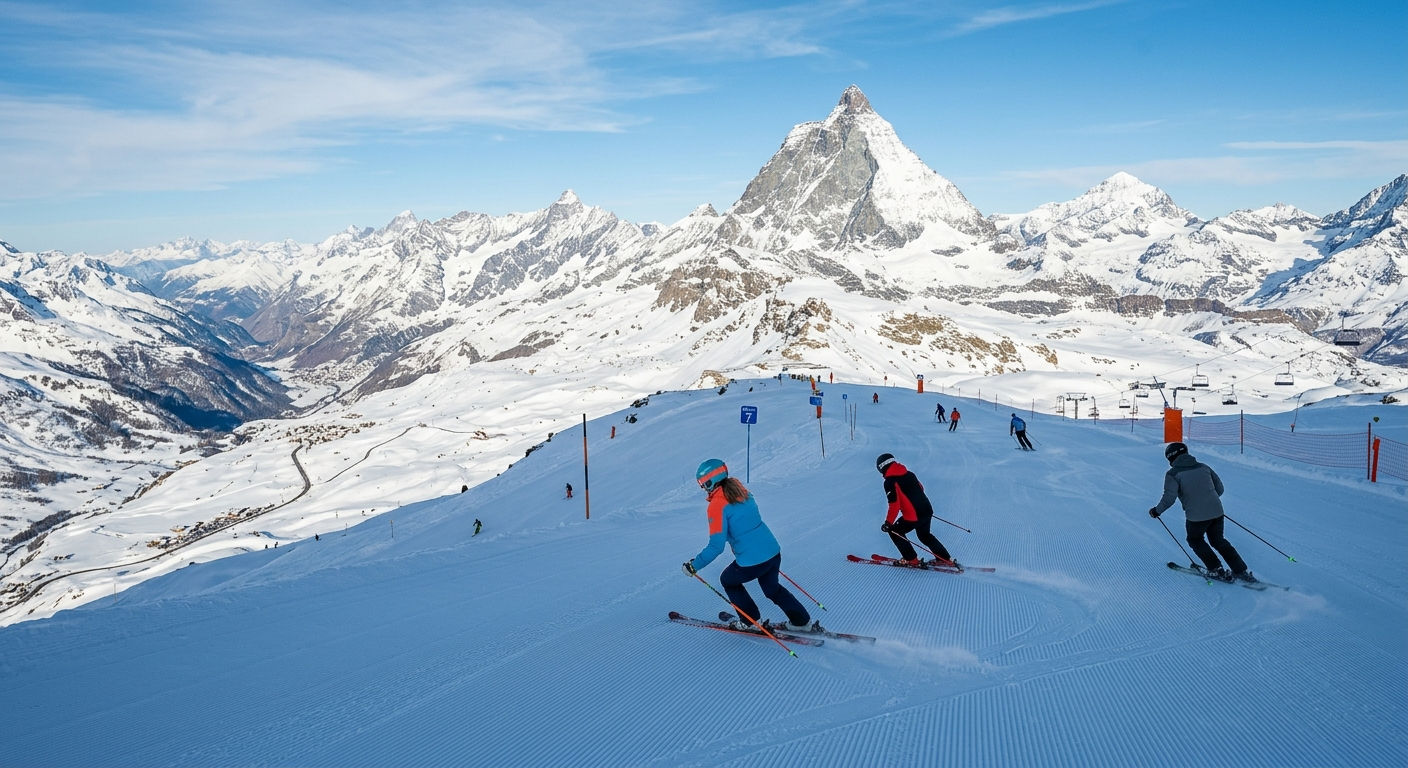
Cervinia's ski area spans from 2,050 metres at village level to 3,480 metres at Plateau Rosa, making it one of the highest lift-served ski areas in Europe. This altitude guarantees snow cover from late November through early May, with glacier skiing available well into summer.
The Italian side of the Matterhorn Ski Paradise offers around 150 km of marked pistes, predominantly suited to intermediate skiers. Wide, well-groomed runs descend from Plateau Rosa and Plan Maison, with consistent pitch and reliable conditions. The Ventina run — a 10 km descent from Plateau Rosa back to the village — ranks among the longest continuous pistes in the Alps.
Terrain Breakdown
| Difficulty | Pistes | Best For |
|---|---|---|
| Green/Blue | 60% of marked runs | Intermediates and confident beginners |
| Red | 30% of marked runs | Progressing skiers and those building confidence |
| Black | 10% of marked runs | Advanced skiers seeking steeper pitches |
Advanced skiers should not overlook the off-piste potential. The Grandes Murailles sector and the runs beneath Plateau Rosa offer serious terrain when conditions allow, though Cervinia's off-piste reputation sits firmly behind that of neighbouring Zermatt and La Thuile.
Snowboarders will find Cervinia particularly accommodating. The Indian Park snow park sits at 2,350 metres and includes kickers, rails, and a halfpipe — all benefiting from the altitude-assisted snow quality.
Skiing from Cervinia to Zermatt
The cross-border connection between Cervinia and Zermatt is the single most compelling reason to ski here. The Matterhorn Ski Paradise lift pass covers both resorts, giving access to 360 km of linked terrain across Italy and Switzerland.
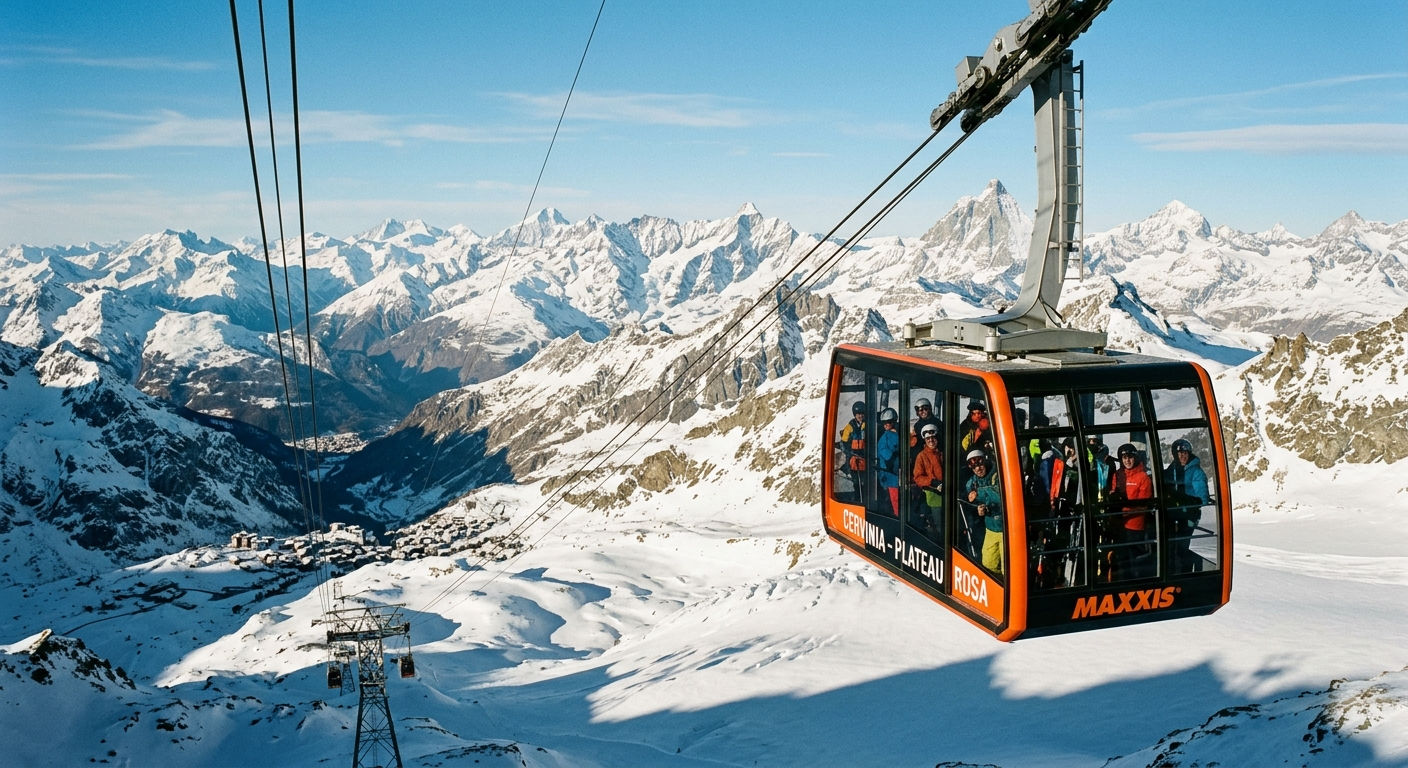
From Cervinia, skiers reach the border via the Plateau Rosa cable car, ascending to 3,480 metres. From the summit, runs descend into the Zermatt ski system — including the Klein Matterhorn sector, Trockener Steg, and the runs above Furi. The crossing itself takes roughly 20 minutes of lift time, and the descent into Zermatt opens up an entirely different character of terrain: steeper, narrower, and more varied than the broad Italian runs.
Practical Considerations
- Lift pass: The International Matterhorn Ski Paradise pass is required for cross-border skiing. A six-day pass costs approximately €380 for adults (2025/26 season).
- Timing: Allow a full day. Reaching Zermatt from Cervinia and returning comfortably requires departing before 10:00 and beginning the return by 15:00.
- Weather dependency: The Plateau Rosa crossing closes in high winds and poor visibility. Check conditions before committing to a cross-border day.
- Return route: The last lift back from Zermatt closes around 16:00. Missing it means a taxi or train back — an expensive and time-consuming detour.
For those staying in Zermatt who want to experience the Italian side, the reverse journey is equally rewarding — and lunch in Cervinia at Italian prices is a well-known local strategy.
The Village: Italian Character at Alpine Altitude
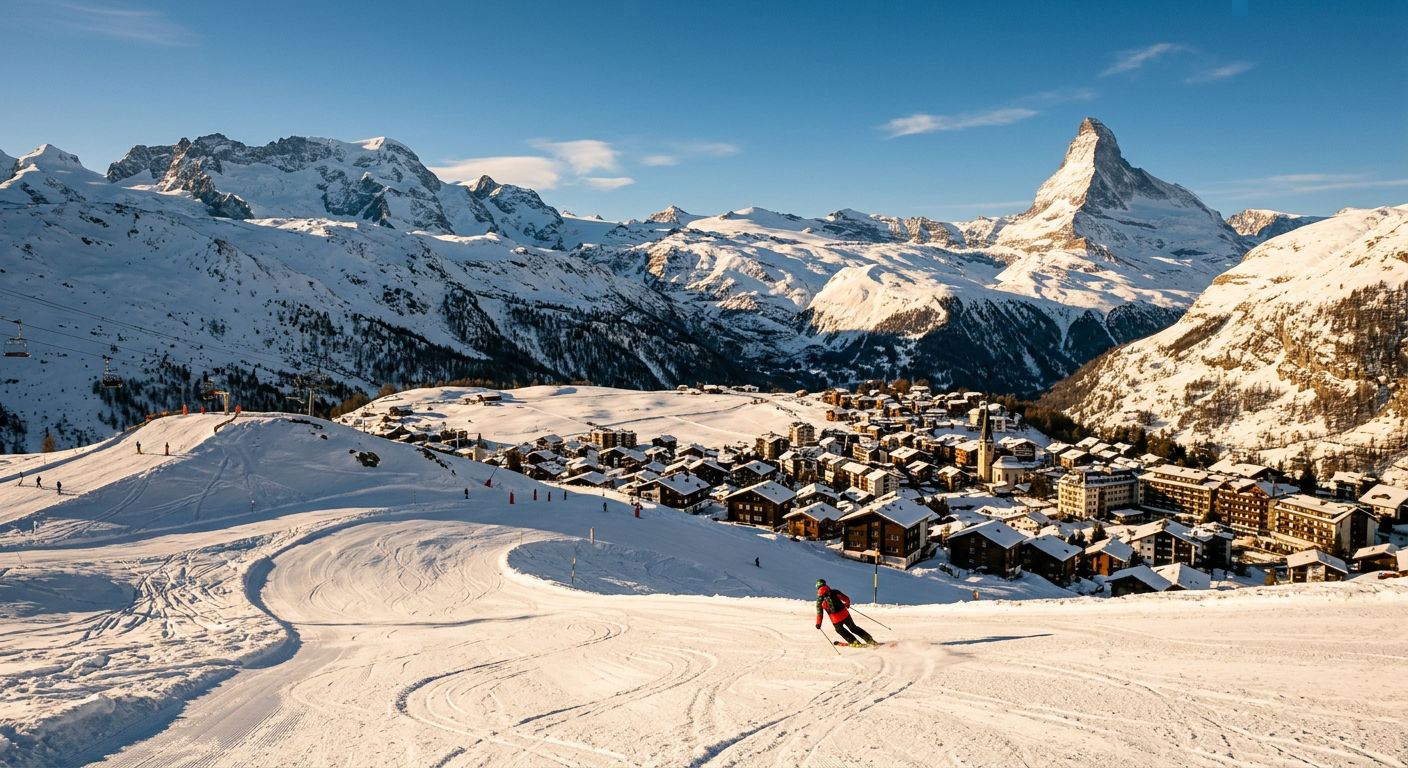
Cervinia lacks the medieval charm of Courmayeur or the polished glamour of Cortina, but what it offers instead is functional, unpretentious, and decidedly Italian. The village sits in the Aosta Valley, a bilingual region where French and Italian mix freely, and the Matterhorn — known locally as Monte Cervino — looms directly above the main street.
Dining
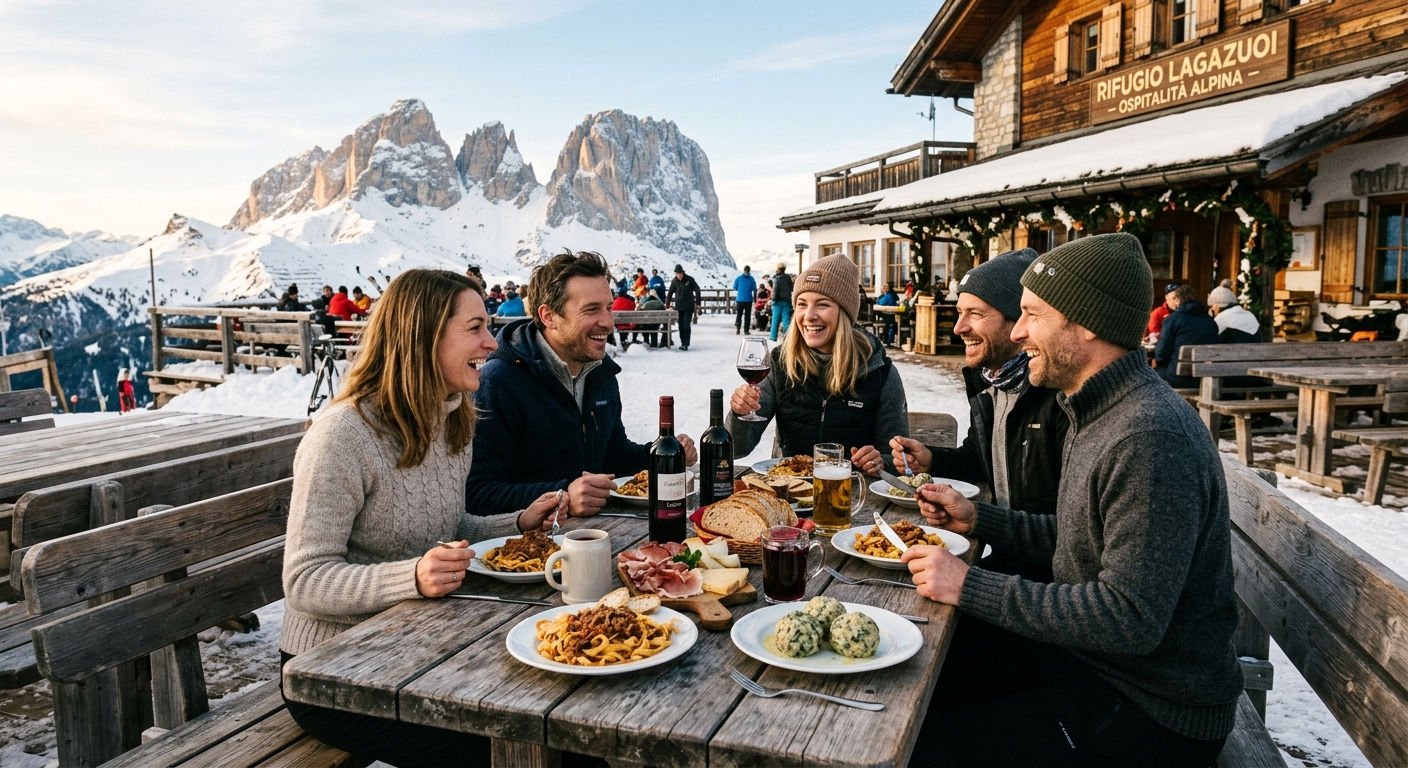
Italian mountain food is Cervinia's quiet advantage. Rifugio Guide del Cervino, accessible by piste, serves handmade pasta with views of the Matterhorn's south face. In the village, restaurants like La Chandelle and Ristorante Al Solito Posto offer multi-course dinners at prices that would cover an appetiser in Zermatt. Expect fonduta (Aosta Valley's answer to fondue), polenta with game ragù, and local Vallée d'Aoste wines.
Après Ski
Cervinia's après scene is relaxed rather than raucous. The Yeti Bar and Copa Pan draw the post-skiing crowd for aperitivos, but this is not St. Anton. The atmosphere suits those who prefer a Negroni on a terrace to a foam party in a basement.
Where to Stay in Cervinia for Skiing
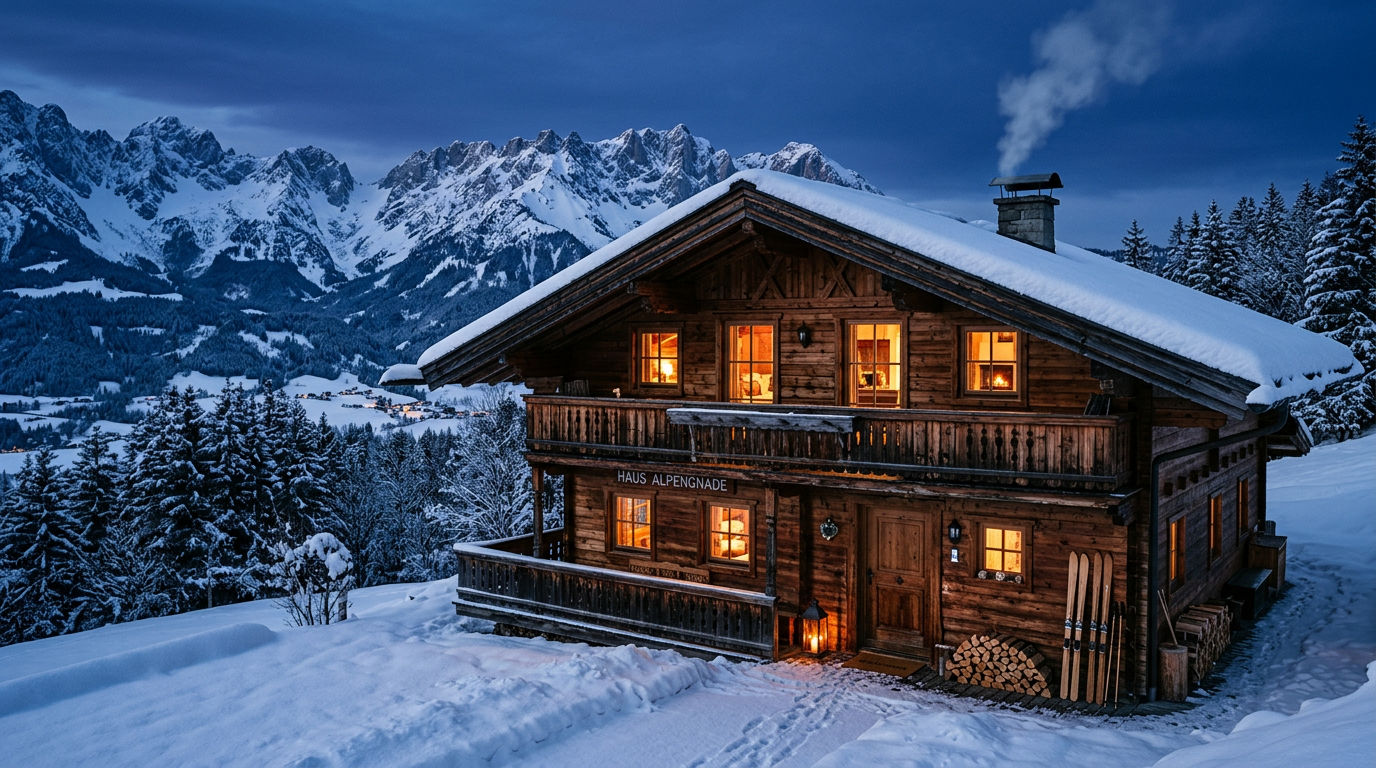
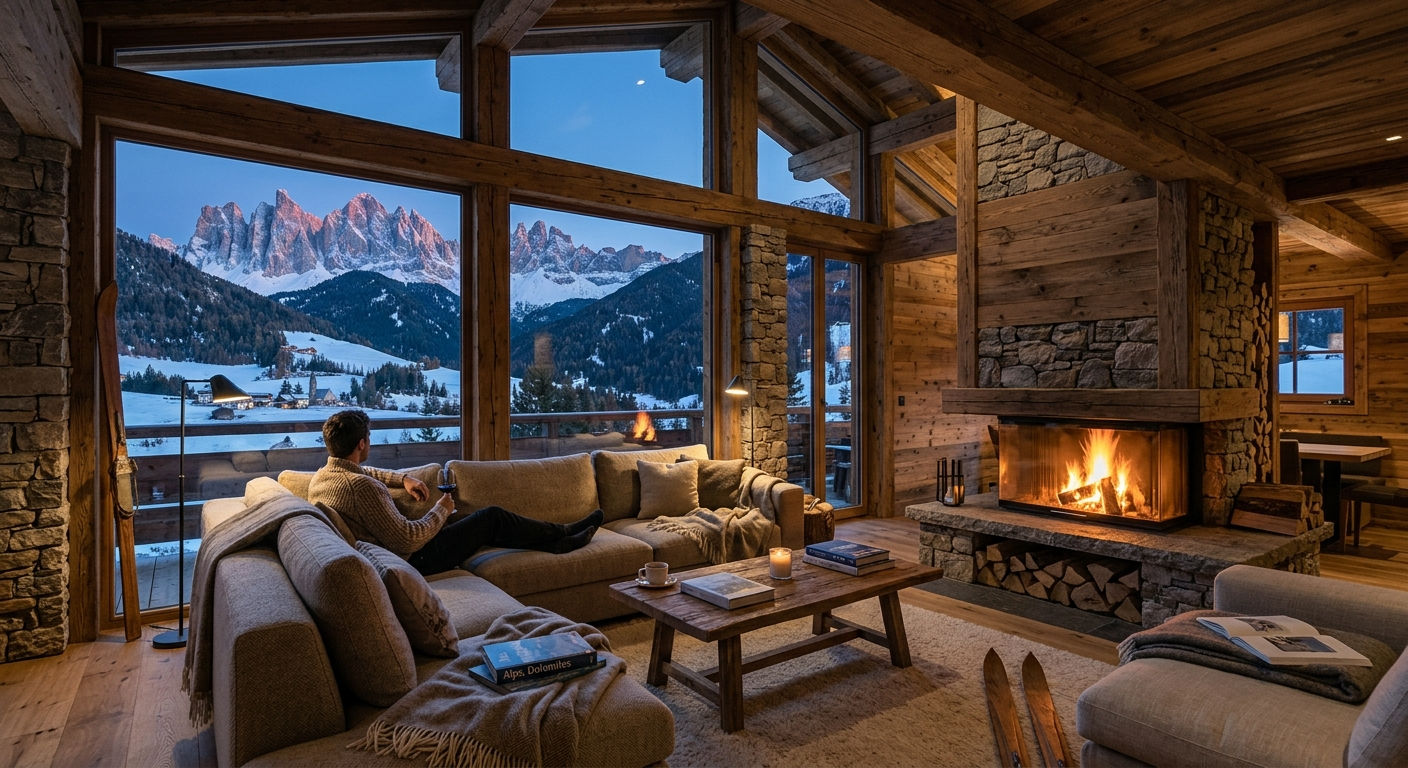
Cervinia's accommodation skews heavily towards hotels, though a growing number of private chalets now cater to groups seeking more space and privacy.
Wellness amenities run unusually deep for a resort of this size.
For Large Groups
For a more intimate option, Heritage Carrel pairs six-person capacity with an unusually complete amenity set — pool, hot tub, sauna, spa, and wine cellar — at a fraction of the price of the larger chalets.
Getting to Cervinia
Cervinia is well-served by two major airports, both offering straightforward road transfers through the Aosta Valley.
| Airport | Distance | Transfer Time | Notes |
|---|---|---|---|
| Turin Caselle (TRN) | 115 km | ~1.5 hours | Closest airport, good European connections |
| Milan Malpensa (MXP) | 185 km | ~2.5 hours | Wider international route network |
| Geneva (GVA) | 195 km | ~2.5 hours | Alternative for those combining with Swiss resorts |
The drive from Turin follows the A5 motorway through the Aosta Valley before climbing to Cervinia via a well-maintained mountain road. No chains or snow tyres are typically required on the main approach, though Italian law mandates winter equipment between November and April.
Private transfers can be arranged through most accommodation providers. Shared shuttle services also operate from both Turin and Milan airports during the ski season.
When to Visit Cervinia
Cervinia's high altitude translates directly into a long, reliable season. The resort typically opens in late November and closes in early May, with glacier skiing on Plateau Rosa available through much of the summer.
| Period | Conditions | Crowd Level |
|---|---|---|
| Late Nov – mid Dec | Early season, limited pistes, quiet | Low |
| Christmas – New Year | Full ski area open, festive atmosphere | High |
| January | Reliable conditions, cold temperatures, short days | Medium |
| February – March | Peak season, best snow, longest days | High |
| April – early May | Spring skiing, warm afternoons, softening snow | Medium-Low |
Best value: January and late March offer the strongest combination of good snow and moderate crowds. February half-term (typically the third week) brings peak pricing across the resort.
Best conditions: February through mid-March delivers the most consistent snow quality. The high altitude means Cervinia holds its snow better than lower Italian resorts like Courmayeur (1,224 m) or Madonna di Campiglio (1,522 m).
Cervinia and Zermatt: Choosing Your Base
For those deciding between the Italian and Swiss sides of the Matterhorn, the choice comes down to priorities. Cervinia offers significantly lower prices, better weather (the south-facing slopes get more sun), and a more relaxed atmosphere. Zermatt offers a larger, more varied ski area, a car-free village with greater architectural charm, and a wider range of upscale dining and nightlife.
Both resorts are accessible on the same lift pass, so a stay in either gives skiing access to the full Matterhorn Ski Paradise.
read our Best Italian Ski Resorts guide, browse ski-in ski-out options, or read our Zermatt Skiing guide for the Swiss alternative.
Frequently Asked Questions
Is Cervinia good for beginners?
Cervinia is one of the better resorts in the Alps for progressing beginners. The wide, well-groomed blue runs from Plan Maison provide consistent pitch and forgiving terrain, and the altitude means snow quality remains reliable throughout the season. True first-timers should note that the nursery slopes sit at village level (2,050 m), where altitude can affect fitness in the first couple of days.
How long does it take to ski from Cervinia to Zermatt?
The crossing takes approximately 20 minutes of lift time via the Plateau Rosa cable car, followed by a descent into the Zermatt ski system. Allow a full day for the round trip, departing Cervinia before 10:00 and beginning the return by 15:00 to avoid missing the last lift back.
Is Cervinia cheaper than Zermatt?
Substantially. A three-course dinner in Cervinia typically costs €40–60 per person, compared to CHF 80–120 in Zermatt. The International lift pass covering both resorts costs the same regardless of which side you stay on.
When does Cervinia ski season open and close?
The main season typically runs from late November to early May. Glacier skiing on Plateau Rosa is available through much of the summer, usually from June to September, though piste availability is limited to high-altitude runs.
Can you drive to Cervinia?
Yes. Cervinia is accessible by road from Turin (1.5 hours) and Milan (2.5 hours) via the A5 motorway and a well-maintained mountain road. Italian law requires winter tyres or snow chains between November and April. The village has parking, though spaces fill quickly during peak weeks — booking accommodation with dedicated parking is advisable.
What is the best area to stay in Cervinia?
The village centre around Via Carrel offers the most convenient access to lifts, restaurants, and shops. Properties along the main piste — which runs directly into the village — provide genuine ski-in ski-out access.