Skiing in St. Moritz: A Complete Guide to the Engadin's Most Storied Resort
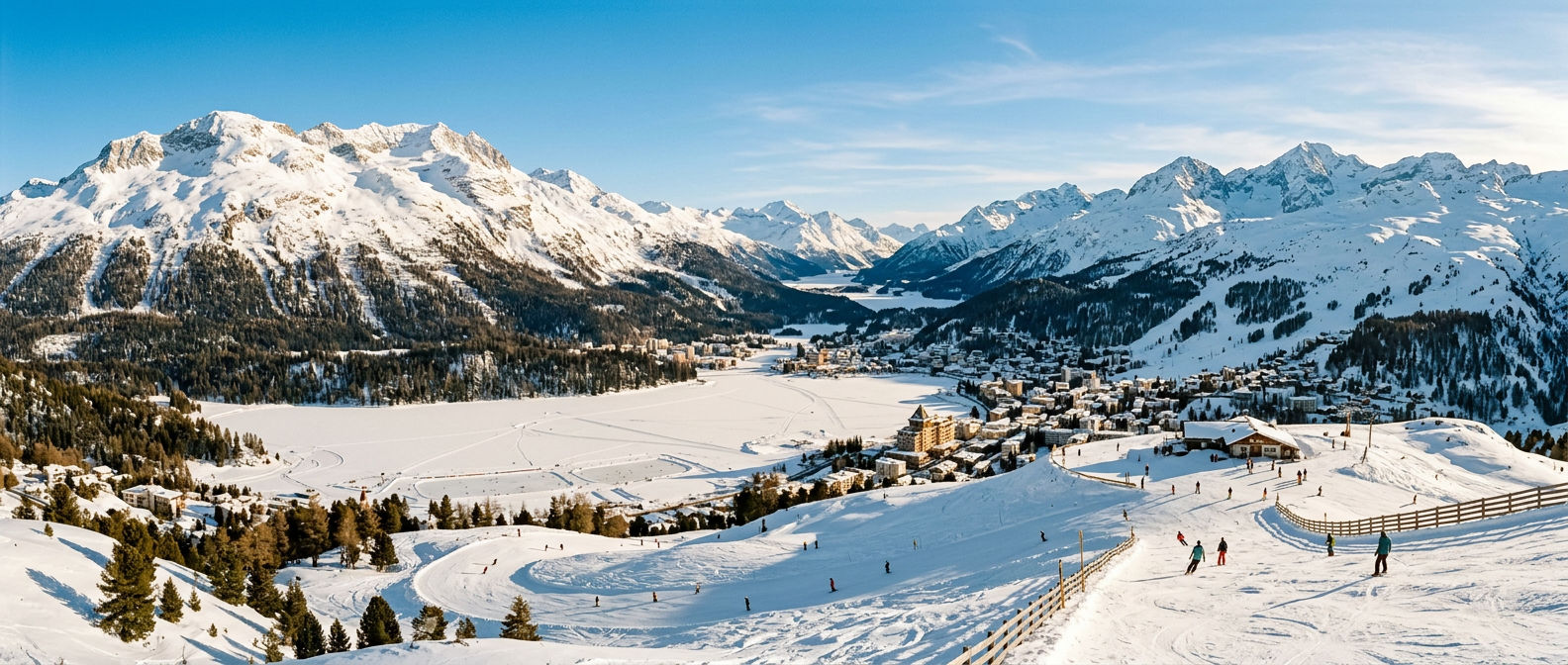
St. Moritz is the resort that started it all. When Johannes Badrutt wagered with a group of British summer guests in 1864 that the Engadin winter was warm enough for shirtsleeves on a sunny day, he set in motion what would become alpine tourism itself. Today, the town at 1,822m altitude in Switzerland's Upper Engadin valley pairs 155km of pistes across three distinct ski areas with a cosmopolitan village that has hosted two Winter Olympics (1928, 1948) and remains one of the most recognised names in mountain travel.
Three Ski Areas, Three Distinct Characters
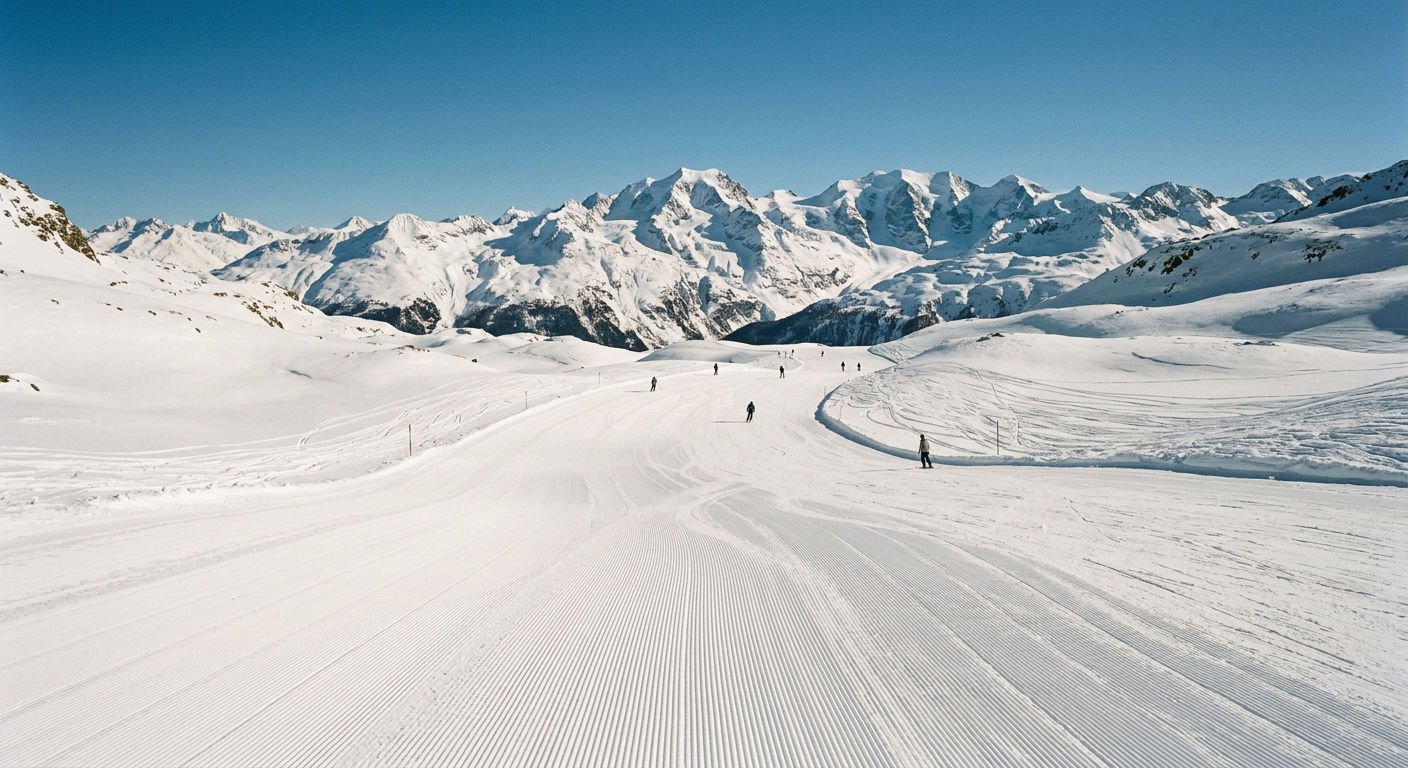
St. Moritz skiing divides across Corviglia, Corvatsch, and Diavolezza-Lagalb — three separate mountains linked by a single regional ski pass but each with a different personality. Together they offer 155km of marked runs and over 50 lifts, with terrain from gentle nursery slopes to serious high-alpine descents.
Corviglia (1,822m–3,057m) is the main ski area, accessed directly from the town by funicular. Its south-facing slopes get extraordinary sun — St. Moritz averages over 320 sunny days per year — and the terrain leans intermediate with wide, cruising runs. The Munt da San Murezzan sector and the runs down to Celerina offer the best groomed pistes. Advanced skiers head to the Piz Nair summit at 3,057m for steeper pitches and panoramic views across the Bernina range.
Corvatsch (1,800m–3,303m), reached from Surlej or Sils Maria, is the highest ski area in the eastern Swiss Alps. Its north-facing slopes hold snow better than Corviglia, and the long descent from the summit to St. Moritz Bad covers 1,500m of vertical — one of the longest continuous runs in Switzerland. Corvatsch is where locals ski on powder days.
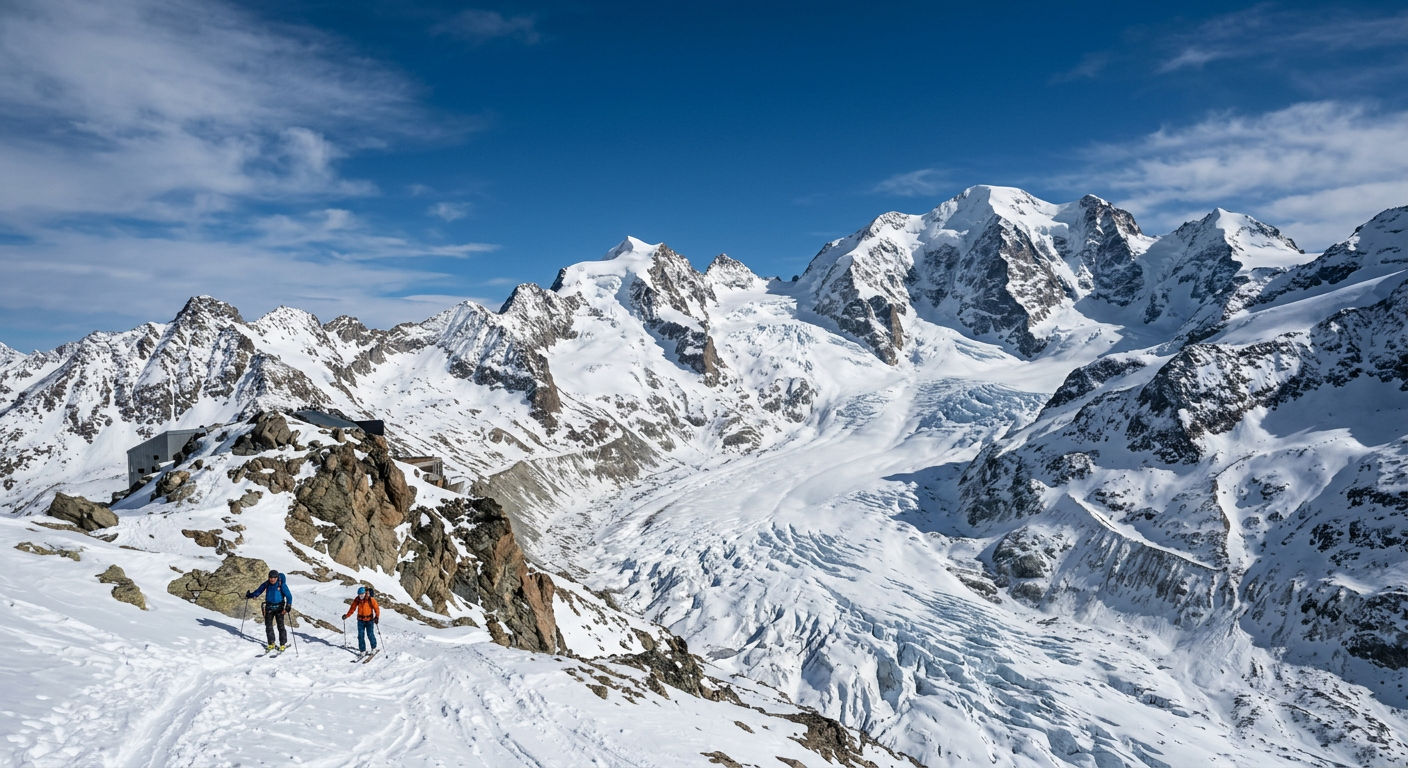
Diavolezza-Lagalb (2,093m–2,978m) is the wildcard: a smaller area near the Bernina Pass with serious off-piste terrain and the celebrated glacier descent to Morteratsch — a 10km unmarked route through crevassed ice that requires a guide. This is not a beginners' mountain.
| Ski Area | Altitude | Vertical | Character | Best For |
|---|---|---|---|---|
| Corviglia | 1,822–3,057m | 1,235m | South-facing, wide cruisers | Intermediates, families, sun-seekers |
| Corvatsch | 1,800–3,303m | 1,503m | North-facing, longest runs | Advanced skiers, powder days |
| Diavolezza-Lagalb | 2,093–2,978m | 885m | High-alpine, glacier | Off-piste, guided glacier descents |
The Ski Pass
The Upper Engadin regional ski pass covers all three areas plus smaller sectors like Zuoz and Furtschellas, totalling 155km of pistes. A six-day adult pass costs approximately CHF 380 for the 2025/26 season. Day passes for individual areas start around CHF 75, making it possible to buy mountain-by-mountain if you only want a day or two on Diavolezza.
The Town: More Than a Ski Resort
St. Moritz functions as a proper year-round town in a way that many purpose-built resorts do not. The Via Serlas shopping street, the lakefront promenade, and a concentration of restaurants that spans from Michelin-starred dining to honest Engadine pizzoccheri give the place a civic weight that Courchevel 1850 or Verbier's town centre cannot quite match.
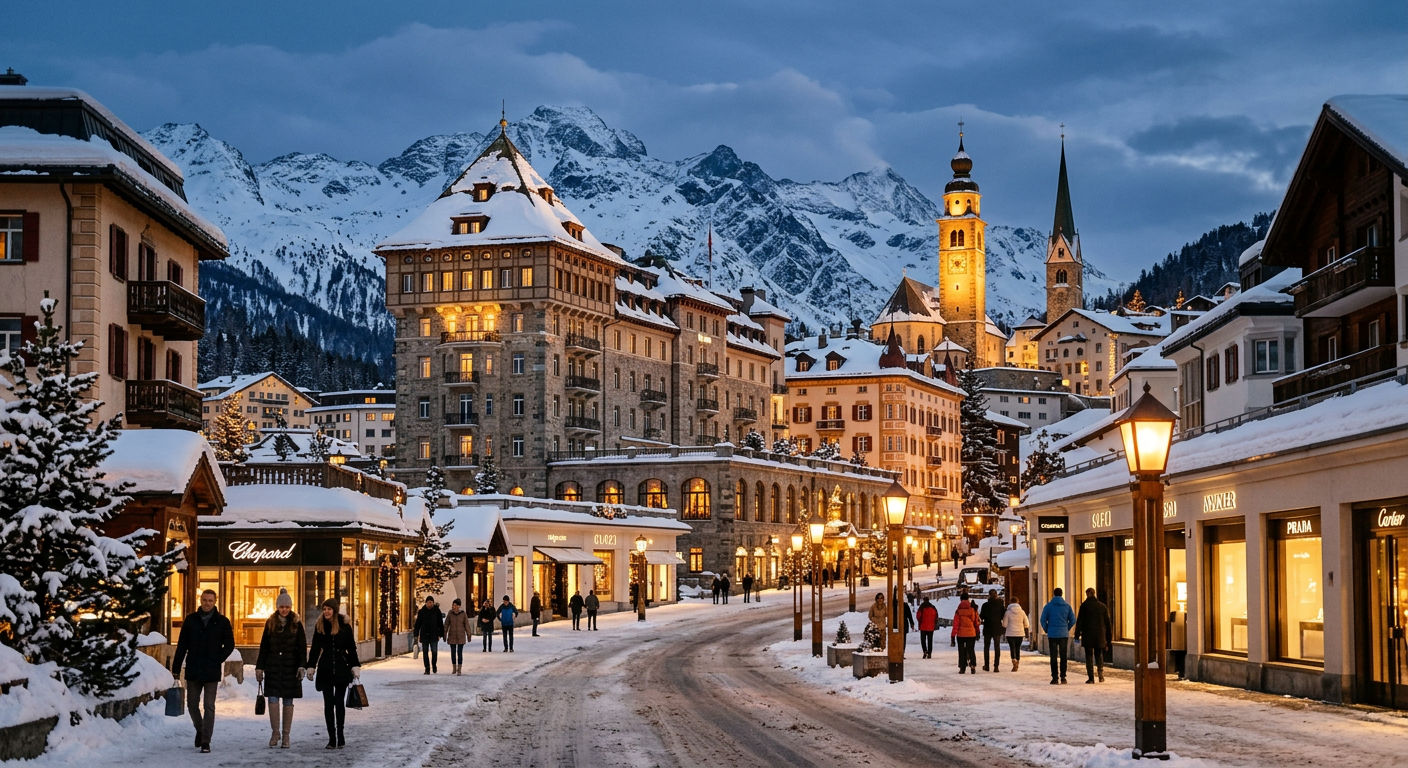
Two distinct quarters define the experience. St. Moritz Dorf, perched above the lake, is where the grand hotels, boutiques, and the Corviglia funicular station cluster. St. Moritz Bad, lower and quieter at the lake's southern end, sits closer to the Corvatsch cable car and the Signal gondola. Bad is more residential, less formal, and increasingly popular with visitors who prefer proximity to Corvatsch's north-facing terrain.
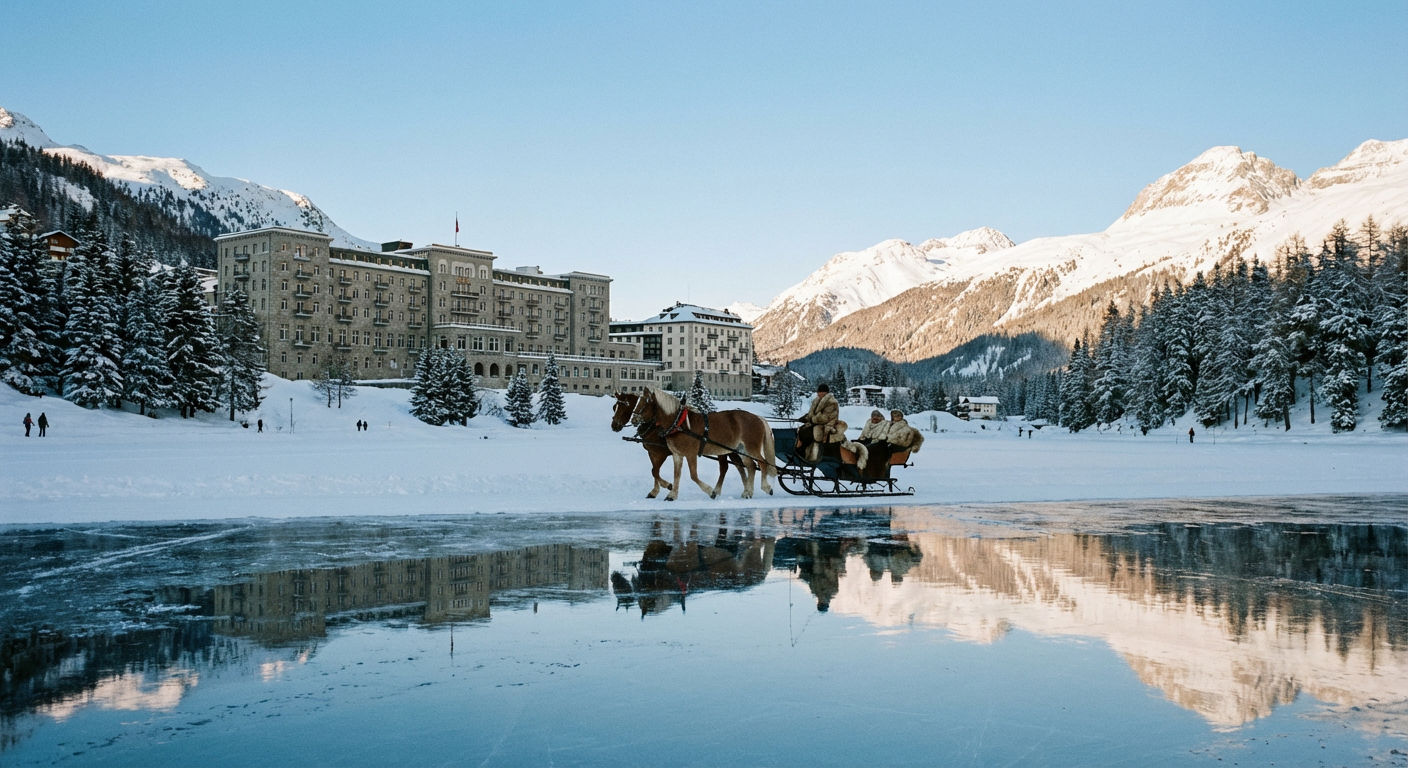
The frozen lake itself becomes a venue in winter: horse racing on the White Turf, cricket on ice, and the Cresta Run bobsled track — the last remaining natural ice run for skeleton in the world — all happen on or beside it. These are not tourist novelties; they are traditions with decades, sometimes centuries, of history.
For visitors comparing luxury ski resorts in Switzerland, St. Moritz stands apart in that it is genuinely a town first and a ski resort second. The skiing is excellent, but the cultural infrastructure — the Segantini Museum, the Engadin Museum, the annual gourmet festival — exists independently of the pistes.
Where to Stay: Hotels, Chalets, and Apartments
St. Moritz accommodation divides broadly into three categories: grand hotels with full-service amenities, private chalets for groups, and apartments for self-catered flexibility.
What distinguishes St. Moritz properties is the depth of wellness facilities.
Private Chalets
Chesa el Toula represents the upper end of private chalet rental in St. Moritz — 6 bedrooms for 10 guests, with a private pool, hot tub, spa, gym, cinema room, and wine cellar. For groups seeking a self-contained retreat, properties like this remove any reason to leave the house except to ski.
When to Visit: Season Timing and Snow
The St. Moritz ski season typically runs from late November through mid-April, with Corvatsch and Diavolezza often opening earlier thanks to their higher altitude. The resort's position in the Upper Engadin — a high-altitude valley at 1,800m with a dry, continental climate — gives it a distinctive snow profile: less snowfall than the western Alps but colder temperatures that preserve what falls, plus far more sunshine.
| Period | Conditions | Crowds | Pricing |
|---|---|---|---|
| Late Nov–mid Dec | Early season, limited terrain | Quiet | Lower |
| Christmas–New Year | Peak season, full terrain open | Very busy | Highest |
| January | Cold, reliable snow, clear skies | Moderate | High |
| February (half-term) | Good snow, school holiday crowds | Busy | High |
| March | Warmer, long sunny days, spring snow | Moderate | Moderate |
| Early–mid April | Late season, Corviglia closes first | Quiet | Lower |
The 320+ sunny days are not marketing fiction — the Engadin's position south of the main Alpine divide creates a föhn shadow effect that produces remarkably clear weather. January and February visitors routinely ski in bright sunshine when resorts north of the divide are socked in with cloud. The trade-off is that St. Moritz receives less snowfall than Val d'Isère or Verbier, relying on cold temperatures and snowmaking to maintain coverage on south-facing Corviglia in particular.
For the best combination of snow, sunshine, and manageable crowds, January through early March is the window. Late March brings spring skiing with long lunches on south-facing terraces — a particular pleasure on Corviglia, where the mountain restaurants are among the best in the Alps.
Getting There
St. Moritz sits in the southeastern corner of Switzerland, further from major airports than the western Alpine resorts but well-connected by road and rail.
By air: The nearest airports are Zurich (3–3.5 hours by car), Milan Malpensa (3.5 hours), and Innsbruck (3 hours). Private aviation can fly directly to Samedan airport (Engadin Airport), just 5km from St. Moritz — one of the highest-altitude commercial airports in Europe at 1,707m.
By rail: The Glacier Express and Bernina Express routes both pass through the Engadin, making St. Moritz one of the most scenic train arrivals of any ski resort in the world. The Bernina Express from Tirano (Italy) crosses the UNESCO-listed Rhaetian Railway over the Bernina Pass — a journey worth building a day around even if you are not a train enthusiast.
By car: From Zurich, take the A3/A13 via Chur and the Julier Pass (open year-round but winter tyres mandatory). The drive is approximately 200km and takes 3–3.5 hours depending on conditions. From Milan, the route via the Maloja Pass is similar in duration.
| Airport | Distance | Drive Time | Notes |
|---|---|---|---|
| Samedan (Engadin) | 5km | 10 min | Private aviation only |
| Zurich | 200km | 3–3.5 hrs | Most common route, via Julier Pass |
| Milan Malpensa | 250km | 3.5 hrs | Via Maloja Pass |
| Innsbruck | 220km | 3 hrs | Via lower Inn valley and Engadin |
Beyond the Pistes: What Makes St. Moritz Distinctive
St. Moritz earns its reputation not through the sheer scale of its ski area — the Three Valleys and the Arlberg are larger — but through the breadth of experience beyond the pistes. Cross-country skiing on 230km of groomed Loipen (cross-country trails) across the frozen valley floor, tobogganing on the Olympic bob run, horse-drawn sleigh rides across the lake, and some of the finest spa facilities in the Alps create a week that does not depend exclusively on lift-served skiing.
For non-skiers or mixed groups, this matters. A partner who does not ski can fill a week in St. Moritz without running out of things to do — a claim that few purpose-built resorts can honestly make.
Frequently Asked Questions
Is St. Moritz good for skiing?
St. Moritz offers 155km of pistes across three distinct ski areas — Corviglia, Corvatsch, and Diavolezza — spanning altitudes from 1,800m to 3,303m. The terrain suits intermediates best, particularly on Corviglia's wide, sunny runs, though Corvatsch and Diavolezza deliver genuine challenge for advanced skiers. It is not the largest ski domain in Switzerland, but the quality of grooming, the reliable sunshine, and the variety across three mountains make it one of the most satisfying.
How much does a ski pass cost in St. Moritz?
A six-day Upper Engadin regional ski pass costs approximately CHF 380 for adults in the 2025/26 season, covering all three ski areas plus smaller Engadin sectors. Day passes for individual mountains start around CHF 75. Children and seniors receive significant discounts, and half-day passes are available from midday.
When is the best time to ski in St. Moritz?
January through early March offers the best balance of reliable snow cover, cold temperatures, and the Engadin's exceptional sunshine. The Christmas–New Year period has full terrain but peak crowds and pricing. Late March into April brings spring skiing conditions with warmer temperatures and long sunny days — ideal for leisurely mornings and extended lunch stops on Corviglia's mountain terraces.
How do you get to St. Moritz from Zurich?
The drive from Zurich to St. Moritz covers approximately 200km via the Julier Pass and takes 3–3.5 hours. The train journey via Chur takes around 3.5 hours with one change. Private aviation can fly directly into Samedan (Engadin Airport), just 5km from the town. Several helicopter transfer services also operate between Zurich and the Engadin.
Is St. Moritz worth the price?
St. Moritz commands a premium, but the value proposition extends beyond the pistes. The town's depth — cultural institutions, year-round restaurants, a frozen lake that hosts horse racing, one of Europe's finest cross-country skiing networks — means that even non-skiing days have substance. For mixed groups where not everyone skis, or for visitors who want a town with civic life rather than a purpose-built resort village, the premium makes sense.
How does St. Moritz compare to Verbier or Zermatt?
Verbier offers a larger, more interconnected ski area (410km across the 4 Vallées) with stronger off-piste terrain and a younger, more energetic après-ski scene. Zermatt has the Matterhorn, year-round glacier skiing, and a car-free village with immediate charm. St. Moritz's advantages are its sunshine (320+ clear days versus both), its non-ski infrastructure, and the breadth of its grand hotel tradition. Serious skiers who prioritise terrain often prefer Verbier; those who want a complete mountain town tend toward St. Moritz.