Swiss Alps Skiing: A Complete Guide to Terrain, Resorts, and Season Timing
Swiss Alps Skiing: A Complete Guide to Terrain, Resorts, and Season Timing
Switzerland's ski resorts sit among the highest and most snow-reliable terrain in Europe, with four principal regions — Verbier, Zermatt, St Moritz, and Gstaad — each offering a fundamentally different mountain experience. Whether you prioritise steep off-piste lines, glacier-fed pistes open into May, or gentle runs beneath 4,000-metre peaks, the Swiss Alps deliver with a precision and infrastructure few rivals match.
What Makes Swiss Alps Skiing Distinctive
Swiss ski resorts combine high-altitude terrain with engineering that borders on obsessive. The result is consistently excellent snow conditions, meticulously maintained pistes, and lift systems that move skiers efficiently even at peak season.
The altitude advantage is significant. Verbier reaches 3,330 metres on Mont Fort, Zermatt offers skiing up to 3,883 metres at the Klein Matterhorn, and even the more modest Gstaad connects to glacier skiing at 3,000 metres. These elevations translate to longer seasons and more dependable snow than lower-altitude competitors in Austria or France.
Switzerland also maintains the highest per-capita spending on mountain infrastructure in the Alps. Cable cars, gondolas, and high-speed lifts are upgraded on shorter cycles. Train connections to resorts — particularly Zermatt and St Moritz — are a genuine alternative to road transfers, and the scenic rail journeys through alpine valleys are part of the experience.
The Best Swiss Ski Areas Compared
Each of Switzerland's principal ski regions serves a different type of skier. The table below compares the essential metrics.
| Resort | Piste (km) | Top Altitude | Vertical Drop | Best For | Season |
|---|---|---|---|---|---|
| Verbier (4 Vallées) | 410 | 3,330 m | 1,800 m | Freeride, advanced | Dec – Apr |
| Zermatt (Matterhorn) | 360 | 3,883 m | 2,200 m | All levels, glacier | Nov – May |
| St Moritz (Engadin) | 350 | 3,303 m | 1,800 m | Intermediates, racing | Nov – Apr |
| Gstaad (Mountain Rides) | 220 | 3,000 m | 1,500 m | Families, beginners | Dec – Apr |
Verbier and the 4 Vallées
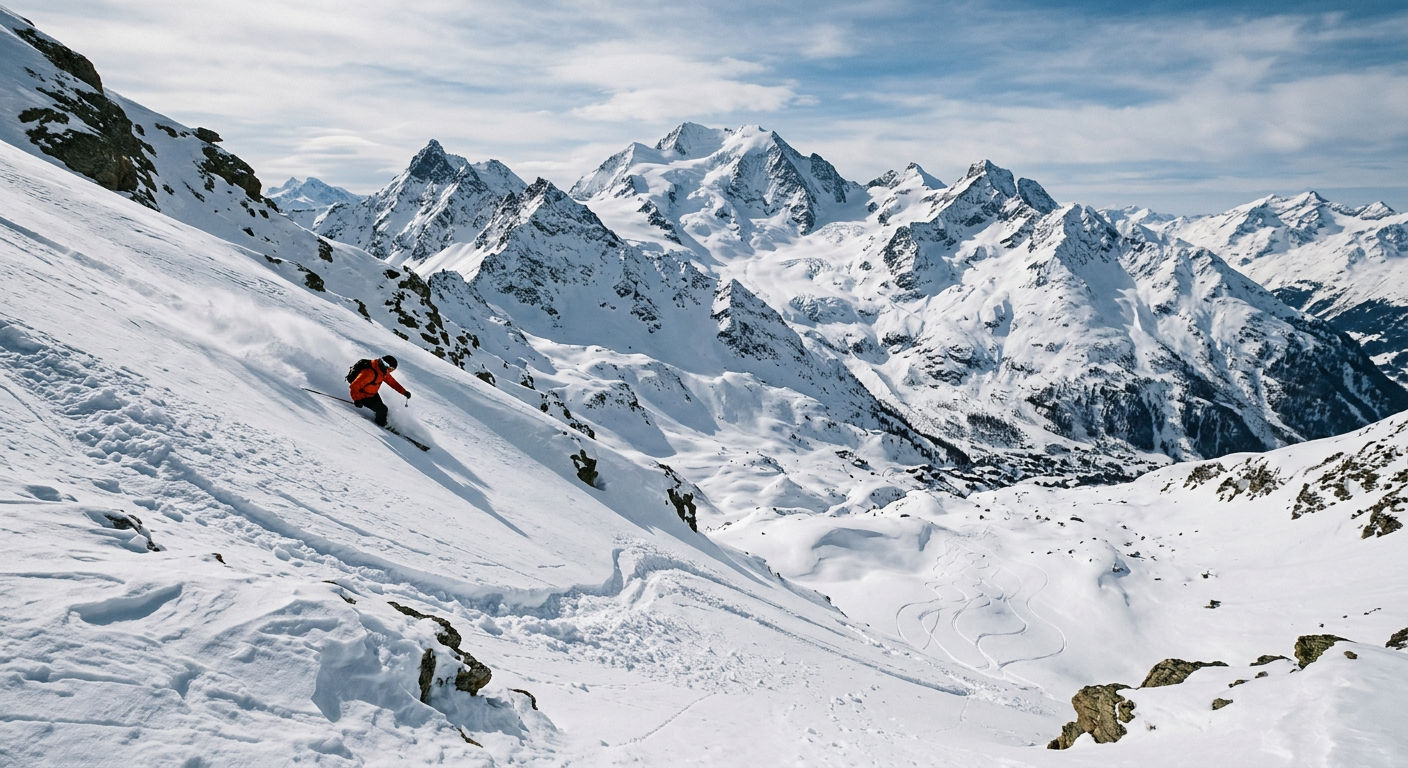
Verbier is the reference point for advanced and expert skiing in the Swiss Alps. The resort anchors the 4 Vallées network, linking Verbier, Nendaz, Veysonnaz, Thyon, and La Tzoumaz across 410 kilometres of marked piste and some of Europe's most respected off-piste terrain.
The signature run is Mont Fort to Tortin — a steep, unpisted descent of over 1,000 vertical metres that draws committed skiers from across Europe. The Bec des Rosses face, site of the Freeride World Tour final, is genuinely testing ground rather than marketing copy.
For intermediates, the lower sections around Les Ruinettes and La Chaux offer wide, groomed runs with views across the Val de Bagnes. The resort has invested heavily in snowmaking below 2,500 metres, extending reliable coverage into early April most seasons.
Getting there: Geneva airport (GVA) is the closest hub at roughly 2.5 hours by road transfer. Le Châble station at the valley floor connects to Verbier by gondola.
Zermatt and the Matterhorn Ski Paradise
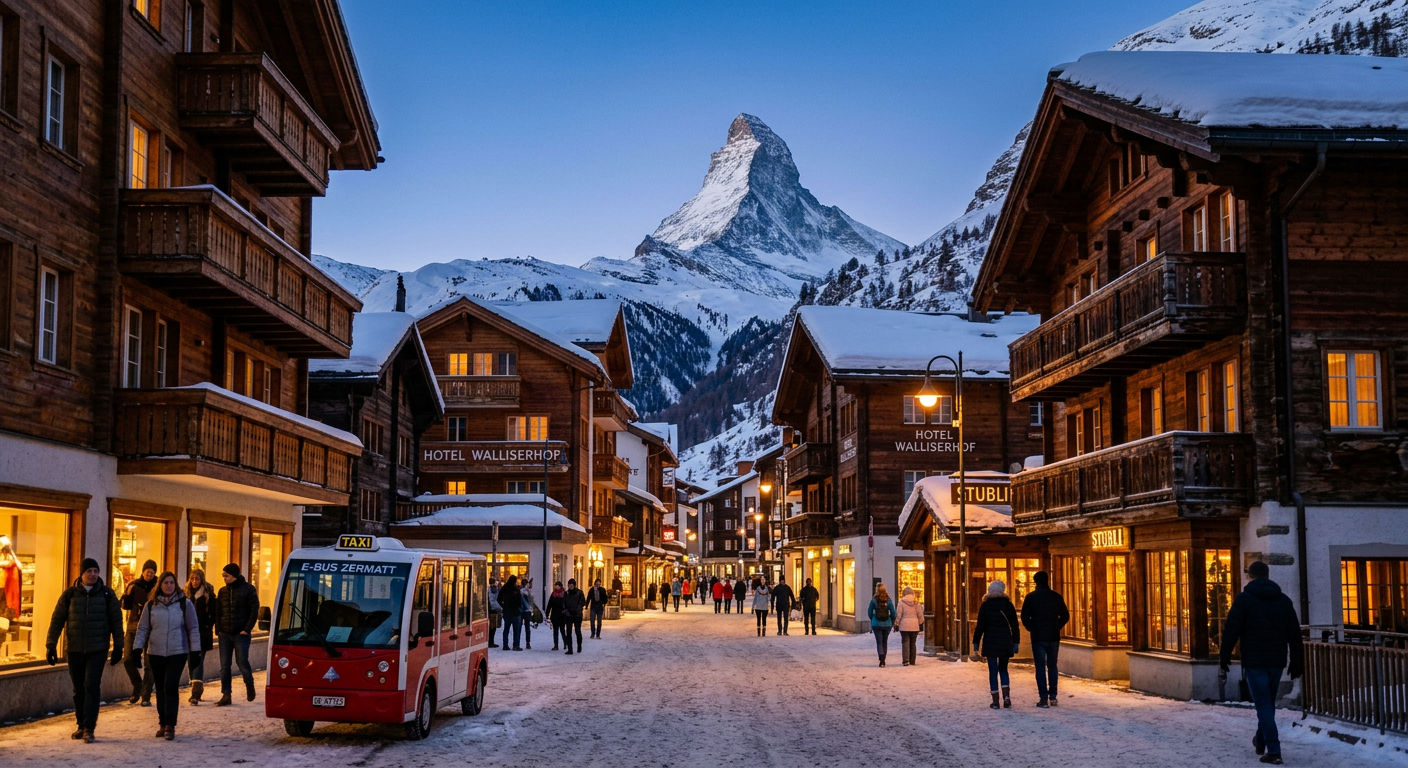
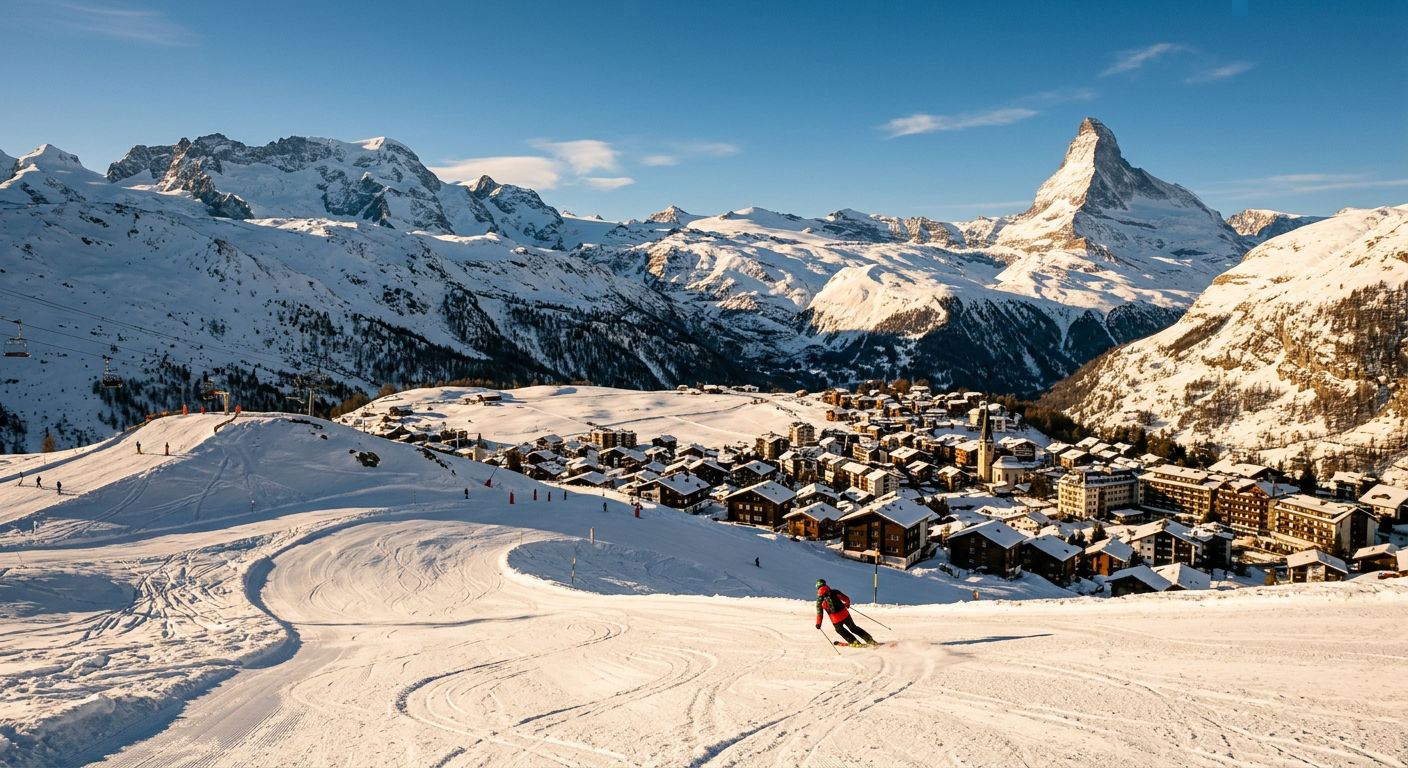
Zermatt offers the highest lift-served skiing in the Alps, with the Klein Matterhorn reaching 3,883 metres and glacier runs open year-round. The Matterhorn Ski Paradise links with Cervinia on the Italian side, creating a 360-kilometre international ski area straddling two countries.
The scale and variety set Zermatt apart. Rothorn (3,103 m) serves confident intermediates with long, groomed descents back to the village. Schwarzsee opens up wide bowls at mid-altitude. The Gornergrat sector delivers what may be the finest single panorama in alpine skiing — a 360-degree sweep of 29 peaks above 4,000 metres.
Zermatt is car-free. Visitors arrive by train from Visp or Täsch and navigate the village by electric taxi and on foot. The result is clean air, quiet streets, and an atmosphere that remains distinctly alpine rather than resort-generic.
Getting there: Zürich (ZRH) or Geneva (GVA), then train via Visp — roughly 3.5 hours from either airport. The Glacier Express scenic route from St Moritz is a renowned alternative.
St Moritz and the Engadin
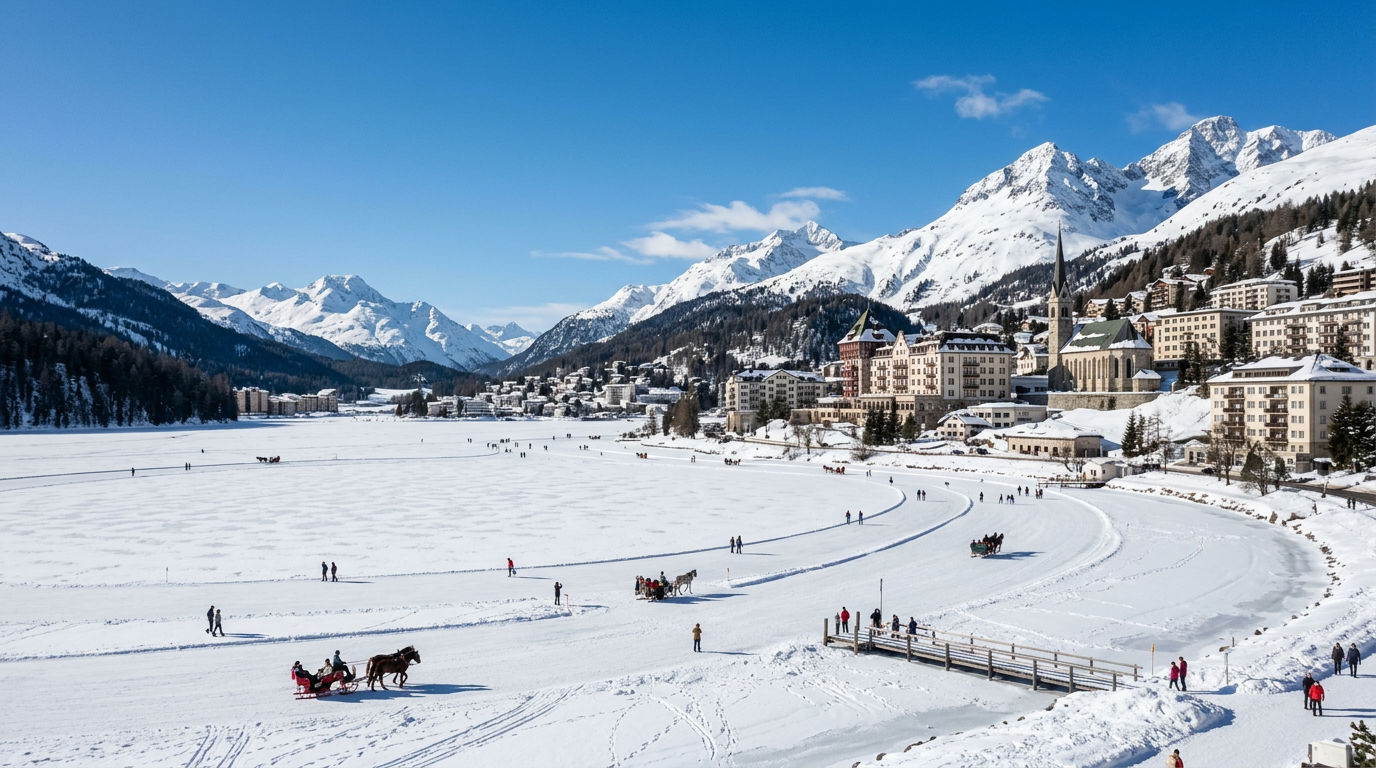
St Moritz invented winter tourism. The resort hosted the Winter Olympics twice (1928 and 1948) and remains the spiritual home of alpine competition, with the Corviglia area still hosting World Cup events. The Engadin valley's 350 kilometres of skiing split across three distinct sectors — Corviglia, Corvatsch, and Diavolezza — each with its own character.
Corviglia (up to 3,057 m) is the main area, directly accessible from St Moritz village. The piste network favours intermediates, with long, sweeping runs and excellent grooming. Corvatsch (3,303 m) adds steeper terrain and the Hahnensee descent — 9 kilometres from summit to the village of St Moritz Bad without a single lift in between.
Diavolezza and Lagalb, slightly further afield, offer exposed high-alpine terrain and glacier descents. The guided off-piste route from Diavolezza to Morteratsch Glacier is a local classic.
Getting there: Zürich airport (ZRH) is roughly 3 hours by car. The Bernina Express from Chur offers one of Europe's most scenic rail journeys into the Engadin.
Gstaad and Glacier 3000
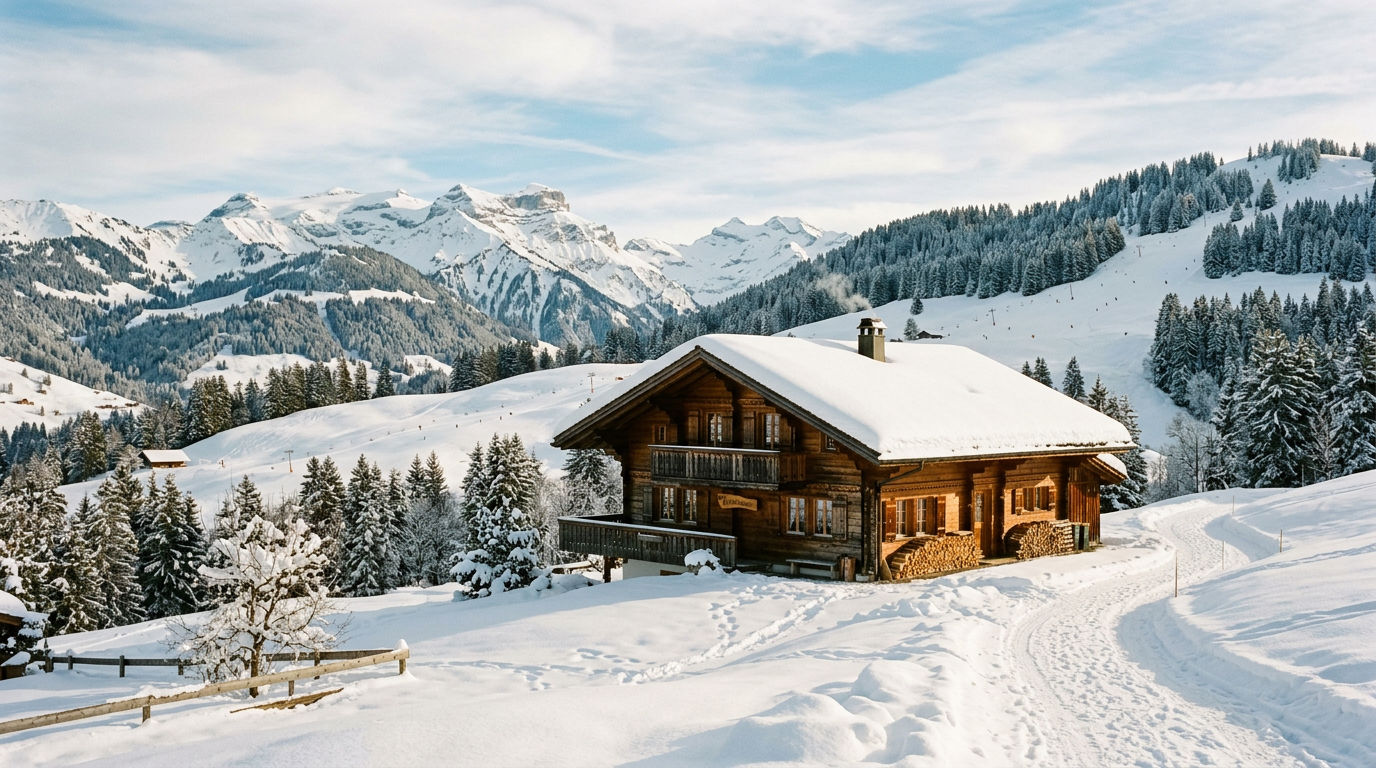
Gstaad operates differently from the larger Swiss resorts. The Gstaad Mountain Rides network covers 220 kilometres across interconnected areas, with terrain that skews gentle to intermediate. This is not a resort for committed piste-bashers seeking vertical challenge — it is a place where skiing forms part of a broader alpine week.
The Glacier 3000 sector, accessed from Les Diablerets, adds a higher-altitude dimension. The Peak Walk suspension bridge and glacier runs above 3,000 metres bring genuine drama to a region otherwise defined by rolling meadows and traditional Bernese Oberland farmsteads.
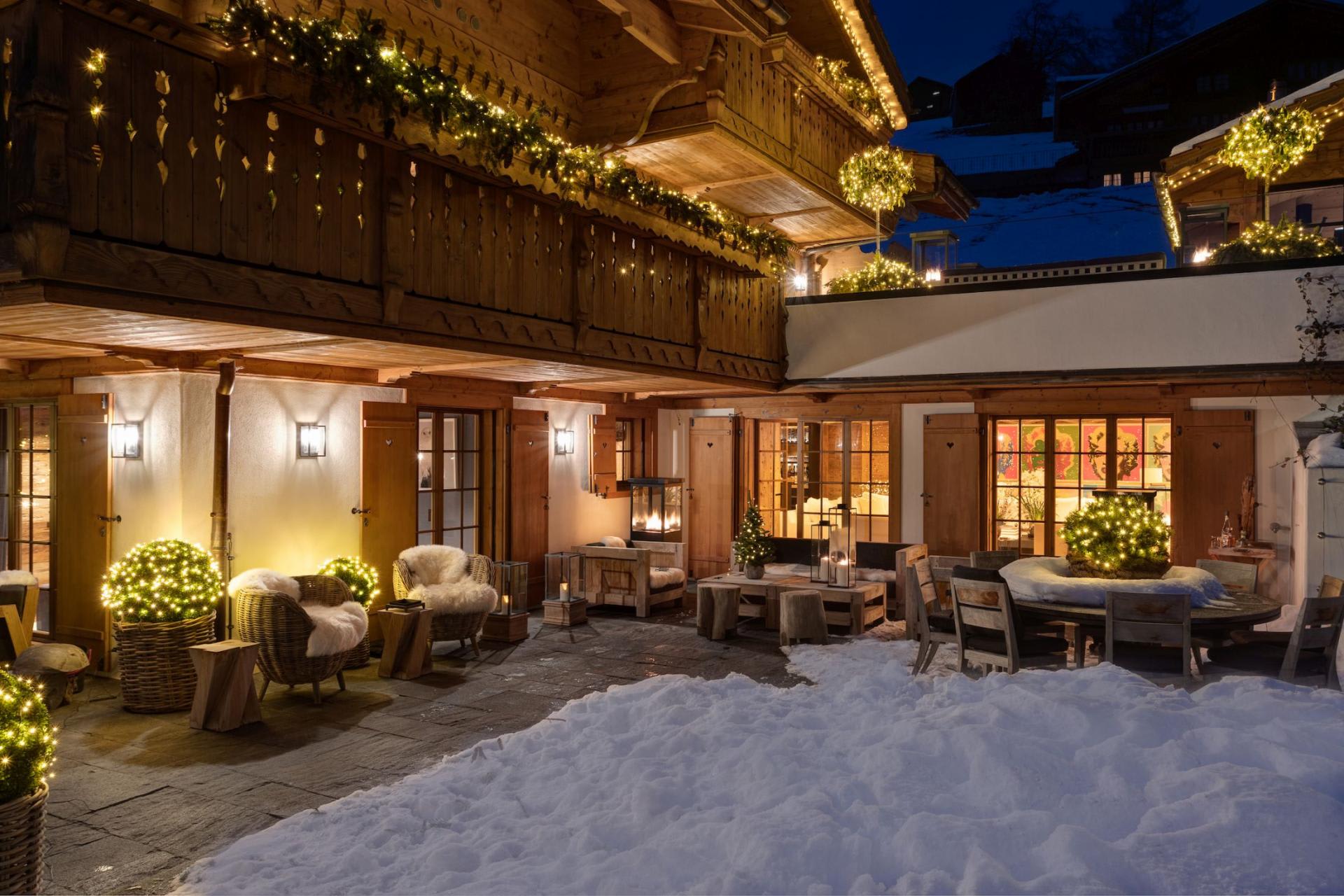
The village carries a refinement that predates ski tourism. Gstaad's pedestrianised centre, its mix of traditional chalets and discreet design hotels, and its emphasis on non-ski activities — cross-country, snowshoeing, winter concerts — give it a character distinct from purpose-driven resorts.
Getting there: Geneva (GVA) is roughly 2 hours by road. Gstaad has its own station on the MOB (Montreux–Bernese Oberland) railway, with a scenic connection from Montreux.
Swiss Ski Passes and Interconnected Areas
Switzerland's ski pass landscape is more fragmented than France's mega-areas but more flexible. Each major resort operates its own regional pass, and the Magic Pass provides a multi-resort alternative covering dozens of mid-sized Swiss areas.
| Pass | Coverage | Key Resorts | Notes |
|---|---|---|---|
| 4 Vallées | 410 km | Verbier, Nendaz, Veysonnaz | Single-resort day passes also available |
| Matterhorn Ski Paradise | 360 km | Zermatt, Cervinia (Italy) | International — bring your passport |
| Engadin St. Moritz | 350 km | Corviglia, Corvatsch, Diavolezza | Includes Engadin valley bus transport |
| Gstaad Mountain Rides | 220 km | Gstaad, Glacier 3000, Saanen | Includes summer hiking access |
| Magic Pass | Multiple regions | 80+ smaller Swiss resorts | Season pass — strong value for multi-trip visitors |
The Magic Pass covers a wide range of smaller Swiss resorts at a notably lower price than single-resort season passes. It does not include the main sectors of Verbier or Zermatt, but it is a strong choice for visitors planning multiple Swiss trips per season or exploring less-crowded areas.
Best Time to Ski in the Swiss Alps
Peak snow conditions across the Swiss Alps fall between mid-January and mid-March. This window combines the deepest snowpack, coldest temperatures for snow quality, and the longest daylight hours of the core season.
Early season (November – December): Zermatt's glacier opens as early as mid-November, making it the first Swiss resort operational each year. St Moritz and higher-altitude areas typically follow in late November. Verbier and Gstaad usually open in early to mid-December.
Peak season (January – March): The busiest weeks centre on European school holidays — two weeks from late December, a week in mid-February (varying by country), and Easter if it falls in March. Outside these windows, lift queues shorten considerably and accommodation rates drop.
Spring skiing (March – May): High altitude pays dividends in spring. Zermatt's glacier skiing continues into May and beyond. Verbier's Mont Fort sector holds snow well into April. Warm afternoons, long terrace lunches, and softening snow define this quieter period.
Best month for most visitors: Late January through February offers the most consistent combination of snow quality, sunshine, and manageable crowds outside school half-term weeks.
Explore Swiss Alps Skiing with Powder Edition
read our Verbier Skiing guide, explore read our Zermatt Skiing guide, or search all Swiss destinations to find the right base for your next trip.
Frequently Asked Questions
What is the best place to ski in the Swiss Alps?
Verbier suits advanced skiers seeking freeride terrain and a lively après-ski scene. Zermatt is the most versatile — year-round glacier skiing, the highest lift-served terrain in the Alps, and an international ski area linking to Italy. St Moritz delivers the broadest intermediate piste network with a refined village atmosphere. Gstaad is the calmest and most family-oriented of the four.
When is the best time to ski in Switzerland?
Mid-January through mid-March offers the most reliable snow conditions and shortest lift queues outside school holidays. For early-season skiing, Zermatt opens from mid-November. For spring skiing, Verbier's high sectors and Zermatt's glacier remain open into April and May respectively.
How much does a Swiss ski holiday cost?
Switzerland is among Europe's more expensive ski destinations. Lift passes range from roughly CHF 70–85 per day for adults at major resorts. Accommodation varies widely — from self-catered apartments to catered chalets with chef service. The Swiss franc's strength means costs run notably higher than equivalent French or Austrian resorts.
Can you ski between Switzerland and Italy?
Yes. The Matterhorn Ski Paradise links Zermatt directly to Cervinia and Valtournenche in Italy. With a valid international ski pass, you can ski across the border and return in a single day. Carry a passport or national ID card.
Are Swiss ski resorts good for beginners?
St Moritz and Gstaad both have well-regarded ski schools and extensive gentle terrain. Zermatt's lower Sunnegga sector includes wide, confidence-building runs with Matterhorn views. Verbier is the least beginner-friendly of the major Swiss resorts — its terrain skews intermediate to advanced.
How do you get to Swiss ski resorts without a car?
Switzerland's rail network is among the best in the world for resort access. Zermatt is fully car-free — you arrive by train from Visp or Täsch. St Moritz is reachable by the Bernina Express. Gstaad has its own station on the MOB line. Verbier requires a road transfer from Le Châble, though a gondola connects from the train station at the valley floor.