The Skiing
These two resorts sit barely an hour apart in the Haute-Savoie, but they offer fundamentally different skiing experiences — in scale, in character, and in the type of skier they reward.
Chamonix is not a single ski area but a collection of five separate domains spread along the valley beneath Mont Blanc: Grands Montets, Brevent-Flegere, Les Houches, Le Tour-Balme, and the legendary Vallee Blanche. None are linked by lifts — you drive or take a bus between them. The total piste network amounts to around 170km, but the numbers understate what Chamonix actually offers. The Grands Montets rises to 3,275m with some of the steepest lift-served terrain in the Alps: sustained, challenging runs with genuine exposure. Brevent-Flegere, facing the Mont Blanc massif, delivers outstanding intermediate skiing with views that few resorts can match. And then there is the Vallee Blanche — the 20km glacier descent from the Aiguille du Midi (3,842m) to the valley floor, which is not a piste at all but an off-piste route that ranks among the great ski experiences anywhere in the world. Chamonix's skiing demands respect. The terrain is steep, the weather can be severe, and the off-piste requires a guide and proper equipment. This is a resort built for strong skiers.
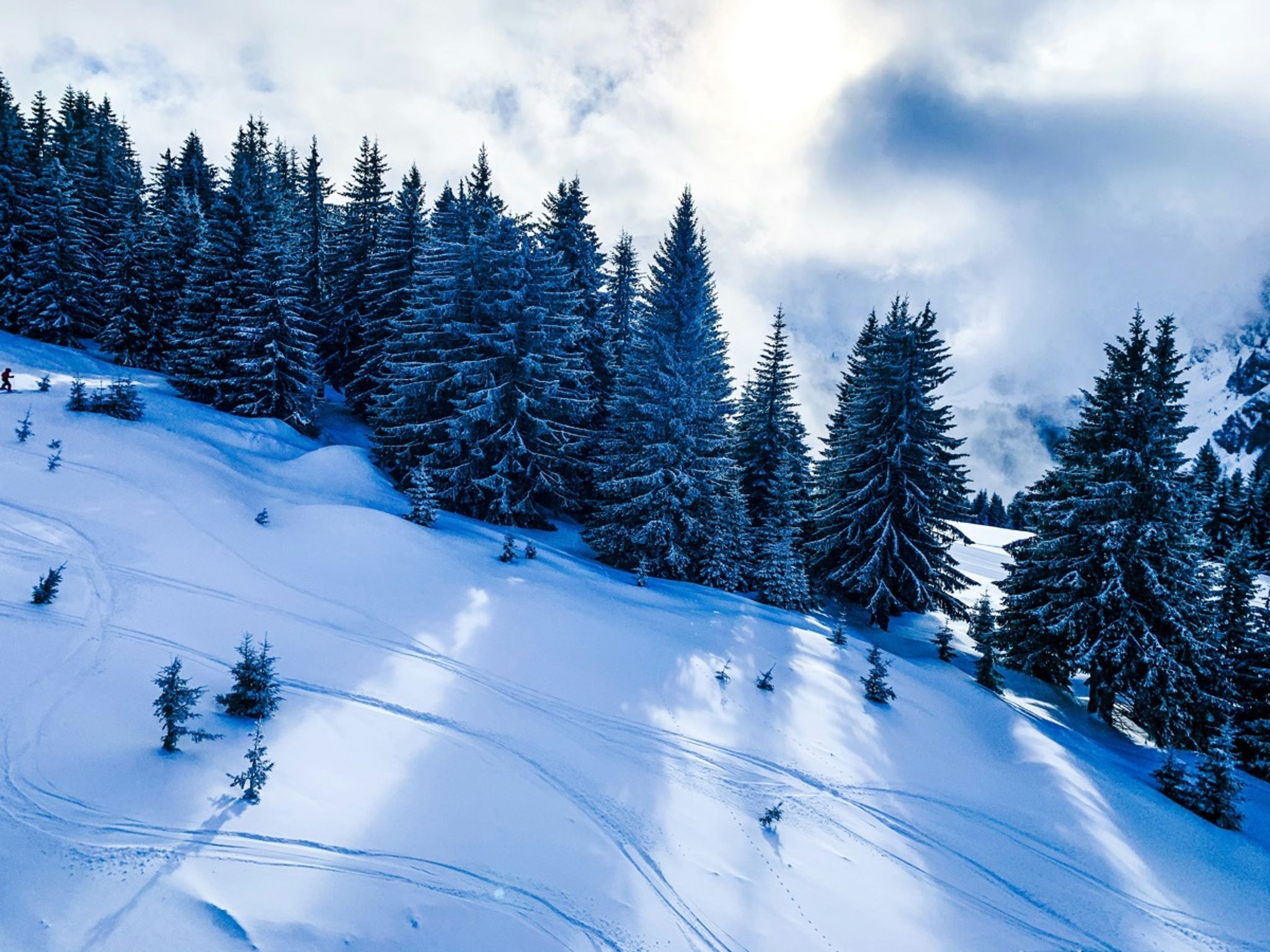
Morzine takes a completely different approach. It sits within the Portes du Soleil — one of the largest linked ski areas in Europe, offering around 650km of pistes across twelve resorts spanning the French-Swiss border. From Morzine you can ski directly into Avoriaz, Les Gets, Chatel, and onwards into Switzerland. The terrain is predominantly intermediate: long, rolling red and blue runs through forests and open bowls, with enough variety to keep a mixed-ability group exploring for a full week without repeating a run. The local Morzine-Les Gets sector alone covers around 120km of well-groomed pistes. There is steeper skiing available — the Swiss Wall above Avoriaz and the off-piste in the Hauts Forts area offer genuine challenge — but the Portes du Soleil's defining quality is its breadth and accessibility rather than its steepness.
For expert skiers and freeriders, Chamonix is the clear choice — there is simply nothing in the Portes du Soleil that compares to the Grands Montets or the Vallee Blanche. For families, intermediates, and groups with mixed abilities who want to cover ground and explore a vast linked system, Morzine delivers far more usable terrain.
The Village & Apres-Ski
The villages could not be more different in origin or atmosphere, and this is often the deciding factor for returning visitors.
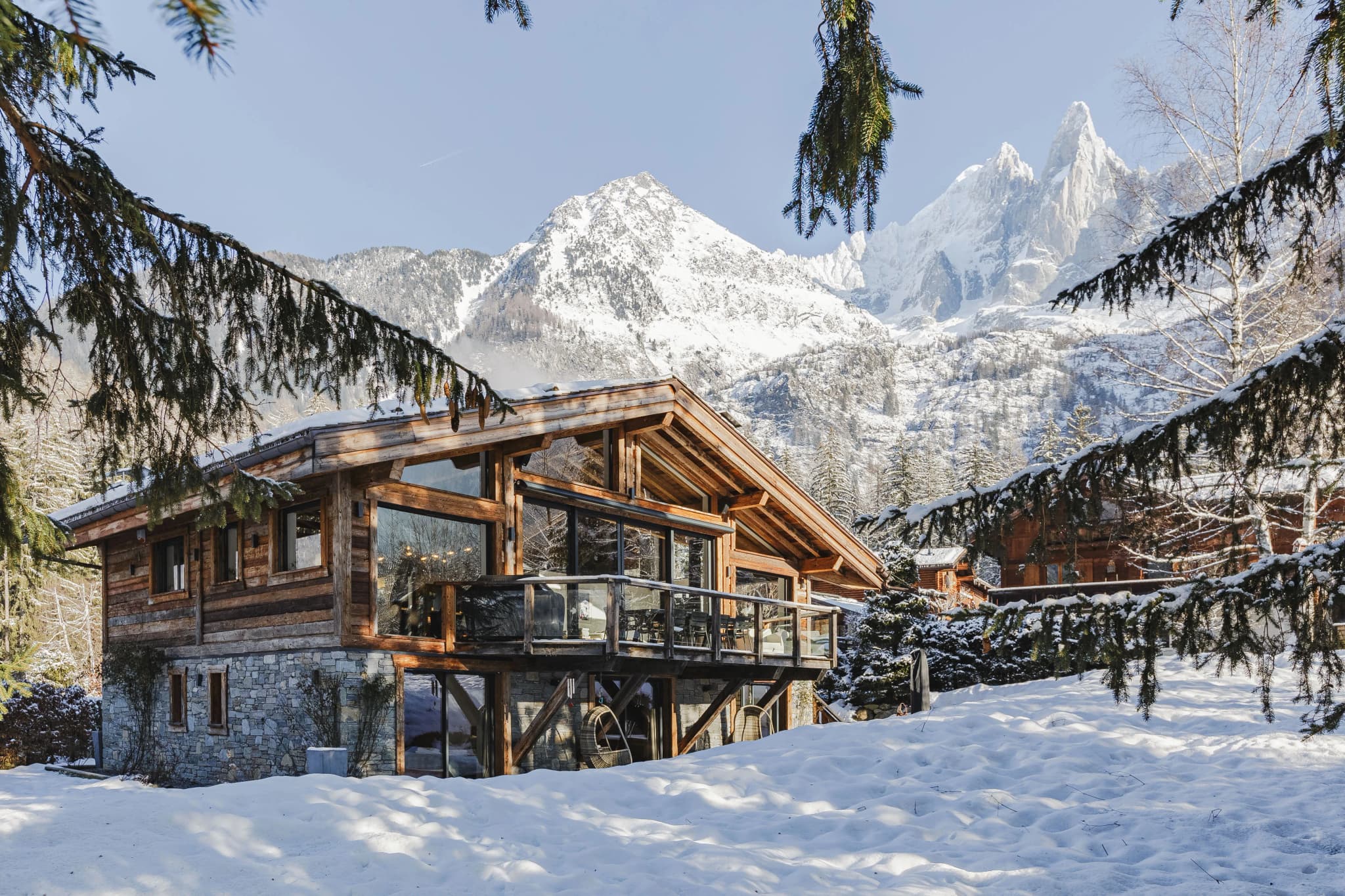
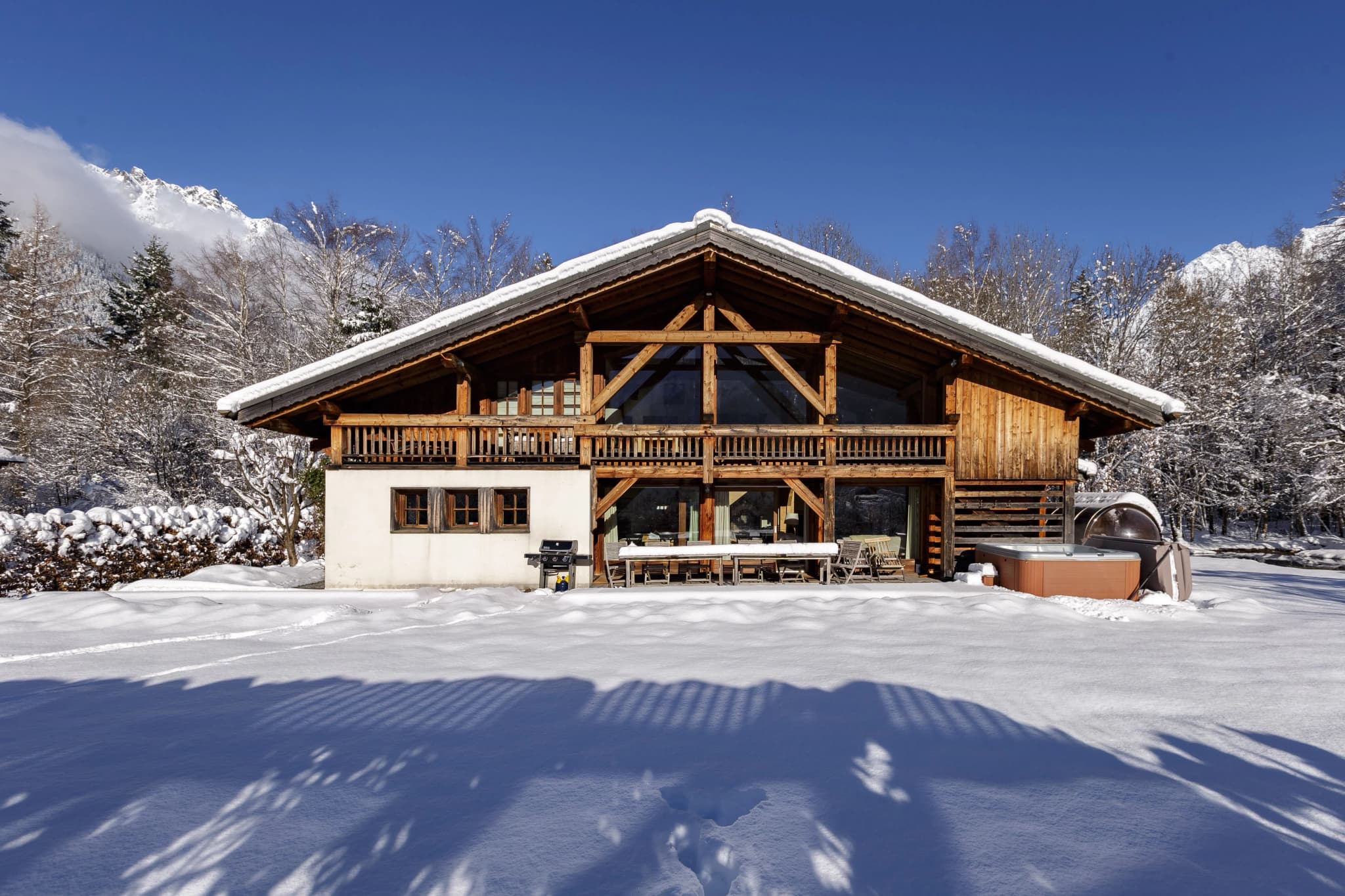
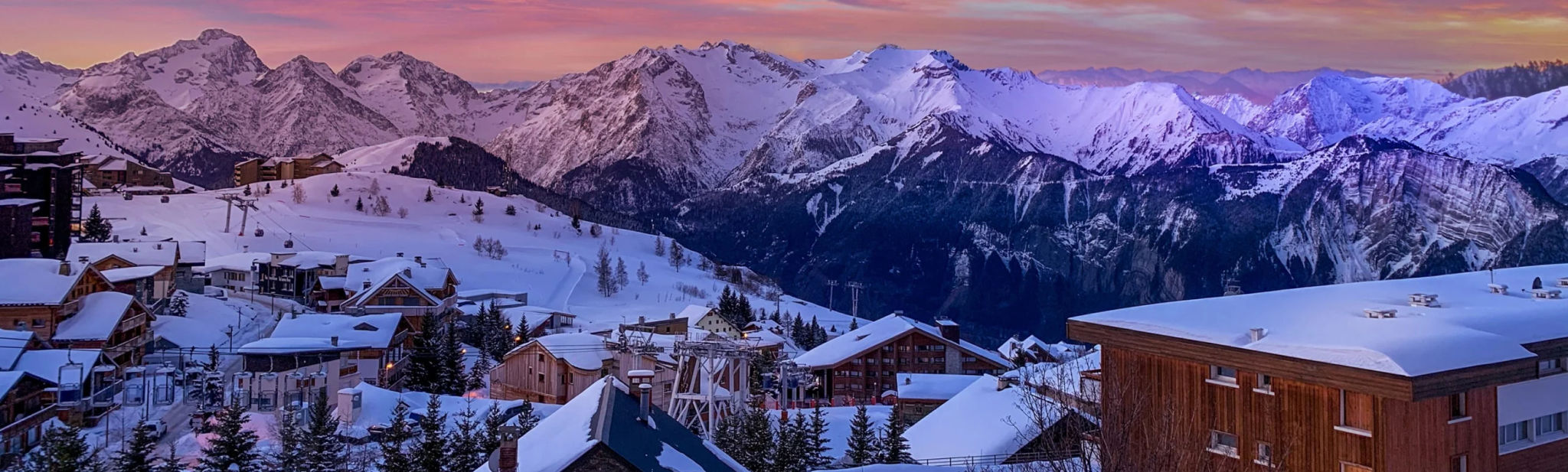
Chamonix is a real town — not a ski resort that happens to have a village, but a genuine Alpine town of around 9,000 permanent residents that has been a centre for mountaineering since the 18th century. The town sits at 1,035m in a dramatic valley beneath the Aiguille du Midi and the Mont Blanc massif. There are proper streets, independent shops, a year-round economy, and a cultural depth that purpose-built ski resorts simply cannot manufacture. The dining scene is strong: Albert Premier holds a Michelin star, and there is a wide range of restaurants from Savoyard fondue joints to wine bars and international kitchens. Apres-ski is lively — the bars at the base of Grands Montets fill early, and the town centre has a string of bars that stay busy well into the evening. Chamonix attracts a broad crowd: mountaineers, trail runners, paragliders, climbers, and skiers who appreciate a town with substance beyond the slopes. Luxury chalets in Chamonix range from traditional timber residences to contemporary builds with views across to the glaciers.
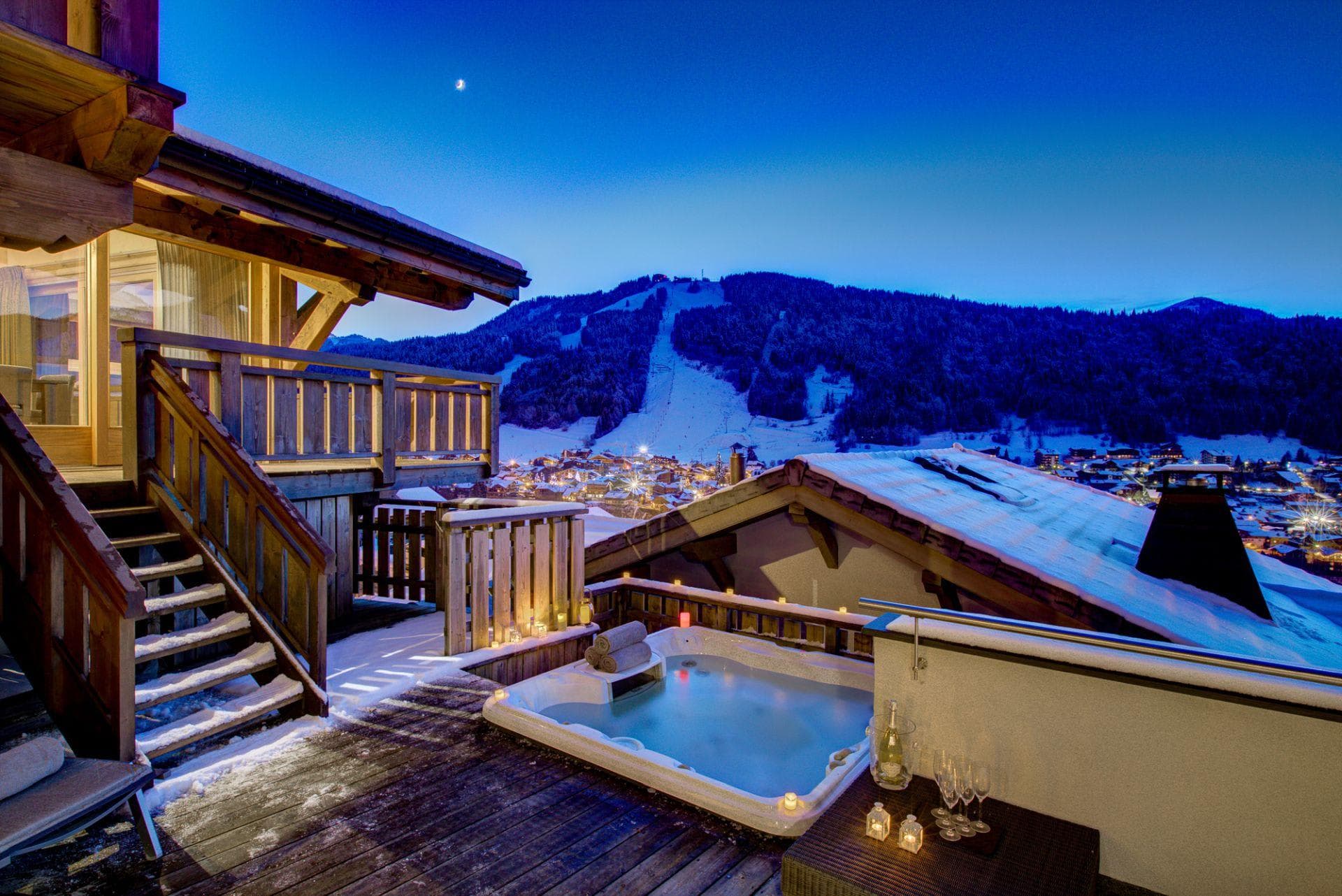
Morzine is a genuine French Alpine village — not purpose-built, but a traditional settlement of stone-and-timber buildings centred around a church and a handful of quiet streets. The village sits at 1,000m in a sheltered valley, and the atmosphere is notably gentler than Chamonix's. This is a resort that families return to year after year for exactly this quality: the pace is unhurried, the village is walkable, and the welcome is warm. Apres-ski is convivial rather than raucous — venues like the Cavern Bar and the Tibetan Cafe draw a friendly crowd, and the village atmosphere in the evenings is pleasant without being overwhelming. Morzine has a good selection of restaurants, though the range and ambition is narrower than Chamonix's. The village also has a strong summer identity around mountain biking, which has brought a younger, active crowd in recent years.
If you want a town with year-round substance, serious dining, and a lively evening scene, Chamonix is in a different category. If you want a charming, gentle village where families feel immediately at ease, Morzine is the better fit.
Getting There
Both resorts benefit from the same airport, which simplifies the comparison considerably.
Chamonix: Geneva airport is the standard arrival point, with a transfer time of around 1 hour 15 minutes via the A40 autoroute through the Arve valley. The drive is straightforward, passing through the Tunnel du Mont Blanc approach road. Chamonix also has a direct rail connection — the TER from Saint-Gervais links to the wider SNCF network, and there are direct bus services from Geneva airport. The town's accessibility year-round is one of its practical advantages.
Morzine: Geneva airport again, with a similar transfer time of around 1 hour 15 minutes. The route diverges from Chamonix's near Cluses, heading up the valley towards Taninges and on to Morzine. The final stretch is a winding mountain road that can be slow in heavy snowfall, but the transfer is short and well-served by private operators. Morzine does not have a direct rail link, so road transfer is the standard option.
The practical difference is negligible. Both resorts are among the most accessible in the French Alps from Geneva, and the similar transfer times mean the choice comes down to the resort itself rather than logistics.
When to Visit
Both resorts sit at similar village altitudes — Chamonix at 1,035m and Morzine at 1,000m — which means early and late season snow cover at village level can be variable. The skiing above, however, differs significantly in altitude range.
Chamonix's terrain extends much higher: the Grands Montets reaches 3,275m and the Aiguille du Midi stands at 3,842m. This gives Chamonix an advantage in snow reliability, particularly in the upper areas where conditions remain excellent well into April. The valley floor, however, can be mild — green grass in the town while powder sits above is a common Chamonix contrast. The Vallee Blanche is typically best from February through April when the glacier conditions stabilise. January through March is the reliable window for the full range of terrain, with April offering excellent spring skiing at altitude.
Morzine and the wider Portes du Soleil have a lower ceiling — most skiing tops out around 2,250m, with the highest point at Pointe de Mossette reaching 2,277m. This means the system is more dependent on natural snowfall, and late-season coverage can thin earlier than in Chamonix. Snowmaking across the Portes du Soleil has expanded significantly, but the sweet spot remains mid-December through mid-March. February half-term is busy given Morzine's popularity with British and French families.
For the widest weather window, Chamonix's high-altitude terrain gives it an edge. For a classic mid-season family holiday — Christmas through early March — Morzine delivers reliably.
The Verdict
These are two of the Haute-Savoie's finest resorts, and both offer an excellent week — but they cater to genuinely different priorities.
Choose Chamonix if you want: steep, demanding terrain that rewards strong skiing; the Vallee Blanche and the Grands Montets — experiences without equal in the Portes du Soleil; a real Alpine town with serious dining, independent shops, and a mountaineering heritage that gives the place substance; and a destination that works year-round, not just in ski season. Chamonix is the resort for skiers who take the mountains seriously.
Choose Morzine if you want: access to the vast Portes du Soleil with 650km of linked terrain — enough to keep any group exploring for a week; a charming, traditional village that families find immediately comfortable; a gentle, convivial atmosphere without the intensity of a mountaineering town; and excellent value compared to many premium French resorts. Morzine is the resort where everyone in the group has a good time — and that matters.
These are not interchangeable resorts. The choice is rarely difficult once you know your group: Chamonix for ambition, Morzine for ease. Both, in their own way, are among the best the French Alps have to offer.
Frequently Asked Questions
Is Morzine or Chamonix better for families?
Morzine is the stronger choice for most families. The village is compact and walkable, the nursery slopes are gentle and well-managed, and the Portes du Soleil provides a vast, interconnected ski area where beginners and intermediates can progress naturally across blue and red runs. Chamonix can work for families with older children who already ski well, but the terrain is generally steeper, the ski areas require bus transfers between them, and the town's scale and energy can feel less contained than Morzine's village atmosphere.
Can you ski between Chamonix and Morzine?
No. Chamonix and Morzine are in entirely separate ski systems — Chamonix's five domains around the Mont Blanc massif and the Portes du Soleil circuit. The two resorts are roughly 70km apart by road (around 1 hour 15 minutes by car via Cluses). A two-centre holiday combining both is possible but would require a base change mid-trip.
Which resort has more skiing — Chamonix or Morzine?
Morzine, by a significant margin. The Portes du Soleil offers approximately 650km of linked pistes — one of the largest ski areas in the world. Chamonix's five separate domains total around 170km of marked pistes. However, raw kilometres do not capture what Chamonix offers: the Vallee Blanche, the Grands Montets' steep terrain, and the vast off-piste potential add dimensions that no piste map can quantify. If you measure by linked terrain on a single lift pass, Morzine wins. If you measure by the quality and challenge of the best runs, Chamonix is hard to beat.
Is Chamonix good for intermediate skiers?
Chamonix works for confident intermediates, though it is not the most natural fit. Brevent-Flegere has excellent red runs with outstanding views, and Le Tour offers gentler, wide-open terrain at the head of the valley. However, the lack of a linked ski area means you spend time on buses between domains, and the most celebrated terrain — the Grands Montets, the Vallee Blanche — demands advanced ability. An intermediate skier would find a wider range of accessible terrain in Morzine's Portes du Soleil, where the linked system allows days of exploration without needing to leave the pistes.
Which is cheaper — Chamonix or Morzine?
Morzine is generally the more affordable option. Lift passes for the Portes du Soleil and the Chamonix Mont-Blanc Unlimited pass are broadly comparable in price, but accommodation and dining in Chamonix tend to be higher given its status as a year-round town with a strong independent economy. Morzine's chalet and apartment rental market offers a wider spread of mid-range options, and the village restaurants are typically less expensive than Chamonix's. The gap is not dramatic, but for a family or group watching the budget, Morzine stretches further.