The Skiing
Cortina and Courmayeur both exemplify the Italian approach to skiing — the mountain experience matters as much as the vertical metres — but the terrain they offer is markedly different.
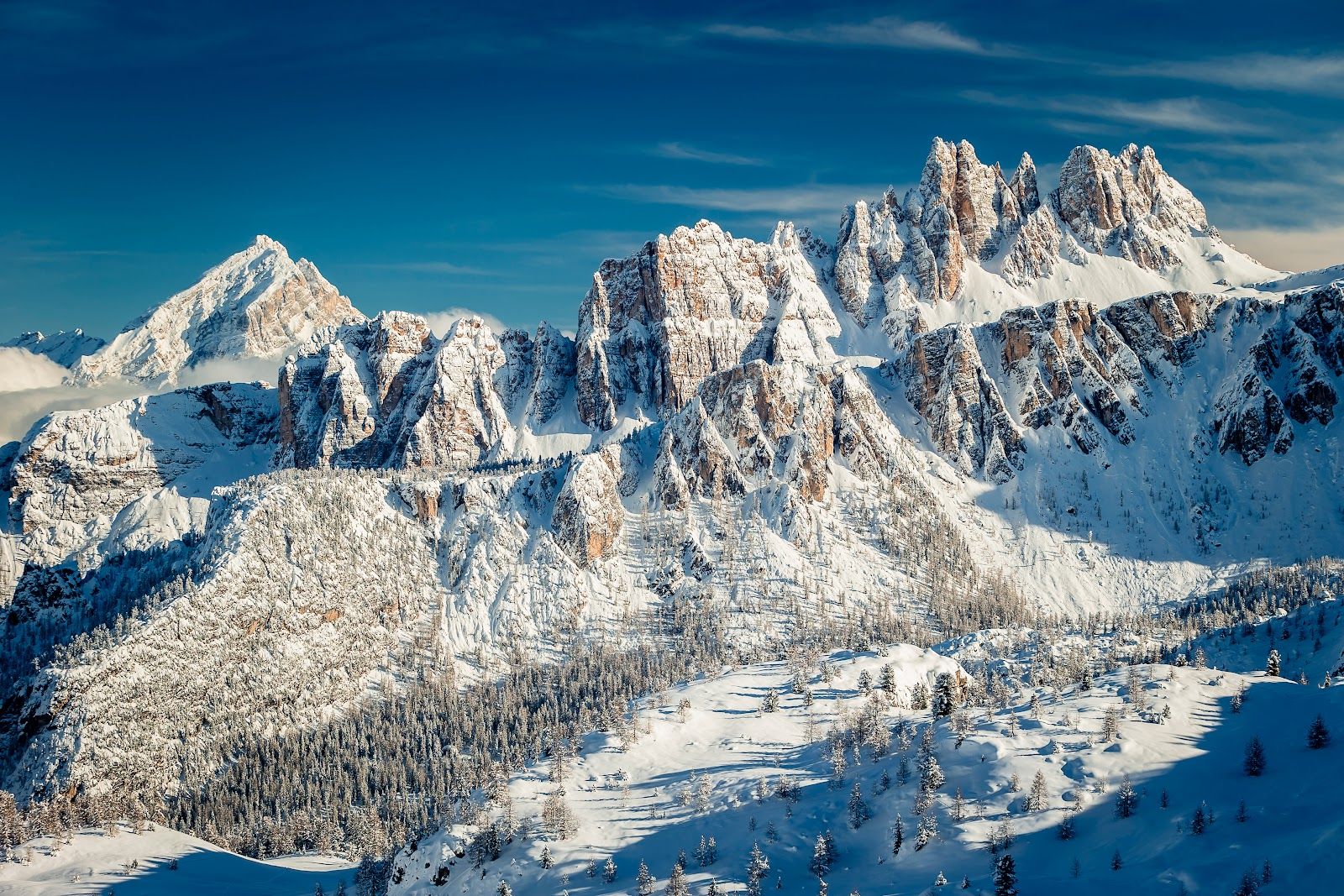
Cortina d'Ampezzo sits in a wide valley encircled by the Dolomites, with skiing spread across five separate sectors: Tofana, Faloria-Cristallo, Cinque Torri (Lagazuoi), Socrepes, and the newly connected Bai de Dones area. The 2026 Winter Olympics have accelerated lift investment dramatically — new gondolas linking Tofana to the Cinque Torri sector mean you can now access the Sella Ronda circuit directly from town. The Dolomiti Superski pass opens up 1,200km of pistes across 12 valleys, making it one of the most extensive lift passes in the world. Cortina's own terrain is best for intermediates, with long, scenic cruisers beneath the rock spires. Experts should head to the Forcella Staunies and the off-piste couloirs off Tofana di Mezzo for genuine challenges.
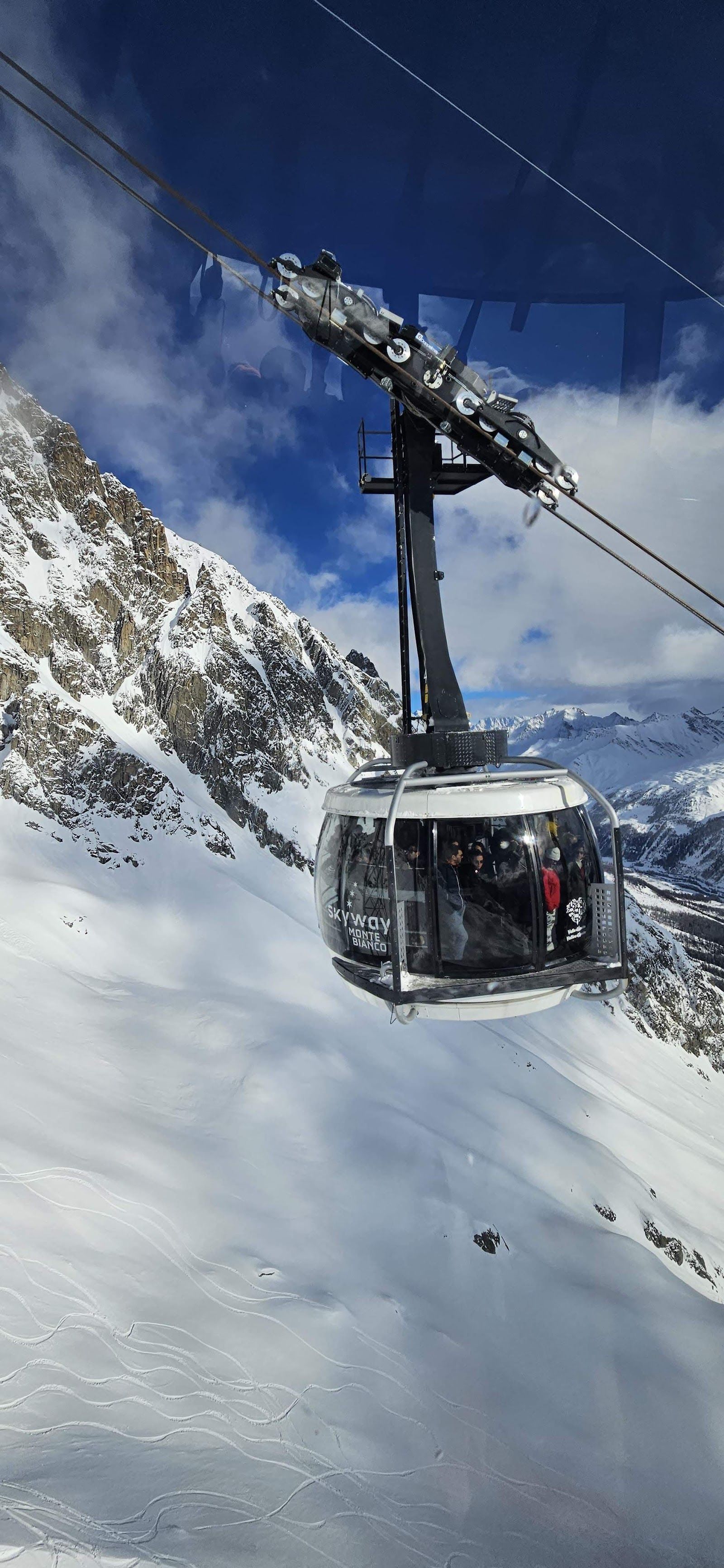
Courmayeur is a more compact ski area — approximately 100km of pistes on the south-facing slopes of Mont Blanc, served by the modern Plan Checrouit and Val Veny lift systems. The on-piste terrain is predominantly intermediate, with wide, well-groomed runs through larch forests. What sets Courmayeur apart is the off-piste: the Vallee Blanche descent from the Skyway Monte Bianco cable car (3,466m) down to Chamonix is one of the legendary routes in Alpine skiing, and the north-facing freeride terrain off Cresta d'Arp and Arp Vieille is serious, sustained, and uncrowded. Courmayeur's on-piste area is smaller than Cortina's but the off-piste potential, guided by local mountain professionals, is exceptional.
Cortina wins on piste scale and the Dolomiti Superski network. Courmayeur wins on off-piste quality and Mont Blanc's raw mountaineering grandeur.
The Village & Apres-Ski
Both towns predate skiing by centuries, and that heritage gives them an authenticity that purpose-built resorts cannot replicate.
Cortina is the grande dame of Italian skiing — host of the 1956 Olympics and soon the 2026 Games, with a glamour pedigree that stretches back to the Austro-Hungarian era. The Corso Italia pedestrian avenue is lined with high-end boutiques, artisan shops, and elegant cafes. The social ritual of the passeggiata — the evening promenade — is alive and well. Apres-ski is more aperitivo than beer hall: Enoteca Cortina, the Hotel de la Poste terrace, and Bar Lovat set the tone. The town has a larger, more cosmopolitan feel than most ski villages, with excellent restaurants ranging from refined Michelin dining at Tivoli to rustic mountain rifugios serving exceptional Ladin cuisine.
Courmayeur is smaller and more intimate. The old town centre — the Via Roma — is a short, atmospheric pedestrian street with boutiques, wine bars, and restaurants packed tightly together. It feels like a proper Italian mountain town rather than an international resort. Apres-ski starts at the Courmayeur Mont Blanc Funivie base area and migrates into town for aperitivo at Cadran Solaire or Roma Bar. The dining scene punches well above the resort's size: Michelin-recognised restaurants like Le Petit Royal sit alongside traditional trattoria serving Aosta Valley specialities — fontina fondue, carbonade, and polenta. The atmosphere is warm, convivial, and distinctly Italian.
Getting There
Both resorts benefit from proximity to major Alpine gateways, though from different directions.
Cortina: Venice Marco Polo airport is the most common gateway at approximately 2 hours by car, via the A27 autostrada and a scenic final approach through the Dolomite valleys. Innsbruck (2h) and Treviso (1h45) are alternatives. Cortina's position in the eastern Alps makes it particularly convenient for visitors coming from central Europe. The approach road is well-maintained and rarely affected by closures, though chains or winter tyres are mandatory.
Courmayeur: Geneva airport is approximately 2 hours via the Mont Blanc tunnel from Chamonix — a spectacular journey. Turin is closer at around 1 hour 30 minutes via the A5 autostrada. Milan Malpensa is approximately 2 hours 30 minutes. The Mont Blanc tunnel connection means Courmayeur is one of the few Italian resorts easily accessible from both France and Italy, making it a natural pairing with Chamonix for a two-country ski trip.
When to Visit
The Italian ski season typically runs from early December through mid-April, with both resorts offering their best conditions in the heart of winter.
Cortina's prime window is January through mid-March. The Dolomites receive less snowfall than the western Alps, but the cold, dry climate preserves snow cover well. February is peak season — the town fills with Italian holiday makers during Settimana Bianca (the traditional Italian ski week). The 2026 Olympics (February) will bring global attention and likely affect availability and pricing. Late March offers increasingly warm temperatures and softer snow, ideal for leisurely skiing and long rifugio lunches.
Courmayeur shares a similar peak period — January to March — with the added advantage of Mont Blanc's altitude for late-season reliability. The north-facing off-piste holds powder longer than the groomed, south-facing pistes. Christmas and New Year are particularly atmospheric in the compact village. April skiing is possible on the higher routes but the main piste area begins to thin by mid-month.
The Verdict
Cortina and Courmayeur are both unmistakably Italian — the food is exceptional, the style is effortless, and the skiing is part of a broader culture of mountain living rather than the sole focus. Choosing between them depends on what you want surrounding your time on the slopes.
Choose Cortina if you want: dramatic Dolomite scenery that exists nowhere else on earth; access to the vast Dolomiti Superski network; a cosmopolitan town with world-class shopping and dining; the buzz of a resort preparing for (and recovering from) an Olympic moment. Cortina is the resort where landscape, culture, and sport meet at the highest level.
Choose Courmayeur if you want: an intimate Italian village with genuine warmth; Mont Blanc's overwhelming alpine grandeur; exceptional off-piste for experienced skiers; the ability to cross into France via the tunnel or over the mountain. Courmayeur is the resort for skiers who value atmosphere and authenticity over scale, and who understand that the best lunch of your holiday might matter as much as the best run.
If you have the flexibility, both resorts pair superbly with neighbours — Cortina with a day on the Sella Ronda circuit, Courmayeur with a tunnel trip to Chamonix. Italian skiing is about the whole experience, and both of these towns deliver that philosophy with characteristic grace.
Frequently Asked Questions
How has the 2026 Olympics changed Cortina?
Significantly. New lifts connecting the Tofana and Cinque Torri sectors have dramatically improved Cortina's ski infrastructure, reducing the historic reliance on ski buses between areas. The Bobbio run has been upgraded for Olympic giant slalom, and village infrastructure (roads, accommodation, public spaces) has been modernised. The resort now functions as a genuinely interconnected ski area rather than a collection of separate mountains — a transformation that makes it substantially more competitive with the major French and Austrian resorts.
Is the Vallee Blanche accessible from Courmayeur?
Yes, but with important caveats. The classic Vallee Blanche route starts from the Aiguille du Midi above Chamonix. From Courmayeur, the Skyway Monte Bianco cable car takes you to Punta Helbronner (3,466m), from where you can traverse to the Aiguille du Midi and descend the Vallee Blanche into Chamonix. The Toula glacier descent on the Italian side is an alternative route. All off-piste routes in this area require a qualified mountain guide — the terrain is glaciated and the risks are real. Book a guide in advance.
Which resort has better food?
This is Italy — both are exceptional. Cortina edges ahead in volume and variety: Tivoli holds a Michelin star, and the rifugio dining tradition (particularly Rifugio Averau and Rifugio Scoiattoli) is outstanding. Courmayeur compensates with Aosta Valley cuisine — one of Italy's most underrated regional food traditions. The fontina cheese, cured meats, and mountain wines (particularly Blanc de Morgex, grown at Europe's highest vineyards) are exceptional. For a pure food-focused holiday, you genuinely cannot go wrong with either.
Is Cortina expensive compared to French resorts?
Cortina is premium by Italian standards but offers better value than Courchevel, Verbier, or St. Moritz for comparable luxury. Accommodation, dining, and lift passes are typically 20-30% less than the top-tier French and Swiss resorts. Courmayeur is more affordable still, particularly for dining and day-to-day costs. The Dolomiti Superski pass, which covers 1,200km across 12 valleys, is remarkable value compared to the Three Valleys or Swiss equivalents.
Can you visit both resorts in one trip?
It's possible but requires commitment — Cortina and Courmayeur are approximately 4 hours apart by car via the Brenner Pass and A5 autostrada (or slightly longer via the scenic Stelvio/Tonale route). A more natural pairing would be Cortina with another Dolomite resort (like Madonna di Campiglio), or Courmayeur with Chamonix via the Mont Blanc tunnel. If you do want both, allow a minimum of five nights at each to justify the travel day between them.