
The Skiing
These are two of America's most distinctive ski destinations, but they sit at almost opposite ends of the resort spectrum.
Park City is the largest lift-served ski resort in the United States — 250km of terrain across two combined mountains since the 2015 merger of Park City Mountain Resort and Canyons Resort linked them with the Quicksilver Gondola. The highest lift reaches 3,049m, the vertical drop is 946m, and the trail variety is genuinely impressive: 28 beginner runs, 146 intermediate, 115 advanced, and 59 expert. Snowfall averages 9m per season — the famously dry Utah powder. The terrain leans intermediate-friendly across both halves of the mountain.
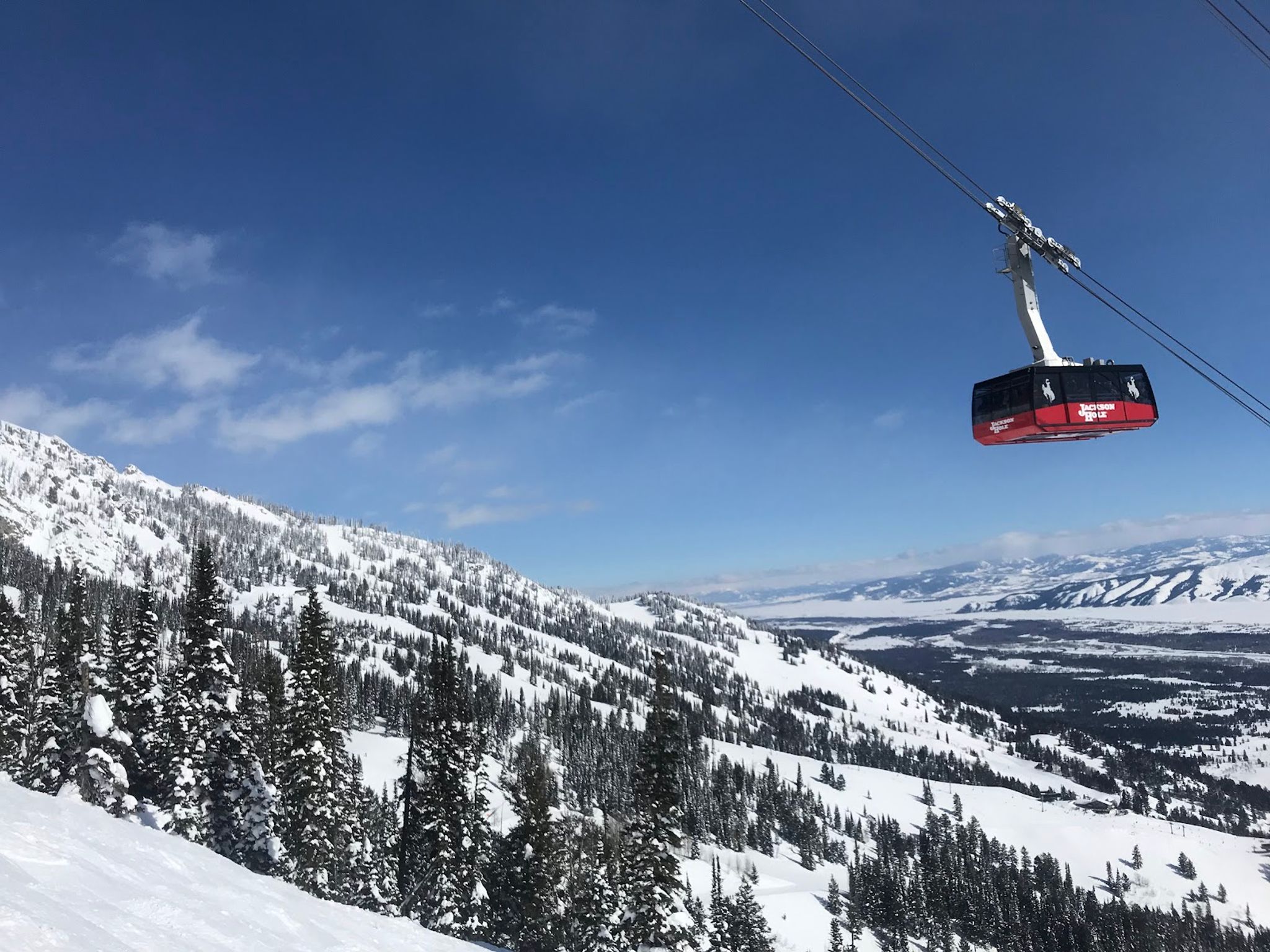
Jackson Hole's reputation rests on the most demanding lift-served terrain in North America. The 116km of marked pistes is small by major-resort standards, but the trail mix is exceptionally serious — 30% advanced, 20% expert. The Aerial Tram from Teton Village to Rendezvous Mountain at 3,185m opens access to terrain that defines the upper end of inbounds skiing in America: Corbet's Couloir, the Hobacks, the Cirque, S&S Couloir. The vertical drop is 1,261m. Snowfall averages 11.6m per season.
For the largest single connected ski area with the deepest variety, Park City wins. For sustained, demanding terrain that defines extreme inbounds skiing, Jackson Hole is in a class of one.
The Village & Apres-Ski
The two destinations are structurally different in their relationship between mountain and town.
Park City is a real town. The Old Town along Main Street is a National Historic District of nineteenth-century mining buildings, restored and converted into one of the most walkable resort cores in North America. The Sundance Film Festival each January transforms the town into a major cultural moment. Apres and dining range from refined (Riverhorse on Main, the Mariposa) to relaxed (No Name Saloon, High West Distillery). The town has a real working economy and a distinct identity beyond skiing.
Jackson Hole skiing is based at Teton Village, a relatively compact resort base that sits about 20 minutes from the actual town of Jackson. The resort base is functional and increasingly upscale (the Four Seasons Jackson Hole anchored a major luxury push), but the genuine cultural and social centre of the area is the town of Jackson itself — a real Western town with the Million Dollar Cowboy Bar, the National Museum of Wildlife Art, and the Town Square's elk antler arches that anchor the Jackson identity.
For a real walkable historic town with deep cultural depth, Park City is unmatched. For rugged Western character anchored by a separate town nearby, Jackson Hole has a distinctive appeal.
Getting There
Both resorts have notable airport options.
Park City: Salt Lake City International Airport is approximately 35 minutes by car. The drive is straightforward via I-80 east, and the airport offers strong direct service from London Heathrow plus a deep network of US connections. The transfer experience is among the most efficient of any major resort in North America.
Jackson Hole: Jackson Hole Airport is approximately 25 minutes from Teton Village — the only major commercial airport located inside a US national park (Grand Teton National Park). The airport offers seasonal direct service from major hubs including Newark, Chicago, and Atlanta. For private aircraft, Jackson Hole is one of the most accessible major resorts.
For commercial flying with the deepest network, Park City's SLC access is the more reliable choice. For an in-park airport experience, Jackson Hole is unique.
When to Visit
Both resorts share the broad Western US ski season but with different snow patterns.
Park City's prime window is January through mid-March, with peak crowds around the Sundance Film Festival in mid-to-late January and President's Day weekend. Late season delivers excellent spring skiing through April.
Jackson Hole's prime window is January through March, when the deep Teton snowpack is most reliable. The early-season conditions can be variable — Jackson's terrain needs meaningful snowpack to open fully — and the resort closes in early April, earlier than most peer resorts.
For a longer reliable season including spring skiing, Park City wins. For peak-season powder days at the most demanding terrain, Jackson Hole is unmatched.
The Verdict
Both resorts are top-tier American choices, but they answer fundamentally different questions.
Choose Park City if you want: the largest lift-served ski terrain in the United States; the easiest airport transfer of any major American resort; a real walkable historic town with deep cultural depth; the Sundance Film Festival in January; broader options for mixed-ability groups. Park City is the resort that combines scale, accessibility, and town character better than any other American resort.
Choose Jackson Hole if you want: the most demanding inbounds terrain in North America; the deepest Rocky Mountain powder snowfall; a rugged Western town with genuine character; an in-park airport that delivers private and commercial access. Jackson Hole is the resort that defines serious American skiing.
The shorthand most Western US advisors use: Park City for travellers who want broad terrain and easy logistics, Jackson Hole for travellers who care most about the mountain itself.
Frequently Asked Questions
Are Park City and Jackson Hole on the same lift pass?
No. Park City is on the Epic Pass (Vail Resorts). Jackson Hole has its own pass and is part of the Ikon Pass network for limited days. The two resorts compete for guests but offer no shared pass.
Which is harder to ski?
Jackson Hole, by a meaningful margin. Park City's terrain is genuinely varied across abilities (28 beginner / 146 intermediate / 115 advanced / 59 expert). Jackson Hole's trail mix skews dramatically toward expert terrain — the tram-served high mountain is among the most demanding in America.
Which is closer to a major airport?
Both have practical in-region airport access. Park City is 35 minutes from SLC International; Jackson Hole is 25 minutes from Jackson Hole Airport. Park City's SLC connectivity is broader for international and US connections.
Which has more luxury accommodation?
Both have meaningful luxury portfolios. Park City's includes the Waldorf Astoria, the Pendry, the Stein Eriksen Lodge (in adjacent Deer Valley), and the Lodges at Deer Valley. Jackson Hole's includes the Four Seasons Jackson Hole, Amangani, Hotel Jackson, and the Snake River Lodge. Park City's depth is broader; Jackson's leans more toward statement luxury properties.
Which is better for non-skiers?
Park City, comfortably. The walkable historic Main Street, year-round restaurant scene, Sundance, and broader cultural depth make Park City significantly more interesting for non-skiers than Jackson Hole's quieter Teton Village base. Jackson town offers good non-skiing options but the cultural infrastructure is less developed than Park City's.