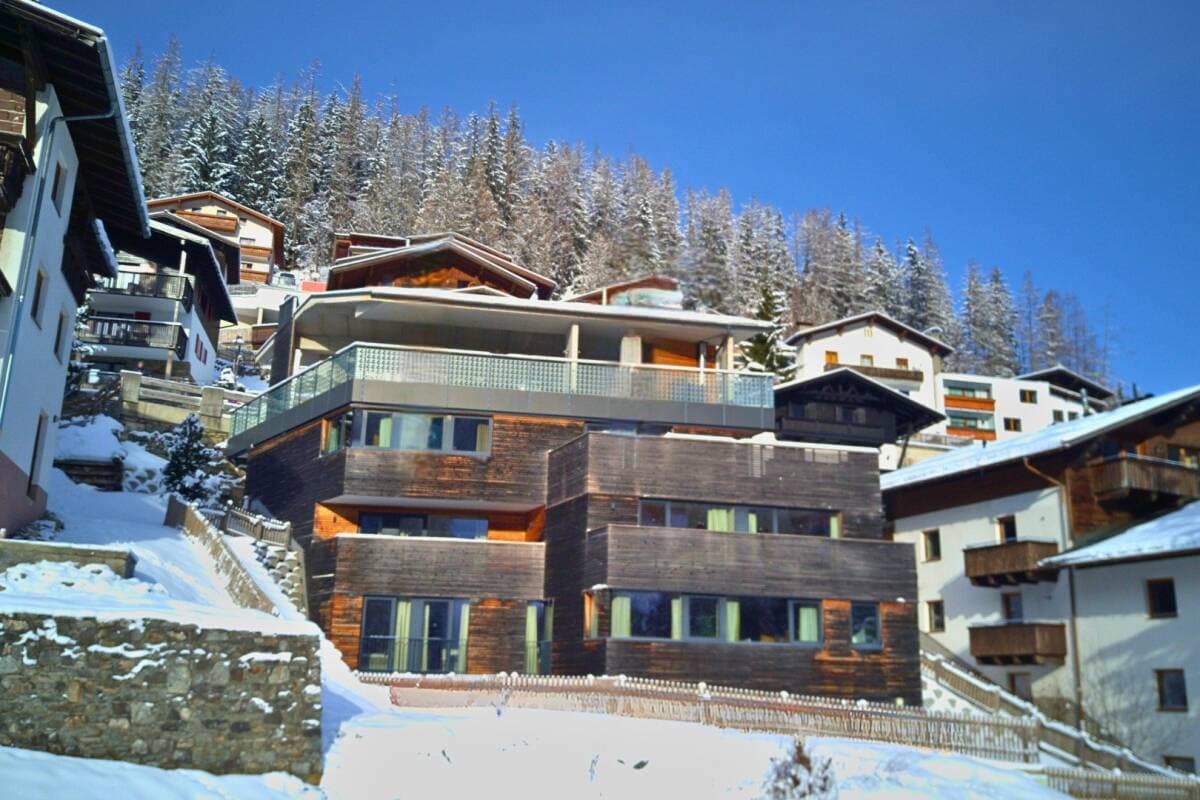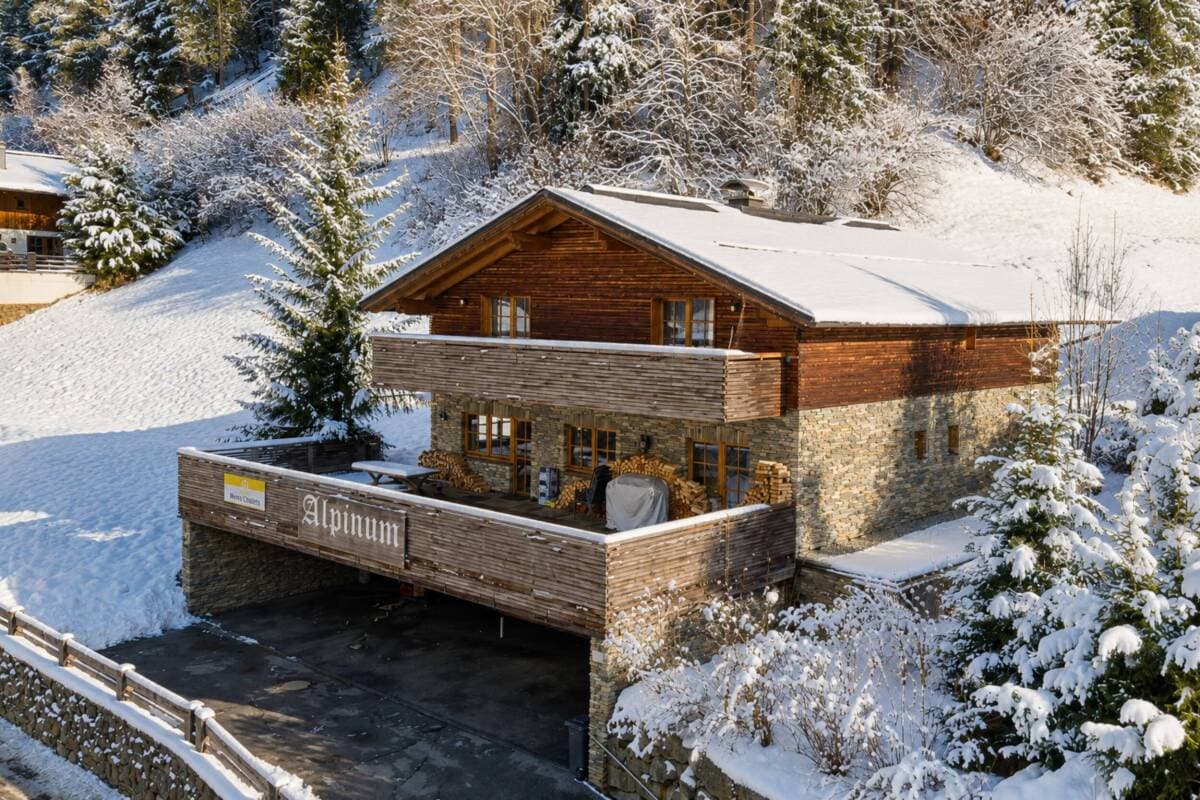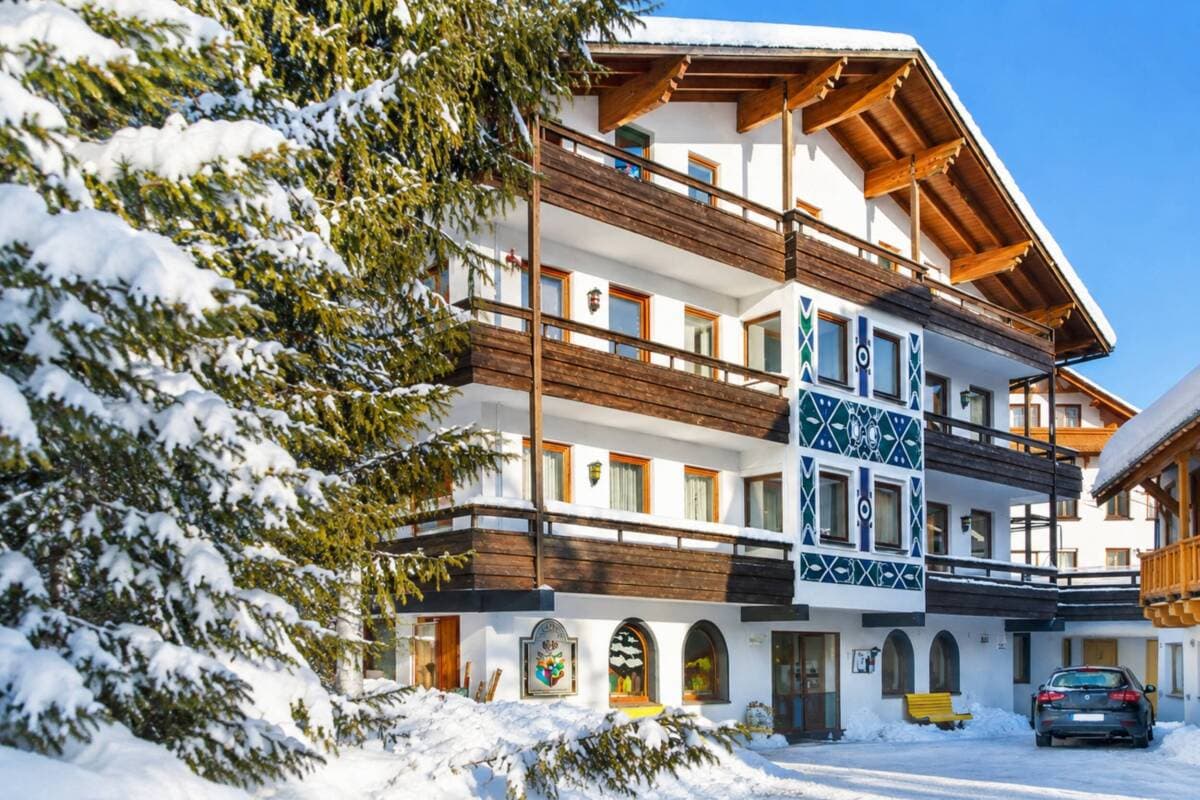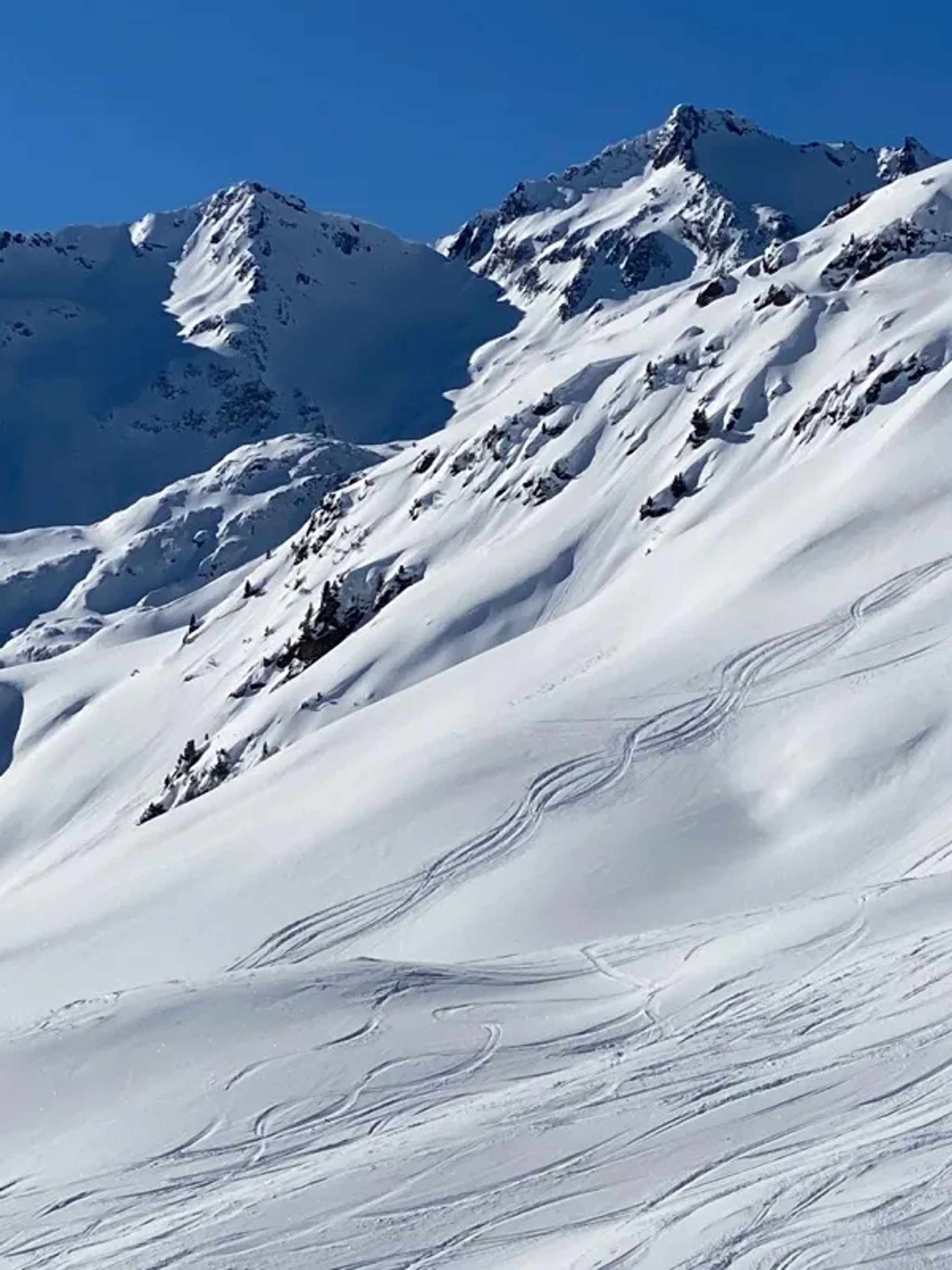
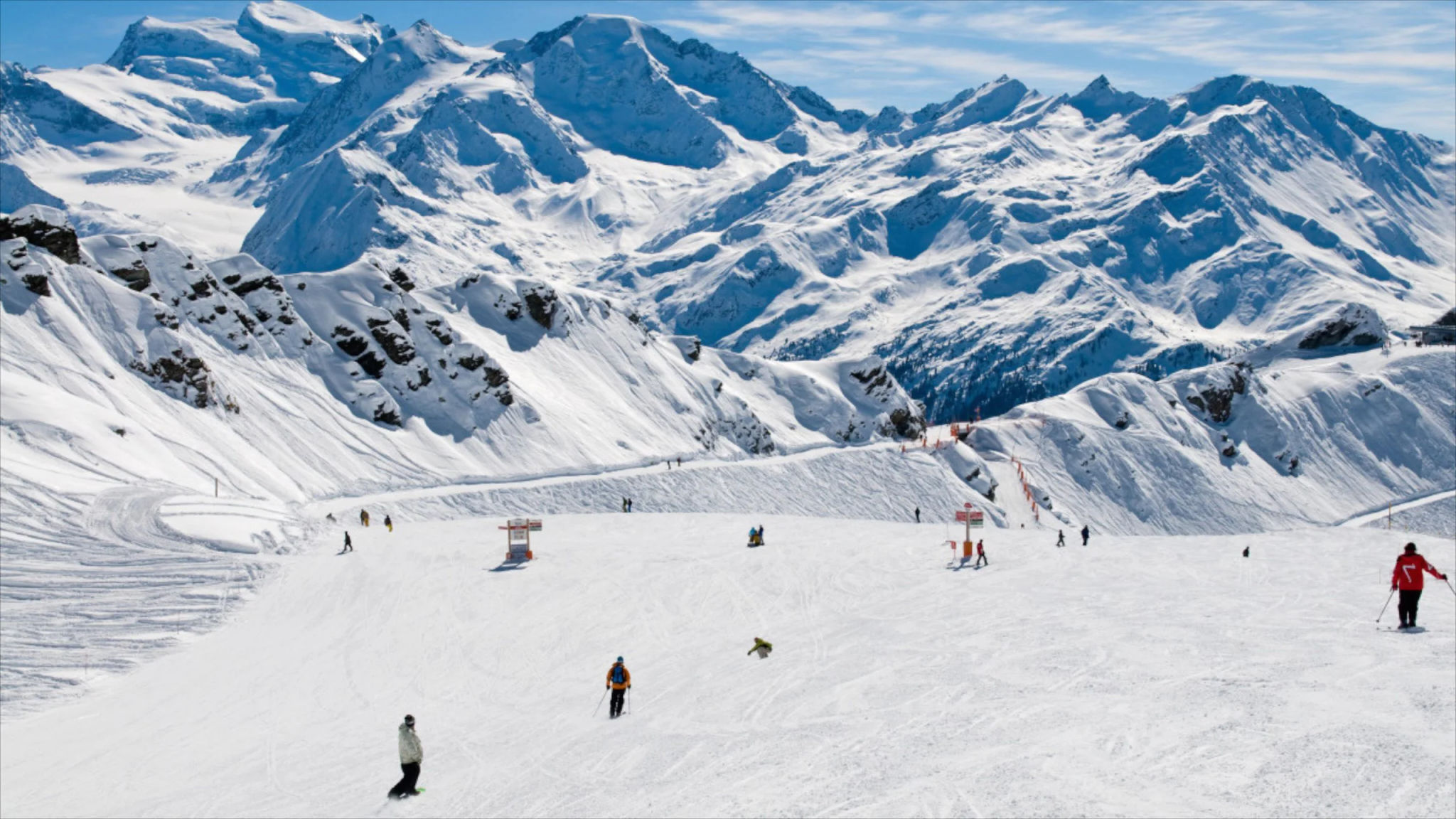
Two resorts, two philosophies. St. Anton trades on heritage, raw freeride credentials and an après-ski culture that has defined Alpine partying for generations. Verbier counters with high-altitude glamour, glacier terrain and a clientele that arrives by private jet into Sion. Both sit comfortably at the top of any serious skier's wish list, and choosing between them is less about quality than about temperament. Here is how they compare.
The Skiing
St. Anton anchors Ski Arlberg, Austria's largest interconnected ski area, with 302km of pistes linking it to St. Christoph, Stuben, Zürs, Lech and Warth-Schröcken. The headline figure for advanced skiers is the network of marked but ungroomed ski routes that fan out from the Valluga and Schindler Kar. The home runs are steep, the off-piste is legendary, and average snowfall sits around seven metres a season. Beginners can find their feet, but the resort wears its reputation as an advanced skier's mountain proudly.
Verbier sits at the gateway to the 4 Vallées, a 412km network that stretches across four valleys of the Valais. The lift-served high point is Mont Fort at 3,330m, which delivers glacier skiing and a vertical drop of more than 2,500m down to Le Châble. The Tortin descent, the Bec des Rosses face used by the Freeride World Tour and over 100km of off-piste itineraries give it as strong an expert pedigree as anywhere in the Alps. Sunnier intermediate terrain in Savoleyres and tree-lined runs at Bruson add useful range.
In broad strokes, St. Anton rewards skiers who want to dig into one cohesive Austrian network with consistently challenging terrain. Verbier offers more verticality, glacier access and a wilder freeride playground, but its scale can feel fragmented across sectors. Both deserve their billing as off-piste paradises.
The Village & Apres-Ski
St. Anton's village is compact, pedestrianised and unmistakably Tyrolean. Chalets, boutiques and bars line a single main street, and the home runs deliver you straight into the heart of the action. The MooserWirt and Krazy Kanguruh are institutions, with table-dancing in ski boots from mid-afternoon, while Basecamp at the Galzigbahn base offers a more polished take. Dining ranges from the high-altitude Verwallstube to the historic Museum Restaurant and the wine-cellared Hospiz Alm in St. Christoph.
Verbier feels more cosmopolitan. The village sits on a sun-drenched terrace at 1,500m and has the slightly spread-out geography of a resort built around a road network rather than a single pedestrian spine. Pub Mont Fort handles the rowdy end of après, Farinet Lounge Bar runs cocktails and DJs into the early hours, and the Farm Club remains one of the most exclusive nightclubs in the Alps. On mountain, Chez Dany and Cabane Mont Fort deliver the kind of fondue lunches that define a Swiss ski day.
For wellness, Verbier pulls ahead. The Spa at W Verbier covers 1,300 square metres with indoor and outdoor pools, nine treatment rooms and cryotherapy, while the Spa by Biologique Recherche at the Experimental Chalet is a destination in its own right. St. Anton's ARLBERG-well.com and the Arlberg Spa are excellent, but the overall offer is more functional than indulgent.
Getting There
St. Anton is most easily reached via Innsbruck Airport, around 100km away with a transfer of roughly an hour and a quarter. Zurich is the larger alternative. The real ace, though, is the mainline railway station in the village itself, which makes arriving by train from London, Paris or Zurich genuinely straightforward.
Verbier is typically accessed from Geneva Airport, 170km away, with transfers of around two hours via Alpybus or private car. Private jets land at Sion, just 45km from the resort. By rail, you take the train to Le Châble in the valley below and continue up by gondola, bus or taxi.
Both resorts work well car-free, though Verbier is more amenable to driving, with private parking common at chalets. In St. Anton, the pedestrian layout and free ski buses mean a car is largely surplus to requirements.
When to Visit
St. Anton's season runs from early December to late April. The Arlberg's reliable snowfall means mid-January through February is the sweet spot for powder, with consistent cold and frequent top-ups. February half-term books out months ahead, so plan accordingly. Late March and April bring sunnier terraces and softer afternoons without sacrificing much terrain.
Verbier's published season runs from 6 December 2025 to 26 April 2026, with the Bruson sector opening a week later and closing earlier. The altitude advantage shows in late season, when Mont Fort's glacier keeps conditions credible well into spring. The Freeride World Tour stop in late March is a fixture for off-piste devotees and a spectacular weekend to witness, though the village fills accordingly.
If snow reliability is your priority, Verbier's higher elevation gives it the edge at the shoulders of the season. If you want the classic deep-winter Alpine experience with the village in full swing, both deliver in January and February.
The Verdict
St. Anton is the choice for travellers who want their skiing serious, their village walkable and their evenings loud. The Arlberg network is one of the great connected ski areas in the world, the off-piste culture runs deep, and the après scene is genuinely without equal. It is also, by Swiss standards, relatively accessible on the wallet.
Verbier is the more polished proposition. Higher, glossier and with a clientele to match, it pairs world-class freeride with the kind of spa, dining and nightlife infrastructure that lets a week off the slopes feel just as considered as a week on them. The 4 Vallées is vast, Mont Fort is unforgettable, and the village's mix of mountain authenticity and international glamour is hard to replicate.
Neither resort is wrong. The question is what kind of holiday you want to remember: the camaraderie of a Tyrolean bar at 4pm with your ski boots still on, or a fondue at Chez Dany followed by cocktails at Farinet and a treatment the next morning.
Choose St. Anton if you want the Alps at their most uninhibited and the off-piste at its most storied. Choose Verbier if you want altitude, glamour and a freeride playground with luxury woven through every part of the week.
Frequently Asked Questions
Is St. Anton or Verbier better for off-piste skiing?
Both are world-class, and the honest answer depends on terrain preference. Verbier has the higher altitude, glacier access at Mont Fort and the Freeride World Tour pedigree, while St. Anton offers a denser network of marked ski routes and famously consistent Arlberg snowfall.
Which resort is easier to reach from the UK?
St. Anton has the simpler journey for rail travellers thanks to its in-village mainline station, with direct connections from major European hubs. Verbier is quicker by air via Geneva, particularly for those flying privately into Sion, but requires a transfer up from the valley.
Is Verbier more expensive than St. Anton?
Generally, yes. Switzerland's overall price level, combined with Verbier's luxury positioning, makes it the pricier choice across accommodation, dining and lift passes. St. Anton offers strong value within the high-end Austrian category, though top chalets in either resort sit firmly in the ultra-luxury bracket.
Which resort is better for non-skiers?
Verbier tends to suit non-skiers more comfortably, with its broader spa offering, polished restaurant scene and lively village life that extends well beyond ski hours. St. Anton has wellness facilities and excellent dining too, but its identity is more singularly focused on the mountain and the après that follows.
When is the best time to book a chalet in either resort?
For both St. Anton and Verbier, the prime weeks of Christmas, New Year and February half-term are typically reserved a year or more in advance, particularly for larger chalets. January and late March often offer better availability and value, while still delivering excellent conditions, especially in Verbier's higher terrain.