
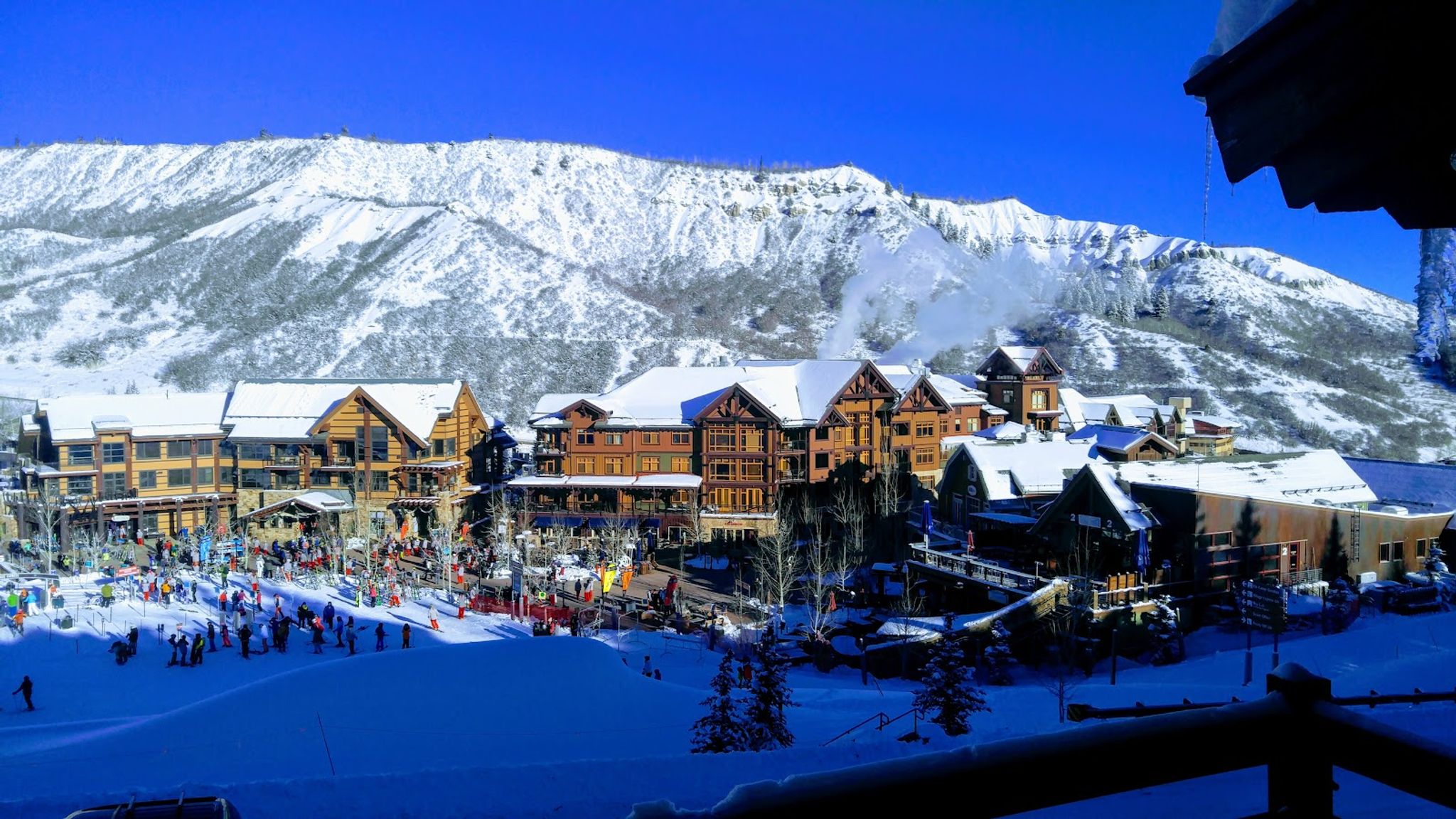
The Skiing
These are two of Colorado's most respected ski destinations, but they sit at different ends of the resort spectrum.
Steamboat anchors a single 165km ski area on Mount Werner, with terrain that defines the Western tree-skiing experience. The trail mix is meaningfully balanced: 14 beginner runs, 42 intermediate, 34 advanced, 10 expert. The highest lift reaches 3,221m, the village base is 2,103m, and the vertical drop is 1,118m. Snowfall averages 8m per season — and Champagne Powder® is a registered Steamboat trademark for the famously light, dry snow that the Park Range produces. The mountain's aspen and pine glades are widely considered some of the best in-bounds tree skiing in North America.
Aspen is really four separate mountains on a single pass — Aspen Mountain (Ajax), Aspen Highlands, Buttermilk, and Snowmass — connected by free shuttle and totalling approximately 5,527 acres of skiable terrain. The variety is unmatched in American skiing. The highest lift reaches 3,813m and snowfall averages 7.6m per season.
For pure tree skiing and the famous Champagne Powder, Steamboat is unmatched. For four-mountain variety and a more iconic luxury skiing experience, Aspen is the more refined destination.
The Village & Apres-Ski
The two towns deliver experiences from different worlds.
Steamboat Springs is a real working Western town. The downtown along Lincoln Avenue retains a genuine ranch-town character — pickup trucks, real cowboys, and a cultural identity that hasn't been overwritten by ski tourism the way most Colorado resort towns have. The hot springs after which the town is named (Strawberry Park Hot Springs is the famous public option) anchor a wellness culture that goes back generations. The dining scene is solid but grounded — barbecue, Western steakhouses, and casual venues outpace fine dining. Apres-ski is more relaxed than at most Colorado resorts; Steamboat doesn't try to be Aspen and doesn't suffer for it.
Aspen is a real town with deep cultural and economic depth that no other American ski destination can match. The Aspen Music Festival, the Aspen Ideas Festival, the Aspen Institute, and the established second-home culture have made Aspen a genuine cultural centre. The dining scene is the deepest in Rocky Mountain skiing. Apres-ski centres on legendary venues like Ajax Tavern, the Hotel Jerome's J-Bar, and Cloud Nine Alpine Bistro on Aspen Highlands.
For genuine working-Western character and a town that hasn't been polished into luxury, Steamboat is unmatched. For cultural depth and the most prestigious ski-town address in America, Aspen is in its own category.
Getting There
Both resorts have meaningful airport options.
Steamboat: Yampa Valley Regional Airport (Hayden) is approximately 35 minutes from Steamboat and offers seasonal direct service from major US hubs. Denver International is approximately 3 hours by car via I-70 and Highway 40. The Hayden direct service makes Steamboat one of the more accessible non-flagship Colorado resorts.
Aspen: Aspen-Pitkin County Airport is 5 minutes from town and accepts both commercial and private aircraft. Denver International is approximately 4 hours by car via I-70 and Highway 82. Eagle County Regional is around 1h30 by car.
Both resorts have practical in-region airports. Aspen's broader winter direct service is meaningfully larger than Steamboat's, but Hayden delivers reliable connections during the season.
When to Visit
Both resorts share Colorado's Rocky Mountain season.
Steamboat's prime window is January through mid-March, when Champagne Powder is most reliable. The mountain is famously kid-friendly and the late January / February school holiday period is the busiest. Late March and April deliver excellent spring skiing, with the rare opportunity to ski in the morning and visit the hot springs in the afternoon.
Aspen's prime window is January through mid-March, with peak periods around Christmas, New Year, and President's Day. The X Games at Buttermilk in late January bring significant energy and crowds. Late March and April deliver excellent spring skiing — Aspen Highlands' Highland Bowl is at its most accessible.
For peak season, both deliver. Steamboat's family-and-Western character is consistent throughout the season; Aspen has more event-driven peaks.
The Verdict
Both resorts are excellent Colorado choices, but they answer fundamentally different questions.
Choose Steamboat if you want: the famous Champagne Powder and best tree skiing in Colorado; a real working Western town with genuine ranch-town character; the natural hot springs that define the area; a meaningfully more relaxed and family-oriented atmosphere than Colorado's flagship resorts. Steamboat is the resort that delivers serious skiing without the status game.
Choose Aspen if you want: four distinct mountains on a single pass with the deepest variety in American skiing; the most culturally and economically established ski town in the United States; the unmatched luxury hotel and dining scene; private aircraft access via Aspen-Pitkin. Aspen is the resort where the town is as significant as the skiing.
The shorthand most Colorado advisors use: Steamboat for travellers who want serious skiing and authentic Western character, Aspen for travellers who want the most prestigious cultural ski experience in America.
Frequently Asked Questions
Are Steamboat and Aspen on the same lift pass?
No. Steamboat is owned by Alterra Mountain Company and is on the Ikon Pass. Aspen Snowmass is on the Ikon Pass network too, so an unrestricted Ikon Pass covers both. Aspen Snowmass also operates its own pass; Steamboat is included on the SkiBig3-style multi-resort networks.
What is Champagne Powder?
Champagne Powder is a Steamboat trademark for the famously light, dry snow produced by the Park Range. The combination of altitude and dry continental air creates snow with very low water content — typically 6% versus 10-15% for most North American snow. The result is faceted, fluffy powder that's exceptionally easy to ski.
Which has more challenging skiing?
Aspen, comfortably. Steamboat's terrain skews intermediate and tree-skiing focused. Aspen's expert terrain (the Highland Bowl, Aspen Mountain steeps) is among the most demanding lift-served terrain in North America.
Which has more luxury accommodation?
Aspen, by a wide margin. The Little Nell, Hotel Jerome, the St. Regis Aspen, and the Snowmass-area Viceroy and Limelight properties anchor one of the deepest luxury portfolios in American skiing. Steamboat's luxury inventory is meaningful but the depth doesn't approach Aspen's.
Which is better for families?
Steamboat is widely considered one of America's best family ski resorts — the trail mix favours intermediates, the town is genuinely welcoming, and the resort's marketing has built a deep family-oriented identity. Aspen is family-friendly too (Buttermilk specifically caters to beginners and families) but the broader town culture skews more adult and luxury-focused than Steamboat's.
