Quick Answer
Canada's two great ski destinations reward different instincts. Banff spreads across three mountains — Lake Louise, Sunshine Village, Mt Norquay — inside a UNESCO-listed national park with cold, dry Rocky Mountain powder averaging 30 feet at altitude. Whistler delivers 8,171 acres across two interconnected peaks (Whistler and Blackcomb), making it North America's largest ski area, with a purpose-built pedestrian village. Pick Banff for wilderness scenery and lighter snow; Whistler for terrain variety and village life.
The Skiing
Both destinations offer world-class skiing, but the scale, character, and feel of the terrain are markedly different.
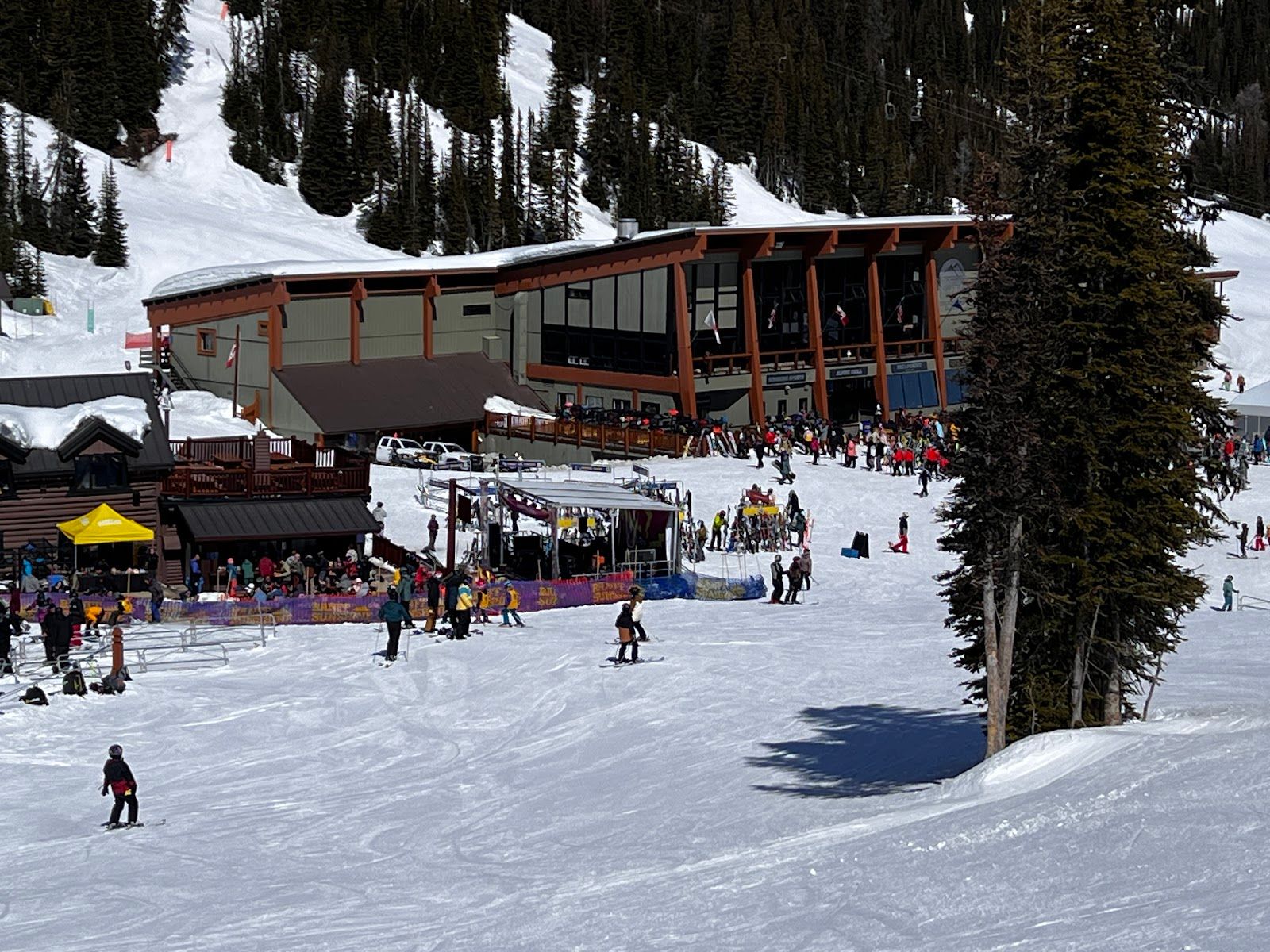
Banff is a gateway to three distinct ski resorts, all included on the SkiBig3 lift ticket: Sunshine Village, Lake Louise, and Mt Norquay. Sunshine Village sits at 7,200 feet on the Continental Divide and receives an average of 30 feet of dry, cold snow annually — more than almost any resort in the Canadian Rockies. Its alpine bowls, particularly Delirium Dive and the Wild West area, offer genuine expert terrain with mandatory avalanche equipment. Lake Louise is the largest of the three at 4,200 acres, with a stunning front face that drops away beneath the iconic Victoria Glacier. The terrain is varied and well-distributed: long groomed cruisers off the front, serious steeps off the back bowls and summit platter, and genuine tree skiing through the Larch area. Mt Norquay is the smallest — a locals' hill with night skiing and a terrain park, useful as a warm-up day but not the main event. Combined, the three resorts offer approximately 8,000 acres and over 300 marked runs.
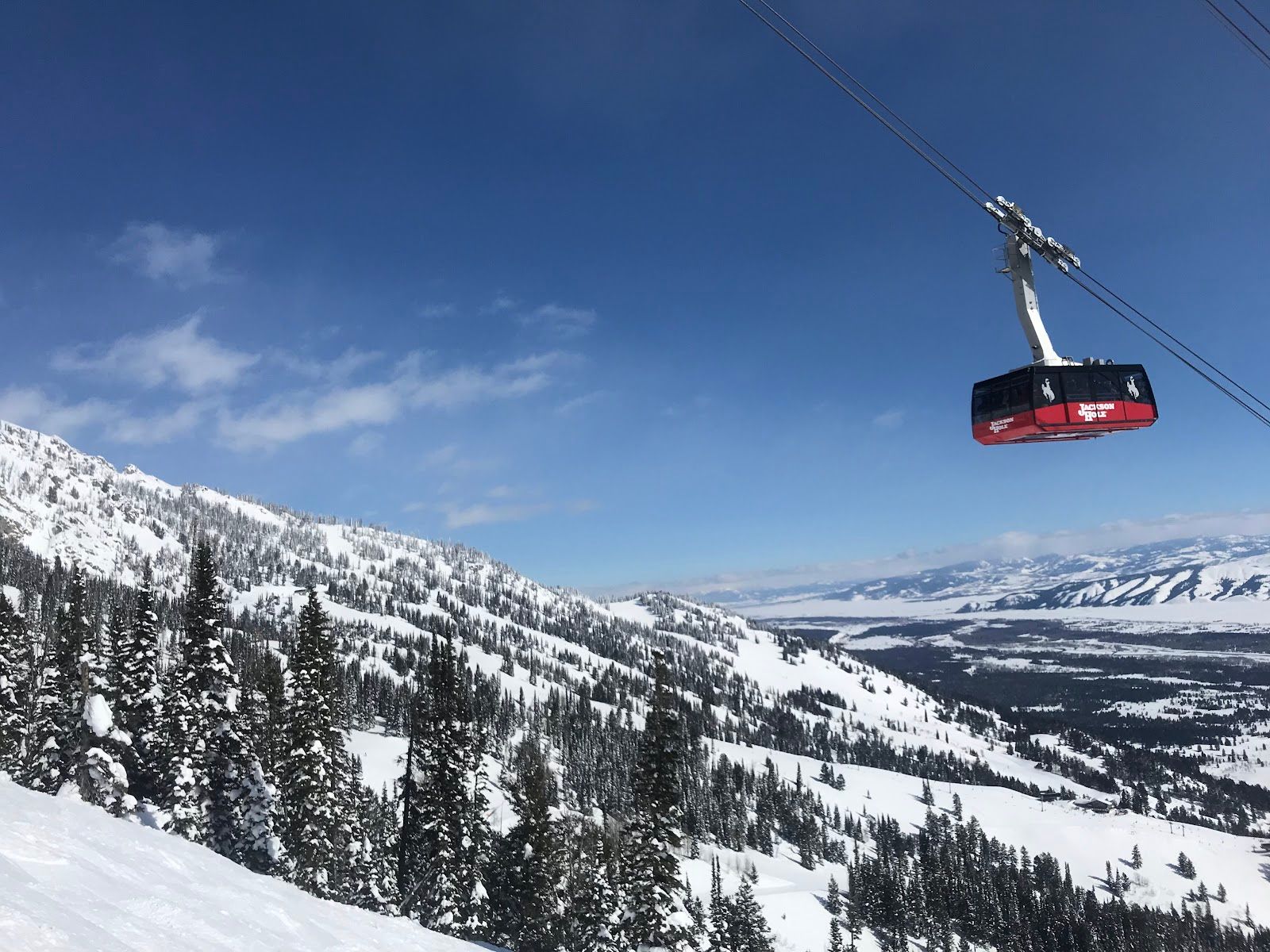
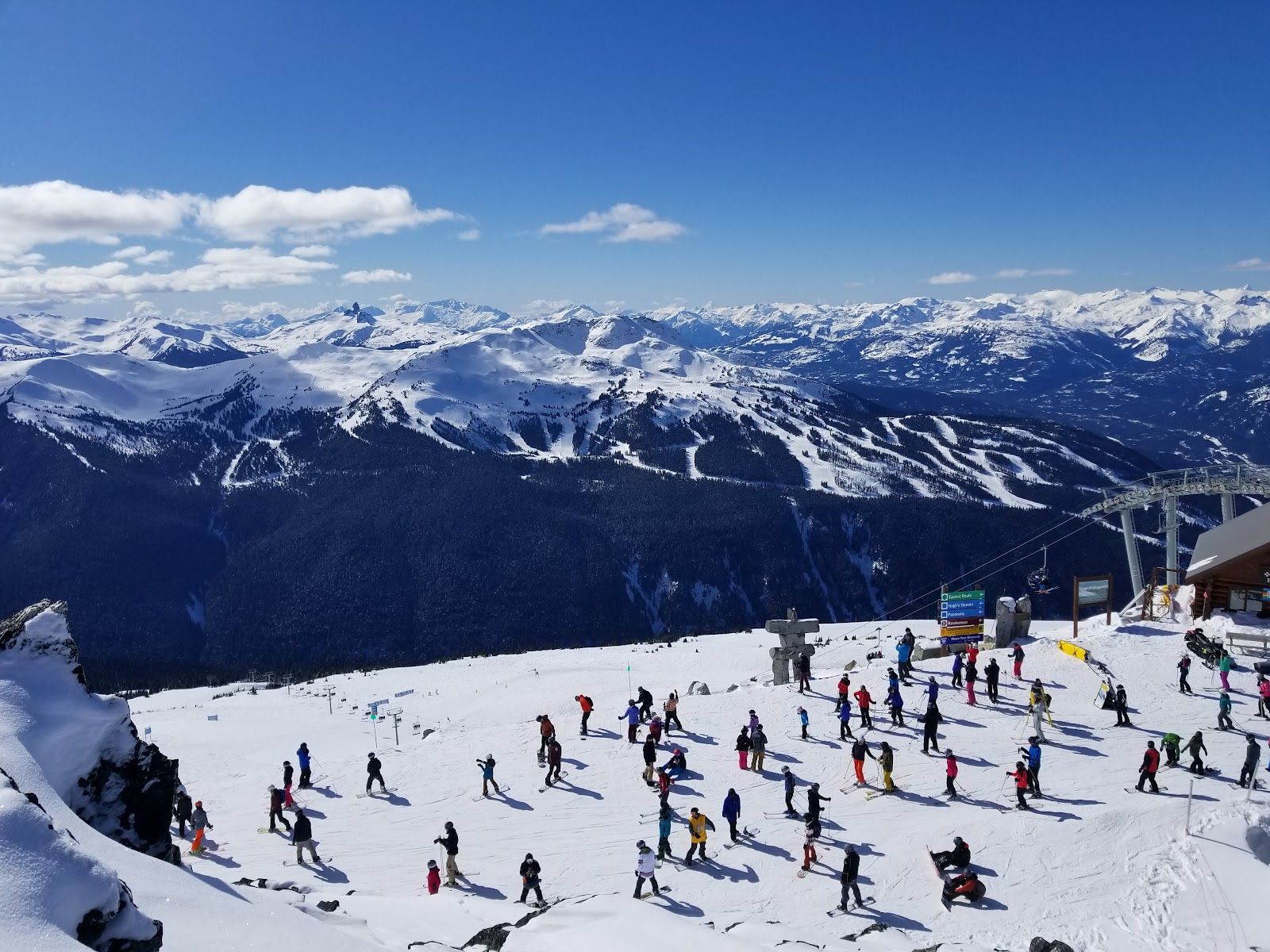
Whistler consolidates everything onto two adjacent mountains — Whistler and Blackcomb — connected at the top by the Peak 2 Peak gondola, an engineering marvel that spans 4.4km between peaks at a height of 436 metres. The combined ski area is 8,171 acres, making it the largest in North America. The terrain is extraordinarily diverse: Blackcomb's Horstman Glacier for high-alpine riding, the steep chutes and couloirs of Whistler's West Bowl, perfectly pitched intermediate cruisers on both mountains, and extensive gladed tree skiing that comes into its own during the heavier snowfalls. The vertical drop of 5,280 feet (Whistler Peak to Creekside base) is among the longest on the continent.
For skiers who value the adventure of exploring three separate mountains across a vast national park landscape, Banff delivers an experience unlike anywhere else. For those who want maximum terrain variety and vertical on a single interconnected mountain system, Whistler is the more complete ski area.
The Village & Apres-Ski
The off-mountain experience could hardly be more different.
Banff is a real town — it existed long before skiing arrived, and the national park setting shapes everything. The main street is lined with heritage buildings, independent shops, restaurants, and a handful of genuinely excellent bars. The Banff Springs Hotel (a Fairmont property built in 1888) is a destination in itself — its Scottish baronial architecture and hot springs pool are iconic. The town has authentic character, but it's spread out, and none of the three ski resorts are ski-in/ski-out from the town centre. Lake Louise Lodge is at the base of Lake Louise ski area, and Sunshine Village has a mountaintop lodge, but evenings are generally spent in Banff town, a 15-25 minute shuttle ride from the slopes. Apres-ski revolves around spots like the Elk & Oarsman and High Rollers, and the natural hot springs at the Upper Hot Springs or Banff Springs are a compelling post-ski ritual.
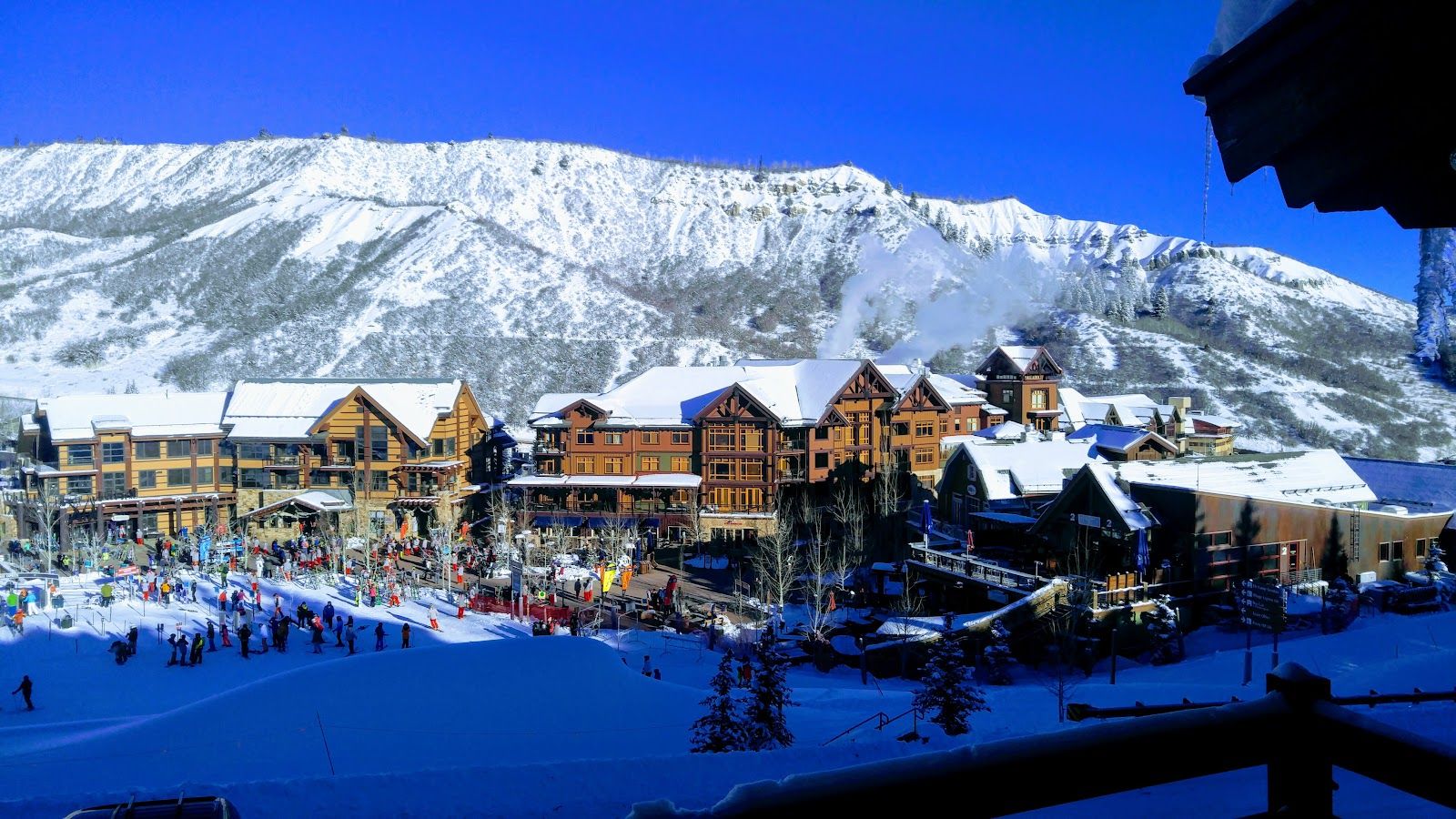
Whistler Village is purpose-built for skiing and it shows — in the best possible way. The pedestrian-only village core sits at the base of both mountains, with the Whistler and Blackcomb gondolas departing within a few hundred metres of each other. You can genuinely walk from your hotel to the lift in ski boots. The village has over 200 restaurants and bars, from high-end spots like Araxi and Rimrock Cafe to lively apres institutions like the GLC, Merlin's, and the Longhorn Saloon. The social scene is vibrant, youthful, and runs late — Whistler has a genuine nightlife that most ski resorts simply cannot match. The best Canadian ski towns article covers the broader scene, but Whistler's village is in a class of its own for convenience and energy.
If you want a town with historic soul set in one of the world's great national parks, where the wilderness is the point, Banff is the choice. If you want a seamlessly designed ski village where everything from first chair to last call is within walking distance, Whistler wins decisively.
Getting There
Access is straightforward for both, but the travel times and logistics differ.
Banff: Calgary International Airport (YYC) is the gateway, approximately 130km east — a 90-minute drive on the Trans-Canada Highway through increasingly dramatic mountain scenery. The drive to Lake Louise ski area is about 45 minutes further (roughly 2.5 hours from Calgary). Multiple shuttle services run daily. Calgary itself is a major international hub with direct flights from London, Amsterdam, Tokyo, and all major North American cities. Winter driving conditions on the Trans-Canada are generally well-managed, but snow tires are mandatory and conditions can close the highway in severe storms.
Whistler: Vancouver International Airport (YVR) is the standard arrival point, approximately 125km south. The drive takes around 2 hours on the Sea-to-Sky Highway (Highway 99) — one of the most spectacular mountain drives in North America, tracing the coastline of Howe Sound before climbing into the Coast Mountains. The road was extensively upgraded for the 2010 Winter Olympics and is well-maintained. Direct flights to Vancouver from London, Sydney, Hong Kong, Tokyo, and all major North American cities make international access straightforward. A daily shuttle service runs between the airport and Whistler.
Both destinations are approximately two hours from their respective international airports. Banff has a slight edge for visitors coming from Europe (Calgary is closer to most transatlantic routes), while Whistler benefits from Vancouver's Pacific hub status for Asian and Australasian travelers.
When to Visit
Both resorts have long seasons, but the snow characteristics and peak periods differ thanks to fundamentally different climates.
Banff's three resorts typically operate from early November (Norquay and Lake Louise) through late May (Sunshine Village often runs into Victoria Day weekend). The defining characteristic is the cold: temperatures regularly drop below -20C in January and February, which keeps the snow dry and light but can make for challenging days on exposed terrain. The sweet spot for most visitors is late February through March, when daylight lengthens, temperatures moderate, and the snowpack is at its deepest. Sunshine Village's high-altitude position means it holds snow reliably into spring when lower resorts are struggling.
Whistler's season runs from late November through late May or early June on the upper mountain, with Blackcomb's Horstman Glacier occasionally extending summer skiing into July. Whistler receives substantially more snow than Banff — averaging over 460 inches (nearly 12 metres) annually — but it's a heavier, wetter maritime snow that falls at warmer temperatures. Powder days are magnificent but the snow can turn heavy quickly. January through March is prime season. December can be affected by rain at lower elevations. April and May offer exceptional spring skiing with longer days and a festive village atmosphere.
If cold, dry powder in a wilderness setting appeals and you don't mind bundling up, Banff's midwinter skiing is superb. If you prefer milder temperatures, bigger snowfall totals, and a livelier spring scene, Whistler has the edge.
The Verdict
These are Canada's two greatest ski destinations, and choosing between them often comes down to what you want the non-skiing hours to feel like.
Choose Banff if you want: a genuine national park experience where elk wander through town and the mountain scenery is staggering; three distinct ski areas with terrain to challenge every level; some of the coldest, driest powder in North America; a real town with heritage character; the chance to combine skiing with hot springs, frozen canyon walks, and genuine wilderness. Banff is the destination where the natural world takes centre stage and the skiing is part of a larger mountain experience.
Choose Whistler if you want: North America's largest ski area with terrain variety that would take a season to fully explore; a purpose-built pedestrian village with world-class dining and nightlife; milder temperatures and enormous snowfall totals; the Peak 2 Peak gondola connecting two mountains at the summit; an experience where the skiing and the social scene are equally compelling. Whistler is the resort that does everything at scale — and does it well.
If you're still undecided, consider this: Banff is a place you visit for the landscape, and the skiing happens to be exceptional. Whistler is a place you visit for the skiing, and the landscape happens to be breathtaking. Both will reward you.
Frequently Asked Questions
Is Whistler or Banff better for beginners?
Whistler is the stronger choice for beginners. Both mountains have extensive beginner terrain served by modern lifts, and the ski school is one of the largest in North America. The village base location means beginners don't need to commute to reach the slopes. In Banff, beginners are best served at Norquay or the front side of Lake Louise, but the shuttle logistics between town and resort add a layer of complexity that Whistler eliminates entirely.
Which resort gets more snow — Banff or Whistler?
Whistler receives substantially more total snowfall — averaging over 460 inches annually versus Banff's 250-300 inches across its three resorts. However, Banff's snow is significantly drier and lighter due to its colder, continental climate. Many powder enthusiasts actually prefer Banff's snow quality despite the lower totals. Sunshine Village, sitting on the Continental Divide at high elevation, receives the most snow of Banff's three resorts and offers the closest comparison to Whistler's depth.
Is Banff colder than Whistler?
Significantly. Banff's January average high is around -5C, with frequent stretches below -20C. Whistler's January average high sits closer to 0C, and it rarely drops below -10C at the village level. The trade-off is that Whistler's warmer temperatures bring wetter, heavier snow and more frequent rain at lower elevations, particularly in December and March. Banff's cold means drier powder but the need for serious layering and face protection on exposed days.
Can you combine Banff and Whistler in one trip?
It's possible but requires planning. The two destinations are approximately 850km apart. Flying between Calgary and Vancouver takes about 1.5 hours (multiple daily flights), or you can drive through the Canadian Rockies via the Trans-Canada Highway in approximately 9-10 hours — one of the world's great road trips passing through Golden, Revelstoke, and Kamloops. A popular itinerary is one week split between the two, flying into Calgary, driving west through the Rockies, and flying home from Vancouver.
Which resort is better for a family ski holiday?
Both are excellent for families, but they excel in different ways. Whistler's village layout is the decisive advantage for families with young children — everything is walkable, ski school drop-off is at the base, and the range of family dining is extensive. Banff offers a richer non-skiing experience for older children and teenagers: wildlife encounters, the Banff Hot Springs, Johnston Canyon ice walks, and dog sledding all provide memorable alternatives to skiing. For a pure ski-focused family trip, Whistler is more convenient. For a broader mountain adventure, Banff is hard to beat.
Is Banff or Whistler better for intermediates?
Whistler is the stronger intermediate destination. Its blue runs are long, wide, and well-connected — you can ski from the top of Whistler Peak to Creekside on intermediate terrain covering over 1,600m of vertical. The Peak 2 Peak gondola opens the full system without needing to downclimb. Banff's intermediate terrain is excellent at Lake Louise (the front face and Larch area) and Sunshine Village, but the need to shuttle between resorts makes the experience feel more fragmented. For mileage and flow, Whistler wins; for scenic variety across three distinct mountains, Banff has appeal.
Which is easier to access from Europe?
Whistler is meaningfully more accessible. Vancouver International (YVR) has direct flights from London, Frankfurt, Amsterdam, and Paris, with the transfer to Whistler running about 2 hours on the scenic Sea-to-Sky Highway. Banff requires flying into Calgary (YYC), which has fewer direct European connections — most British travelers connect via London Heathrow or Toronto. The Calgary-to-Banff transfer is 90 minutes. Net journey time from London: ~13 hours to Whistler, ~14–16 hours to Banff.