
Austria's Tyrol has a habit of producing resorts that punch well above the European average, and few rivalries are as deliciously close-fought as Ischgl versus Sölden. Both sit at 1,377 metres, both are unapologetically modern, and both have built reputations on the twin pillars of serious skiing and seriously loud nights. Yet the two resorts feel quite different once you arrive, and choosing the right one for your week comes down to terrain, atmosphere and the kind of luxury you want to come home to.
The Skiing
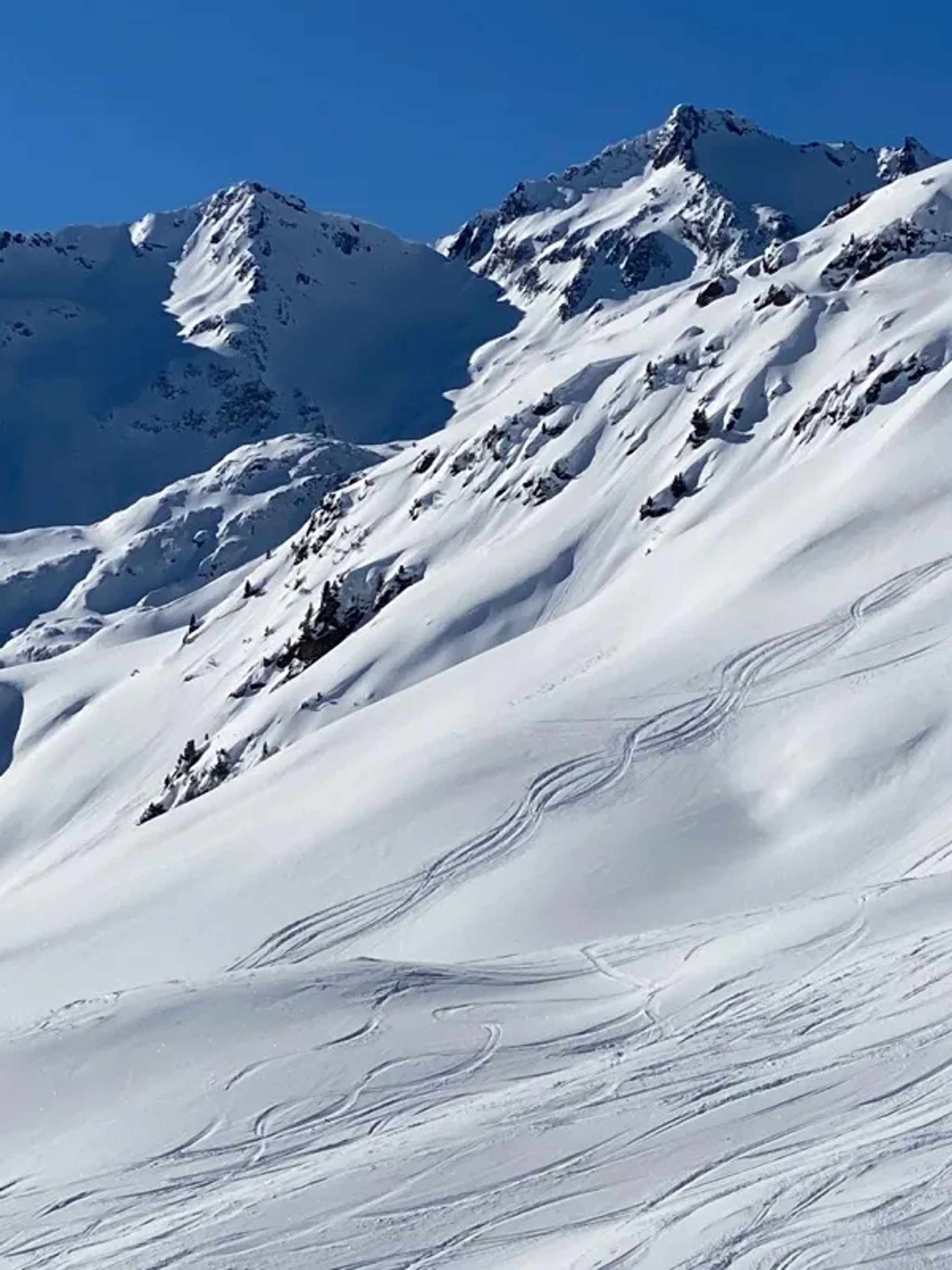
Ischgl is the larger of the two on paper, with 239km of connected pistes spread across the Silvretta Arena and a seamless border crossing into Samnaun in Switzerland. The bias is firmly intermediate, with around 60 percent of the trail map graded red, and the layout favours skiers who like to clock miles on wide, rolling, perfectly groomed motorways. The highest lift tops out at 2,872m, which means snow reliability is consistently excellent from late November through to early May.
Sölden takes a different approach, packing 144km of piste into a three-mountain layout that reaches all the way to 3,340m via the Tiefenbach and Rettenbach glaciers. The terrain is more vertically dramatic, with a vertical drop of 1,963m, and the trail breakdown is notably more beginner-friendly. The Giggijoch and Tiefenbach sectors are full of wide carving pistes, while the Rettenbach glacier hosts the FIS World Cup opener and gives advanced skiers a genuinely steep test.
For freeriders and adventurous skiers, both resorts deliver but in different ways. Ischgl's Piz Val Gronda cable car opens up vast lift-accessed powder fields above Samnaun, and the Palinkopf descents are properly demanding. Sölden counters with the Gaislachkogl, a 3,048m peak whose off-piste flanks are a magnet for advanced skiers, plus the bonus that glacier access extends usable freeride terrain deep into spring.
The Village & Après-Ski
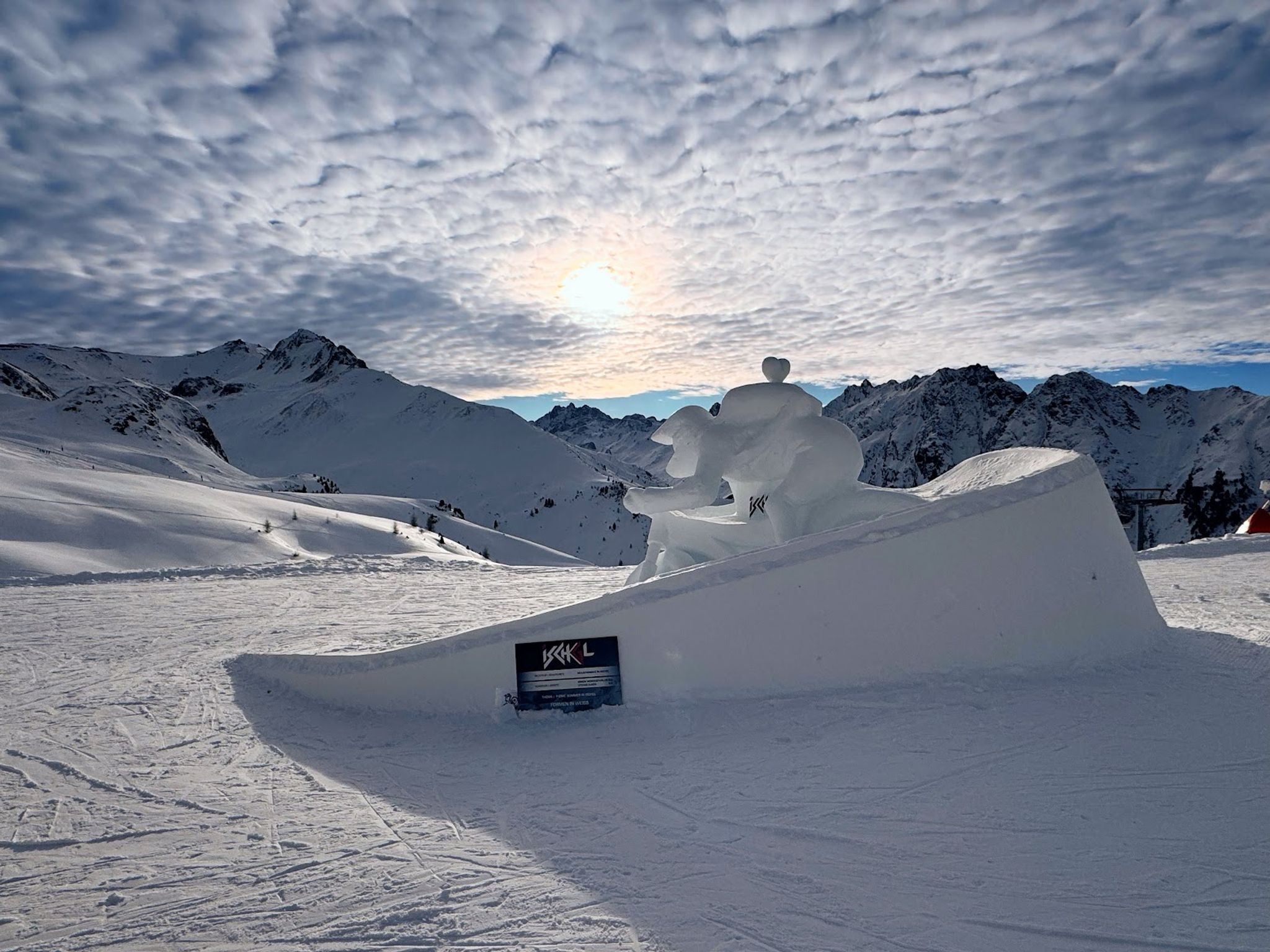
Both villages live and breathe après, but they wear it differently. Ischgl is densely packed into a narrow Paznaun valley, and the architecture leans Tyrolean traditional with a luxury polish. Kuhstall, Trofana Alm and Schatzi Bar are the unmissable trio, and the gourmet scene punches hard with Paznauner Stube under Martin Sieberer and Stüva under Benjamin Parth. It is a resort that pivots from fur-lined fine dining to a sweaty dancefloor within a single block.
Sölden stretches further along its main valley road and feels a touch more sprawling, but the energy is equally relentless. Fire & Ice and the Schirmbar are institutions in their own right, and the on-mountain dining has a cinematic edge thanks to the ice Q restaurant at the Gaislachkogl summit, famous as a Spectre filming location. Down in the village, the Freizeit Arena and the spectacular Aqua Dome a short drive down-valley give recovery days a properly indulgent shape.
If we are splitting hairs, Ischgl edges the gourmet contest while Sölden edges the spectacle contest. The 007 Elements installation and the James Bond heritage give the Ötztal a sense of occasion that is hard to replicate, while Ischgl's Top of the Mountain concerts bookend the season with global headline acts.
Getting There
Ischgl is best reached via Innsbruck Airport, around 100km and a 1h 15min transfer away. Rail travellers can take an ÖBB service to Landeck-Zams and continue on the direct Postbus Line 260 into the village. The resort itself is famously walkable, with underground pedestrian tunnels and moving walkways linking the gondola stations.
Sölden is marginally closer to Innsbruck at 85km, with the same 1h 15min transfer time. The rail route runs to Ötztal Bahnhof followed by the frequent Postbus Line 4194 straight into the resort. A free ski bus service runs along the valley road throughout the day, connecting hotels with the Giggijoch and Gaislachkogl base stations.
Neither resort requires a car, although in Sölden a vehicle can be useful for exploring the wider Ötztal and reaching the Aqua Dome. In Ischgl, the compact footprint and tunnel network make driving genuinely redundant.
When to Visit
If you want the longest possible season, Sölden wins outright. The glacier ski areas open in mid-October, and the resort runs through to early May, making it a strong pick for autumn ski weekends and late-spring sunshine skiing. Ischgl runs from late November to early May, which still gives a generous window but leaves the pre-season to Sölden.
Mid-season in both resorts means peak energy and peak prices. Ischgl's Top of the Mountain concerts draw enormous demand at the opening and closing weekends, and accommodation and lift passes for those weeks need to be booked many months ahead. Sölden's dynamic pricing rewards advance online booking with discounts of up to around 20 percent off the gate price, so planning early pays off.
For families and quieter weeks, the post-Epiphany window in January tends to be the sweet spot in both villages. Late March and early April deliver the high-altitude snow with longer daylight and sunnier terraces, and Sölden's glaciers in particular hold their condition beautifully into spring.
The Verdict
Both resorts are world-class, and neither would be a wrong choice. Ischgl is the better pick if your priorities are sheer piste mileage, a cross-border element to the week, a famously efficient lift system and the most concentrated après scene in the Alps. Its luxury accommodation skews hotel-led, with grand addresses like Hotel Elizabeth and Hotel Trofana Royal anchoring the upper end of the market.
Sölden suits those who want glacier-backed snow security, dramatic vertical, a more varied beginner-to-intermediate mountain and the option of larger standalone chalets. The presence of properties like Hermitage Mountain Lodge and Chalet Landa makes it a notably stronger fit for private groups wanting their own footprint rather than a hotel floor.
The hardest call is for advanced skiers who love long days on snow and big nights afterwards. Both will deliver, but Ischgl probably has the edge on linked terrain while Sölden has the edge on steep glacier pitches and freeride character.
Choose Ischgl for the larger linked ski area, the duty-free dash to Samnaun and the most theatrical après-ski week in Austria. Choose Sölden for glacier-guaranteed snow, three-thousand-metre peaks and the chance to base your group in a fully private chalet.
Frequently Asked Questions
Which resort has the bigger ski area, Ischgl or Sölden?
Ischgl is the larger of the two, with 239km of connected pistes across the Silvretta Arena including the cross-border link to Samnaun in Switzerland. Sölden offers 144km spread across three mountains and two glaciers, with more vertical drop but a smaller overall network.
Which has better snow reliability?
Both are exceptionally snow-sure thanks to high-altitude terrain, but Sölden has the slight edge for season length thanks to its Tiefenbach and Rettenbach glaciers, which allow skiing from mid-October. Ischgl's season runs from late November to early May with consistently excellent high-altitude cover.
Which resort is better for non-skiers?
Both villages are lively and walkable with strong wellness offerings. Sölden has the spectacular Aqua Dome a short distance down-valley and the 007 Elements cinematic installation, while Ischgl counters with the modern Silvretta Therme spa complex and a denser concentration of gourmet restaurants.
Is the après-ski really as wild as people say?
Yes, in both resorts. Ischgl's Kuhstall, Trofana Alm and Schatzi Bar are legendary, while Sölden delivers through venues like Fire & Ice and the Schirmbar. Expect high-energy parties that start mid-afternoon on the slopes and continue into the early hours.
Which is the easier transfer from the UK?
Both resorts use Innsbruck Airport with a transfer time of around 1h 15min. Sölden is marginally closer at 85km against Ischgl's 100km, and both are well served by private transfers, shared shuttles and direct Postbus services from the regional train stations.