The Skiing
Lech and Kitzbuhel both carry enormous prestige in Austrian skiing, but the mountains they offer are fundamentally different in character.
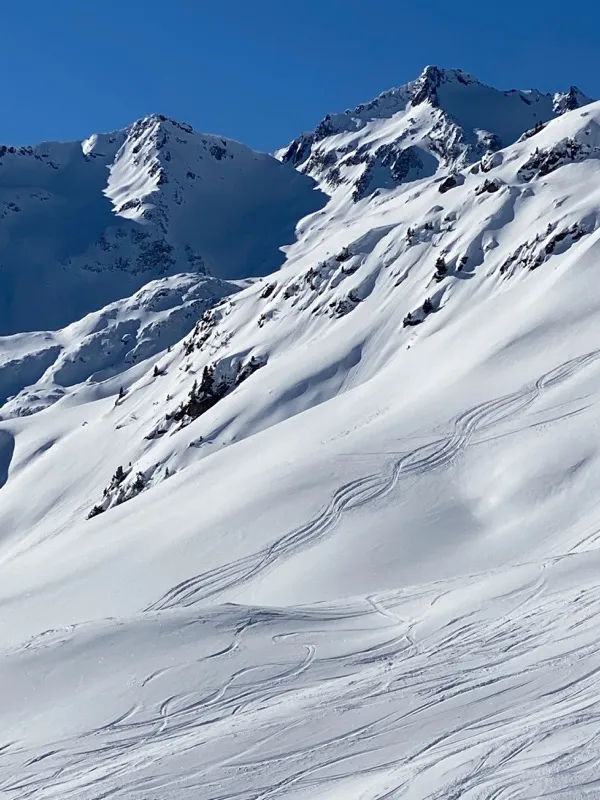
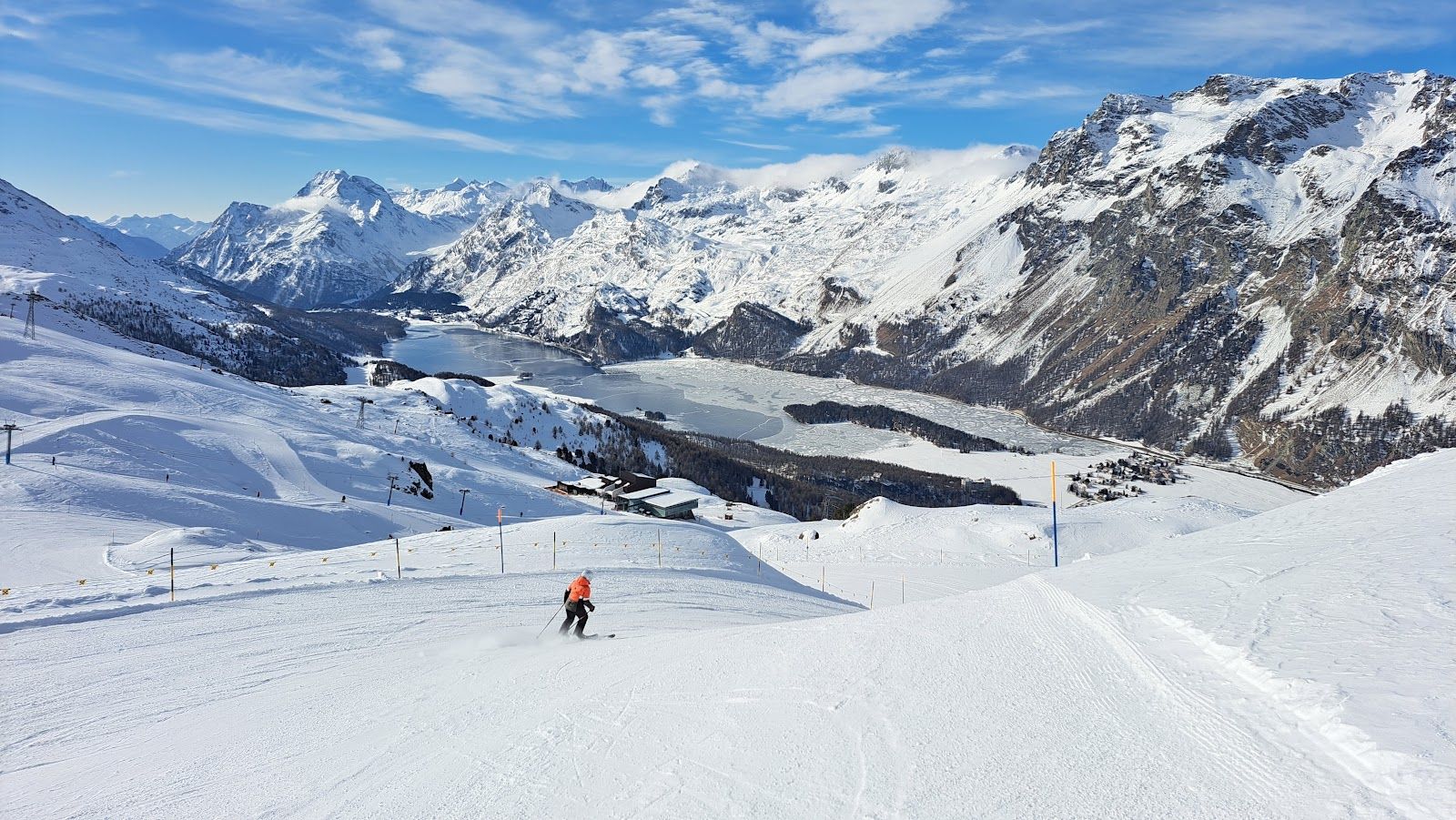
Lech sits in the heart of the Arlberg region — one of the snowiest corners of the Alps, receiving an average of 7 metres of snowfall per season. The Ski Arlberg area links Lech with Zurs, St. Anton, St. Christoph, Stuben, and Warth-Schrocken across 305km of marked runs and 200km of documented off-piste routes. The White Ring ski safari — a 22km circuit connecting Lech, Zurs, and the surrounding peaks — is one of the great days out in Alpine skiing. Terrain leans toward long, rolling reds and wide-open off-piste bowls. Advanced skiers will find serious challenges on the runs from Madloch and Zuger Hochlicht, while intermediates can cruise for days without repeating a run.
Kitzbuhel offers 170km of pistes across the Hahnenkamm and Kitzbuheler Horn sectors, plus the extended KitzSki area reaching into the Kirchberg and Jochberg valleys. The terrain is more varied in gradient — a generous mix of gentle cruising runs, technical mogul fields, and the infamous Streif downhill course, the most demanding race piste in World Cup skiing. The skiing sits lower (800m–2,000m compared to Lech's 1,450m–2,811m), which means snow reliability depends more on the season and snowmaking covers a significant proportion of the pistes.
For deep snow and off-piste adventure, Lech wins comfortably. For groomed piste variety and the thrill of skiing a legendary race mountain, Kitzbuhel holds its own.
The Village & Apres-Ski
These two villages represent opposite ends of the Austrian resort spectrum — and both are exceptional.
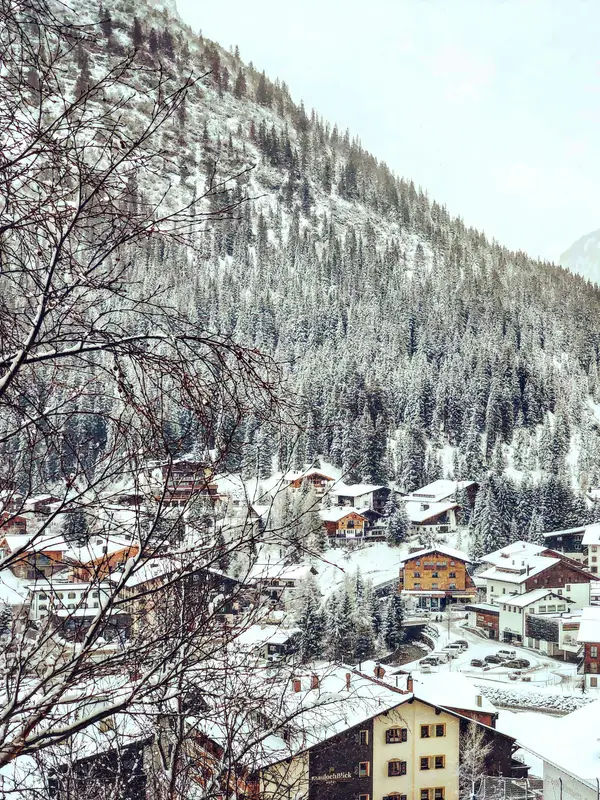
Lech is discreet wealth made tangible. The village is small, immaculate, and deliberately exclusive. Car-free zones, understated five-star hotels, and a handful of excellent restaurants define the experience. Apres-ski exists but it's civilised — think champagne on a sun terrace at the Burg Hotel rather than beer-soaked basement bars. The Ruf bar provides a livelier scene for those who want it, but Lech's default mode is quiet sophistication. This is where European royal families have skied for generations, and the atmosphere reflects that lineage.
Kitzbuhel is a living medieval town that happens to have world-class skiing attached to it. The cobbled old town, Gothic church spires, and painted Tyrolean facades give it a charm that purpose-built resorts simply cannot replicate. Apres-ski is a genuine event here — the Londoner, Pavillon, and Stamperl form a well-worn circuit, and the energy during Hahnenkamm race week in January is electric. There are Michelin-quality restaurants alongside traditional Gasthof dining rooms. Kitzbuhel feels like a real place with a ski lift, not a ski resort with a village attached.
Getting There
Both resorts are well-served by Austrian and regional airports, with straightforward transfers.
Lech: Innsbruck airport is the nearest major gateway at approximately 1 hour 15 minutes by car via the Arlberg Pass (or Arlberg tunnel in poor conditions). Zurich (2h30) and Friedrichshafen (1h30) are reliable alternatives. The final approach through the Arlberg valley is scenic but can be slow in heavy snowfall — budget extra time if arriving during a storm cycle.
Kitzbuhel: Innsbruck is again the closest airport at roughly 1 hour, while Salzburg is 1 hour 30 minutes and Munich around 2 hours. Kitzbuhel has its own mainline train station with direct connections from Innsbruck, Salzburg, and beyond — one of the most convenient rail connections of any major resort in the Alps.
When to Visit
The Austrian season typically runs from early December through mid-April, but the two resorts peak differently.
Lech's prime window is January through mid-March, when the Arlberg's heavy snowfall cycle is at its most reliable. Late January and February deliver the deepest powder and the most consistent off-piste conditions. The resort is notably quieter than its French and Swiss equivalents during school holidays, though prices do rise.
Kitzbuhel's signature moment is Hahnenkamm race week in late January — the town transforms into the social epicentre of the ski world. Beyond that, February and March offer the best combination of snow cover and longer daylight hours. Late season skiing is less reliable here than at higher-altitude resorts, so plan accordingly if you're booking for April.
The Verdict
These are two of Austria's finest resorts, and the right choice depends on what you're looking for from a ski holiday rather than any objective superiority.
Choose Lech if you want: deep snow and outstanding off-piste; a quiet, exclusive village with impeccable taste; the vast Arlberg ski area at your doorstep; a family atmosphere where the mountain takes priority over the social scene. Lech is the resort where understated quality defines every detail.
Choose Kitzbuhel if you want: a vibrant medieval town with genuine year-round character; varied piste skiing across a storied race mountain; lively apres-ski and a strong dining scene; the convenience of excellent rail connections. Kitzbuhel is the resort where skiing, culture, and nightlife exist in equal measure.
If you're torn, consider this: Lech is where you go to disappear into the mountains. Kitzbuhel is where you go to be part of something. Both are unmistakably Austrian, and both reward return visits.
Frequently Asked Questions
Which resort has better snow — Lech or Kitzbuhel?
Lech has a clear advantage in natural snowfall. The Arlberg region averages around 7 metres per season, and Lech's north-facing orientation preserves snow cover well into spring. Kitzbuhel sits at a lower altitude and relies more heavily on snowmaking, though the system is extensive and covers the majority of key runs. For powder skiing, Lech is the stronger choice.
Is Kitzbuhel good for beginners?
Yes, Kitzbuhel has well-maintained beginner areas on the Kitzbuheler Horn side and at the base of the Hahnenkamm. The gentle blue runs around Resterhohealm are excellent for building confidence. Lech also caters well to beginners, particularly in the Oberlech area, but Kitzbuhel offers more variety for progressing intermediates.
Can you ski between Lech and St. Anton?
Yes. The Ski Arlberg area has been fully linked since 2016, connecting Lech, Zurs, St. Anton, St. Christoph, Stuben, and Warth-Schrocken into a single 305km ski domain. The connections are efficient and the terrain between the villages is some of the best in the system.
Which resort is more expensive?
At the top end, Lech is pricier. Its reputation for exclusivity means luxury accommodation and dining command premium rates — comparable to Courchevel or St. Moritz. Kitzbuhel offers a wider price range, from traditional Austrian guesthouses to five-star hotels, and the town's year-round economy keeps some costs more grounded than a pure ski resort.
Is the Hahnenkamm race worth attending?
Absolutely. Hahnenkamm weekend in late January is one of the great events in Alpine sport. The atmosphere in Kitzbuhel is extraordinary — the town fills with racing fans, former champions, and a genuine carnival energy. Even if you're not a racing enthusiast, the spectacle of the Streif course and the surrounding festivities make it a memorable experience. Book accommodation well in advance.