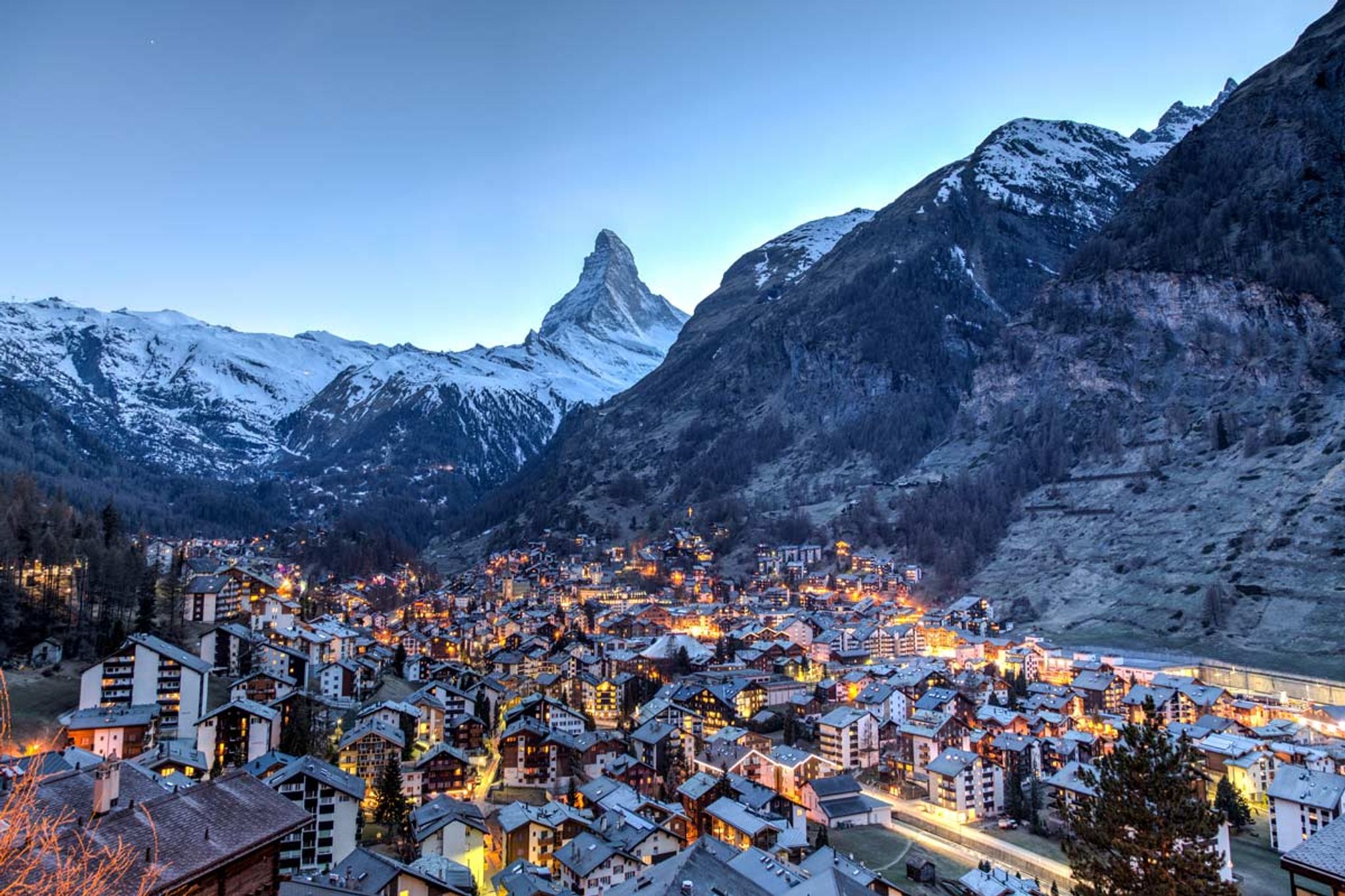
Few alpine names carry the weight of St. Moritz and Cortina. One invented the winter holiday; the other turned it into cinema. Both promise a luxury ski week of the highest order, yet the moods could hardly be further apart. Choosing between them is less a question of quality and more a question of temperament, and that is exactly what this comparison is built to unpick.
The Skiing
St. Moritz spreads its terrain across three non-linked sectors: Corviglia, Corvatsch and the Diavolezza/Lagalb pairing. The result is genuine variety. Corviglia's south-facing pistes are made for confident intermediates who like to cruise in sunshine, while Corvatsch's north-facing aspect, climbing past 3,300m, holds its snow beautifully and rewards skiers who want length and altitude. Diavolezza adds drama, with glacier scenery and a celebrated unpatrolled descent toward the Morteratsch glacier that ranks among the most memorable off-piste experiences in Switzerland.
Cortina, by contrast, is all about scenery and grooming. The local terrain is divided between Tofana, Faloria and the Cinque Torri-Lagazuoi area, each set against the jagged limestone of the Dolomites. Tofana hosts the storied Olympic downhill and offers the sharpest local challenges, Faloria's north-facing pitches preserve snow quality, and the Cinque Torri-Lagazuoi sector delivers the resort's signature day out, weaving through WWI history toward the Hidden Valley descent. Add the wider Dolomiti Superski lift pass and the available kilometres multiply enormously.
The character split is clear. St. Moritz skis bigger and steeper from a single base, with a strong freeride and glacier dimension. Cortina skis softer and prettier, with a heavy bias toward beginners and intermediates and a layout that asks you to use ski buses or a car to move between sectors. Both reward long, slow lunches more than dawn-to-dusk mileage, which is rather the point.
The Village and Apres-Ski
St. Moritz Dorf sits on a sun-drenched terrace above its frozen lake, a tight cluster of grand hotels, jewellers and discreet bars. Apres tends toward the refined end of the spectrum: a heated rooftop drink at Hauser's, a whisky at Devil's Place inside the Waldhaus am See, or an early-evening retreat to the Kempinski spa. Sternbar Marguns provides the closest thing to a livelier mountain scene. The energy here is poised rather than boisterous, and the dress code shifts noticeably once the lifts close.
Cortina's social rhythm runs along the pedestrianised Corso Italia, where the passeggiata is as much a part of the day as the skiing. Enoteca Cortina anchors the wine-bar end of apres, while Janbo and Faro pull a younger, louder crowd off the main street. The town feels lived-in and theatrical in a way St. Moritz does not, with a confidence that comes from being Italian first and a ski resort second. Both villages excel at non-skier days, though Cortina arguably edges it for sheer walkability.
Dining is where each resort makes its strongest case. St. Moritz offers Michelin-starred IGNIV by Andreas Caminada at Badrutt's Palace, the truffle-pizza theatre of Chesa Veglia and mountain glamour at El Paradiso. Cortina counters with Rifugio Averau on Cinque Torri, regularly cited among the Alps' best mountain restaurants, the fashionable El Camineto and Michelin-starred Tivoli at the base of Tofana. Neither resort will leave a serious gourmand wanting.
Getting There
St. Moritz is most commonly reached via Zurich Airport, with the transfer covering roughly 210km and taking around 2 hours 45 minutes by road. The more romantic option is the Rhaetian Railway from Chur, one of the most scenic train journeys in the world, terminating at St. Moritz Railway Station in the heart of the village.
Cortina sits closer to Venice Marco Polo Airport, about 148km away with a transfer of around 2 hours 15 minutes. Direct coach services from the airport run frequently, and the absence of a station in town is mitigated by efficient bus links from Calalzo di Cadore.
Once in resort, both work well without a car. St. Moritz's Engadin Bus and Rhaetian Railway are exceptional and included with a ski pass. Cortina's Skibus network is comprehensive and similarly free with a valid pass, though a car is genuinely useful if you plan to roam between Cinque Torri, Alta Badia and the further reaches of the Dolomiti Superski circuit.
When to Visit
Both resorts open in late November, with St. Moritz running into early May and Cortina typically winding down in mid-April. Early December delivers quieter slopes and the start of the season's festive programming, though snow cover varies and both resorts lean heavily on snowmaking to guarantee opening conditions.
High season runs from the week before Christmas through to mid-January, with another spike during the Italian and European February half-terms. Cortina in particular fills up during these periods and benefits from booking well in advance, both for accommodation and for any hope of a table at Tivoli, Rifugio Averau or El Camineto. St. Moritz's dynamic lift-pass pricing also rewards skiers who plan early, with significant discounts available for advance bookings.
March is arguably the sweet spot at both resorts: longer days, more reliable sunshine and softer snow on south-facing aspects. St. Moritz's high-altitude north-facing pistes on Corvatsch hold spring conditions particularly well, while Cortina's lower base means snow quality is more dependent on the season's cumulative snowfall. For non-skiers, the shoulder weeks of late March and early April offer the most relaxed version of both villages.
The Verdict
If your week is built around the skiing first, with the village as a stylish backdrop, St. Moritz has the more substantial mountain. The altitude, the variety across Corviglia, Corvatsch and Diavolezza, and the genuine freeride options give it depth that rewards stronger skiers and groups that want to range widely across terrain.
If the week is built around the place itself, with skiing as one of several daily pleasures, Cortina is unbeatable. The Dolomite backdrop is the most photogenic in the Alps, the rifugio lunches are among the best on the continent, and the rhythm of life along the Corso Italia is impossible to replicate further north.
Budget and party composition matter too. St. Moritz's property market sits at the very top of the European luxury index, with trophy penthouses and historic chesas changing hands at extraordinary numbers. Cortina's rental scene is leaner and more boutique in feel, with newer luxury chalets offering a slightly more contemporary aesthetic for large groups.
In the end, neither resort disappoints. Choose St. Moritz for Swiss polish, serious mountain credentials and a village that has defined alpine glamour for over 150 years. Choose Cortina for Italian warmth, gastronomic indulgence and scenery that will frame every photograph you take.
Frequently Asked Questions
Which resort is better for a first luxury ski trip?
Cortina tends to suit first-time luxury skiers slightly better thanks to its forgiving terrain, generous beginner areas around Socrepes and the relaxed walkability of the town. St. Moritz is more rewarding once you are comfortable on red runs and ready to take advantage of its higher, more varied terrain.
Can non-skiers enjoy both resorts equally?
Yes, though the experiences differ. St. Moritz offers winter walking trails, the Cresta Run, ice activities on the lake and serious spa facilities, while Cortina leans into shopping, long lunches at accessible mountain rifugios and a pedestrian town centre designed for strolling.
How do the lift passes compare?
St. Moritz uses dynamic pricing with an adult day pass starting around CHF 85 and discounts of up to 30% for booking well in advance. Cortina's adult day pass sits at around EUR 74, with a six-day Dolomiti Superski pass at EUR 423 unlocking access to the wider Dolomite circuit.
Is one resort significantly easier to reach from the UK?
Cortina is the marginally easier transfer, with Venice Marco Polo around 2 hours 15 minutes by road. St. Moritz from Zurich takes closer to 2 hours 45 minutes, though the scenic Rhaetian Railway option from Chur is a destination experience in its own right.
Where should large groups or multi-generational families look first?
Cortina's larger chalet inventory, including properties such as the LV Estate Chalets, suits big multi-family bookings particularly well. St. Moritz leans more toward grand hotel suites and refined chesas, with standout options including Chesa el Toula and the Carlton Penthouse for groups wanting a more formal palace-style stay.