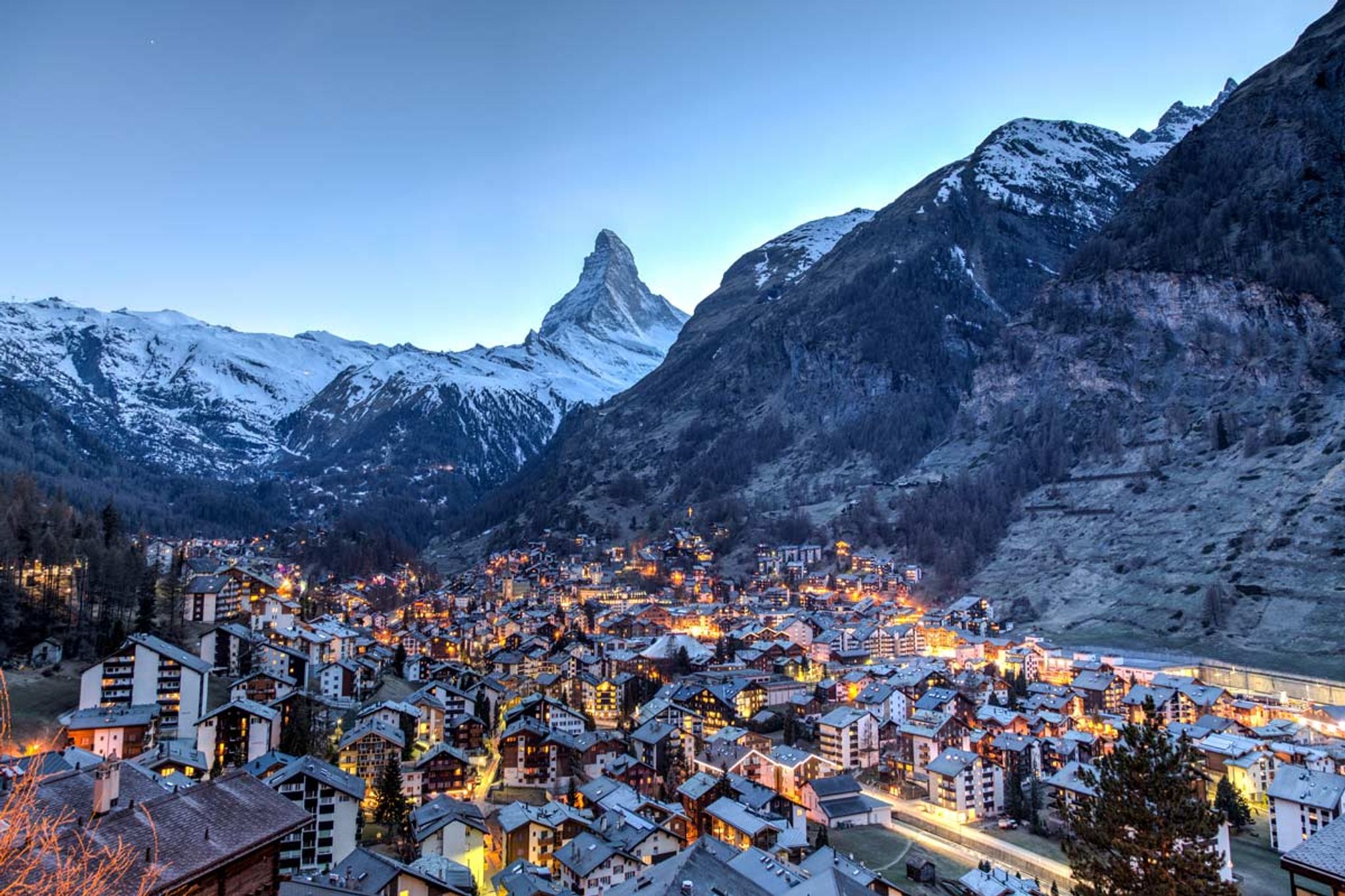

Two resorts, two very different ideas of what a luxury ski week should feel like. Zermatt is the high-altitude classicist, a car-free Swiss village pinned beneath the Matterhorn with skiing that climbs to the roof of Europe. Cortina d'Ampezzo is its Italian counterpoint, all pastel facades, fur coats and slow lunches against the jagged theatre of the Dolomites. Both are bucket-list. Neither is a compromise. The question is which one suits the trip you actually want to take.
The Skiing
Zermatt operates on a different scale. With 360km of connected pistes spanning the Swiss-Italian border into Cervinia, a 2,263m vertical drop and lifts reaching 3,883m on the Matterhorn Glacier Paradise, this is one of the few resorts in the Alps where you can ski reliably from late November to early May, and continue on the glacier through summer. The terrain favours strong intermediates and above, with endless red cruisers off Gornergrat, serious off-piste off Rothorn, and the marked yellow freeride itineraries that have made the resort a fixture on every freerider's wishlist.
Cortina plays a different game. The local network covers roughly 120km of pistes spread across Tofana, Faloria and Cinque Torri-Lagazuoi, but a Dolomiti Superski pass opens up the wider 1,200km regional network including the Sella Ronda. The mountain itself tops out at 2,924m, and while the vertical is less aggressive than Zermatt's, the pistes are groomed to within an inch of their lives and snowmaking covers a vast majority of the runs, which matters in a resort where the village sits at 1,224m.
Where Zermatt is a skier's mountain with luxury laid over the top, Cortina is a luxury destination that happens to have very good skiing. Experts will find the Olympia run on Tofana and a handful of genuinely steep pitches, but the resort's heart is in long, scenic intermediate days, with stops for a glass of something cold at a rifugio with a view. If your group includes a mix of abilities and appetites, that balance is part of the appeal.
The Village & Apres-Ski
Zermatt's village is a working alpine town that has grown elegantly around its centuries-old core. It is strictly car-free, navigated on foot, by electric taxi or on the free e-bus. The pace is brisk, the dining scene is exceptional from Schäferstube's Valais lamb to the wood-fired pizzas at Grampi's, and the apres ranges from the legendary disorder of Hennu Stall on the way down from Furi to the more polished DJ-led scene at CERVO.
Cortina is altogether more theatrical. The Corso Italia is a pedestrianised parade of designer boutiques, historic cafes and the kind of people-watching that justifies an early finish on the slopes. Apres here is wine-led rather than beer-led, anchored by spots like Enoteca Cortina, and dinner culture leans long and late. The town hosted the 1956 Winter Olympics and is co-hosting the 2026 Games, which has injected fresh investment into lifts, infrastructure and hospitality.
Both villages reward staying in the centre. Zermatt feels like a self-contained world. Cortina feels like an Italian town that happens to have ski lifts.
Getting There
Zermatt is reached via Geneva Airport, around 230km and a 2h 45min journey away. The smartest route is by rail: direct SBB services run from Geneva and Zurich to Visp, where you change onto the Matterhorn Gotthard Bahn up the valley. Drivers must stop at the Matterhorn Terminal in Täsch and take the 12-minute shuttle train, as the village itself is closed to private cars.
Cortina is best accessed from Venice Marco Polo, 148km away and roughly 2h 15min by road. Cortina Express and ATVO run direct coaches to the town centre, and a car is genuinely useful here if you plan to explore Cinque Torri, Alta Badia or the wider Dolomiti Superski area. The nearest rail station is at Calalzo di Cadore, 35km out, with a bus link into town.
For UK travellers, both are realistic Friday-to-Sunday options. Zermatt asks for a little more patience on transfer day; Cortina is the quicker door-to-chalet run.
When to Visit
December through early January delivers the festive atmosphere both resorts trade on, with full decorations, packed restaurants and premium pricing across the board. Book accommodation and the better tables well ahead, particularly for Christmas, New Year and the Italian February holidays in Cortina.
January, outside the New Year window, is the connoisseur's month. Quieter slopes, sharper light and the best value of the season. Zermatt's high altitude makes it particularly dependable in deep winter, and the glacier sectors are usually in excellent condition. Cortina's snowmaking infrastructure keeps the pistes consistently skiable even when natural snow is patchy lower down.
March and early April are arguably the sweet spot. Longer days, softer afternoons and the full sun-terrace season in Cortina, where lunch at a rifugio becomes the point of the day. Zermatt typically skis well into early May thanks to its altitude, with the glacier extending the season further still.
The Verdict
If your priority is the skiing itself, in scale, vertical and reliability, Zermatt is the stronger pick. The cross-border terrain, the freeride pedigree and the year-round glacier put it in a category very few resorts can match, and the village backs it up with a dining scene that is genuinely world-class.
If you want a luxury alpine week where the skiing is one ingredient among several, Cortina is the more rewarding choice. The town is more sophisticated as a daily experience, the Dolomites are arguably the most beautiful range in the Alps, and the rhythm of long lunches and elegant evenings is hard to replicate elsewhere.
Mixed groups will find Cortina more accommodating. Skier-led groups will get more out of Zermatt. Neither resort underdelivers on the luxury side, and both have the property stock to support a serious chalet booking.
For deep snow, high vertical and the mountain that defines the genre, Choose Zermatt. For Italian glamour, dramatic scenery and a slower, more stylish rhythm, Choose Cortina.
Frequently Asked Questions
Which is better for non-skiers, Zermatt or Cortina?
Cortina has the edge for non-skiers thanks to its pedestrianised Corso Italia, designer shopping and the ease with which pedestrians can reach mountain rifugios for lunch. Zermatt offers excellent wellness and dining, but its identity is more tied to the mountain itself.
Is Cortina's skiing big enough for a week-long luxury trip?
Yes, particularly with the Dolomiti Superski pass, which opens up roughly 1,200km of connected terrain across the region. Intermediates can ski a different sector each day, and the scenery alone justifies extending the trip.
How reliable is the snow in each resort?
Zermatt is among the most snow-sure resorts in the Alps thanks to its altitude and glacier access, with skiing available year-round on the upper slopes. Cortina sits lower but compensates with extensive snowmaking that covers the vast majority of its pistes.
Which resort is easier to reach from the UK?
Cortina is generally quicker door-to-door, with a transfer of around 2h 15min from Venice Marco Polo. Zermatt takes longer because of the train connection from Visp and the car-free arrival via Täsch, though many travellers consider the rail journey part of the experience.
Do I need a car in either resort?
You absolutely do not want one in Zermatt, which is strictly car-free and serviced by electric taxis, e-buses and the shuttle train. In Cortina a car is genuinely useful for accessing different sectors or neighbouring valleys, although the free ski bus network for pass holders covers most needs in town.
