Quick Answer
Two Swiss icons, two different holidays. St Moritz is Alpine glamour — frozen-lake polo, the Cresta Run, Badrutt's Palace, and a town that functions year-round beyond the pistes. Zermatt is the Matterhorn above a car-free village, with 360km of linked skiing to Cervinia in Italy and year-round glacier runs on the 3,883m Klein Matterhorn. Pick St Moritz for social scene and non-ski experiences; Zermatt for ski area scale and iconic scenery.
The Skiing
Both resorts offer world-class skiing, but the shape and scale of their terrain differ in ways that matter.
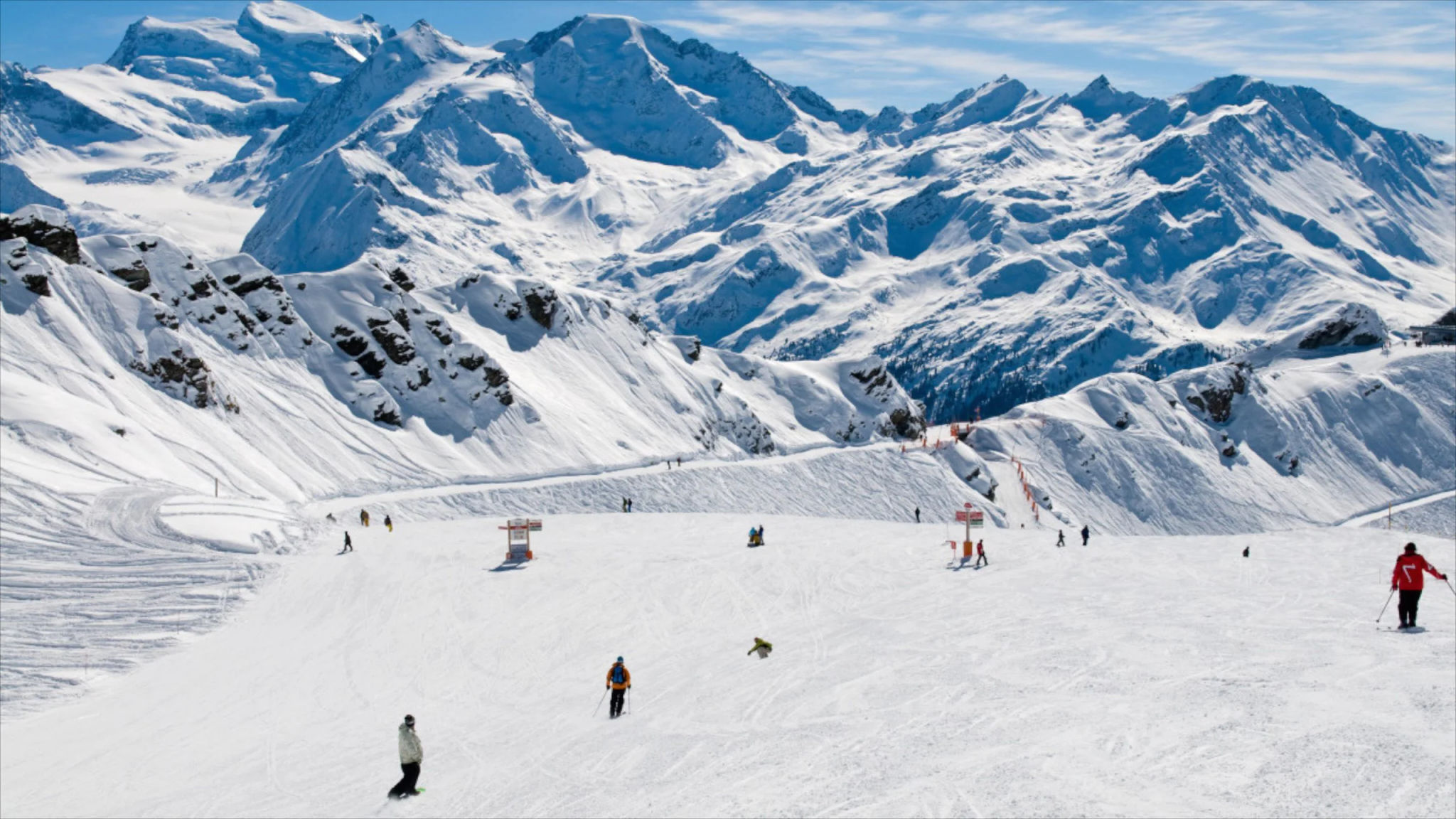
Zermatt is the bigger ski area by a meaningful margin. The Matterhorn Ski Paradise covers over 360km of pistes and links directly to Cervinia on the Italian side — making it the largest linked ski area in Switzerland. The terrain spans three main sectors: Rothorn for steep, north-facing runs and excellent snow preservation; Gornergrat for long, scenic cruising with panoramic views; and Klein Matterhorn, where the top station at 3,883m is the highest lift-served point in Europe. The altitude delivers reliable snow from late November through May, and glacier skiing on the Theodul glacier runs year-round. Intermediates thrive on the long, rolling runs between Zermatt and Cervinia. Advanced skiers find genuine steeps off Stockhorn and the Triftji couloirs. The sheer vertical — over 2,200m from Klein Matterhorn to the village — is extraordinary.
St. Moritz sits in the Engadin valley with access to around 350km of pistes spread across several ski areas: Corviglia above the town is the main domain, with wide, well-groomed runs and the famous Hahnensee descent; Corvatsch (3,303m) on the opposite side of the valley offers more challenging terrain and excellent off-piste; and Diavolezza/Lagalb further east provides wild, high-alpine glacier skiing, including the legendary 10km descent down the Morteratsch glacier. The ski areas are not fully linked by lifts — you need the ski bus or car between them — which means the terrain feels spread out rather than interconnected. The skiing is sunny (the Engadin averages over 300 days of sunshine a year) and the grooming is impeccable, but the experience is less seamless than Zermatt's lift-linked network.
For skiers who want one large, connected system with maximum vertical and a season that stretches from autumn to summer, Zermatt delivers. For those who value sunny piste skiing, variety across distinct areas, and the atmosphere of the Engadin, St. Moritz holds its own — but Zermatt has the edge on pure ski area scale.
The Village & Apres-Ski
These are two of Switzerland's most celebrated mountain towns, but they occupy entirely different registers.
St. Moritz is a lakeside town with an identity far larger than skiing. This is the resort that effectively invented the Alpine winter holiday — hotelier Johannes Badrutt wagered a group of British summer guests in 1864 that they'd enjoy the Engadin in winter, and modern ski tourism was born. That heritage of glamour persists. The town sits on the shore of Lake St. Moritz, which freezes solid in winter and hosts polo matches, cricket on ice, and horse racing on snow — spectacles that exist nowhere else in the Alps. The Cresta Run (a natural ice toboggan track operated by a private club since 1885) and the Olympic bobsled run add to the sense that St. Moritz is a place where sport meets spectacle. The social scene is refined rather than rowdy — champagne bars, the Dracula Club, and King's Club at Badrutt's Palace set the tone. Art galleries, designer boutiques, and a cosmopolitan crowd round out a village that functions as a year-round destination, not just a ski resort.
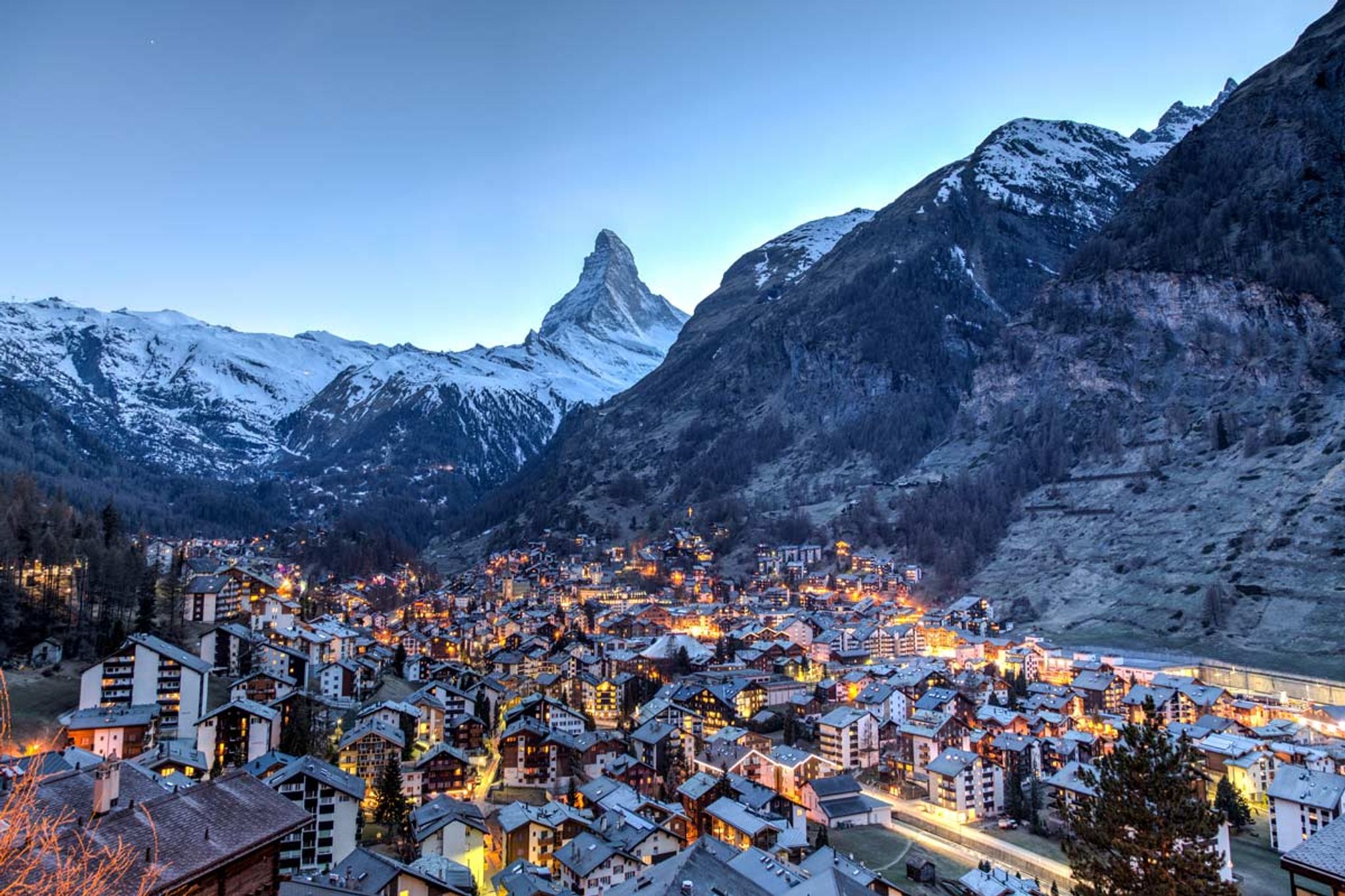
Zermatt is an entirely different proposition: a car-free Alpine village dominated by one of the most famous mountains on earth. No private vehicles are allowed in Zermatt — you arrive by train and get around by electric taxi or on foot. The car-free streets give the village a quietness and intimacy that's rare for a resort of this stature. The Matterhorn is visible from almost everywhere, and its presence gives Zermatt a sense of drama that no other resort can replicate. The village itself is polished and well-maintained, with traditional timber chalets, good restaurants, and a walkable centre. Apres-ski is moderate — Papperla Pub and Hennu Stall are lively without being overwhelming — and the atmosphere trends toward couples, families, and serious skiers rather than the party crowd. Luxury chalets in Zermatt are among the finest in Switzerland, with Matterhorn views that alone justify the trip.
If you want a resort town with a social calendar that extends far beyond skiing — frozen lake events, world-class dining at Badrutt's Palace, and the energy of an international crowd — St. Moritz is unmatched. If you want a quieter, more scenic village where the mountain is the main event and the car-free streets make every walk feel like a postcard, Zermatt wins.
Getting There
Both resorts require some commitment to reach, and neither sits conveniently next to a major airport.
St. Moritz: The most common route is via Zurich airport, roughly three hours by car through the Julier Pass (which can close in heavy snow) or via the Albula route. The more scenic alternative is the train: the Rhaetian Railway from Chur to St. Moritz is a UNESCO World Heritage route, and the full Glacier Express from Zermatt to St. Moritz takes approximately 3.5 hours — one of the great rail journeys in Europe. Milan Malpensa (roughly 3.5 hours) is another option, particularly useful for travellers combining a city break. St. Moritz has a small airport at Samedan that accepts private jets, which tells you something about the clientele.
Zermatt: Geneva airport is the standard gateway, roughly 3.5 hours by car to Tasch (the road-end parking village) followed by a 12-minute train to Zermatt itself. Sion airport, when operational for commercial flights, cuts the journey to around 1.5 hours. Zurich is also possible but adds an hour. The critical detail is that no cars enter Zermatt — you must park in Tasch and take the shuttle train. This can feel inconvenient with heavy luggage, but most luxury chalets arrange transfers, and the car-free village you arrive into makes the minor hassle worthwhile.
For a two-centre trip, the Glacier Express connects the two resorts directly — a spectacular journey across 291 bridges and through 91 tunnels. It is not fast, but it may be the finest way to travel between any two ski resorts in the world.
When to Visit
Both resorts deliver strong conditions across a long season, though the optimal windows and character differ.
Zermatt's altitude advantage — the village at 1,620m with skiing to 3,883m — means it has the most reliable snow of any major resort in the Alps. The season runs from late November through late April on the main mountain, with glacier skiing available year-round (the summer ski area on Theodul is popular with national teams and snow-sport enthusiasts). February and March offer the best combination of snow depth and lengthening days. Late March and April bring spring skiing at its finest: warm terraces at Chez Vrony, corn snow on the Italian side, and thinner crowds after Easter.
St. Moritz plays a different card: sunshine. The Engadin valley's high-pressure climate delivers cold, clear days more consistently than almost anywhere in the Alps. January and February are excellent for piste skiing, though temperatures can drop sharply. The frozen lake events — polo in late January, horse racing through February — add a layer of spectacle that is unique to St. Moritz and worth timing a visit around. The ski season runs from mid-December through mid-April, with Diavolezza and Corvatsch holding snow well into spring. St. Moritz lacks Zermatt's glacier, so there is no summer skiing option.
The Verdict
These are arguably the two most prestigious ski resorts in Switzerland, and each represents a distinct vision of what a mountain holiday can be.
Choose St. Moritz if you want: a glamorous lakeside town where skiing is part of a broader programme of sport, culture, and spectacle; frozen lake polo and the Cresta Run; Michelin-starred dining and Badrutt's Palace; sunny Engadin days on immaculately groomed pistes; a resort that has hosted two Winter Olympics and still carries that cachet. St. Moritz is for travellers who want a mountain experience that goes well beyond the slopes.
Choose Zermatt if you want: Switzerland's largest linked ski area with over 360km of terrain stretching into Italy; the highest lift-served point in Europe and year-round glacier skiing; a car-free village with the Matterhorn as your permanent backdrop; a quieter, more focused mountain atmosphere; world-class chalet accommodation with views that define the Alps. Zermatt is for skiers who want the mountain to be the main event.
The honest distinction: St. Moritz is a resort town that happens to have excellent skiing. Zermatt is a ski resort that happens to have an extraordinary village. Both are exceptional — the question is which version of the Swiss Alps you're looking for.
Frequently Asked Questions
Is St. Moritz or Zermatt better for skiing?
Zermatt has the edge for pure skiing. Its 360km linked area is larger, the vertical drop is greater, and the Klein Matterhorn glacier at 3,883m guarantees snow when lower resorts struggle. The cross-border link to Cervinia adds variety and the Italian side offers excellent long cruising runs. St. Moritz has good skiing across Corviglia, Corvatsch, and Diavolezza — roughly 350km in total — but the areas are not interconnected, which means bus rides between them. For dedicated skiers planning a week on the slopes, Zermatt is the stronger choice.
Can you visit both St. Moritz and Zermatt in one trip?
Yes, and the Glacier Express makes it a memorable experience. The train runs daily between the two resorts, taking approximately 3.5 hours through some of the most dramatic scenery in the Alps. A common approach is to split a two-week trip or plan a long weekend in each. Some travellers book a one-way Glacier Express journey and fly home from a different airport — arriving via Zurich to St. Moritz, training to Zermatt, and departing via Geneva.
Which resort is more expensive — St. Moritz or Zermatt?
Both are premium Swiss resorts and neither is cheap. St. Moritz skews slightly more expensive on average, particularly at the top end — Badrutt's Palace, Suvretta House, and the lakeside hotels command rates that reflect the town's status. Zermatt has a wider spread of accommodation options, from mid-range apartments to ultra-luxury chalets. Lift pass prices are comparable. Restaurant prices in both resorts are typical for Switzerland, though the Italian side of Zermatt's ski area offers noticeably better value for on-mountain dining.
Is Zermatt car-free? How do you get around?
Zermatt has been car-free since the 1930s. You drive to Tasch (5km from Zermatt) and take the shuttle train, which runs every 20 minutes and takes 12 minutes. Within Zermatt, transport is by foot, electric taxi, or horse-drawn carriage. It takes some adjustment if you are used to driving to the lifts, but the result is a village with clean air, quiet streets, and a genuinely pedestrian atmosphere. Most chalet operators and hotels arrange luggage transfers from Tasch station.
What non-skiing activities can you do in St. Moritz?
St. Moritz offers more non-skiing activities than almost any resort in the Alps. The frozen lake hosts polo, cricket, and horse racing between January and March. The Cresta Run (natural ice toboggan, open to the public on select days) and the Olympic bobsled run offer adrenaline off the slopes. The town has galleries, designer shops, and a spa culture centred around the natural mineral springs that gave St. Moritz its name. Cross-country skiing in the Engadin valley is world-class — the annual Engadin Skimarathon draws thousands. For many visitors, the skiing is only one part of a St. Moritz holiday.
Which has better luxury chalets — St Moritz or Zermatt?
Both have exceptional inventory, but the character differs. Zermatt's luxury chalet market is deeper — the traffic-free village has more purpose-built standalone chalets with private spas, ski rooms, and Matterhorn-facing terraces. St Moritz's luxury accommodation skews toward grand hotels (Badrutt's Palace, Kulm, Suvretta House) and large private apartments rather than standalone chalets. For a traditional chalet experience with dedicated staff, Zermatt has more options. For hotel-quality service with social scene, St Moritz wins.
Is St Moritz worth visiting if you don't ski?
Yes — arguably more than any other major Alpine resort. The town functions as a year-round cultural destination. Non-skiers can spend full days on the frozen lake (polo in January, horse racing and cricket matches), take the scenic Bernina Express railway to Italy, tour the Segantini Museum or Nietzsche's house in nearby Sils, explore the designer shopping along Via Serlas, or use the extensive spa infrastructure. Zermatt is beautiful but primarily built around the mountain; St Moritz is a town that happens to have skiing.