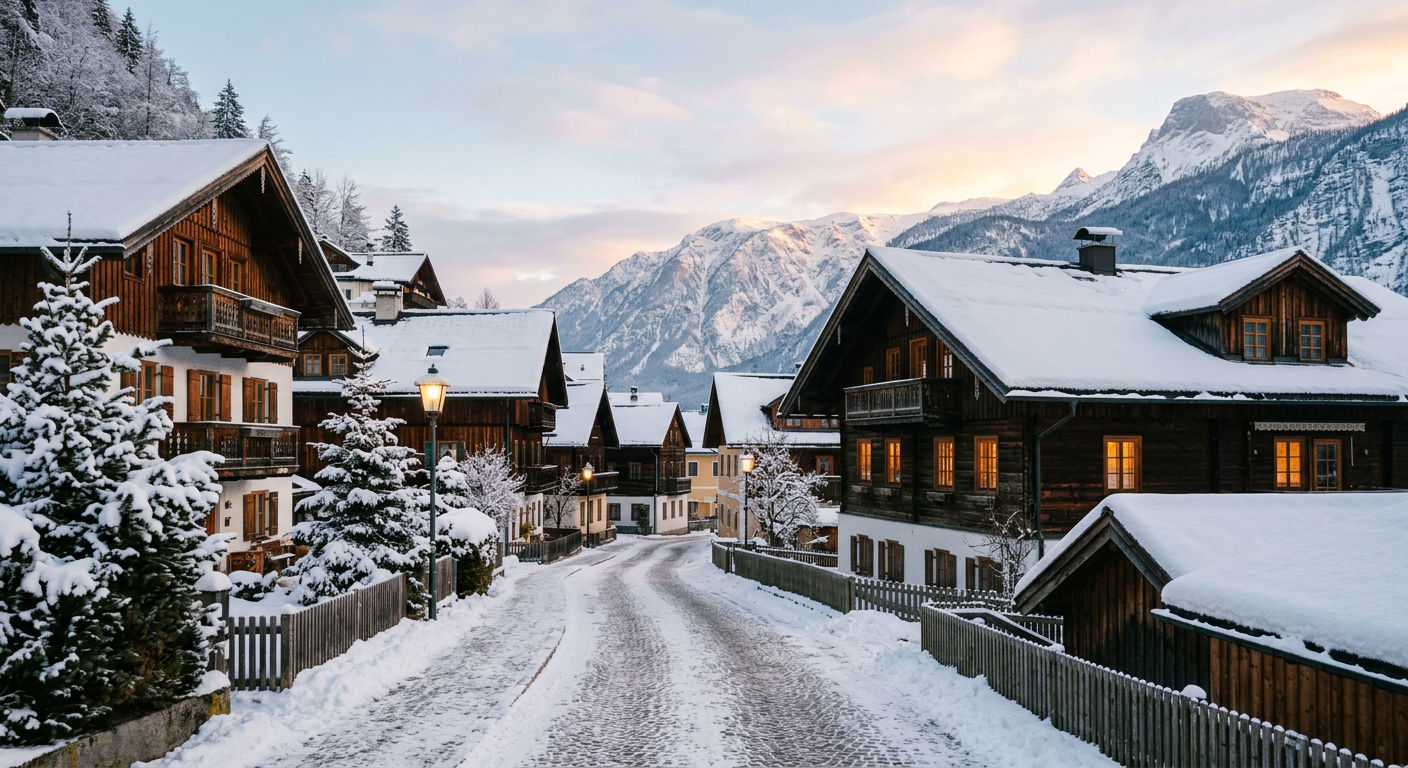
Ski Trip to Italy: A Planning Guide for the Italian Alps

Quick Answer
Italy offers five distinct ski regions — the Dolomites, Val d'Aosta, Trentino, the Via Lattea, and Lombardy — each accessible from Milan, Turin, Venice, or Innsbruck within two to three hours. Lift passes cost €50–€70 per day versus €80+ in France and Switzerland. The on-mountain dining, from rifugio lunch menus to Michelin-starred restaurants in Cortina, sets Italian skiing apart. Pick the Dolomites for scenery and linked terrain, Val d'Aosta for altitude and cross-border skiing, or Trentino for families.
Italy's ski resorts have spent the last decade investing in lift infrastructure while keeping prices noticeably below their French and Swiss counterparts. A week in Cervinia costs roughly 30% less than an equivalent week in Verbier, yet the terrain links directly to Zermatt's 360km ski area. The Dolomiti Superski pass — covering 1,200km of piste across 12 valleys — remains one of the best-value lift tickets in the Alps.
This guide covers how to plan an Italian ski trip: which region suits your group, how to get there, what it costs, and where to stay. For a resort-by-resort comparison, see our guide to the best Italian ski resorts.
Why Italy? What Sets Italian Skiing Apart
Italian ski resorts deliver three things that France and Switzerland struggle to match at the same price point: on-mountain gastronomy, architectural drama, and value.
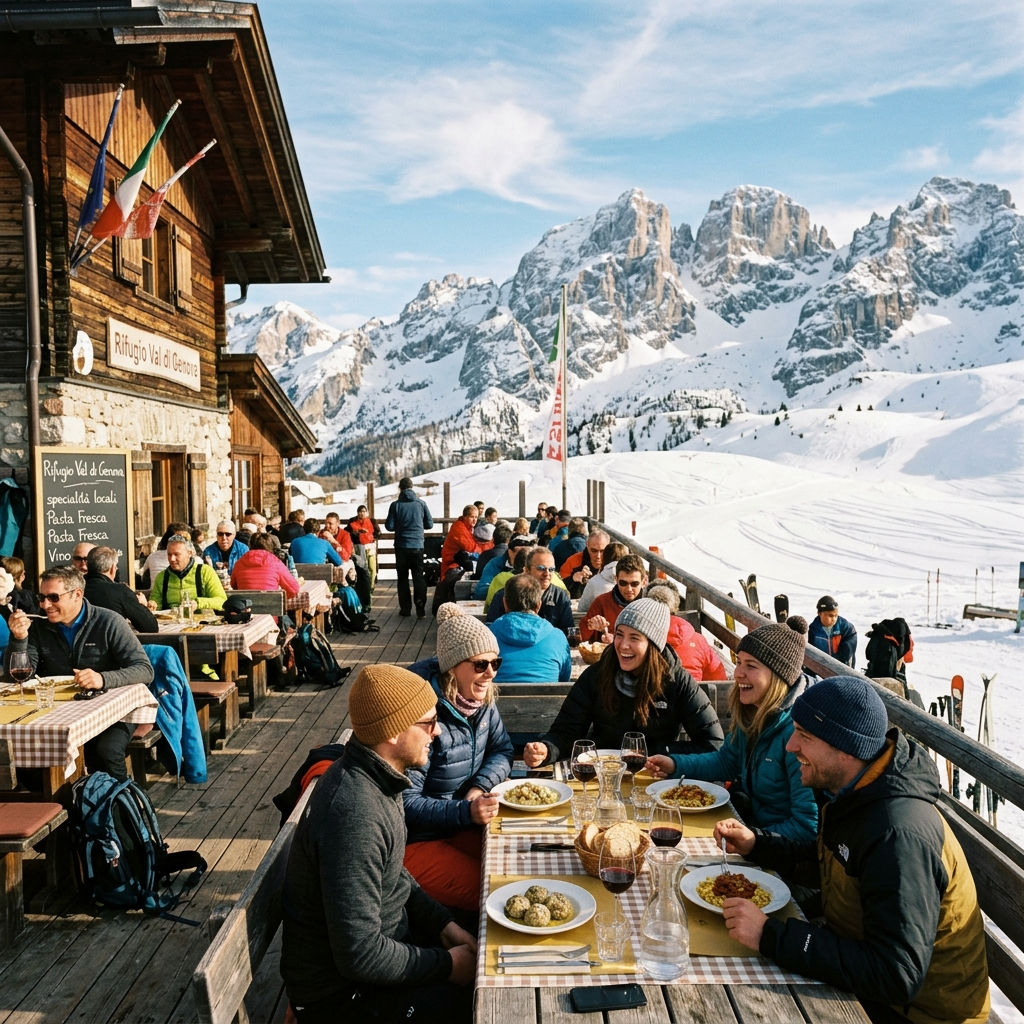
The rifugio lunch is not an afterthought. In the Dolomites, mountain huts serve handmade pasta, local wines, and grilled meats on sun terraces with views of pale limestone spires. Cortina alone has three Michelin-starred restaurants. This is not a country where a ham sandwich on a chairlift passes for lunch.
Lift pass pricing reflects a different economic model. Even single-resort passes in Cervinia or Courmayeur run €50–€65 per day.
The scenery is structurally different. Where French mega-resorts sit above the treeline in broad open bowls, Italian resorts — particularly in the Dolomites — thread between vertical rock towers, through pine forests, and along narrow ridgelines. The skiing is more intimate and more varied.
And the après-ski culture leans convivial rather than nightclub. Prosecco on a sun terrace at 3pm, followed by a passeggiata through a village piazza. Italy does not try to be Verbier or St. Anton after dark, and that is part of the appeal.
Five Italian Ski Regions Worth Knowing
Italy's ski terrain splits into five distinct regions, each with a different character, access point, and accommodation profile. Here is how they compare.
| Region | Key Resorts | Linked Piste | Nearest Airport | Transfer Time | Best For |
|---|---|---|---|---|---|
| Dolomites | Cortina, Selva Gardena, Alta Badia, Corvara | 1,200km (Dolomiti Superski) | Venice (VCE) / Innsbruck (INN) | 2–2.5h | Scenery, intermediate cruising, gastronomy |
| Val d'Aosta | Cervinia, Courmayeur, Champoluc | 360km (Cervinia–Zermatt) | Turin (TRN) / Milan (MXP) | 1.5–2h | Altitude, off-piste, cross-border skiing |
| Trentino | Madonna di Campiglio, Pinzolo | 150km | Verona (VRN) / Milan (BGY) | 2–2.5h | Families, tree skiing, Italian village life |
| Via Lattea | Sestriere, Sauze d'Oulx, Clavière | 400km | Turin (TRN) | 1.5h | Value, large linked area, sunny skiing |
| Lombardy | Livigno, Bormio | 115km + 50km | Milan (MXP) / Bergamo (BGY) | 3h | Duty-free shopping (Livigno), snow reliability |
The Dolomites
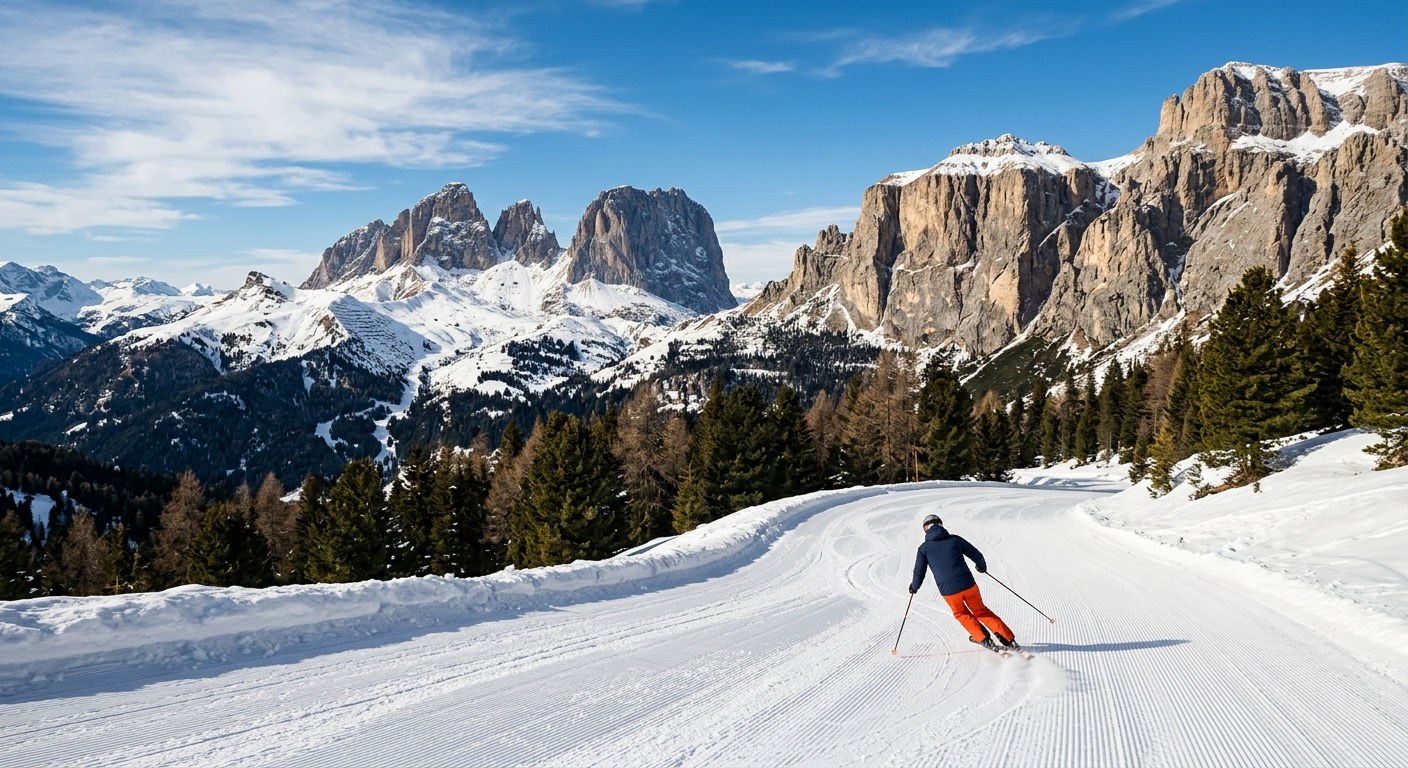
The Dolomiti Superski region links 12 valleys into a single pass covering 1,200km of piste. The terrain favours long, groomed intermediate runs between dramatic rock formations — the Sella Ronda circuit alone covers 40km in a single loop.
Cortina hosted the 2026 Winter Olympics, which brought significant infrastructure upgrades — a new gondola linking Cortina's separate ski areas and improved road access from Venice Marco Polo airport.
Val d'Aosta
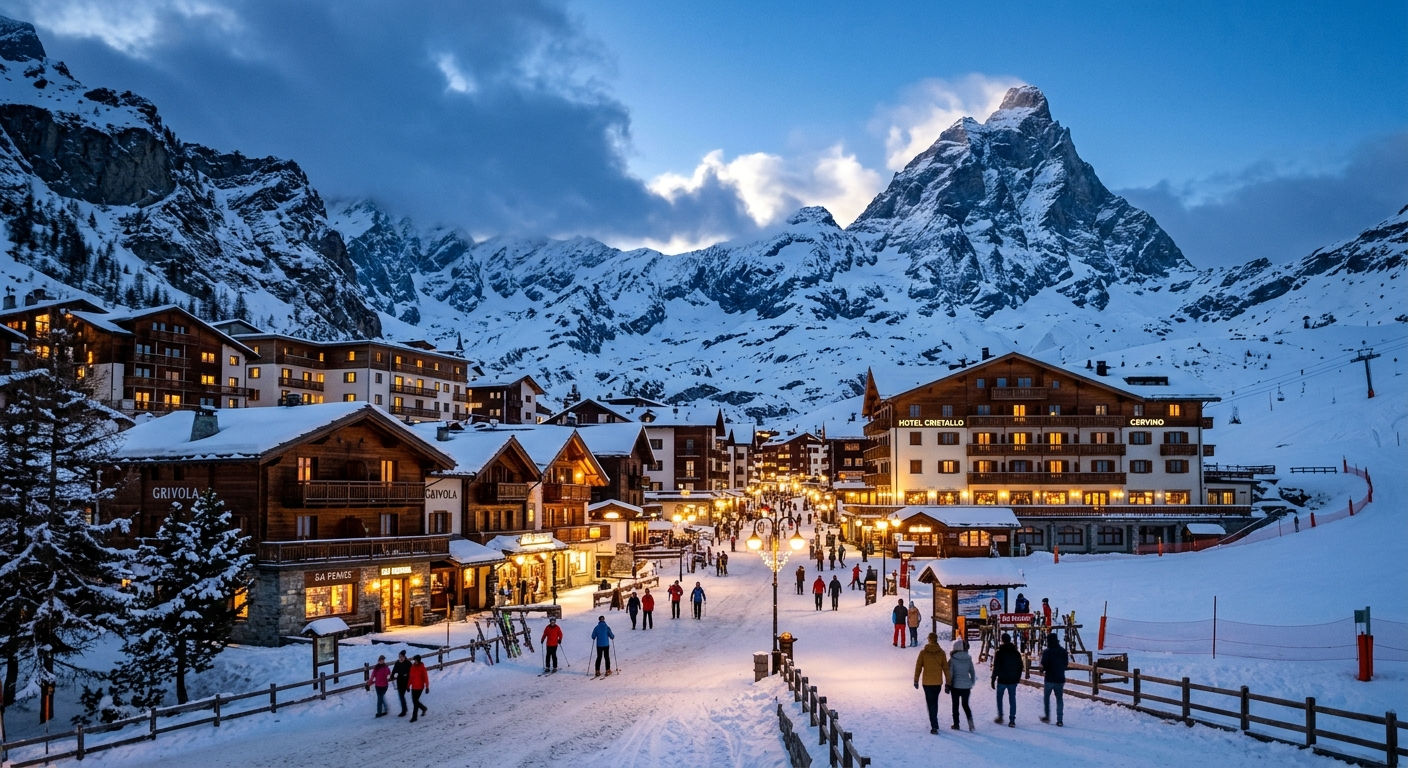
Cervinia sits at 2,050m and connects directly to Zermatt via the Matterhorn Ski Paradise, creating one of the highest and most snow-reliable ski circuits in the Alps. The combined area offers 360km of piste between 1,524m and 3,883m — the highest lift-served skiing in Europe.
Courmayeur, on the Italian side of Mont Blanc, offers a different experience: a compact 100km ski area with a historic town centre and strong freeride terrain — the Vallée Blanche descent from Punta Helbronner and the off-piste lines off the Youla cable car draw advanced skiers from across the Alps.
Trentino
Madonna di Campiglio sits in a forested valley between the Brenta Dolomites and the Adamello glacier. The terrain covers 150km across two linked areas — Campiglio and Pinzolo — with a strong emphasis on intermediate cruising through tree-lined runs.
Via Lattea and Lombardy
The Via Lattea (Milky Way) links Sestriere, Sauze d'Oulx, and Clavière into a 400km ski area stretching across the Italian-French border to Montgenèvre. This is Italy's best-value major ski circuit — lift passes and accommodation run noticeably below Dolomite or Val d'Aosta prices.
Livigno, tucked in a high valley near the Swiss border, is a duty-free zone. That status keeps accommodation and dining prices low, and the 115km ski area receives reliable snow from November to April.
Getting There: Airports and Transfers
Italian ski resorts are served by five main airports. Transfer times are generally shorter than equivalent French destinations because Italian resorts sit closer to the Po Valley floor.
| Airport | Code | Serves | Transfer Time | Notes |
|---|---|---|---|---|
| Milan Malpensa | MXP | Val d'Aosta, Lombardy | 2–3h | Largest hub, most international routes |
| Turin Caselle | TRN | Val d'Aosta, Via Lattea | 1.5–2h | Closest to Cervinia and Courmayeur |
| Venice Marco Polo | VCE | Dolomites (south) | 2–2.5h | Best for Cortina and Val di Fassa |
| Verona Catullo | VRN | Trentino, western Dolomites | 2–2.5h | Best for Madonna di Campiglio |
| Innsbruck | INN | Dolomites (north) | 1.5–2h | Austrian airport, northern Dolomite access |
| Bergamo Orio | BGY | Lombardy, Trentino | 2.5–3h | Budget airline hub (Ryanair, easyJet) |
Shared shuttle services run €40–€60 per person on peak weekends. The A5 motorway from Turin to the Aosta Valley is well-maintained and chains are rarely needed on the main road — only for the final climb to resort.
For the Dolomites, the Brenner motorway from Innsbruck provides fast access to the northern valleys (Selva Gardena, Alta Badia). From Venice, the A27 north to Belluno reaches Cortina in under two hours in normal conditions.
When to Go: Season Timing and Snow
Italian ski seasons typically run from early December to mid-April, with high-altitude resorts like Cervinia and the Presena glacier near Madonna di Campiglio extending into May.
Peak weeks (highest prices, busiest slopes):
- Christmas/New Year: 21 December – 5 January
- Italian school holidays (Settimana Bianca): varies by region, usually early–mid February
- Carnival week: late February (dates shift annually)
Best-value windows:
- Early January (6–20 January): slopes are quiet, snow is typically deep, prices drop 20–30% from peak
- March: longer days, spring snow in the mornings, excellent value on accommodation
- Early December: many resorts open with limited terrain but significantly discounted rates
Snow reliability varies by altitude. Cervinia (2,050m base) and Livigno (1,816m base) are among the most snow-reliable resorts in the Alps. Lower Dolomite resorts like Cortina (1,224m base) rely more heavily on snowmaking, though investment in artificial snow systems has been substantial since the Olympic preparations.
What It Costs: An Italian Ski Trip Budget
An Italian ski trip runs 20–30% below an equivalent week in France or Switzerland. Here is a realistic budget breakdown for a week in a mid-range Italian resort.
For context, an equivalent week in Courchevel or Verbier typically runs €2,500–€6,000 per person. The gap is largest in accommodation and lift pass costs.
Where to Stay: Italian Ski Accommodation
Italian ski accommodation differs from the French chalet market. The mix tilts more heavily toward hotel-style properties, residence apartments, and boutique bed-and-breakfast chalets than the large standalone chalets typical of Méribel or Verbier.
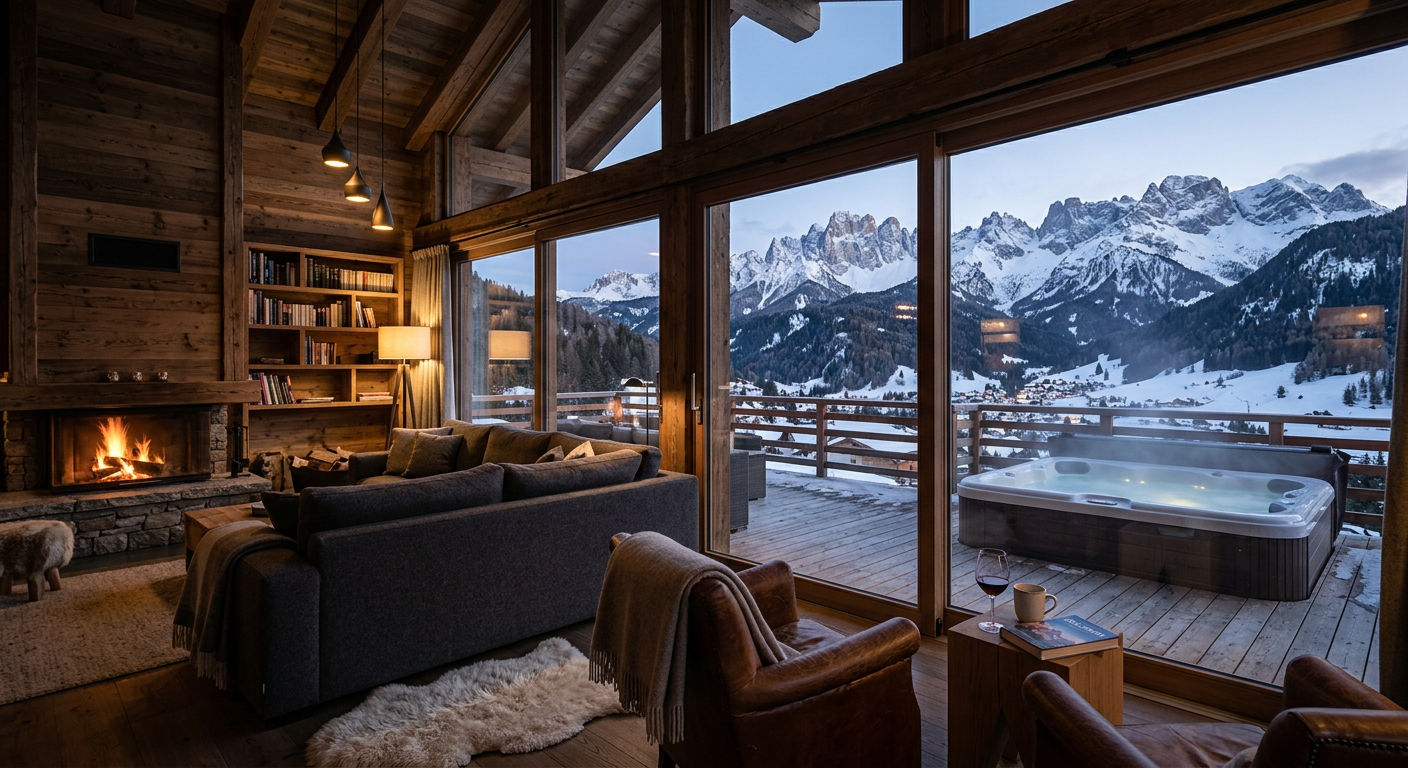
The wellness offering is strong across Italian resorts.
read our Best Italian Ski Resorts guide to see current availability across all five key resorts.
Choosing the Right Resort for Your Group
- Couples seeking gastronomy and scenery: Cortina or Courmayeur — smaller, character-driven towns with excellent dining
- Families with young children: Madonna di Campiglio — gentle terrain, compact village, strong childcare infrastructure
- Advanced skiers and off-piste enthusiasts: Cervinia (linked to Zermatt) or Courmayeur — altitude, vertical, and freeride terrain
- Groups on a budget: Livigno — duty-free pricing, reliable snow, and good self-catered options
- Intermediate cruisers: Selva Gardena or Alta Badia — the Sella Ronda circuit is purpose-built for long, scenic descents
Plan Your Italian Ski Trip
read our Best Italian Ski Resorts guide, or browse individual resorts: Cervinia, Madonna di Campiglio, Cortina, and Courmayeur.
For a deeper look at individual Italian resorts, see our guide to the best Italian ski resorts or browse our resort-specific guides for Cervinia, Cortina, Courmayeur, and Madonna di Campiglio.
Frequently Asked Questions
Is Italy cheaper than France or Switzerland for skiing?
Yes, by a meaningful margin. Lift passes in Italy typically cost €50–€70 per day compared to €75–€95 in the Trois Vallées or Verbier. A week-long Italian ski trip averages €1,300–€3,300 per person, compared to €2,500–€6,000 in top-tier French or Swiss resorts.
Which Italian ski resort has the best snow?
Cervinia (2,050m base, 3,480m top) and the Presena glacier near Madonna di Campiglio offer the most reliable natural snow in Italy, both open well into spring. Among the Dolomites, resorts above 1,500m like Selva Gardena benefit from heavy investment in snowmaking — the Dolomiti Superski region operates over 7,500 snow cannons covering more than 90% of its 1,200km of piste.
How long is the transfer from Milan to Italian ski resorts?
Milan Malpensa airport sits two to three hours from most Italian ski resorts. Turin Caselle is closer to Val d'Aosta resorts — Cervinia and Courmayeur are typically 1.5 to 2 hours by road. Shared shuttles run €40–€60 per person.
Can you ski from Italy to Switzerland?
Yes — the Cervinia–Zermatt link via the Matterhorn Ski Paradise connects Italian and Swiss slopes into a single 360km ski area. You can ski from Cervinia (Italy) at 2,050m across to Zermatt (Switzerland) at 1,620m and back in a single day, passing through the Klein Matterhorn at 3,883m. You need a valid international lift pass, which covers both sides.
What is the Dolomiti Superski pass?
The Dolomiti Superski pass is a single lift ticket covering 12 linked valleys and 1,200km of piste across the Dolomites. In the 2025/26 season, a six-day adult pass cost approximately €350; 2026/27 pricing is typically confirmed by October. It covers Cortina, Selva Gardena, Alta Badia, Val di Fassa, and eight other valleys. The pass also includes access to the Sella Ronda — a 40km circuit connecting four valleys via a loop of lifts and runs.
When is the best time to ski in Italy?
Early January (6–20 January) offers the best combination of snow quality and value — slopes are quiet after the holiday rush, and accommodation prices drop 20–30%. March brings longer days and spring snow conditions, ideal for sunny terrace lunches. Avoid Settimana Bianca (the Italian school holiday week in early-to-mid February) unless you book well in advance, as Italian family resorts like Madonna di Campiglio fill entirely during this period.