Ski Holiday in Switzerland: A First-Timer's Resort Picker for the Swiss Alps
 Powder Edition
Quick Answer
Switzerland offers four distinct ski holiday profiles: Verbier for off-piste terrain and nightlife across the 4 Vallées, Zermatt for high-altitude reliability and Matterhorn views with 360km of linked piste, St. Moritz for Engadin sunshine and cultural prestige, and Gstaad for understated village life with 220km of varied skiing. Geneva and Zurich airports put most resorts within a two-to-three-hour transfer. Pick Verbier for freeride ambition, Zermatt for guaranteed snow, St. Moritz for sunshine, and Gstaad for discretion.
Switzerland earns its reputation as the most refined ski destination in the Alps — and its most expensive. But the premium buys something specific: reliable snow at altitude, car-free villages, immaculate infrastructure, and a hospitality culture that treats skiing as a way of life rather than a seasonal industry.
This guide is built as a decision framework — pick your airport, match your skiing profile, check your budget tier, and land on the right resort. For deeper terrain analysis, see our Swiss Alps skiing guide. For accommodation-focused comparisons, see luxury ski resorts in Switzerland. This article covers the practical planning decisions, backed by data from our current collection of over 300 Swiss rental properties.
The Four Resorts Compared
Switzerland's four main ski resorts span from 1,050m to 3,883m altitude, with ski areas ranging from 220km (Gstaad) to 410km (Verbier's 4 Vallées). Each targets a different skier profile — the table below maps altitude, terrain scale, transfer time, and best-for match to help you narrow the field.
| Resort | Altitude | Piste km | Nearest Airport | Transfer | Best For |
|---|---|---|---|---|---|
| Verbier | 1,500–3,330m | 410km (4 Vallées) | Geneva (GVA) | 2h | Freeride, nightlife, large groups |
| Zermatt | 1,620–3,883m | 360km (Matterhorn Ski Paradise) | Geneva (GVA) / Zurich (ZRH) | 3.5h / 3h | Snow reliability, views, long season |
| St. Moritz | 1,822–3,303m | 350km (Engadin) | Zurich (ZRH) | 3h | Sunshine, culture, non-skiing activities |
| Gstaad | 1,050–3,000m | 220km (Gstaad Mountain Rides) | Geneva (GVA) / Bern (BRN) | 2h / 1.5h | Village charm, families, discretion |
Verbier: The Freeride Capital
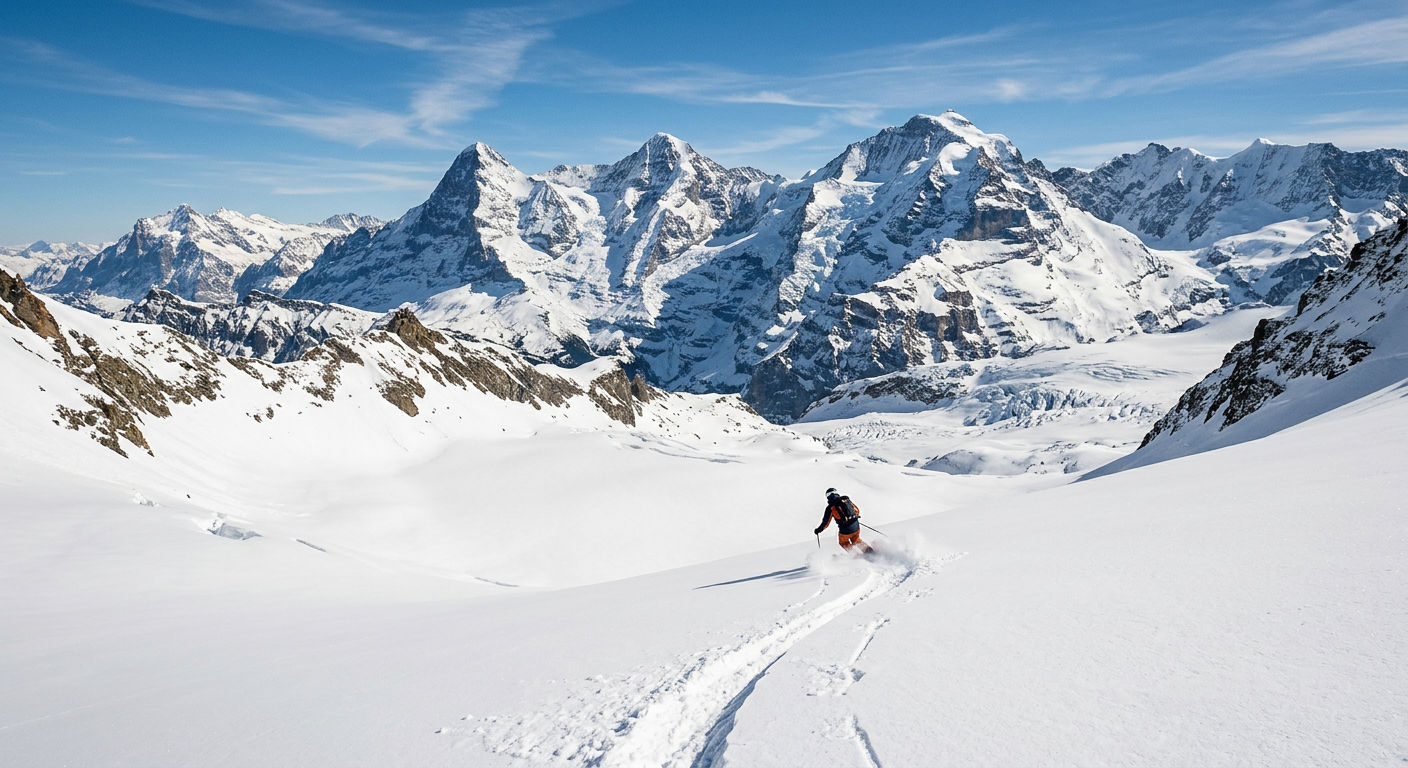
Verbier sits at the centre of the 4 Vallées, Switzerland's largest linked ski area at 410km of marked runs. The resort's reputation rests on its off-piste terrain — the itineraries from Mont Fort (3,330m) and Mont Gelé draw advanced skiers from across Europe. But the groomed runs across Savoleyres and the lower sectors suit intermediates well, and Les Esserts nursery slopes handle beginners.
The village itself runs on a different energy to Zermatt's car-free calm. Verbier has a working-town feel — busy bars, a younger crowd, and an après-ski scene anchored by places like Pub Mont Fort and the Farinet complex. For families, the quieter satellite villages of La Tzoumaz and Nendaz offer the same lift pass at lower prices.
Transfer: Geneva airport to Verbier takes roughly two hours by road, making it one of the more accessible Swiss resorts.
What to know: The Verbier lift pass covers the full 4 Vallées system, but the Mont Fort cable car and some itineraries require a separate supplement. Check before you book.
In our current collection, Verbier accounts for 123 properties — 95 of them chalets. Of those, 100 include a private hot tub and 88 have a sauna. Ski-in ski-out access is available at 111 properties, the highest proportion of any Swiss resort in our portfolio.
Explore chalets in Verbier or filter for ski-in ski-out properties with a hot tub. For a deeper look at terrain and off-piste itineraries, see our Verbier skiing guide.

Zermatt: Snow-Sure and Car-Free
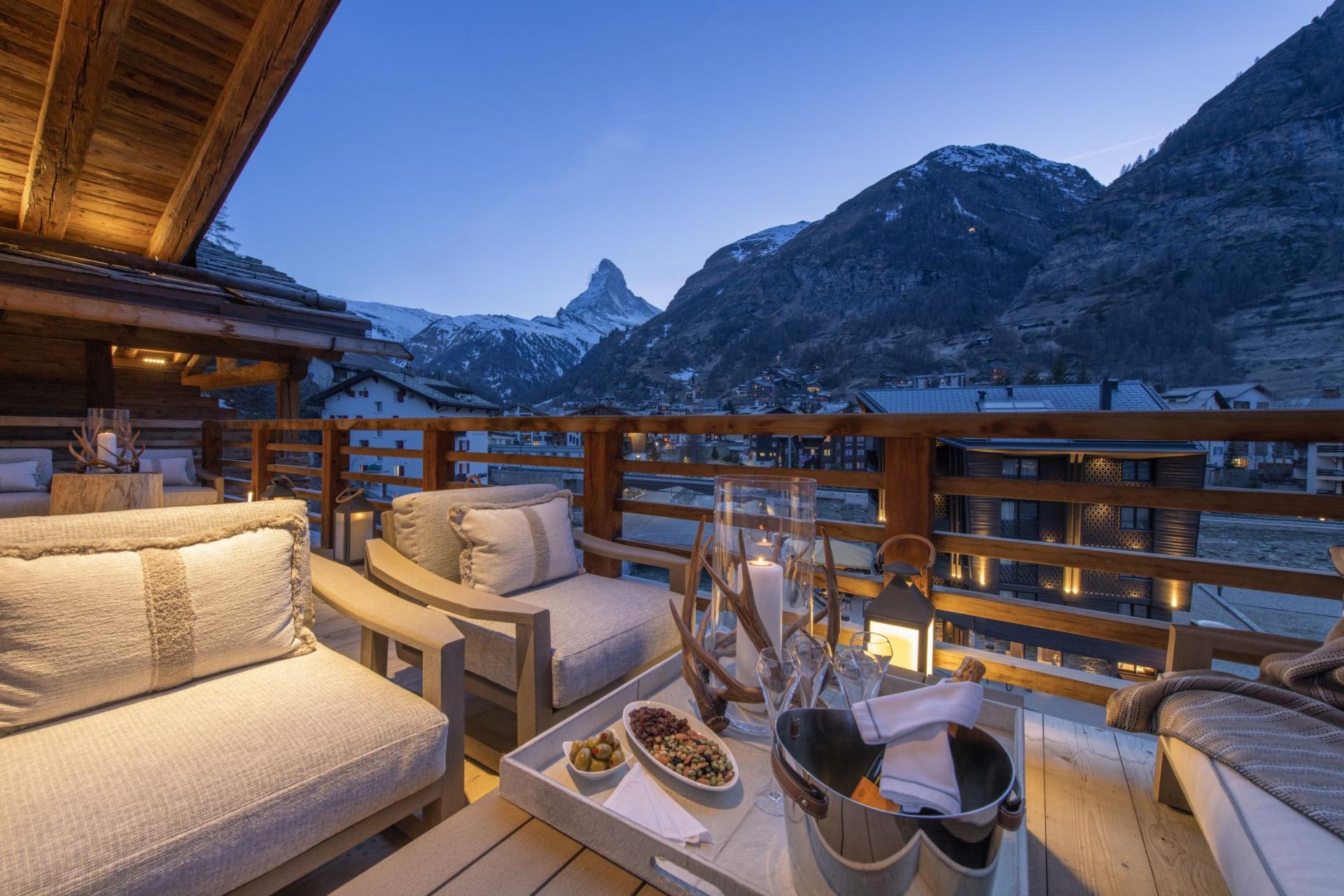
Zermatt's defining asset is altitude. The Matterhorn Glacier Paradise tops out at 3,883m — the highest lift-served point in the Alps — and the resort's north-facing slopes hold snow from late November through late April, often into May. The link to Cervinia on the Italian side adds variety and sunshine when weather closes in on the Swiss face.
The village is car-free. Electric taxis and horse-drawn carriages handle transport, and the Bahnhofstrasse main street functions as a pedestrian promenade lined with shops, restaurants, and hotels. It is quieter than Verbier but more polished — Zermatt operates year-round and the infrastructure reflects it.
Transfer: Zermatt is the least accessible of the four. The final approach is by train only (the Matterhorn Gotthard Bahn from Visp or Täsch), adding 30–45 minutes to any road transfer. From Geneva, expect 3.5 hours total; from Zurich, roughly 3 hours.
What to know: Zermatt's lift pass also covers Cervinia, but cross-border skiing requires a passport. The Gornergrat rack railway is worth a non-skiing day for the panoramic Matterhorn views alone.
Across our Zermatt collection of 112 properties, 92 include a sauna, 94 have a hot tub, and 73 offer a private pool. The mix of chalets (51), apartments (25), and hotels (35) gives more flexibility than most Swiss resorts.
Browse our Zermatt collection or filter for properties with a pool. For neighbourhood detail and where to stay, see our Zermatt accommodation guide.
St. Moritz: Sunshine and Engadin Prestige
St. Moritz receives more than 300 days of sunshine a year — a claim no other major Alpine resort can match. The Engadin valley's southern exposure and high altitude (the village sits at 1,822m) create a climate that is cold, dry, and bright. Skiing divides across three areas: Corviglia for intermediates and the main village access, Corvatsch for off-piste and glacier skiing, and Diavolezza for dramatic high-alpine terrain.
Beyond the skiing, St. Moritz has a cultural identity that stands apart. The Cresta Run bobsled track, the frozen lake hosting polo and cricket in winter, the Segantini Museum, and the town's Engadin Romansh heritage give it a depth that purely purpose-built resorts lack.
Transfer: Zurich airport to St. Moritz takes about three hours by road, or four hours by the Glacier Express and Bernina Express scenic rail routes — which are destinations in themselves.
What to know: St. Moritz pricing sits at the top of the Swiss market. The town attracts a jewellery-and-champagne crowd, but the skiing itself is more varied than its reputation suggests — Corvatsch's north face holds serious freeride lines.
In our current collection, St. Moritz lists 34 properties. All 34 offer ski-in ski-out access, 26 include a sauna, and 22 have a hot tub. Service splits across bed and breakfast (17), catered (8), and self-catered (15).
Explore our St. Moritz collection or see properties with sauna and hot tub.
Gstaad: Understated and Village-First
Gstaad's skiing often surprises visitors who associate the name only with wealth and discretion. The Gstaad Mountain Rides area covers 220km across six interconnected sectors, with Glacier 3000 reaching above the treeline for snow-sure high-altitude runs. The terrain suits intermediates and families best — long, groomed cruisers through forest and open pasture — though Glacier 3000's Oldenhorn area offers steeper pitches.
The village is small enough to walk across in ten minutes, and its chalet-style architecture is enforced by building code. No glass towers, no brutalist apartment blocks. Every structure in the old village centre conforms to the traditional Bernese Oberland style, giving Gstaad a visual coherence that larger resorts struggle to maintain.
Transfer: Geneva to Gstaad takes roughly two hours; Bern airport is closer at 1.5 hours. The MOB Golden Pass railway also connects Gstaad to Montreux and the Lake Geneva region — a scenic alternative to driving.
What to know: Gstaad's lower village altitude (1,050m) means early and late-season snow can be variable on the lower slopes, though Glacier 3000 compensates with guaranteed high-altitude skiing.
Our Gstaad collection includes 23 properties, with 20 offering hot tubs and all 23 featuring a sauna. The split between catered (11) and bed and breakfast (11) reflects the resort's preference for full-service hospitality.
When to Go: Season Timing and Pricing
Swiss ski seasons run broadly from late November to mid-April, with Zermatt and Verbier's high-altitude sectors extending into May some years. The decision on timing depends on priorities.
Peak weeks — Christmas/New Year (21 Dec – 4 Jan), February half-term (8–22 Feb), and Easter — carry the highest prices and require booking 6–12 months in advance. Swiss school holidays overlap heavily with UK and European breaks, compressing availability.
Best value windows:
- Early January (5–25 Jan): Snow is typically good, crowds thin out after New Year, and prices drop 20–30% from peak.
- Mid-March (10–31 Mar): Longer days, warmer terraces, reliable high-altitude snow. Spring skiing at its best.
- Late November / early December: Opening weeks carry risk on lower slopes but can be excellent at altitude. Prices are at their annual low.
Season length by resort:
| Resort | Typical Season | Best for Late Season |
|---|---|---|
| Zermatt | Late Nov – Late Apr (May at altitude) | Yes — glacier skiing extends the window |
| Verbier | Early Dec – Mid Apr | Moderate — Mont Fort holds snow well |
| St. Moritz | Early Dec – Early Apr | Moderate — Corvatsch glacier helps |
| Gstaad | Mid Dec – Late Mar | No — lower altitude limits late season |
What It Costs: A Realistic Budget
Switzerland is not a budget destination, and pretending otherwise does travellers a disservice. Here is a realistic weekly cost breakdown for a group of four adults.
| Category | Budget Range (per person/week) |
|---|---|
| Lift pass | CHF 350–420 (6-day pass) |
| Accommodation | CHF 600–3,000+ depending on property and season |
| Dining | CHF 50–120/day (on-mountain lunch + dinner) |
| Equipment rental | CHF 200–350 |
| Transfer | CHF 80–200 (shared; private higher) |
Cost-saving strategies that work in Switzerland:
- Book a self-catered chalet and cook two meals at home — dining is where Swiss costs escalate fastest
- Buy lift passes online in advance (most resorts offer 5–10% early-bird discounts)
- Travel in early January or mid-March for the best price-to-snow ratio
- Consider Gstaad or the Verbier satellite villages (La Tzoumaz, Nendaz) for lower accommodation costs without sacrificing ski area access
Across our current Swiss collection of over 300 properties, accommodation options range from self-catered apartments to fully staffed chalets with private chef, spa, and concierge. For a detailed breakdown of Swiss chalet types and what to expect at each price tier, see our Swiss ski chalet guide.
Getting There: Airports and Transfers
Geneva, Zurich, and Bern serve different halves of Swiss ski country — your airport choice narrows your resort shortlist before you consider terrain or budget.
Geneva (GVA) — The primary gateway for western Switzerland. Verbier (2h), Gstaad (2h), and Crans-Montana (2.5h) are all within comfortable driving distance. Well served by UK, European, and long-haul flights.
Zurich (ZRH) — Best for eastern resorts. St. Moritz (3h by road, 4h by scenic rail), Andermatt (1.5h), Klosters/Davos (2h). Also viable for Zermatt (3h via Visp).
Bern (BRN) — Smaller airport with fewer connections, but the closest option for Gstaad (1.5h) and a useful alternative for Verbier.
Rail note: Switzerland's rail network is among the best in Europe. The Swiss Travel Pass covers most routes and many mountain railways. For Zermatt — which is car-free — the train from Visp or Täsch is not optional, it is the only way in.
Beyond the Big Four
Crans-Montana, Klosters, Saas-Fee, and Grindelwald each list 10+ properties in our current collection and offer meaningfully lower costs than the four marquee resorts — often 30–40% less for comparable accommodation.
- Crans-Montana (19 properties in our current collection) — A sun-drenched plateau above the Rhône valley with wide, cruising pistes and a golf-resort sensibility
- Klosters (13 properties in our current collection) — Quieter than neighbouring Davos, sharing the same Parsenn ski area; long favoured by the British royal family
- Saas-Fee (12 properties in our current collection) — A car-free glacier village at 1,800m with year-round skiing and lower prices than Zermatt
- Grindelwald (10 properties in our current collection) — Gateway to the Jungfrau region and the new V-Bahn gondola system; the Eiger's north face as your daily backdrop
Start Planning Your Swiss Ski Holiday
Powder Edition brings together over 300 properties across Switzerland's finest ski resorts — from self-catered apartments in Saas-Fee to fully staffed chalets in Verbier and Zermatt. Explore our Swiss collection, filter by ski-in ski-out access, or browse properties with a hot tub and sauna.
Frequently Asked Questions
Which Swiss ski resort has the most reliable snow?
Zermatt consistently offers the longest season and most reliable snow cover in Switzerland. Its north-facing slopes and glacier skiing up to 3,883m mean the resort typically operates from late November through late April, sometimes extending into May. Verbier's Mont Fort sector (3,330m) is the next best option for late-season cover.
How much does a week's skiing in Switzerland cost compared to France?
A Swiss ski week typically costs 20–40% more than the equivalent in France or Austria. A 6-day lift pass in Verbier runs CHF 390 versus roughly EUR 310 in Courchevel. On-mountain dining averages CHF 35–50 per lunch in Zermatt, compared to EUR 18–30 in the Three Valleys. The gap narrows if you book a self-catered chalet and avoid resort restaurants — accommodation pricing in Gstaad and the Verbier satellite villages can approach French Alpine rates.
Is Gstaad good for families?
Gstaad suits families well. The terrain across Gstaad Mountain Rides favours intermediates and improving skiers, with long groomed runs through forest that children find confidence-building. The village is compact and walkable, the traffic is light, and the après-ski scene is calm rather than raucous. Glacier 3000 adds a high-altitude dimension for older children ready for steeper terrain.
Can you ski between Zermatt and Italy?
Yes. The Matterhorn Ski Paradise links Zermatt to Cervinia and Valtournenche on the Italian side, offering 360km of combined piste. A standard Zermatt lift pass covers the Italian sectors. You will need a passport or national ID card for the cross-border connection, and conditions on the link can close in poor weather.
How far in advance should I book a Swiss ski holiday?
Peak-week chalets in Verbier and Zermatt sell out by the previous summer — book 6–12 months ahead for Christmas, February half-term, or Easter. For value windows like early January or mid-March, 3–4 months' lead time is usually sufficient. Lift passes and transfers can be left until 4–6 weeks before travel, but buying passes online before the season typically saves 5–10% through early-bird pricing.
Is Switzerland worth the extra cost over France or Austria?
Switzerland charges a premium over France and Austria — expect 20–40% more for comparable accommodation and dining. What the premium buys is specific: car-free villages (Zermatt, Saas-Fee), immaculate grooming, a longer season at altitude, and a hospitality culture that operates year-round rather than seasonally. For skiers who prioritise infrastructure, reliability, and village atmosphere over value per piste-kilometre, Switzerland justifies the difference.