Where to Stay in St. Anton: A Neighbourhood Guide to Austria's Most Storied Ski Village

Quick Answer
St. Anton am Arlberg has four main accommodation areas. Dorf (the village centre) puts you within walking distance of restaurants, shops, and the Galzigbahn gondola. Nasserein, five minutes east, offers the resort's most direct ski-in ski-out access via the Nassereinbahn. Oberdorf sits above the centre — quieter, more traditional, slightly removed from lifts. St. Christoph, at 1,800 metres, is a separate hamlet with altitude and exclusivity. Pick Dorf for village life; Nasserein for slope-side convenience; St. Christoph for seclusion and altitude.
St. Anton am Arlberg sits at 1,304 metres in the western Tyrolean Alps, anchoring the Ski Arlberg area — Austria's largest interconnected ski domain at 305 kilometres of marked runs spanning St. Anton, St. Christoph, Stuben, Lech, Zürs, and Warth-Schröcken. The village has been a serious ski destination since the 1920s, when Hannes Schneider established the first organised ski school here.
Unlike purpose-built French stations where everything sits at a single base, St. Anton's accommodation spreads across several distinct areas along the valley floor and up the hillside. The difference between a doorstep ski-in chalet in Nasserein and a village-centre hotel in Dorf is more than cosmetic — it determines your daily rhythm, your après-ski options, and how much you rely on the free ski bus.
St. Anton at a Glance
| Detail | St. Anton am Arlberg |
|---|---|
| Ski Area | 305 km (Ski Arlberg linked) |
| Village Altitude | 1,304 m |
| Top Altitude | 2,811 m (Valluga) |
| Lifts | 88 across Ski Arlberg |
| Season | Early December – late April |
| Nearest Airport | Innsbruck (INN), 75 min transfer |
| Other Airports | Zurich (ZRH), 2.5 hrs; Munich (MUC), 3 hrs |
| Snow Record | Average 7 m annual snowfall |
| Best For | Advanced skiers, off-piste, après-ski |
Dorf: The Village Centre
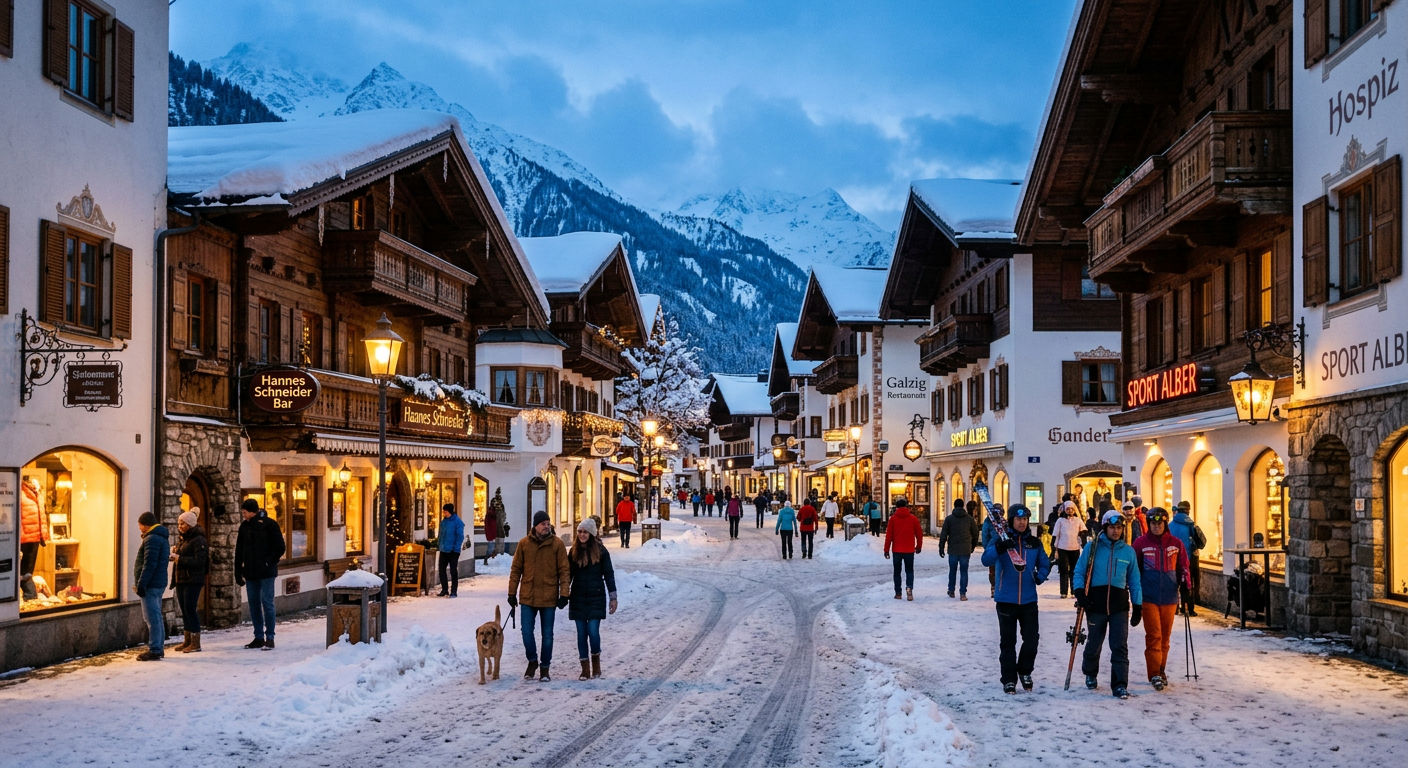
Dorf is St. Anton's historic heart — a compact cluster of Tyrolean timber-and-stone buildings along the main pedestrian zone. The Galzigbahn gondola, the primary lift into the Ski Arlberg system, departs from the western edge of the village. The Rendl cable car, accessing the resort's sunny south-facing slopes, sits a short walk south across the railway line.
This is where St. Anton's famous après-ski scene plays out at valley level. Bar Cuba, Piccadilly, and the Scotty's Bar strip line the pedestrian zone. Restaurants range from traditional Tyrolean Stuben to contemporary dining. Two supermarkets, a bakery, ski hire shops, and a pharmacy sit within five minutes on foot.
The trade-off is ski-in access. While some Dorf properties sit close enough to the Galzigbahn piste return to qualify as ski-in, most involve a short walk in boots — typically three to eight minutes. For groups where some members ski and others explore the village, this is the natural base. The non-skiing partner has genuine shops, cafés, and spa facilities to fill the day.
Who Should Stay in Dorf
First-time visitors to St. Anton, couples who want to walk to dinner and après-ski, and groups with mixed abilities or non-skiers. Also the strongest base if you want to split time between Galzig/Valluga terrain and the Rendl area — both lifts are reachable on foot from the centre.
Nasserein: The Ski-In Gateway

Nasserein sits roughly 800 metres east of the village centre, connected by a flat five-minute walk or the free ski bus. The Nassereinbahn gondola departs from here, reaching the Gampen and Kapall sectors of the ski area. More significantly, several Nasserein properties sit directly on — or within metres of — return pistes, making this St. Anton's most reliable area for genuine ski-in ski-out access.
The compromise is evening convenience. Nasserein has a handful of restaurants and a small supermarket, but the range is thin compared to Dorf. Most guests walk or shuttle into the village centre for dinner and après-ski. If your priority is maximising ski time and retreating to a well-equipped chalet in the evening, Nasserein delivers. If you want to stumble home from Bar Cuba at midnight without thinking about transport, Dorf is the better call.
Who Should Stay in Nasserein
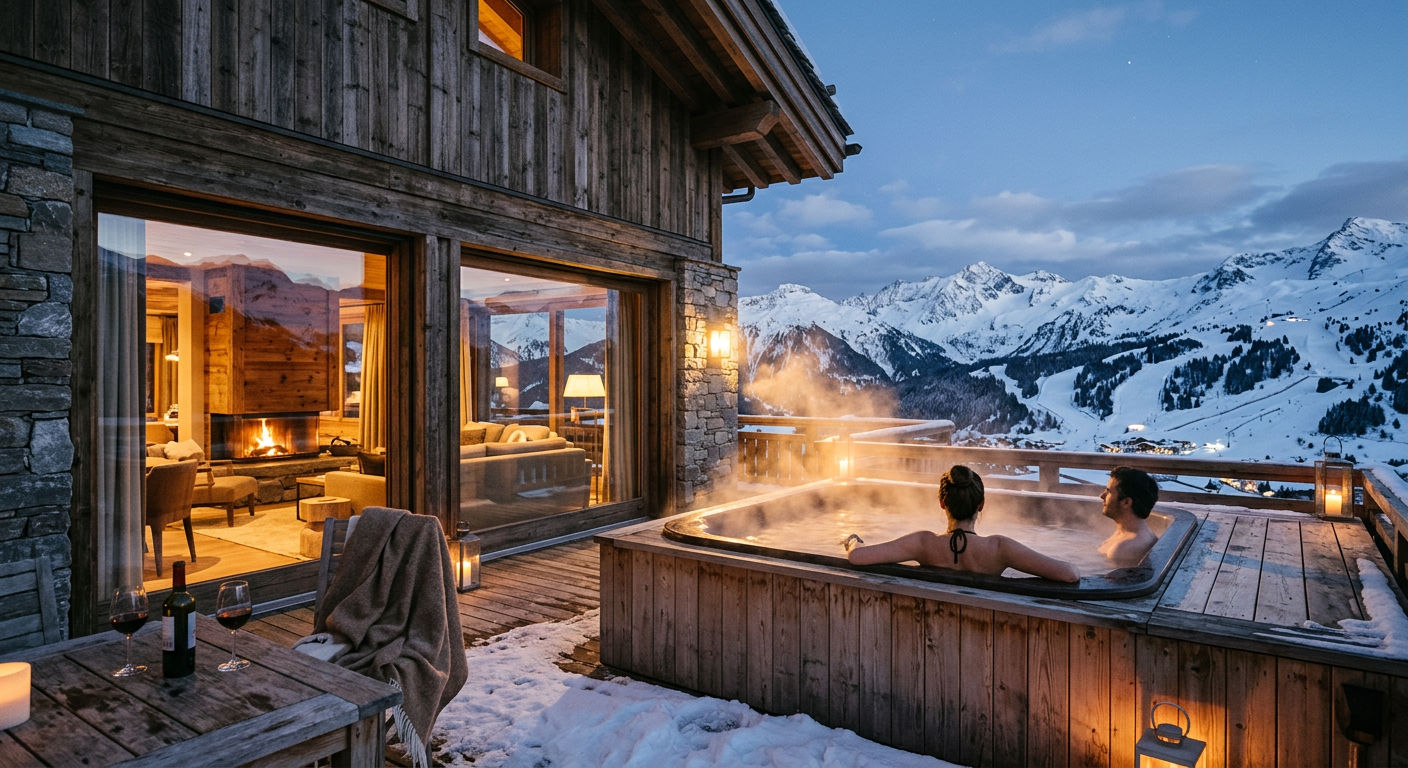
Dedicated skiing groups who want the shortest possible path to the lifts, families with children who benefit from ski-in convenience, and anyone prioritising wellness amenities (hot tub, sauna, pool) over village-centre nightlife.
Oberdorf: The Quiet Upper Village
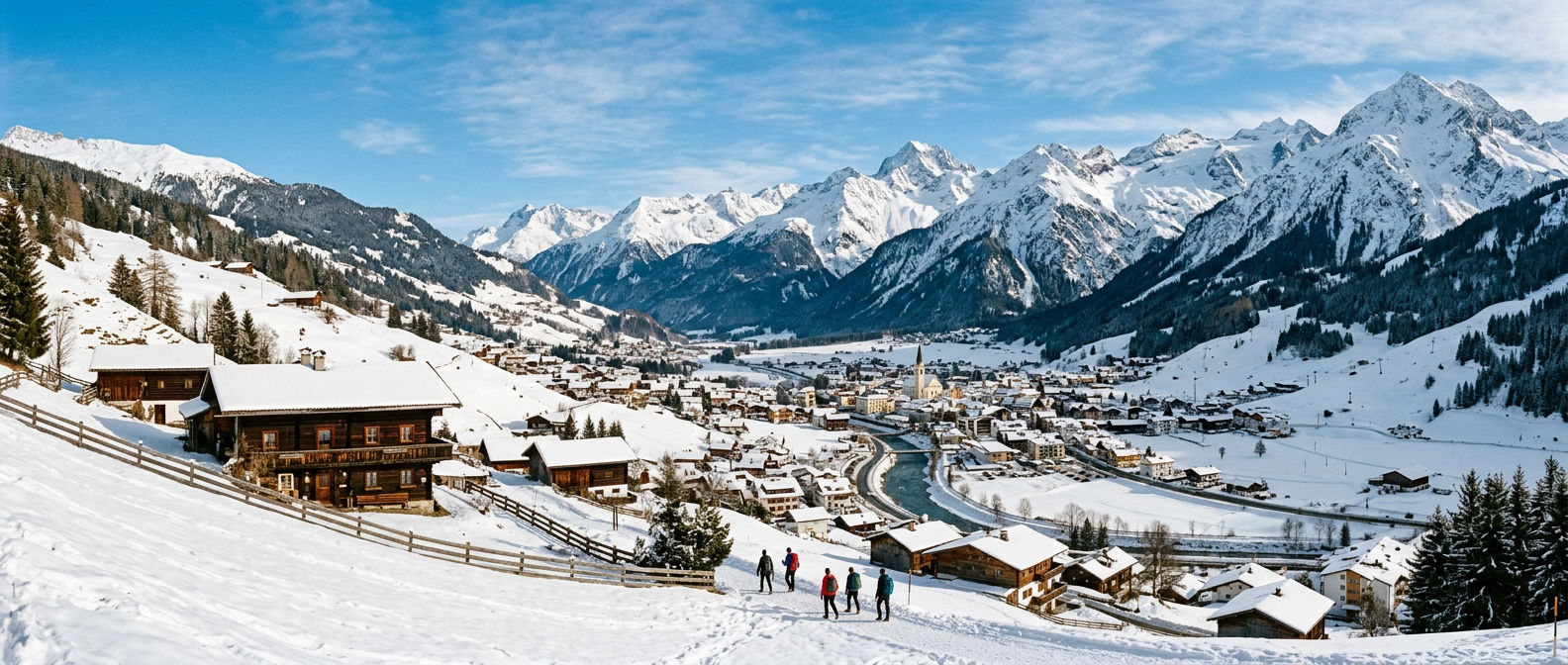
Oberdorf occupies the hillside above the village centre — a residential area of traditional Tyrolean farmhouses, newer chalets, and quiet lanes. The altitude gain is modest (50–100 metres above Dorf), but the separation from the main pedestrian zone is noticeable. Traffic noise drops away, and views open up across the valley toward the Rendl and Kapall peaks.
Properties in Oberdorf typically offer larger plots and more outdoor space than the compact village-centre hotels. The larger group-sized chalets tend to sit in Oberdorf or upper Nasserein, where plot sizes permit the scale.
Lift access from Oberdorf requires either a short downhill walk to the Galzigbahn or Nassereinbahn (five to ten minutes, depending on exact position) or use of the free ski bus. Some properties sit close enough to upper piste routes to qualify as ski-in on the return, though the outbound journey involves a walk or bus.
For groups prioritising space, privacy, and a quieter atmosphere over doorstep lift access, Oberdorf represents strong value. Properties here — particularly the larger chalets — often price below equivalent-sized options closer to the lifts.
Who Should Stay in Oberdorf
Large groups (10–20+ guests) who need space, families who prefer quiet evenings to village-centre noise, and budget-conscious visitors willing to trade lift proximity for lower prices and more generous accommodation.
St. Christoph: The High-Altitude Hamlet
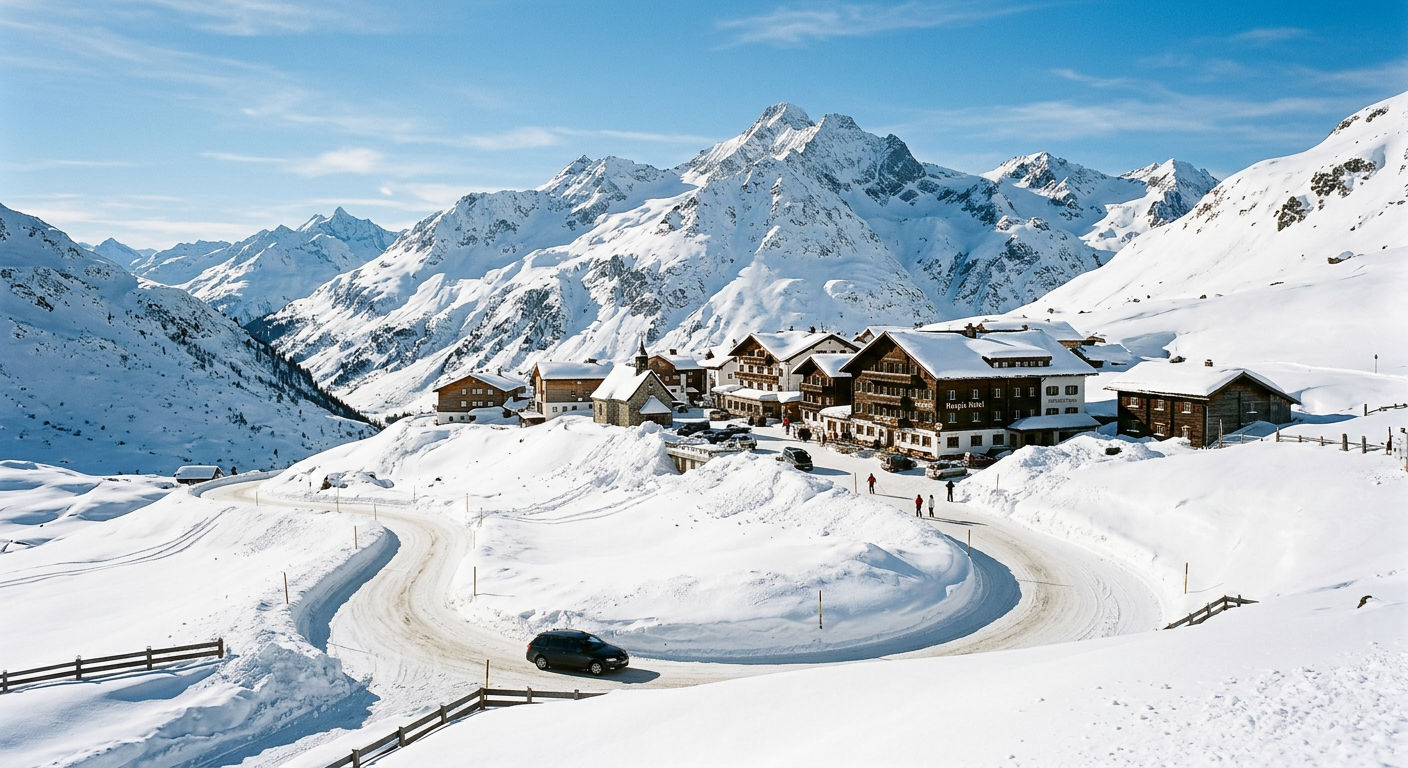
St. Christoph am Arlberg is the altitude-and-seclusion choice — a tiny hamlet at 1,800 metres on the Arlberg Pass, six kilometres and 500 vertical metres above St. Anton's village centre, with reliable snow and no nightlife. It is not a neighbourhood of St. Anton in the walkable sense — you drive or take the ski bus. But it shares the same Ski Arlberg lift pass, and properties here ski directly into the linked system.
The hamlet clusters around the historic Hospiz and the Arlberg ski school's advanced training centre. The altitude delivers more reliable snow coverage than the valley floor, and the quiet is absolute — there is no high street, no supermarket, no après-ski scene.
For travellers who want altitude, direct lift access, and genuine seclusion, St. Christoph occupies a unique position on the Arlberg — closer in spirit to a mountain refuge than a resort village.
Who Should Stay in St. Christoph
Experienced skiers who value altitude and snow reliability over village amenities, couples seeking seclusion, and guests who treat their accommodation as a self-contained retreat rather than a base for exploring a town.
Getting to St. Anton
St. Anton benefits from unusually strong transport links for an Austrian ski resort.
By air: Innsbruck airport (INN) is the closest, roughly 75 minutes by transfer. Zurich (ZRH) is two and a half hours, Munich (MUC) three hours.
By rail: St. Anton has its own railway station on the Arlberg line, with direct services from Innsbruck (75 minutes), Zurich (3 hours via Feldkirch), and connections from Vienna (5.5 hours). The station sits in the village centre — a rare convenience that means you can arrive without a transfer or taxi. The Austrian ÖBB night train from Hamburg, Düsseldorf, and Amsterdam also stops here.
By road: The Arlberg Pass road (S16/A13) connects St. Anton to the Inn Valley and the Austrian motorway network. From Innsbruck, it is roughly 100 kilometres. The Arlberg Tunnel bypasses the pass in winter. Parking in St. Anton is limited and often charged; many properties include private parking, but confirm before booking.
Explore Our St. Anton Collection
Browse the full St. Anton collection, filter by ski-in ski-out access, or explore catered chalets for a fully hosted stay.
For a deeper look at the skiing itself, see our complete St. Anton skiing guide.
Frequently Asked Questions
What is the best area to stay in St. Anton for families?
Dorf (the village centre) suits families best for first visits — everything is walkable, the Galzigbahn gondola reaches beginner terrain on Gampen within minutes, and non-skiing family members have shops and cafés to explore. For families prioritising ski-in convenience, Nasserein offers doorstep lift access without the walk-in-boots logistics that younger children find tiring.
Is St. Anton good for non-skiers?
The village centre has genuine depth for non-skiers — the Arlberg Well.com leisure centre offers a 25-metre pool, spa, and fitness facilities, and the pedestrian zone has enough restaurants and shops to fill several days. The rail station also enables easy day trips to Innsbruck (75 minutes). That said, St. Anton is a skiing village first — non-skiers will find more off-slope variety in Zermatt or Megève.
How does St. Anton compare to French resorts for accommodation?
French resorts like Courchevel and Val d'Isère typically have larger inventories and wider price ranges, but Austrian hospitality culture often delivers more inclusive service at comparable price points.
Can you ski between St. Anton and Lech?
Yes. The Ski Arlberg lift pass connects St. Anton to Lech, Zürs, Stuben, Warth, and Schröcken across 305 kilometres of linked terrain. The Flexenbahn gondola, completed in 2016, provides a weather-reliable connection between St. Anton/St. Christoph and the Lech-Zürs sector. A confident intermediate can ski the full Arlberg circuit in a day — Lech via the Flexenbahn, back via Stuben and the Albonagrat.
What is the best time to visit St. Anton?
January through mid-March delivers the most consistent snow and the full Arlberg link. The Christmas and New Year weeks are the most expensive and most crowded. Late January and early February often combine the best snow coverage with manageable lift queues. The season typically runs from early December through late April, but the highest terrain (Valluga, 2,811m) and the Lech connection maintain conditions longest.
How far in advance should you book accommodation in St. Anton?
Peak weeks — Christmas, New Year, February half-term, and Easter — sell out six to twelve months ahead, particularly for the larger catered chalets. January and March offer more flexibility; booking three to six months ahead typically secures a good range of options.