Where to Stay in Tignes: A Village-by-Village Guide to France's Highest Resort
Quick Answer
Tignes splits into five altitude villages sharing the 300km Espace Killy ski area with Val d'Isère. Val Claret at 2,100m delivers the most direct ski-in/ski-out access and glacier proximity. Tignes Le Lac offers the best balance of village life and slopeside convenience. Tignes 1800 provides newer accommodation at slightly lower prices. Les Brévières, the original hamlet at 1,550m, trades altitude for genuine Savoyard character. Pick Val Claret for ski-focused efficiency; Le Lac for atmosphere; Les Brévières for charm.
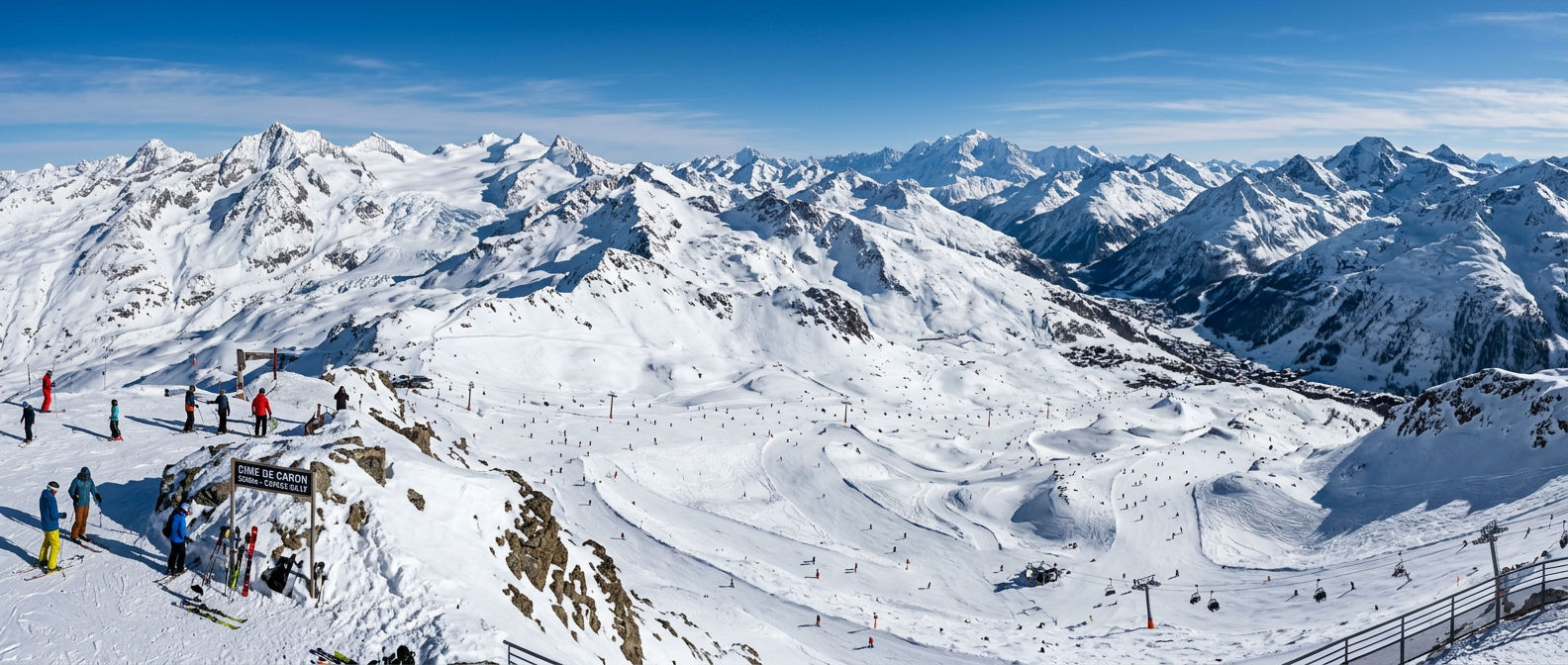
Tignes sits higher than almost any other resort base in Europe, and that altitude shapes everything — snow reliability, season length, and the near-universal ski-in/ski-out access that defines the resort. The ski area connects directly to Val d'Isère via the Espace Killy lift system, combining for 300 kilometres of marked pistes across terrain that ranges from wide glacier cruising to demanding off-piste itineraries.
For terrain and piste detail, see our Tignes skiing guide.
Tignes at a Glance
| Village | Altitude | Character | Ski Access | Best For | Price Level |
|---|---|---|---|---|---|
| Val Claret | 2,100m | Purpose-built, functional | Direct to Grande Motte glacier | Serious skiers, groups | ££££ |
| Tignes Le Lac | 2,100m | Lakeside, most amenities | Tovière, Palafour lifts | Couples, families, atmosphere | £££–££££ |
| Tignes 1800 | 1,800m | Newer, residential | Chaudannes lift | Families, mid-budget | £££ |
| Les Brévières | 1,550m | Traditional Savoyard | La Sache, SNTF lifts | Charm, value, quiet | ££ |
| Les Boisses | 1,850m | Small hamlet | Connects to Le Lac | Privacy, self-catering | ££ |
Chambéry airport sits under two hours by road — the closest commercial option. Lyon Saint-Exupéry is roughly 2.5 hours, and Geneva approximately three hours. The Bourg-Saint-Maurice TGV station is 30 minutes from Val Claret, with direct Eurostar services from London St Pancras during winter weekends (roughly nine hours).
Val Claret: The Skier's Default
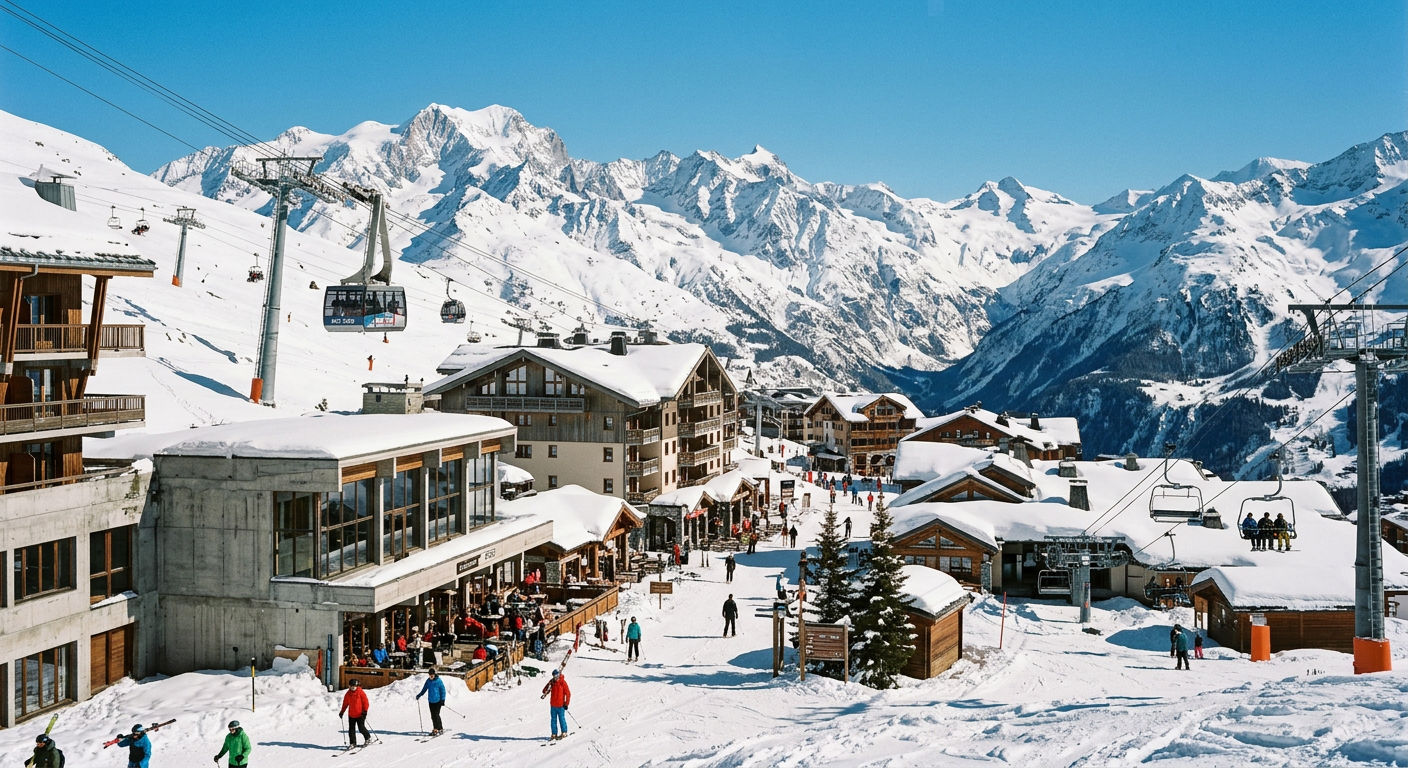
Val Claret occupies the highest position in the resort at 2,100 metres, directly below the Grande Motte funicular — the gateway to Tignes' glacier skiing at 3,456 metres. The village was purpose-built for ski access, and it shows: lifts fan out in multiple directions, and most accommodation sits within a boot-walk of the piste.
The architecture is functional rather than charming. Concrete apartment blocks from the 1960s dominate the skyline, though several have been renovated to a high standard. The village centre is compact — a handful of restaurants, two or three bars, a Sherpa supermarket, and equipment shops cluster around the central plaza. Après-ski options include the Loop Bar and Grizzly's, though Tignes' nightlife is modest compared to Val d'Isère or St. Anton.
What Val Claret lacks in aesthetic appeal, it compensates for in skiing logistics. The funicular reaches the Grande Motte glacier in under ten minutes. The Tovière gondola connects to Val d'Isère's side of the Espace Killy. On a powder morning, you can be first onto the glacier before most other villages have finished breakfast.
Tignes Le Lac: The Village Centre

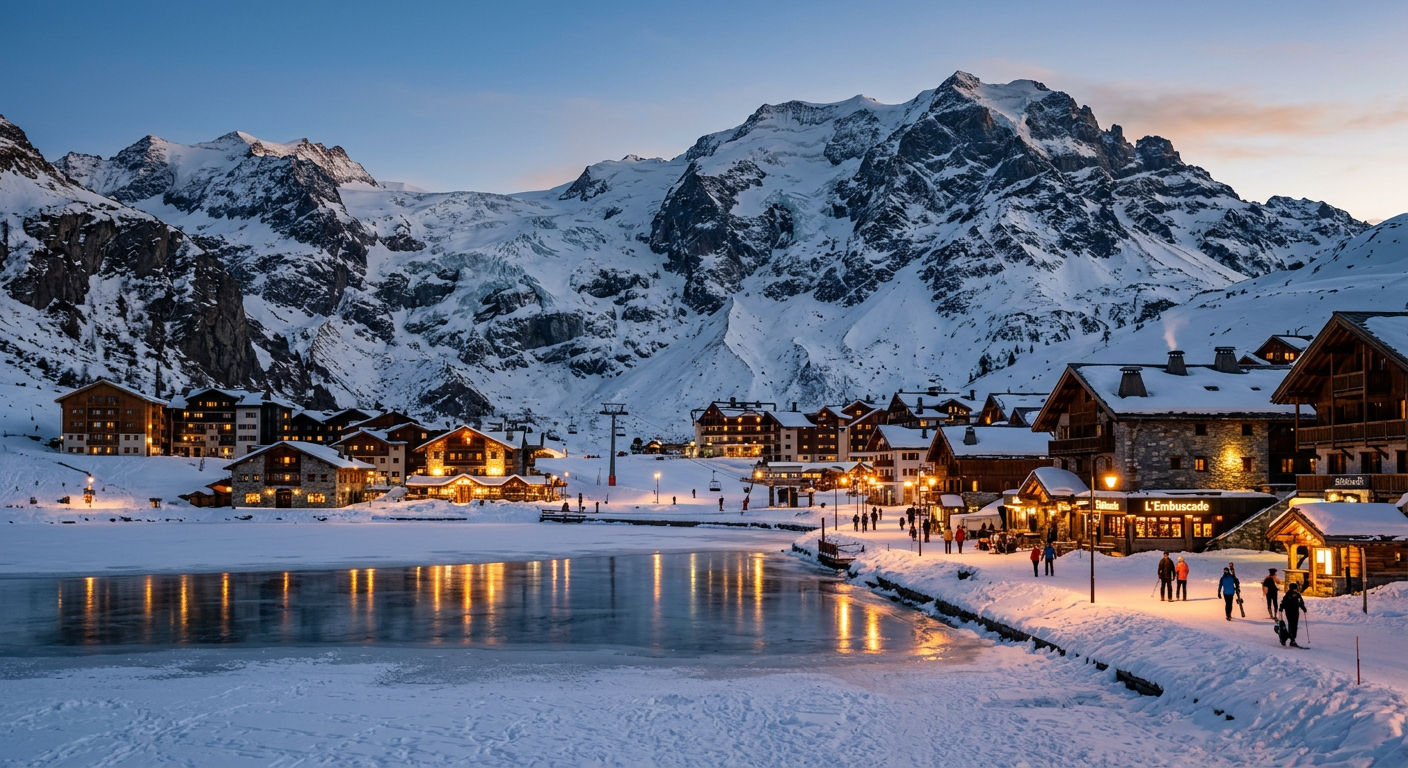
Tignes Le Lac shares Val Claret's 2,100-metre altitude but offers something its neighbour does not: a recognisable village centre with a lakeside setting. The frozen lake at the heart of the resort — used for ice diving, curling, and winter walking — gives Le Lac a focal point that Val Claret's plaza cannot match.
The village has the strongest concentration of restaurants and shops in the resort. Le Brasserie, the Couloir, and La Ferme are local staples, and the pedestrianised centre provides a genuine après-ski stroll that feels less utilitarian than Val Claret. A small cinema, bowling alley, and the Lagon leisure pool add non-skiing diversions — particularly useful for families or mixed groups where not everyone skis every day.
Ski access from Le Lac is strong, though a half-step below Val Claret. The Palafour and Tovière lifts connect to the upper ski area and across to Val d'Isère. The Chaudannes sector sits between Le Lac and 1800, offering gentler terrain suited to intermediates and children.
Tignes 1800: The Quieter Middle Ground
Tignes 1800 — sometimes called Lavachet — sits 300 metres below Le Lac on the road between the upper resort and Les Brévières. The village has undergone significant development in recent years, with newer apartment residences and a handful of chalets replacing some of the older stock.
The Chaudannes lift connects 1800 to the main ski area, and a free shuttle bus runs to Val Claret and Le Lac every 15 minutes throughout the day. The commute is short but real — a consideration for skiers who want first lifts without a bus ride.
The village atmosphere is quieter than Le Lac, with fewer restaurants and limited après-ski. A small commercial centre includes a bakery, a supermarket, and a couple of equipment shops. For families or groups who prefer a calmer base and are comfortable with the shuttle, 1800 offers newer accommodation at rates typically 20–30% below equivalent Le Lac properties.
The village suits families with young children — the ESF meeting point sits at the Chaudannes lift base, and the gentler intermediate terrain in this sector provides a natural progression from beginner slopes.
Les Brévières: The Traditional Village

Les Brévières is the oldest and lowest of Tignes' villages, sitting at 1,550 metres on the road up to the main resort. Where the upper villages are purpose-built and functional, Les Brévières is genuinely Savoyard — stone-and-wood buildings, a church, and a small cluster of restaurants and shops that feel closer to a working alpine hamlet than a ski station.
The village was partially rebuilt after the original Tignes village was flooded in 1952 to create the Chevril dam. That history gives Les Brévières a layered character — newer ski infrastructure grafted onto a village foundation that predates the resort by centuries.
Ski access is via the SNTF gondola and La Sache lift, connecting to the main Espace Killy network. The trade-off is time: reaching the glacier or the Val d'Isère side of the ski area requires more lifts than from Val Claret or Le Lac.
The run back down to Les Brévières through the trees is one of the more enjoyable descents in the resort — a long, winding intermediate piste that drops over 500 vertical metres.
Accommodation in Les Brévières tends toward smaller chalets and apartments, with rates running meaningfully below the upper resort. The village suits couples, small families, and skiers who value character over convenience. Dining options are limited but include La Ferme de Claudine, known for local Savoyard cuisine.
Les Boisses: The Hamlet Between
Les Boisses sits between Le Lac and Les Brévières at around 1,850 metres — a small collection of properties rather than a self-contained village. There are no shops, no restaurants, and no nightlife. What Les Boisses offers is privacy and a short connection to Le Lac by shuttle or ski.
The hamlet is best suited to self-catering groups who want slopeside access without the activity of the upper villages. Properties here tend toward privately owned chalets, and the atmosphere is closer to a mountain retreat than a ski station.
What the Numbers Tell You
Alongside that, 95% include a sauna, 79% a hot tub, and 75% a swimming pool, reflecting the resort's evolution from budget-functional to genuinely well-equipped.
When to Book and When to Visit
Tignes' altitude delivers one of the longest seasons in Europe. The resort typically opens in late November and runs through early May, with glacier skiing available into summer. Snow reliability is rarely a concern — the base sits high enough that natural cover holds well into spring, and snowmaking reinforces the lower connections.
The busiest periods are Christmas week, New Year, and February half-term (which varies by country — UK, French, and Dutch school holidays stagger across late January to early March).
For the strongest value, January outside school holidays offers excellent conditions with lower demand. March delivers longer days, softer snow in the afternoons, and rates that settle back toward mid-season pricing. Early December and late April suit those willing to accept slightly thinner cover in exchange for empty pistes and minimal queues.
Choosing Your Base
The right village depends on what you prioritise. A decision framework:
Choose Val Claret if: You want the fastest access to the glacier and the widest lift network from your doorstep. You ski hard, care about first lifts, and are indifferent to village charm.
Choose Le Lac if: You want a balance of ski access and village life. You value lakeside atmosphere, a choice of restaurants, and the widest range of accommodation types.
Choose Tignes 1800 if: You want newer accommodation, a quieter evening, and are comfortable with a short shuttle ride to the main lifts. Budget-conscious families will find strong value here.
Choose Les Brévières if: You want genuine Savoyard character, lower rates, and a beautiful tree-lined ski descent. You're prepared to accept a longer lift connection to the upper ski area.
Choose Les Boisses if: You want seclusion. You're self-catering, you value privacy, and you can reach Le Lac by shuttle or ski.
For those weighing Tignes against its Espace Killy neighbour, our Val d'Isère vs Tignes comparison covers terrain, village life, and accommodation in detail.
Frequently Asked Questions
Which Tignes village has the best ski-in/ski-out access?
Val Claret and Tignes Le Lac both offer strong ski-in/ski-out access, but Val Claret has the edge for direct glacier skiing via the Grande Motte funicular.
Is Tignes good for families?
Tignes works well for families with intermediate-level children who enjoy the independence of ski-in/ski-out access. The Chaudannes sector between Le Lac and 1800 provides gentle terrain, and the ESF ski school operates from multiple meeting points. However, families with very young non-skiing children may find the purpose-built villages less engaging than traditional resort towns like Megève or Morzine.
How do you get to Tignes from the UK?
The most direct route is a flight to Chambéry (under two hours by transfer) or Lyon (2.5 hours). Geneva is roughly three hours by road. During winter weekends, the Eurostar runs direct to Bourg-Saint-Maurice station — 30 minutes from Val Claret — making Tignes one of the more accessible high-altitude resorts by rail from London.
When does the Tignes ski season run?
Tignes typically opens in late November and closes in early May, with glacier skiing on the Grande Motte extending into summer. The resort's 2,100-metre base altitude delivers one of the most reliable natural snow records in Europe, averaging roughly seven metres of annual snowfall. Snow cover holds well into April on north-facing terrain.
Is Tignes better than Val d'Isère?
Tignes and Val d'Isère share the same 300km Espace Killy ski area, so the skiing is equivalent. The difference is village character: Val d'Isère offers a traditional, pedestrianised main street with stronger dining and après-ski; Tignes offers higher altitude, more direct glacier access, and lower prices for equivalent accommodation. Our Tignes vs Val d'Isère comparison breaks down the trade-offs in detail.