The Skiing
These are two strong French ski areas, but their character is structurally different.
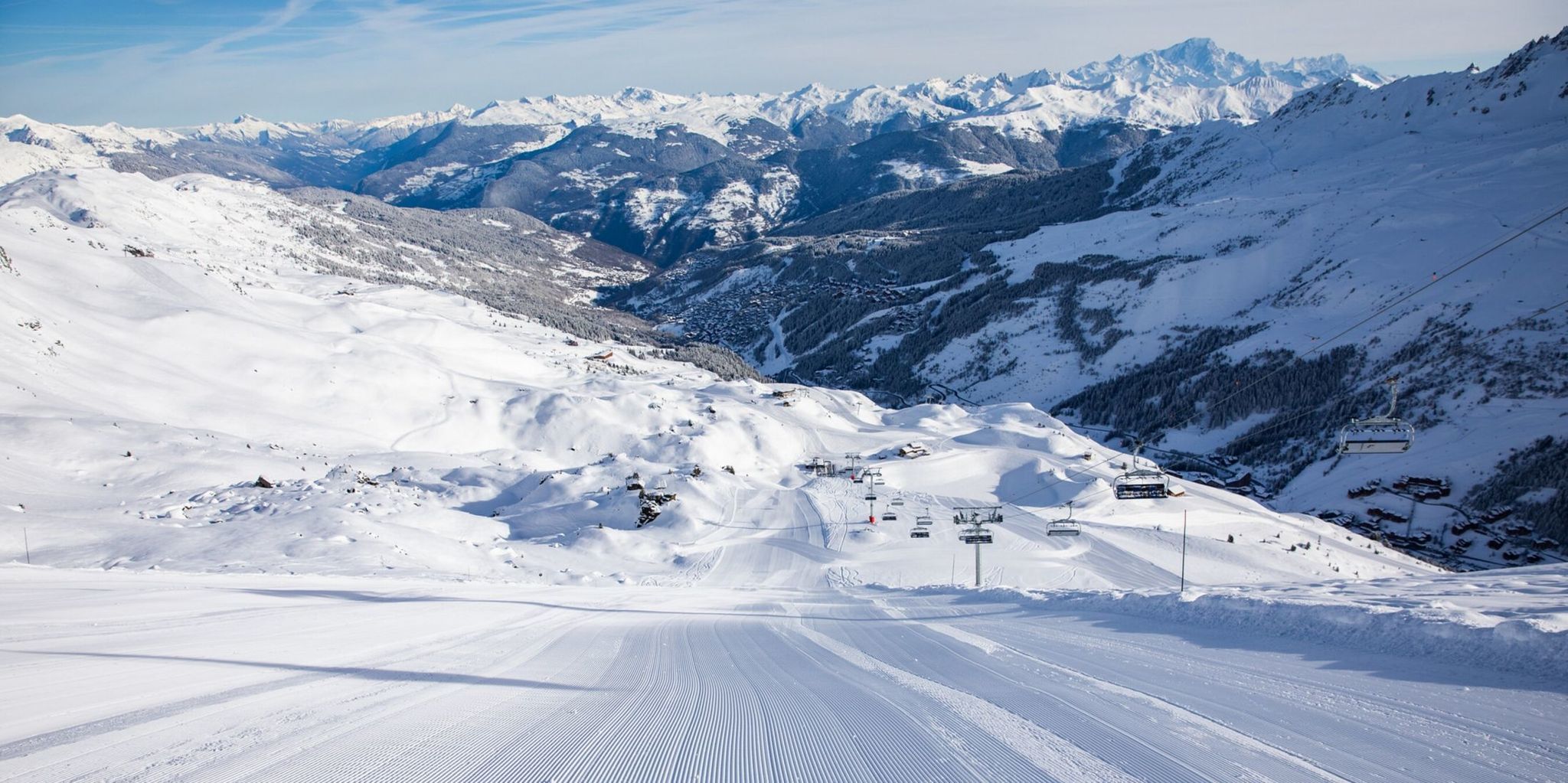
Courchevel sits at the heart of the Three Valleys — 600km of linked pistes spanning Méribel and Val Thorens as well, the largest connected ski area in the world. The local Courchevel domain is deliberately polished — wide blue and red runs, immaculate grooming, gentle nursery slopes at every village level (1850, Moriond, Le Praz), and extensive snowmaking that supports lower elevations. The terrain favours beginners and intermediates strongly. The highest local lift is 2,740m, a vertical drop of 1,440m from Le Praz (1,300m) and around 890m from Courchevel 1850.
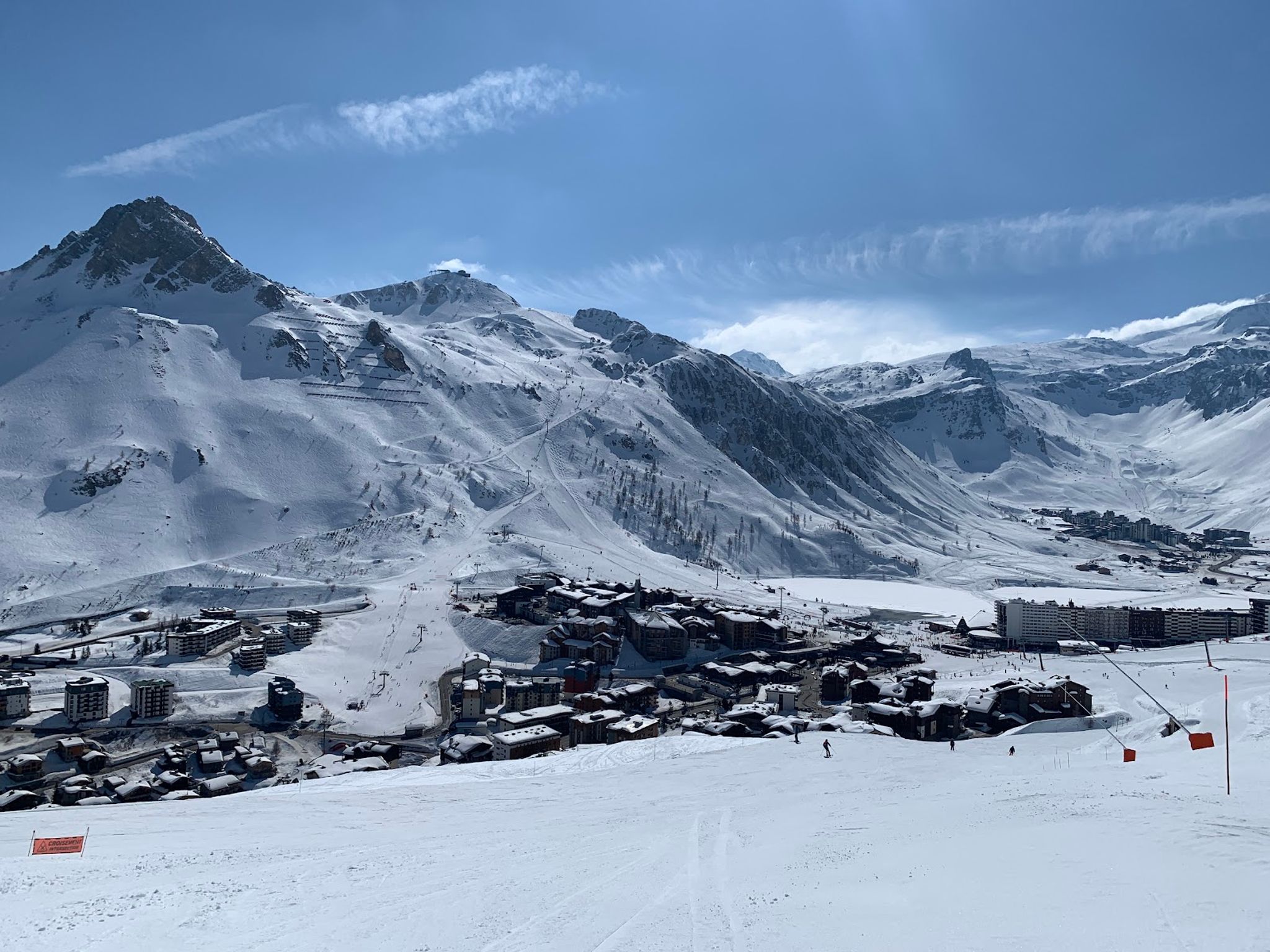
Tignes shares the 300km Espace Killy with Val d'Isère. The numbers are smaller than Courchevel's, but the altitude is meaningfully higher — village base at 2,100m, highest lift at 3,456m, vertical drop of 1,906m. The Grande Motte glacier delivers reliable late-season and even summer skiing. The terrain mix is harder than Courchevel's, with more demanding red and black runs and stronger off-piste heritage from the Tovière and Aiguille Percée sectors.
For pure scale and the largest variety of terrain, Courchevel and the Three Valleys win. For altitude, snow reliability, and a more demanding mountain, Tignes is the better fit.
The Village & Apres-Ski
This is where the resorts diverge most clearly.
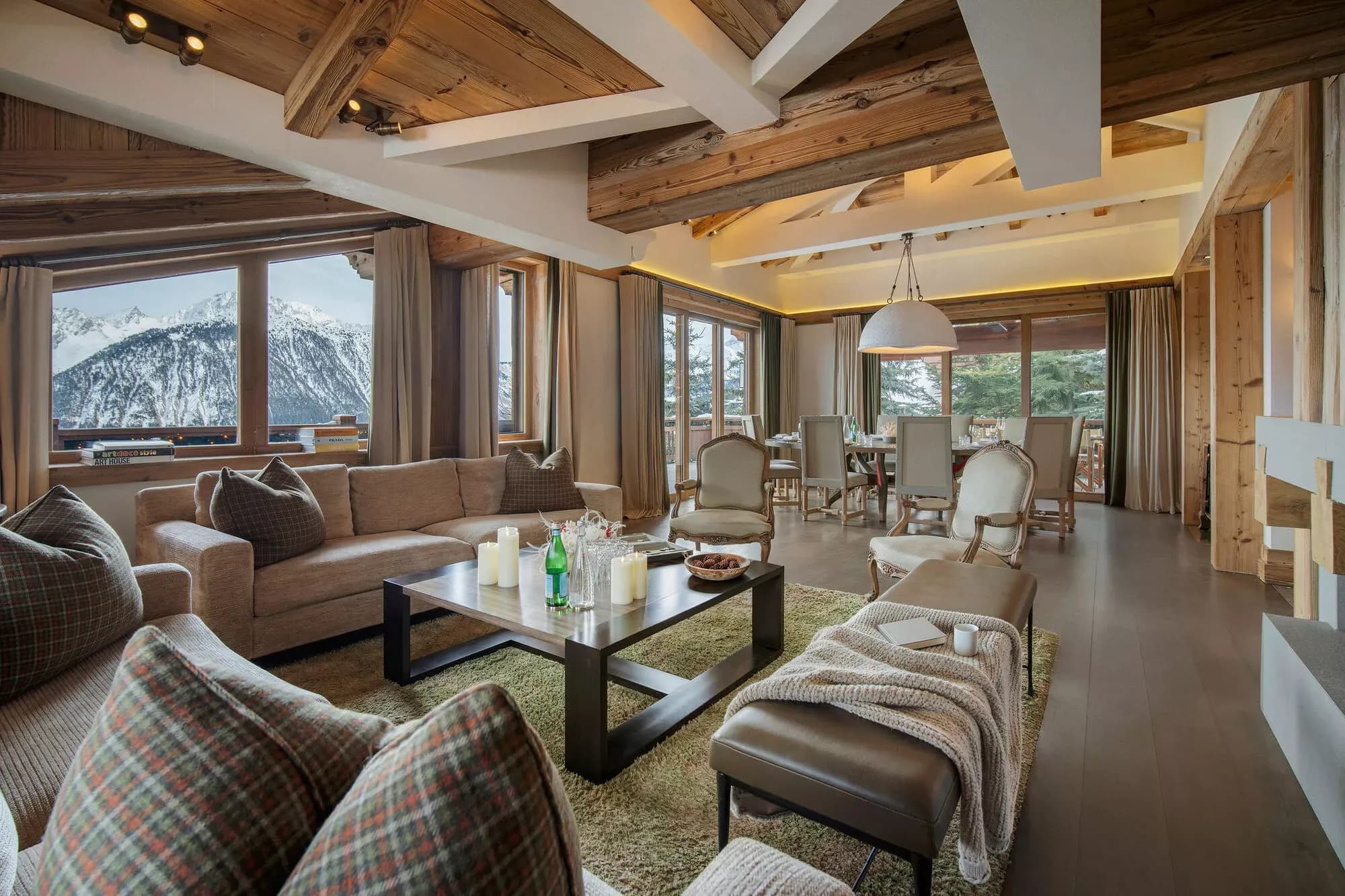
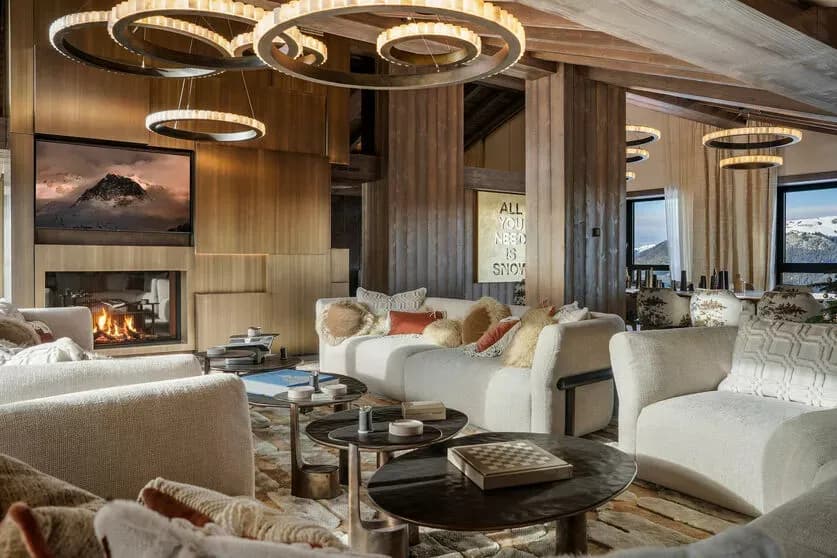
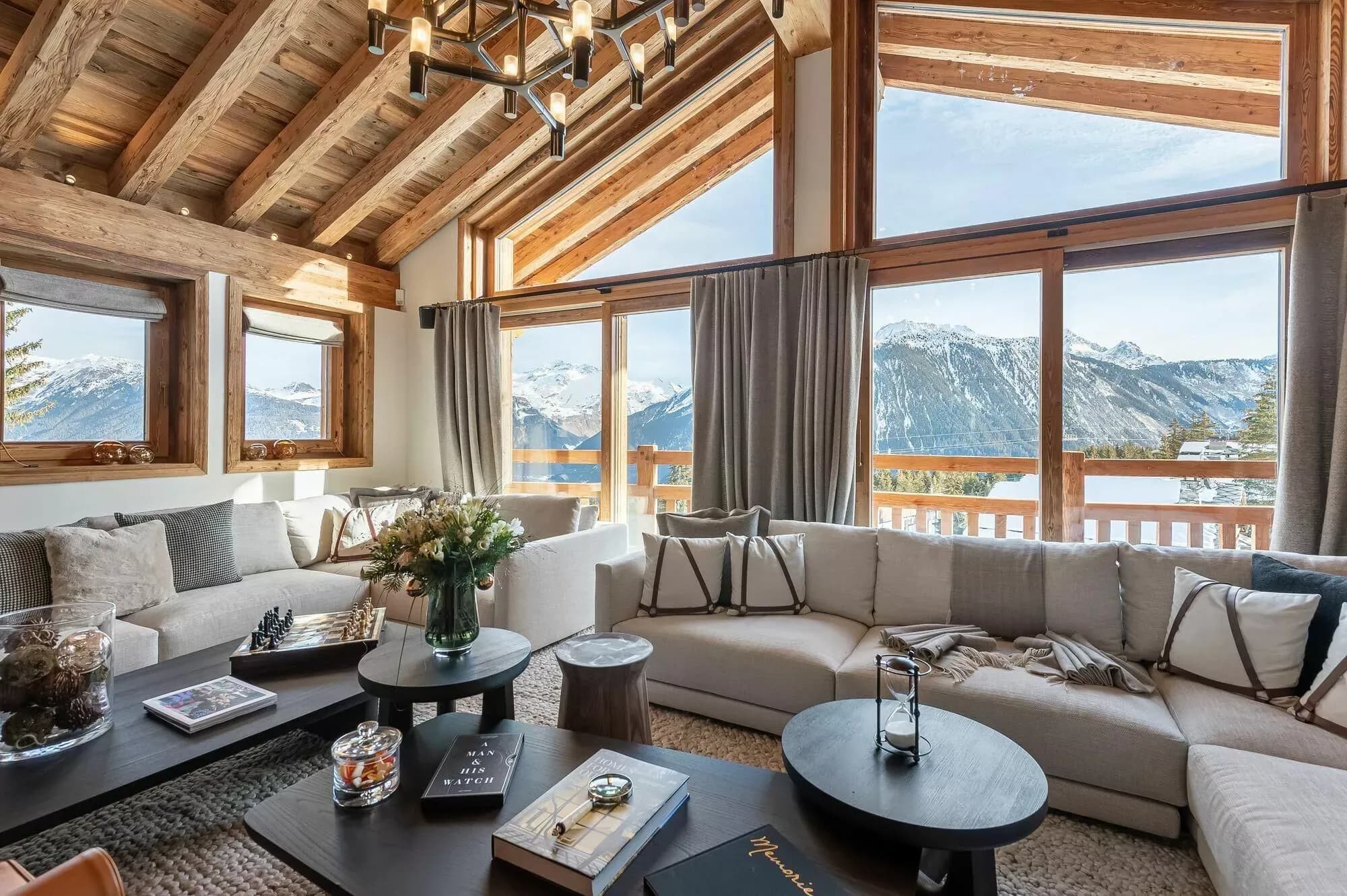
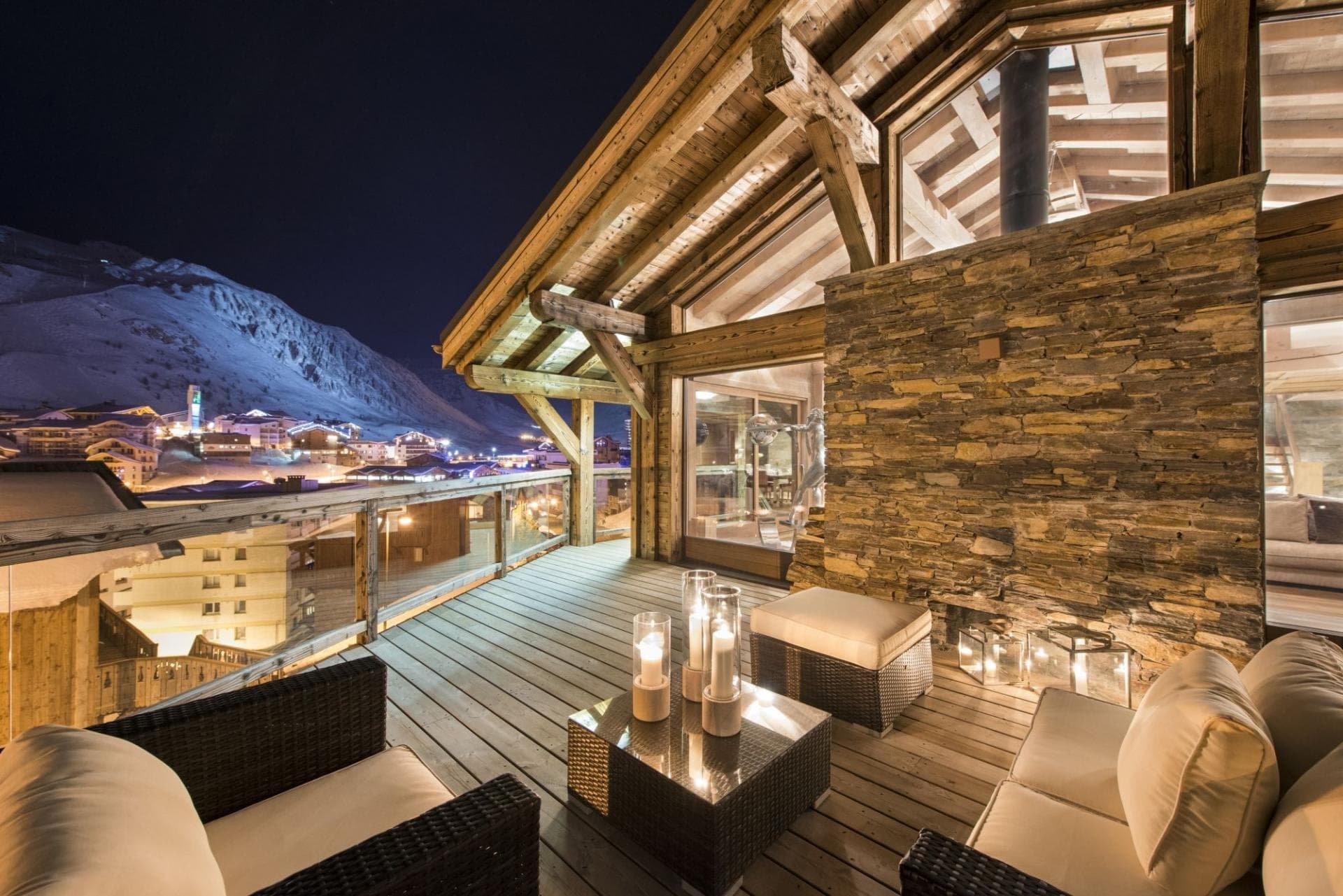
Courchevel 1850 is the polished, manicured icon — flagship boutiques along the Jardin Alpin, six Michelin stars, and a hotel landscape that includes Cheval Blanc, Les Airelles, and the Aman Le Mélézin. The lower villages (Moriond, Le Praz, La Tania) offer more relaxed alternatives with stronger Savoyard character. The market for luxury chalets in Courchevel is the deepest in the Alps. Apres-ski leans toward champagne bars and hotel terraces.
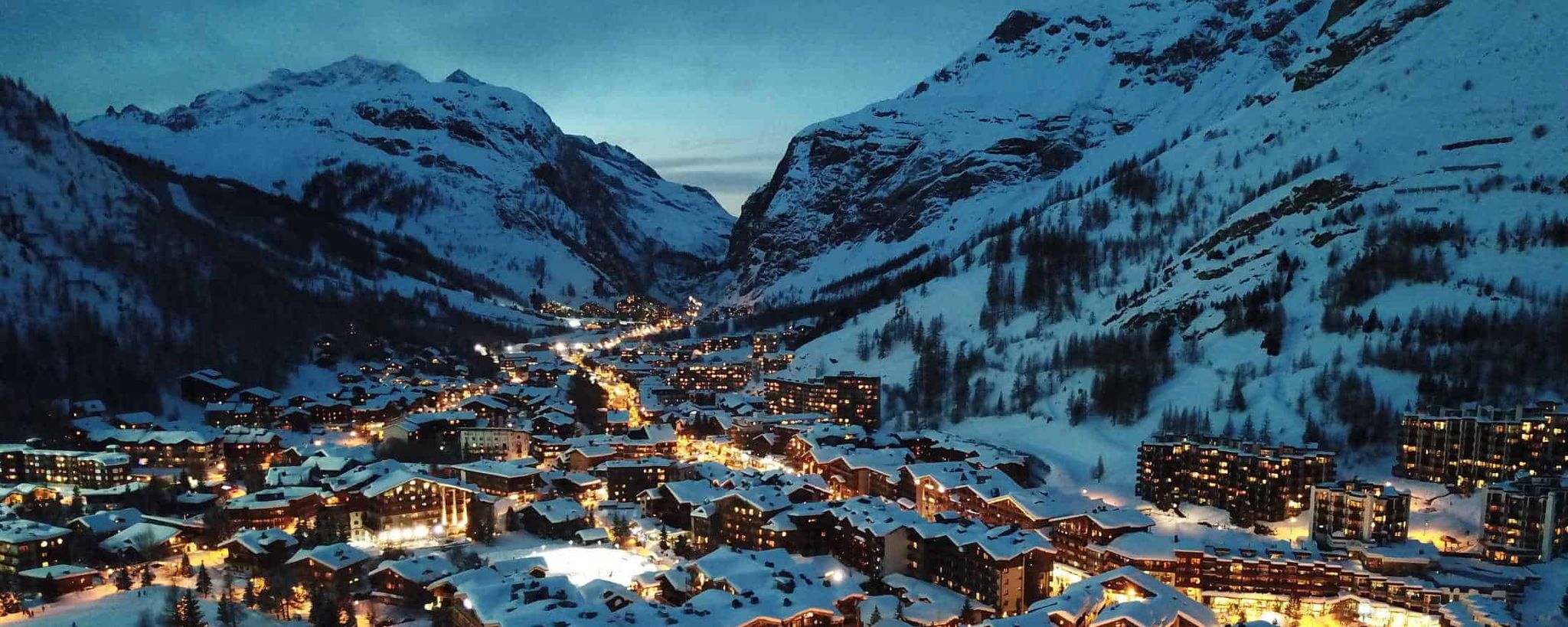
Tignes is purpose-built. The original village was flooded in the 1950s for the Tignes hydroelectric dam, and the resort was rebuilt at altitude as a series of concrete-and-glass complexes — Tignes le Lac, Tignes Val Claret, and Tignes le Lavachet. Architecturally, it is what it is: functional, modernist, stacked. The newer developments at Tignes 1800 (formerly Les Boisses) are softer and more traditional. The apres-ski is genuine and lively — Le Loop, the Drop, and Lo Soli all earn their reputations — but the sophisticated edge belongs to Courchevel.
If the village experience matters as much as the skiing, Courchevel wins decisively. If you would rather pay less, ski more, and accept that the village is a base camp, Tignes is the rational choice.
Getting There
Both resorts are reached via the Tarentaise corridor.
Courchevel: Chambéry is the closest airport at around 1h30 by car. Geneva (2h45) and Lyon (2h30) are the standard alternatives. Courchevel uniquely has its own altiport — a short mountain runway accepting private aircraft and helicopter transfers, the fastest door-to-slope option in the Alps.
Tignes: Geneva is the standard gateway at 2h45 to 3h15 by car. Lyon (Saint-Exupéry) is around 2h30 in good conditions. Bourg-Saint-Maurice train station is the closest major rail terminus, with seasonal Eurostar Snow Train service from London St Pancras.
For private aircraft, Courchevel's altiport is unique. For Eurostar arrival from London, Tignes is the more practical option via the Bourg-Saint-Maurice transfer.
When to Visit
Both resorts share the broad French Alpine season, but their characteristics differ at the edges.
Courchevel's prime window is January through mid-March, when snow cover is deep and the Three Valleys are fully operational. February half-term is the busiest and most expensive period, particularly at 1850. Late March can offer surprisingly strong skiing at lower prices, though the snowmaking does much of the work below the tree line.
Tignes follows the same calendar but with two altitude advantages. The village base at 2,100m means the snow holds longer at resort level — you can still ski back to the door in late April when Courchevel's lower runs may be patchy. The Grande Motte glacier extends the season meaningfully, with skiing possible into early summer in strong years — see our spring skiing guide for late-season planning.
For peak season, both resorts deliver. For spring or shoulder-season trips, Tignes's altitude is the deciding factor.
The Verdict
Both resorts serve French ski travellers well — but they serve very different priorities.
Choose Courchevel if you want: the largest linked ski area in the world; the densest fine-dining scene in the Alps; the polished, full-service luxury of 1850; private aircraft access via the unique altiport. Courchevel is the resort where every detail of the experience is curated for top-tier travellers.
Choose Tignes if you want: the snowiest and highest-altitude base in the Tarentaise; the Grande Motte glacier for late-season and even summer skiing; meaningfully better value at the top end of the chalet market; a functional ski-first village without the price premium of Courchevel 1850. Tignes is the resort where the mountain is the point and the village is infrastructure.
The shorthand many advisors use: Courchevel for travellers who want curated luxury wrapped around their skiing, Tignes for travellers who want maximum skiing value and aren't paying for the village.
Frequently Asked Questions
Can you ski between Courchevel and Tignes?
No, they are in separate ski areas. Courchevel is part of the Three Valleys; Tignes is part of the Espace Killy with Val d'Isère. They are approximately 90km apart by road, around 90 minutes' drive.
Which has better luxury chalets — Courchevel or Tignes?
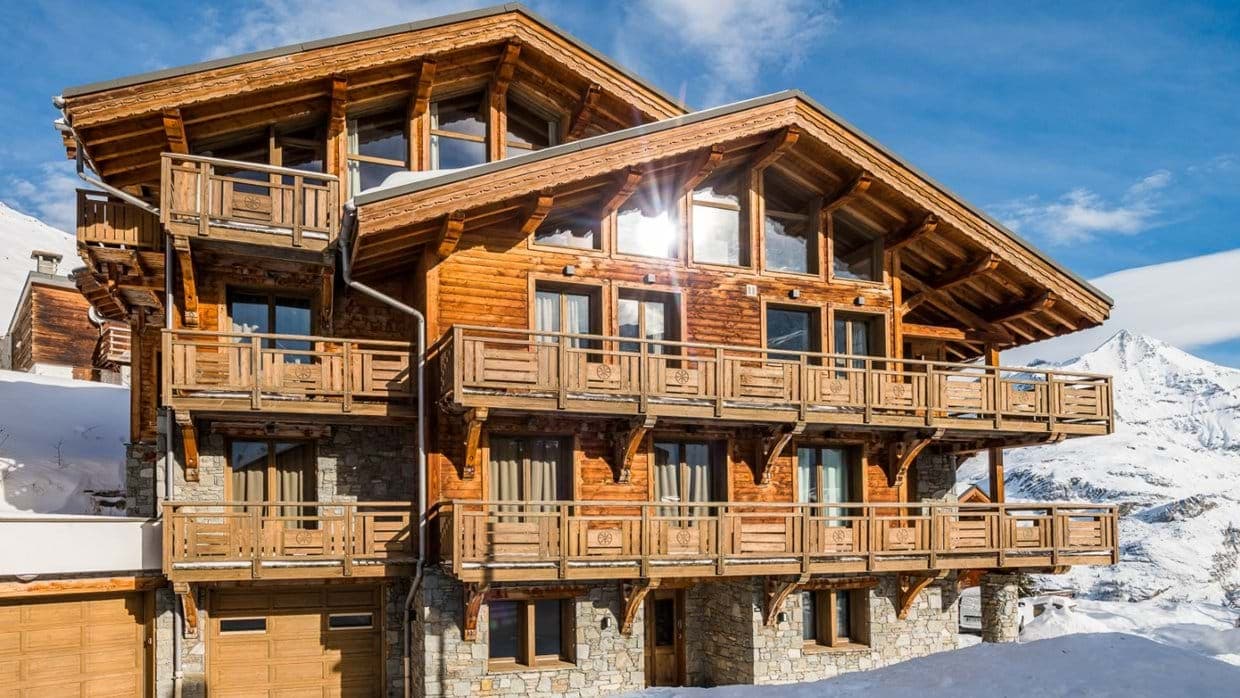
Courchevel has the deeper bench at the very top end, particularly around 1850, where weekly rates of £400,000+ are not unusual at flagship properties like Chalet Edelweiss and Les Airelles. Tignes has fewer ultra-trophy chalets but a strong middle-luxury tier at significantly lower price points than Courchevel equivalents.
Which has better snow — Courchevel or Tignes?
Tignes, by a meaningful margin. The village base is at 2,100m versus Courchevel 1850's 1,850m, and the Grande Motte glacier in Tignes extends the skiable season into early summer. Courchevel relies more on snowmaking, particularly for the lower runs and the village-level pistes.
Which is better for beginners — Courchevel or Tignes?
Courchevel, comfortably. The nursery slopes at 1850 and Moriond are gentle, well-maintained, and free at the village level. The ESF programme is one of the largest in France. Tignes has good beginner terrain too, but the higher altitude can make first days harder for first-time skiers.
Which has better apres-ski?
Tignes has the livelier traditional apres-ski scene with venues like Le Loop and the Drop drawing real crowds. Courchevel's apres is more refined — champagne bars and hotel terraces rather than dance floors. For traditional ski-resort apres, Tignes wins; for sophisticated evening atmosphere, Courchevel.