Two French resorts, two very different propositions. Val Thorens is the modern, high-altitude powerhouse anchoring the world's largest interconnected ski area. Val d'Isère is the storied Tarentaise village whose name has been synonymous with serious skiing for nearly a century. Both attract the same calibre of guest, both deliver world-class terrain, and both demand a thoughtful choice. Here's how they stack up.
The Skiing
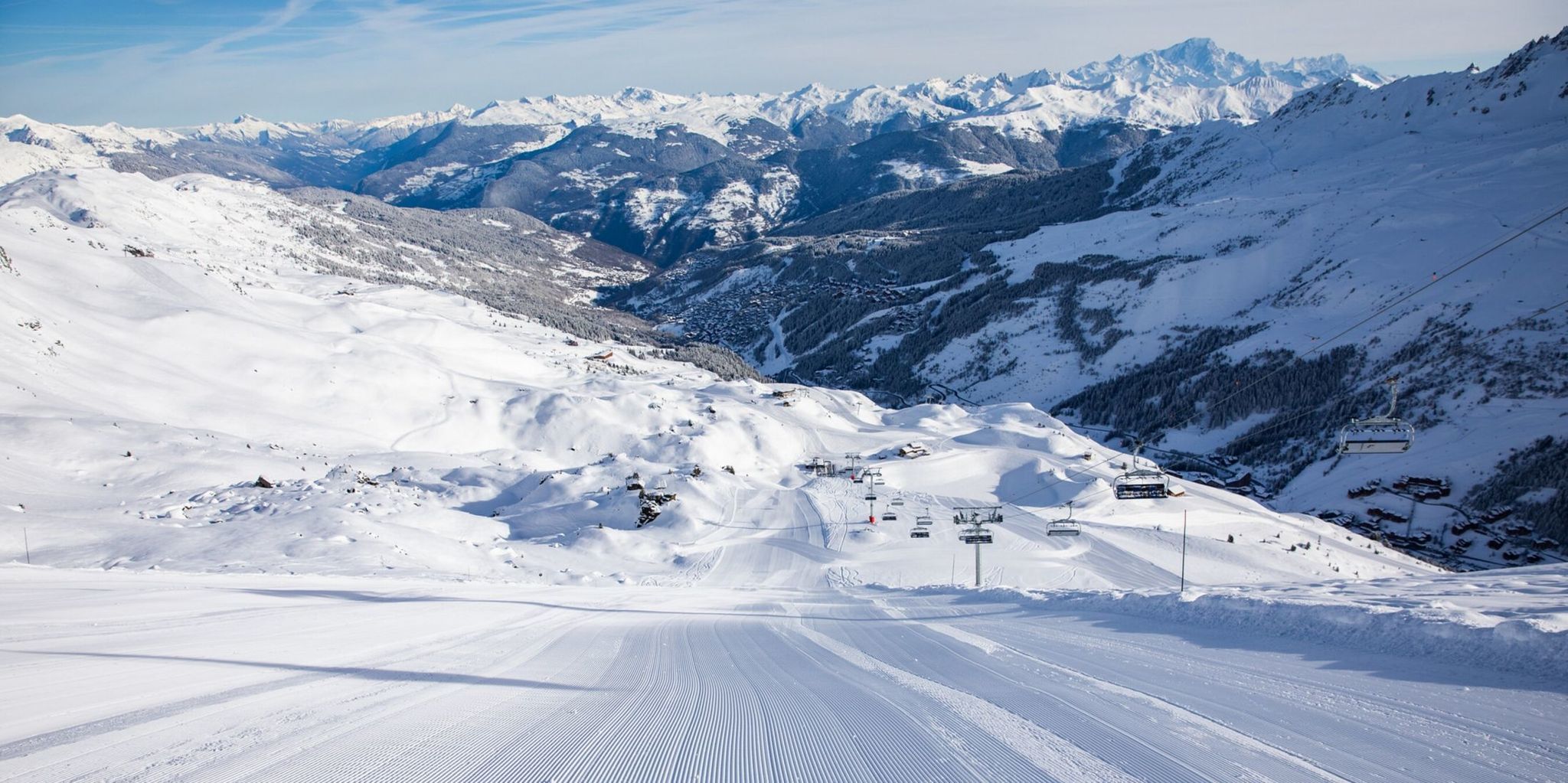
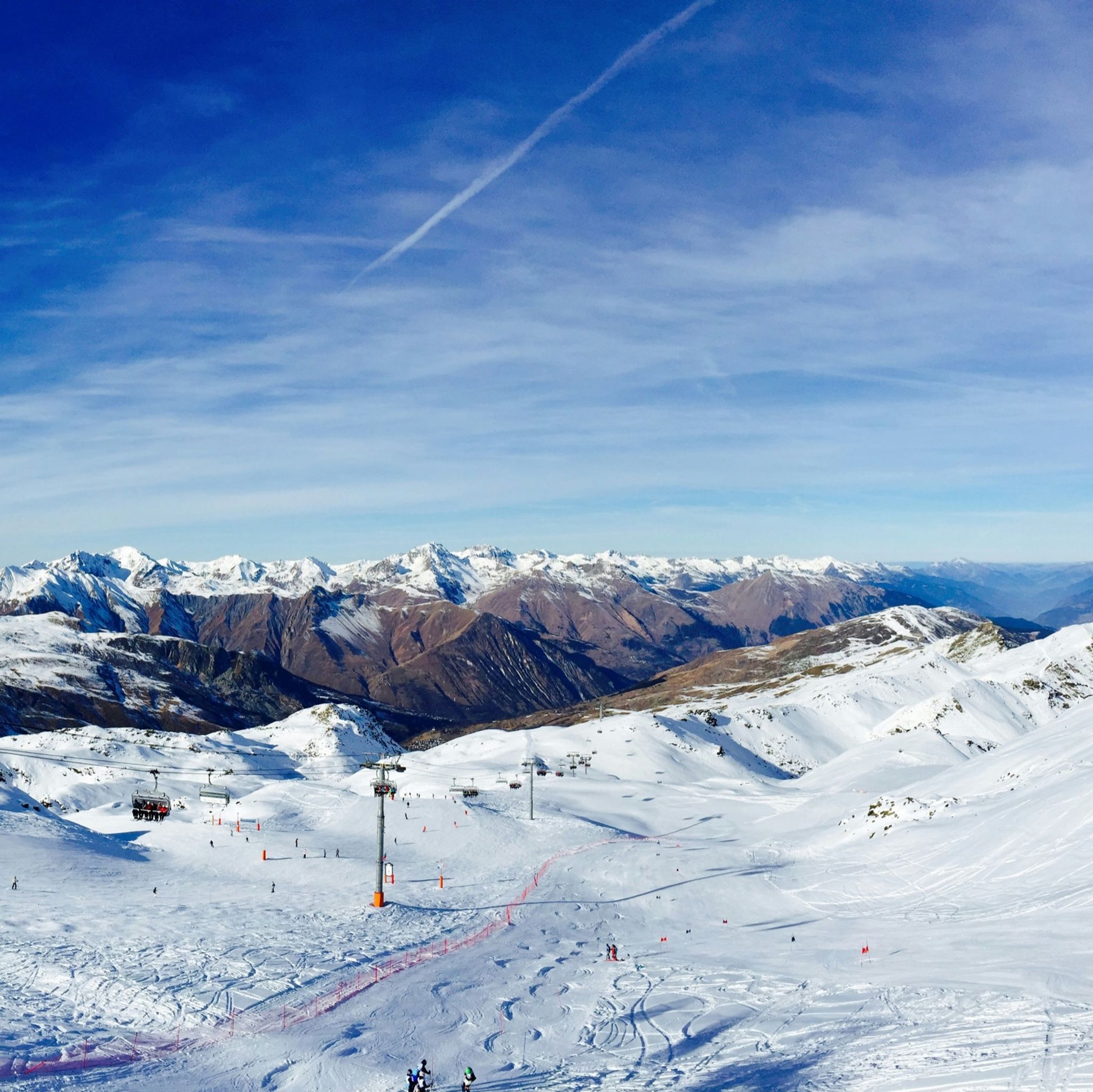
Val Thorens sits at 2,300m, with lifts climbing to 3,230m and a vertical drop of 1,430m. The terrain is almost entirely above the treeline, which gives the resort its signature look: vast, sweeping bowls, wide motorway pistes and seamless connections into the 600km Les Trois Vallées network. With 39 intermediate and 30 advanced trails on its own slopes, the resort skews towards strong intermediates and above, although a revamped beginner zone at the village base has broadened its appeal. Iconic descents include the Combe de Caron from the 3,200m summit cable car and the long, sunny cruisers of the Orelle sector.
Val d'Isère, by contrast, begins at 1,850m and climbs to 3,456m, with a striking 1,906m of vertical to play with. Linked with neighbouring Tignes, it forms a 300km domain that ranges from gentle glacier cruising on the Pissaillas to the fearsome Face de Bellevarde Olympic black. The Solaise sector houses a high-altitude designated beginner area with covered magic carpets, while Le Fornet offers some of the most respected lift-served off-piste in the Alps. With 15 expert pistes and a reputation for backcountry, this is a mountain that rewards ambition.
Both resorts post a 6m average seasonal snowfall and run from late November to early May, so neither will let you down for conditions. The distinction is character: Val Thorens is open, modern and engineered for efficiency, while Val d'Isère offers more variety, more vertical and a stronger pull for those who want to leave the piste behind.
The Village & Apres-Ski
Val Thorens is purpose-built and unapologetic about it. The architecture is functional rather than romantic, but the layout pays dividends, with practically every building genuinely ski-in/ski-out. Evenings cluster around La Folie Douce, the underground nightclub Le Malaysia and a lively central drag of bars including Saloon Bar. It is a high-energy, cosmopolitan town that pulses well into the small hours.
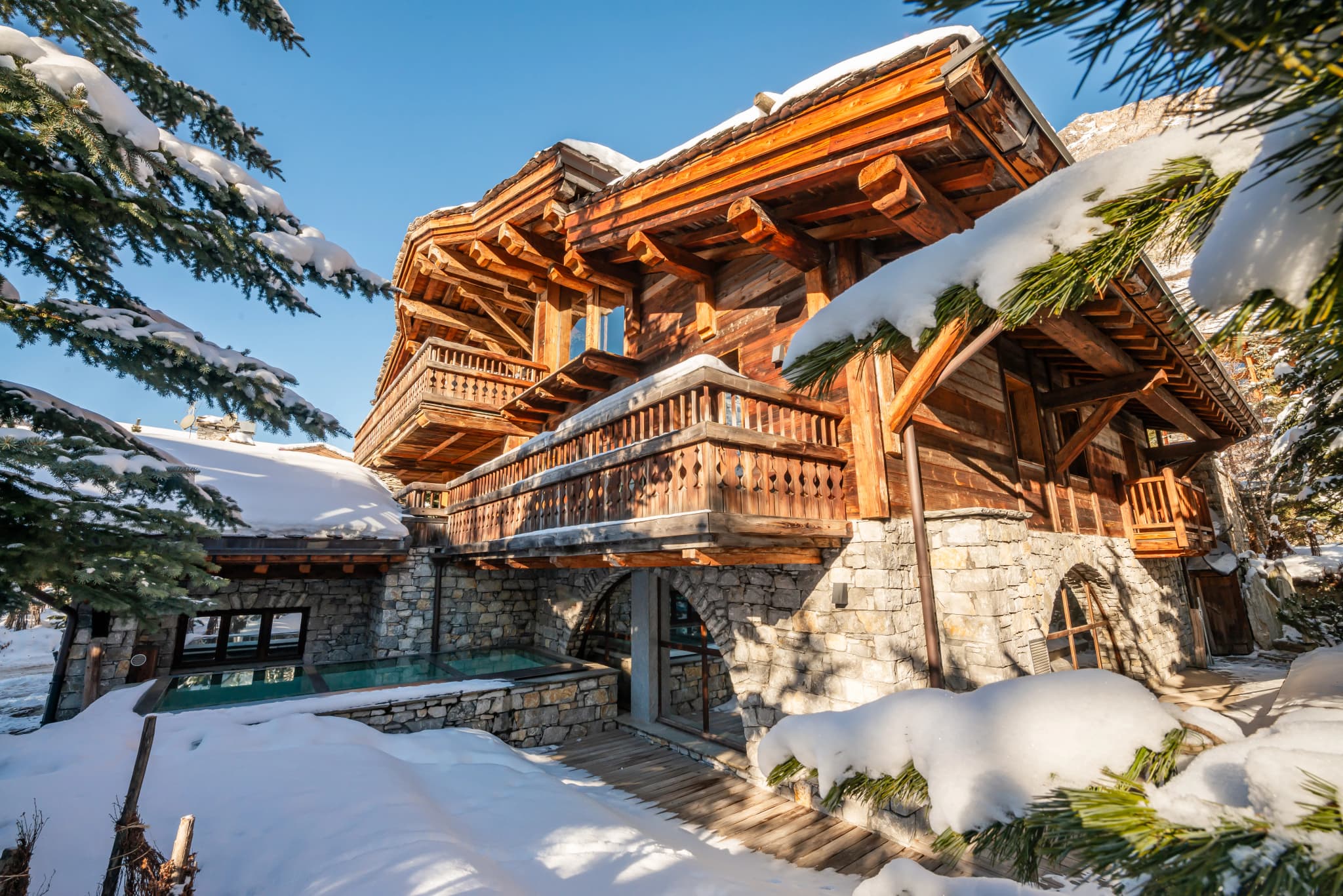
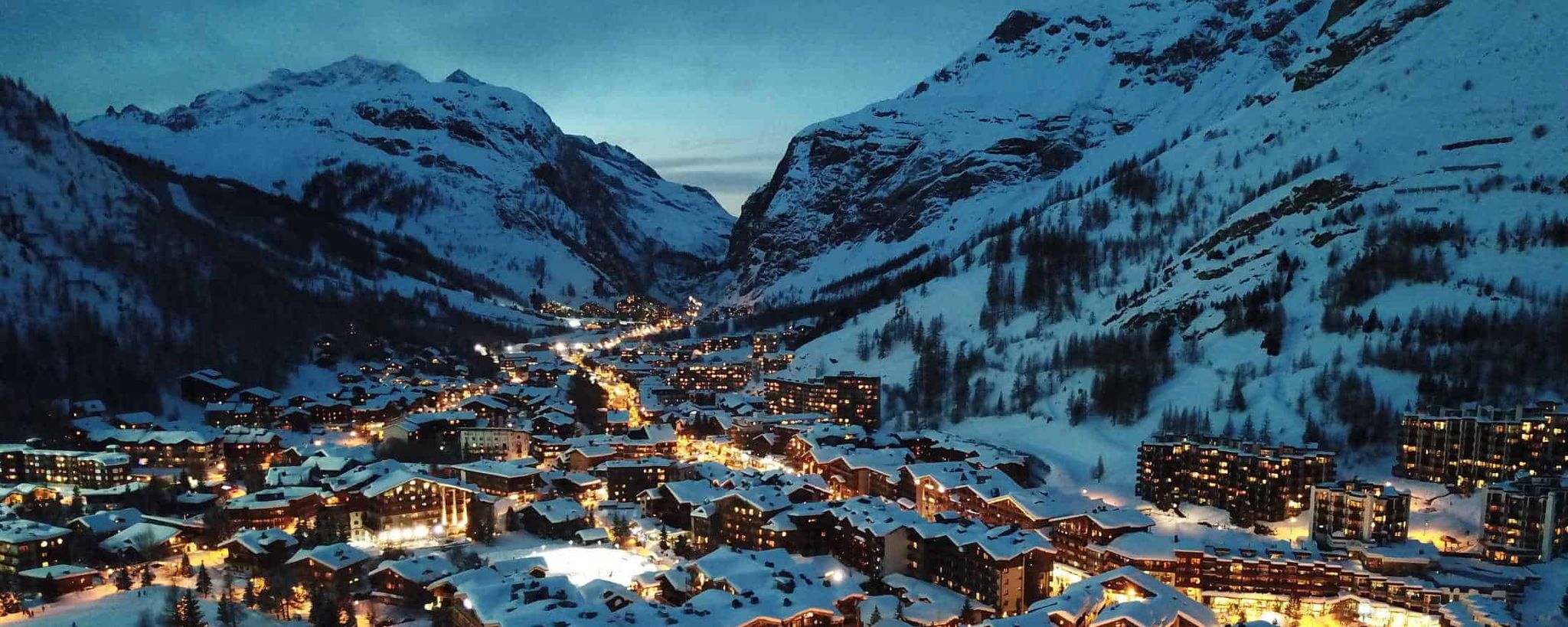
Val d'Isère plays a different hand. The village centres on a 17th-century church and is built in traditional stone-and-wood Savoyard style, with five-star hotels, designer boutiques and Michelin-starred kitchens woven through it. Après runs from the table-dancing chaos of La Folie Douce and slope-side Cocorico to late-night institutions like Dick's Tea Bar. Dining is a serious affair, anchored by the two-Michelin-star L'Atelier d'Edmond in Le Fornet and the much-loved on-mountain L'Edelweiss.
If you want vertical convenience and a town built for skiing, Val Thorens wins on layout. If you want a sense of place, a village to wander and a dining scene with proper depth, Val d'Isère pulls ahead.
Getting There
Val Thorens is 155km from Geneva Airport, roughly a 2h 45min transfer by private shuttle or shared service. Rail travellers can take the TGV or Eurostar snow train to Moûtiers and complete the journey with a 45-minute bus up to the resort. Mandatory paid parking applies, so pre-book if you are driving.
Val d'Isère is further at 220km from Geneva, around 3h by road. Trains run to Bourg-Saint-Maurice, followed by a 45-minute bus or taxi up the valley. Parking is available in central underground car parks, but advance booking is strongly advised in peak weeks.
Both resorts work well without a car, with free shuttle networks running constantly through the day and into the evening. Val d'Isère's longer transfer is the one tangible trade-off for its lower-altitude village charm.
When to Visit
Early season favours Val Thorens. Its elevation means it consistently opens earlier and closes later than its neighbours, and December weeks here are about as snow-sure as European skiing gets. Christmas and New Year deliver full-throttle atmosphere in both resorts, with prices and crowds to match.
January and the first half of March are the connoisseur's window. Conditions are typically at their best, the slopes are quieter outside half-term, and luxury chalets are easier to secure. Both resorts hold snow exceptionally well thanks to their altitude, so even a low-snow year tends to be a non-issue up high.
Late season is where the two diverge slightly. Val Thorens, with its higher base, keeps its full footprint open longer and is the safer bet for an April trip. Val d'Isère's high lifts and glacier access also stay strong into spring, with the added pleasure of sunny terraces in the old village. Both run comfortably into early May.
The Verdict
Val Thorens is the rational choice. It is higher, more snow-sure, more convenient on the snow and plugged directly into the largest linked ski area on earth. For groups who want to maximise mileage, who care about ski-in/ski-out above all else, and who want a guaranteed party at the end of the day, it is hard to beat.
Val d'Isère is the romantic one. The village has soul, the dining is genuinely world class, and the off-piste and Olympic terrain give serious skiers a lifetime of projects. It rewards travellers who want their ski week to feel like a holiday rather than a mission.
For our money, the deciding factor usually comes down to group composition. Mixed-ability families and intermediate-heavy groups tend to thrive in Val Thorens. Expert-led parties, foodies and luxury seekers gravitate to Val d'Isère.
Either way, you are choosing between two of the finest resorts in the Alps. Choose Val Thorens for altitude, efficiency and the Three Valleys at your doorstep. Choose Val d'Isère for village character, expert terrain and a dining scene without rival.
Frequently Asked Questions
Which resort has more reliable snow?
Both average around 6m of snowfall per season and run from late November to early May. Val Thorens edges it on reliability thanks to its 2,300m base, the highest of any European resort, which is why it consistently opens earliest and closes latest.
Is Val d'Isère better for experts than Val Thorens?
For pure off-piste and steep terrain, Val d'Isère has the stronger reputation, with the Face de Bellevarde Olympic run, the Pissaillas glacier and renowned backcountry from Le Fornet. Val Thorens still offers excellent freeride bowls and the Combe de Caron, but the variety and lift-accessed wilderness in Val d'Isère is hard to match.
Which resort is easier to reach from the UK?
Val Thorens is closer to Geneva at 155km versus 220km for Val d'Isère, saving roughly 15 to 30 minutes by road. Both are well served by TGV and Eurostar snow trains, terminating at Moûtiers for Val Thorens and Bourg-Saint-Maurice for Val d'Isère.
Which has the better village atmosphere?
Val d'Isère offers a traditional Savoyard village built around a 17th-century church, with stone-and-wood architecture and a strong sense of place. Val Thorens is purpose-built and modern, prioritising ski convenience over old-world charm, though its central village is lively and walkable.
Where should I stay for the best après-ski?
Both resorts host a La Folie Douce, so high-octane mountain partying is on the menu either way. Val Thorens pairs it with the cavernous Le Malaysia nightclub, while Val d'Isère counters with slope-side Cocorico and the legendary Dick's Tea Bar in the village.