The Skiing
Both resorts deliver world-class skiing — but the experience of skiing them is structurally different.
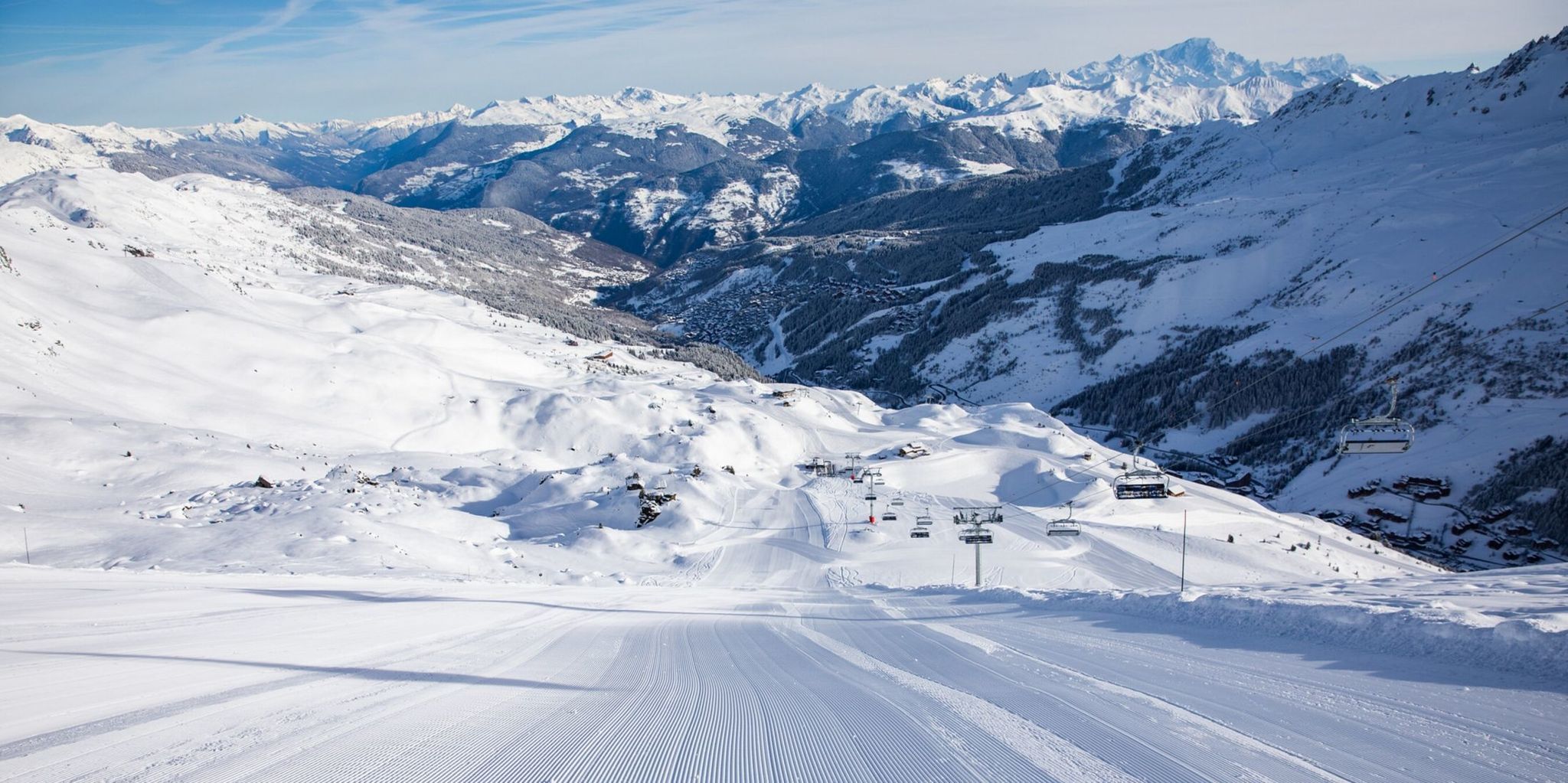
Courchevel sits at the heart of the Three Valleys, the largest connected ski area in the world at 600km of linked pistes spanning Méribel and Val Thorens as well. The local Courchevel domain is deliberately polished — wide blue and red runs, immaculate grooming, gentle nursery slopes at every village level, and extensive snowmaking that supports the lower elevations. The terrain mix favours beginners and intermediates strongly — strong skiers will spend most of their time exploring the wider Three Valleys network.
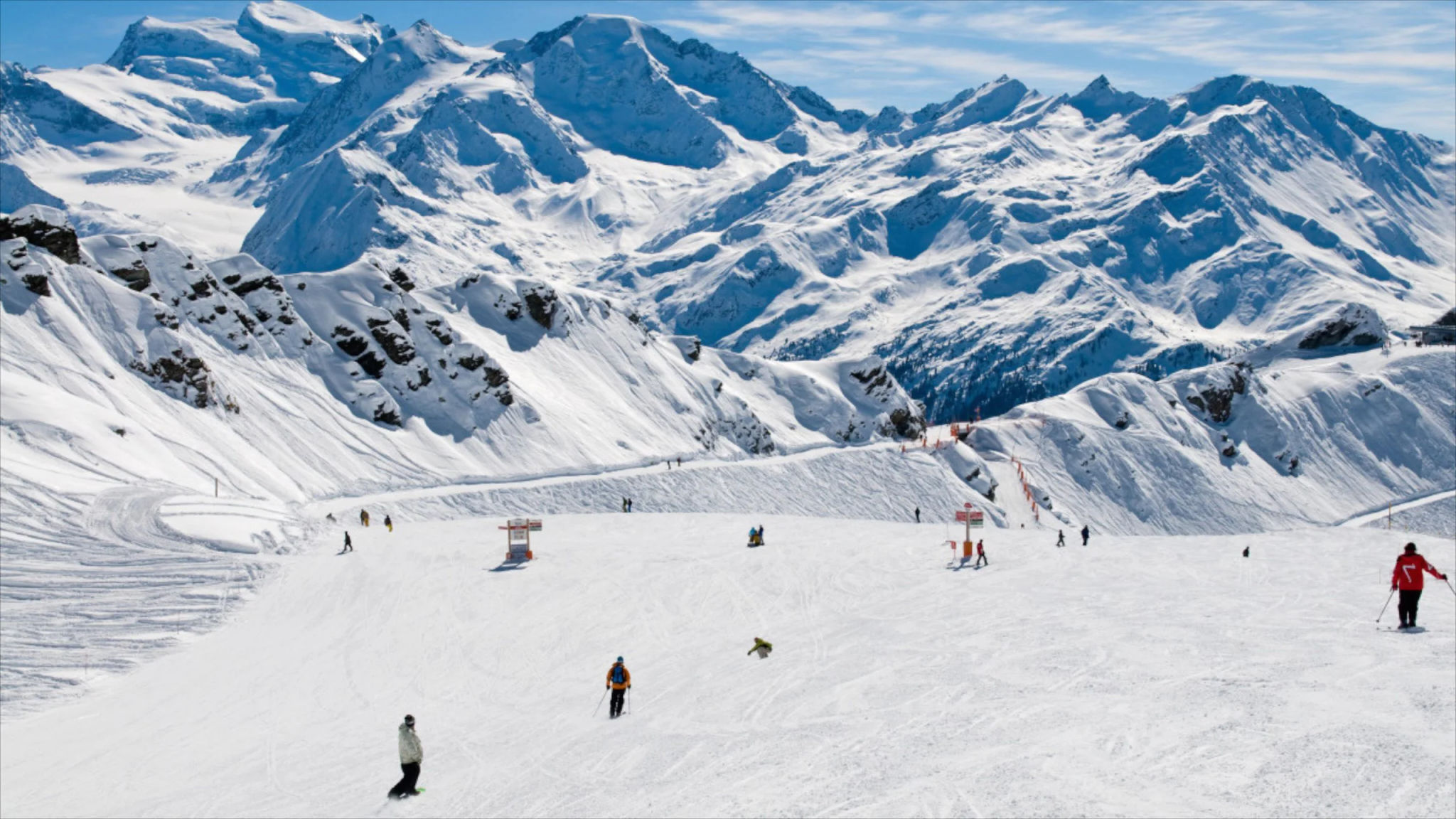
Zermatt's 360km domain spans three connected mountains — Sunnegga, Gornergrat, and Klein Matterhorn — with cross-border access into Cervinia in Italy. It is the standout name in the Swiss Alps. The highest lift reaches 3,883m, the highest in the Alps, and the Theodul glacier delivers year-round skiing. The terrain favours intermediates strongly — long, wide blue and red runs winding down through some of the most breathtaking high-mountain scenery anywhere. The vertical drop of 2,263m is significantly larger than Courchevel's 1,440m, which is measured from its lowest village, Le Praz.
For pure scale and the largest linked terrain, Courchevel and the Three Valleys win. For high-altitude scenery and year-round glacier access, Zermatt is unmatched.
The Village & Apres-Ski
These are two of the most beautiful village settings in the Alps, achieved in entirely different ways.
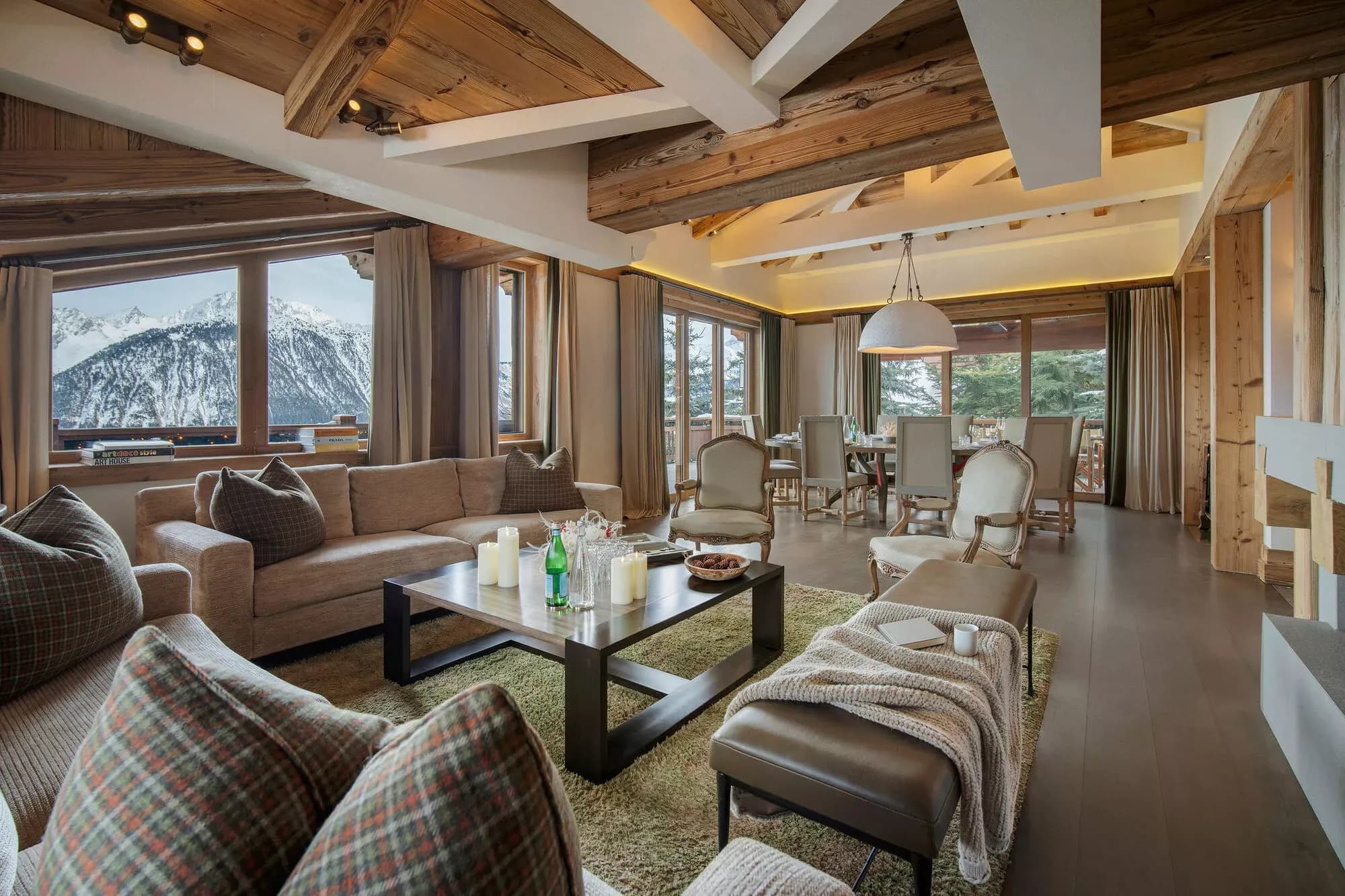
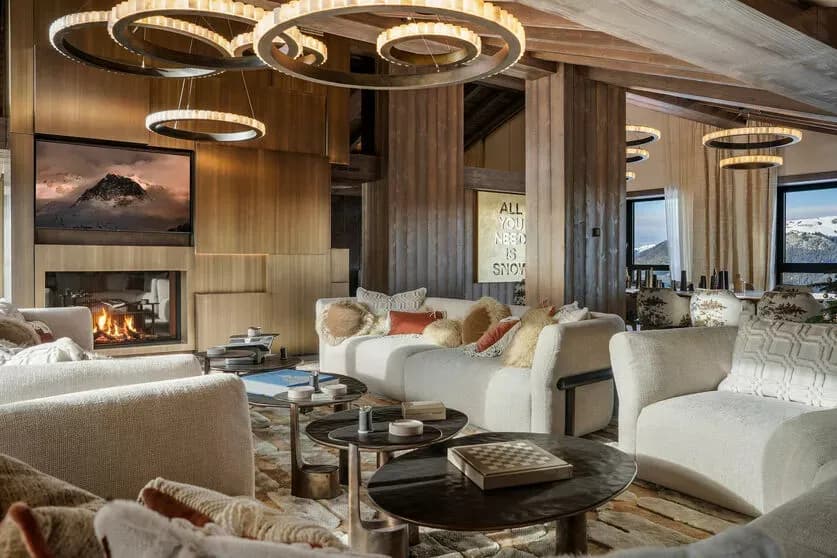
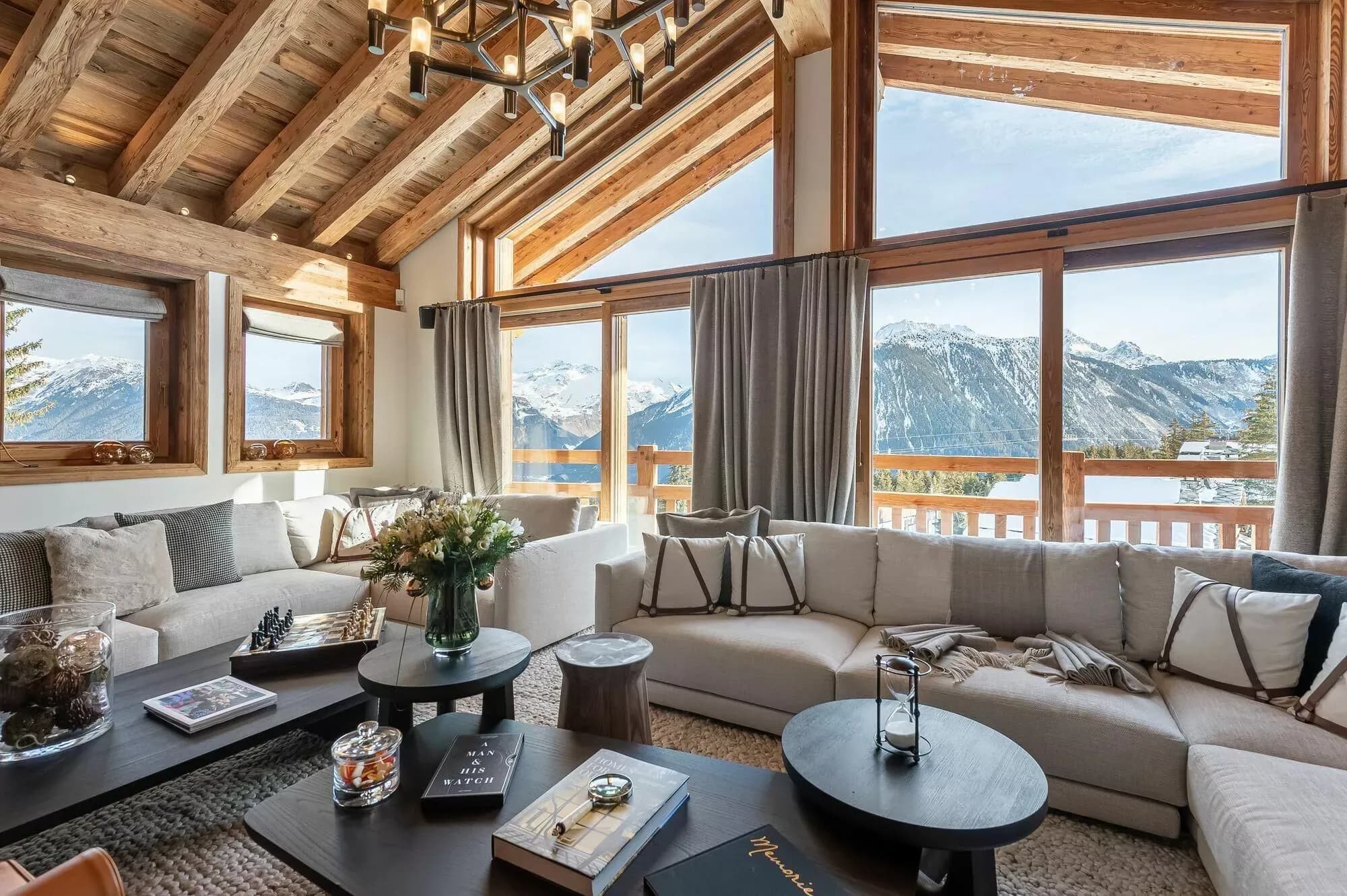
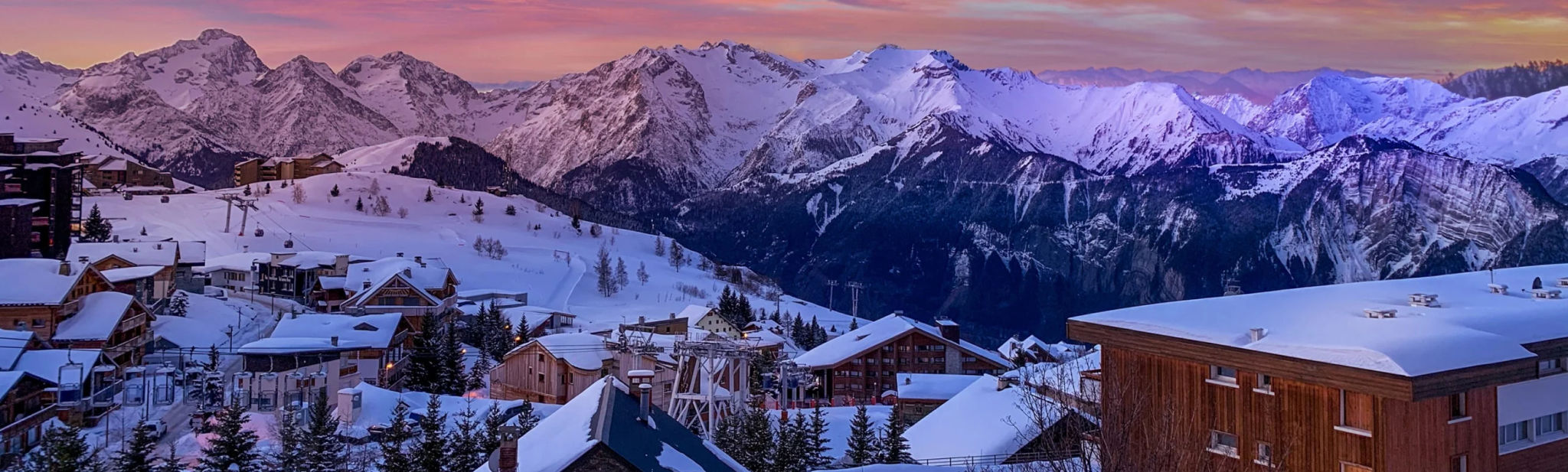
Courchevel 1850 is the polished, manicured icon — flagship boutiques along the Jardin Alpin, six Michelin stars, and a hotel landscape that includes Cheval Blanc, Les Airelles, and the Aman Le Mélézin. The lower villages (Moriond, Le Praz, La Tania) offer more relaxed alternatives with stronger Savoyard character. The market for luxury chalets in Courchevel is the deepest in the Alps. Apres-ski leans toward champagne bars and hotel terraces rather than rowdy venues.
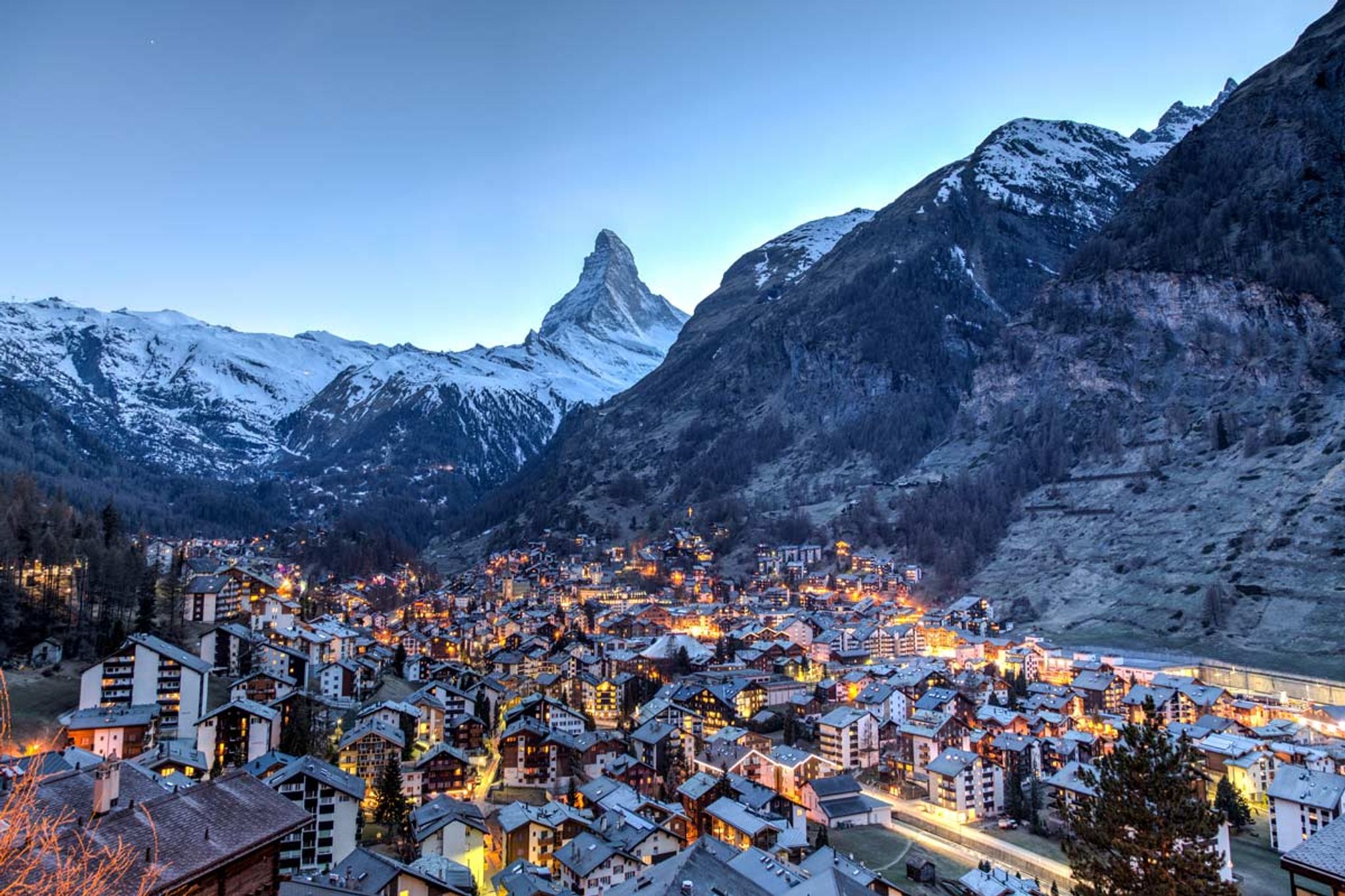
Zermatt is car-free. Electric taxis and horse-drawn carriages move guests through narrow streets lined with timber chalets, and the Matterhorn looms over almost every view from the town. The village has been a destination for over 150 years, and the layered heritage is everywhere — the Mont Cervin Palace, the Riffelalp Resort at 2,222m, and a dense scene of long-established mountain restaurants. The market for luxury chalets in Zermatt anchors the very top end. The apres-ski is more restrained than Courchevel's, with Hennu Stall and Cervo Mountain Resort the better-known names.
If you want unparalleled fine dining and the polished luxury of a purpose-built premium village, Courchevel wins. If you want one of the most iconic settings in the Alps with deep historical character, Zermatt is unmatched.
Getting There
Both resorts require meaningful transfers but offer distinctive options.
Courchevel: Chambéry is the closest airport at around 1h30 by car. Geneva (2h45) and Lyon (2h30) are the standard alternatives. Courchevel uniquely has its own altiport — a short mountain runway accepting private aircraft and helicopter transfers, the fastest door-to-slope option in the Alps for those with the budget.
Zermatt: Geneva is the standard gateway at approximately 3 hours by combined road and rail. The village is car-free, so guests typically transfer by car or taxi to Täsch (5km below) and complete the journey by frequent shuttle train. Zurich is an alternative at around 3h30.
For private aircraft access, Courchevel's altiport is the only option of its kind in the Alps. For a scenic rail arrival into the heart of a car-free village, Zermatt is more memorable.
When to Visit
Both resorts deliver long, reliable seasons.
Courchevel's prime window is January through mid-March, when the Three Valleys are fully operational. February half-term is the busiest and most expensive period at 1850. Late March can offer strong skiing at lower prices, supported by the resort's extensive snowmaking.
Zermatt's altitude and glacier give it a longer season — late November through early May for the main resort, with year-round skiing on the Theodul glacier. The Matterhorn views are at their most striking in mid-winter. February half-term peaks across all tiers.
For year-round access or shoulder-season trips, Zermatt's altitude is the deciding factor. For the heart of the season, both resorts deliver equally.
The Verdict
Both resorts represent the upper tier of European ski travel. The choice is about what you want the setting to be.
Choose Courchevel if you want: the largest linked ski area in the world; the densest fine-dining scene in the Alps; the polished, full-service luxury of 1850; private aircraft access via the unique altiport. Courchevel is the resort where every detail of the experience is curated.
Choose Zermatt if you want: the Matterhorn as your daily backdrop; one of the most beautiful and historically layered villages in the Alps; year-round glacier skiing at the highest lift in the European Alps; a car-free atmosphere with horse-drawn carriages and electric taxis. Zermatt is the resort where the setting carries the experience.
The shorthand many advisors use: Courchevel for the most curated luxury experience in skiing, Zermatt for the most iconic setting.
Frequently Asked Questions
Which has the better skiing — Courchevel or Zermatt?
It depends on what you mean by better. Courchevel offers the larger linked area (600km via the Three Valleys vs Zermatt's 360km plus the Italian crossover). Zermatt offers the higher altitude (highest lift 3,883m vs 2,740m), the larger vertical (2,263m vs 1,440m from Le Praz), and more dramatic scenery. Both favour intermediates over experts.
Can you ski into Italy from Courchevel or Zermatt?
Only from Zermatt. The international pass connects Zermatt directly to the Cervinia ski area in the Aosta Valley — a unique cross-border experience. Courchevel's Three Valleys terrain is contained within France.
Which has better Michelin dining?
Courchevel, by a wide margin. The village holds six Michelin stars within walking distance, including Le 1947 at Cheval Blanc. Zermatt has strong fine dining including After Seven (Michelin) at the Backstage Hotel, but the overall density doesn't approach Courchevel's.
Is Zermatt more expensive than Courchevel?
At the very top end, pricing is broadly comparable. Zermatt's hotel rates skew higher than Courchevel's at equivalent star ratings, partly because car-free logistics constrain land supply. For independent luxury chalets, Courchevel 1850 commands the highest prices in either resort.
Which is better for non-skiers?
Both are excellent for non-skiers. Zermatt's car-free walkable centre, gondola access to the Matterhorn viewing platforms, and dense restaurant scene give non-skiers strong daytime activities. Courchevel's spa hotels, boutique shopping, and Michelin restaurants make for an exceptional luxury non-skiing experience. Zermatt edges it for natural attractions; Courchevel edges it for indulgence.